You are comparing custom notebook MOQ and pricing quotes, but the numbers rarely tell the full story on the first email.
One supplier quotes 500 units while another starts at 2,000, and both call the price “competitive” without explaining what is actually included.
Custom notebook MOQ and pricing depend on binding type, page count, cover construction, print method, packaging, and freight terms—not on unit price alone. A low per-unit quote can hide setup fees, revision limits, or shipping assumptions that push your true landed cost higher.
Want a practical way to compare quotes before you approve a deposit? The sections below break down MOQ drivers, line-item pricing, and the questions brand teams should confirm in writing.
Buyer takeaway
Do not choose a notebook supplier on MOQ or unit price alone. Compare what each quote includes, what is excluded, and which production risks are controlled before mass printing starts.
- If MOQ looks low: confirm whether cover tooling, prepress proofs, or packaging are billed separately.
- If unit price looks high: ask which binding, paper grade, and QC steps are built into the quote.
- If you plan reorders: confirm file ownership, color standards, and whether future runs reuse the same production setup.
Why Custom Notebook MOQ Rarely Matches Your First Quote
Minimum order quantity is not a single factory rule. It is the point where setup cost, material waste, and labor efficiency make the project viable.
Perfect-bound notebooks with a laminated cover often start around 500–1,000 units for offset runs, depending on size and page count.
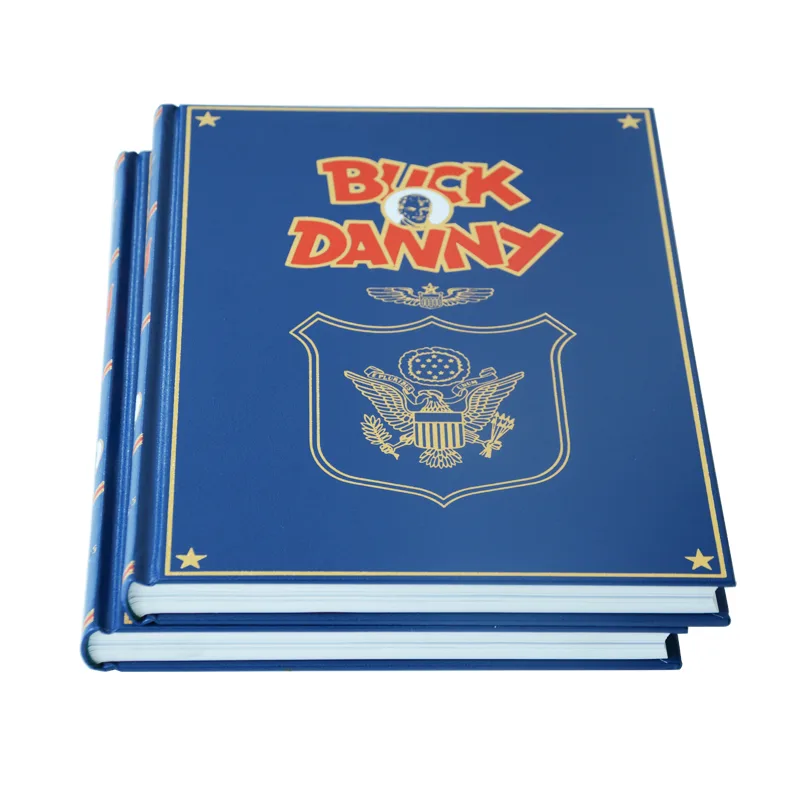
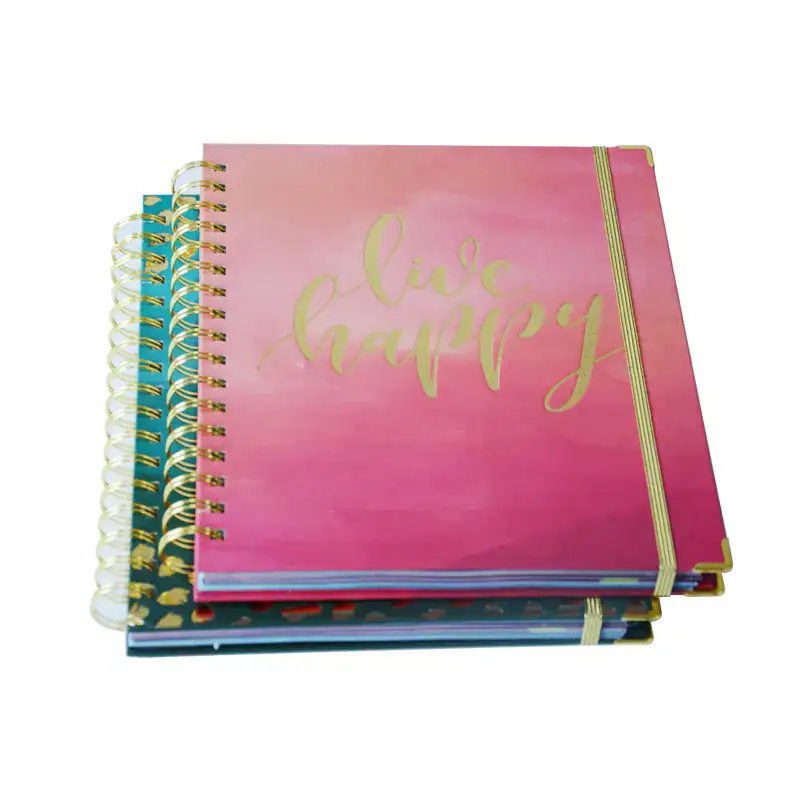
Wire-O, spiral, or case-bound notebooks with specialty covers can push MOQ higher because cover assembly and binding fixtures take more setup time.
When cover assembly lifts MOQ, lock the structure first with the notebook format decision so hardcover, softcover, and Wire-O quotes stay comparable.
Digital printing may allow lower test quantities, but unit cost rises sharply and color consistency can differ from offset production.
That is why two suppliers can quote different MOQs for what looks like the same brief—they are pricing different production paths.
What Drives Custom Notebook Unit Pricing
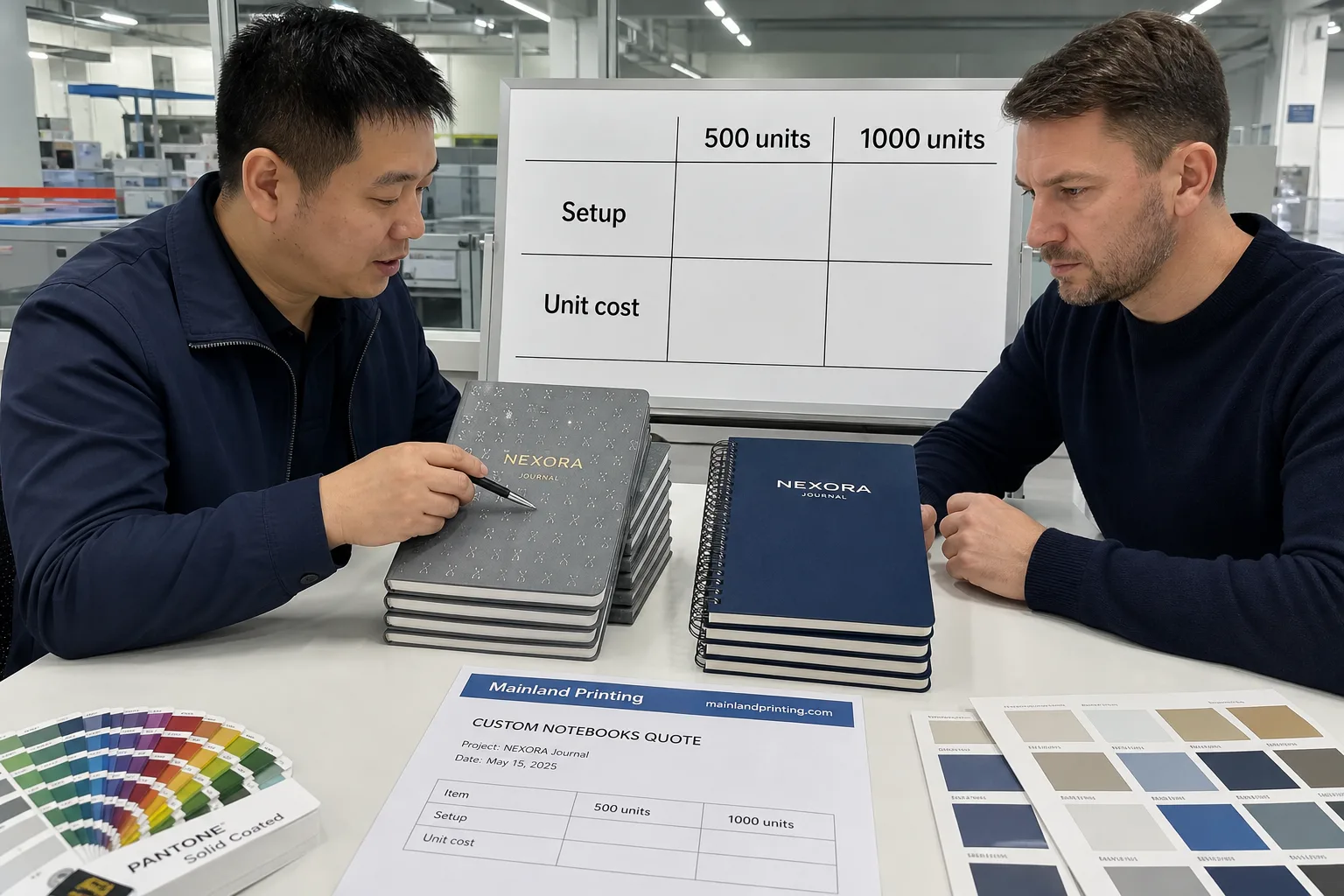
Unit price is only the visible layer. Most notebook quotes are built from the components below.
| Cost component | What it covers | Why it changes MOQ |
|---|---|---|
| Prepress and proofing | File check, imposition, digital or physical proofs | Fixed cost spread across fewer units raises unit price |
| Interior printing | Page count, paper weight, color vs. black-and-white | Higher page counts increase paper and press time |
| Cover construction | Softcover, hardcover, PU leather, foil, spot UV | Tooling and hand work raise setup thresholds |
| Binding | Perfect bind, saddle stitch, wire-O, spiral | Some bindings need dedicated fixtures or higher waste rates |
| Finishing and QC | Trimming, shrink wrap, spot checks, AQL sampling | Stricter inspection adds labor per carton |
| Packaging and freight | Cartons, pallets, FOB, CIF, or DDP terms | Volume and incoterms can exceed print cost on small runs |
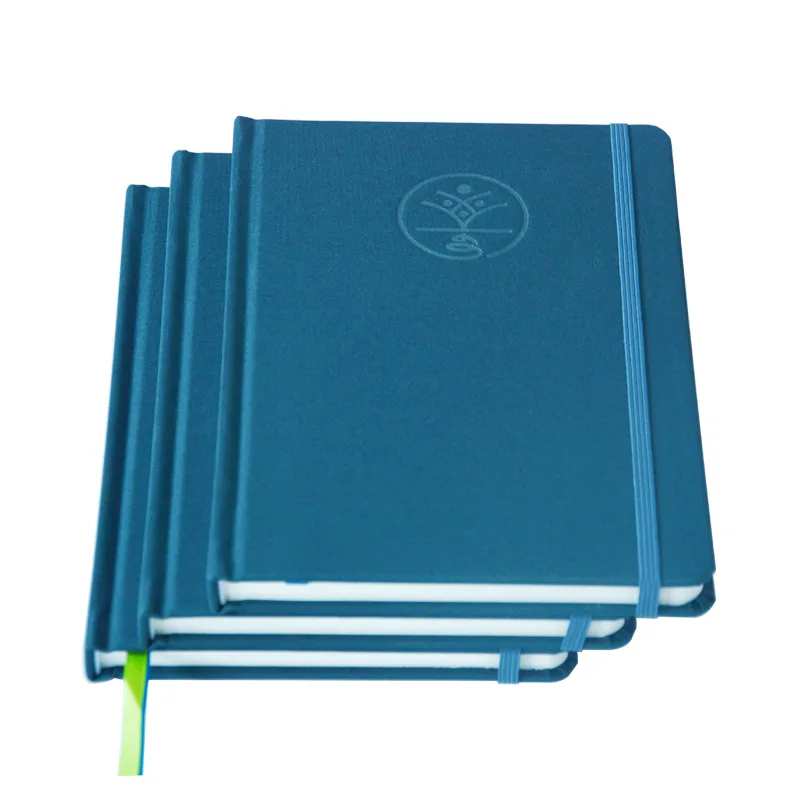
Cover complexity is often the silent MOQ driver. If your project needs a debossed logo, elastic closure, or pocket folder, ask how those features are quoted—as included options or add-on lines.
For paper and layout decisions that affect print cost, review how notebook inner page specs interact with opacity, coating, and writing performance.
True Project Cost Formula for Notebook Orders
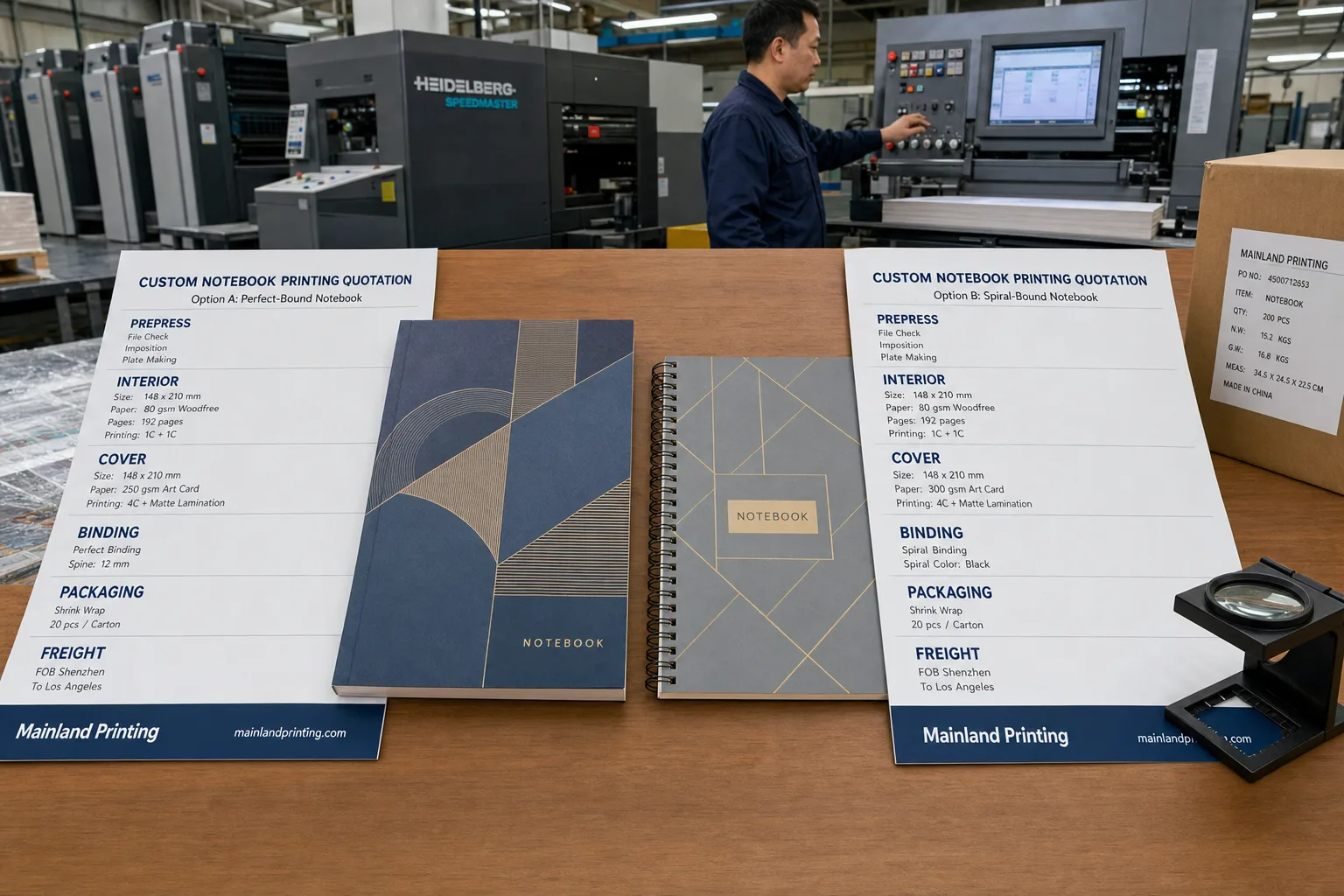
Buyers who only compare unit price often miss the budget items that appear after approval.
Use this simple model before you sign off:
True notebook project cost = setup/prepress + unit production + finishing + packaging + inspection + freight + duty/tax + revision risk
Then divide by usable units—not ordered units—if you expect QC rejects or shipping damage allowances.
A quote that looks cheaper at 1,000 units may lose advantage once you add inland trucking, customs clearance, or repacking at your warehouse.
Before that repack risk lands on your dock, lock retail wrap and carton marks with the notebook US dock pack brief so DDP numbers stay receivable.
If your launch depends on landed delivery, align freight assumptions with your DDP shipping checklist before you compare suppliers.
What to Compare Line by Line
Ask each supplier to break the quote into reviewable lines. If they refuse, treat the quote as incomplete.
| Review point | What to ask | Why it matters |
|---|---|---|
| MOQ tier | What changes at 500, 1,000, and 2,500 units? | Shows whether your target quantity is efficient |
| Proof rounds | How many digital or physical proofs are included? | Extra revisions often bill per round |
| Color standard | CMYK, Pantone targets, and approval method? | Color drift creates reprint risk |
| Binding spec | Exact binding type and durability test? | Binding choice changes cost and MOQ |
| Packaging | Bulk cartons, retail packs, or gift boxes? | Retail-ready packing adds labor and materials |
| Payment milestones | Deposit tied to approved proof or shipment? | Protects cash flow if samples fail |
Binding is one of the fastest ways quotes diverge. Compare how business binding options affect durability, lay-flat behavior, and price before you lock MOQ.
Hidden Cost Signals in Notebook Supplier Quotes
Some quotes look attractive because they leave expensive items undefined. Watch for these patterns.
| Signal | What it may mean | What to clarify |
|---|---|---|
| Unit price only | Setup, proofs, or tooling billed later | Request a full line-item quote |
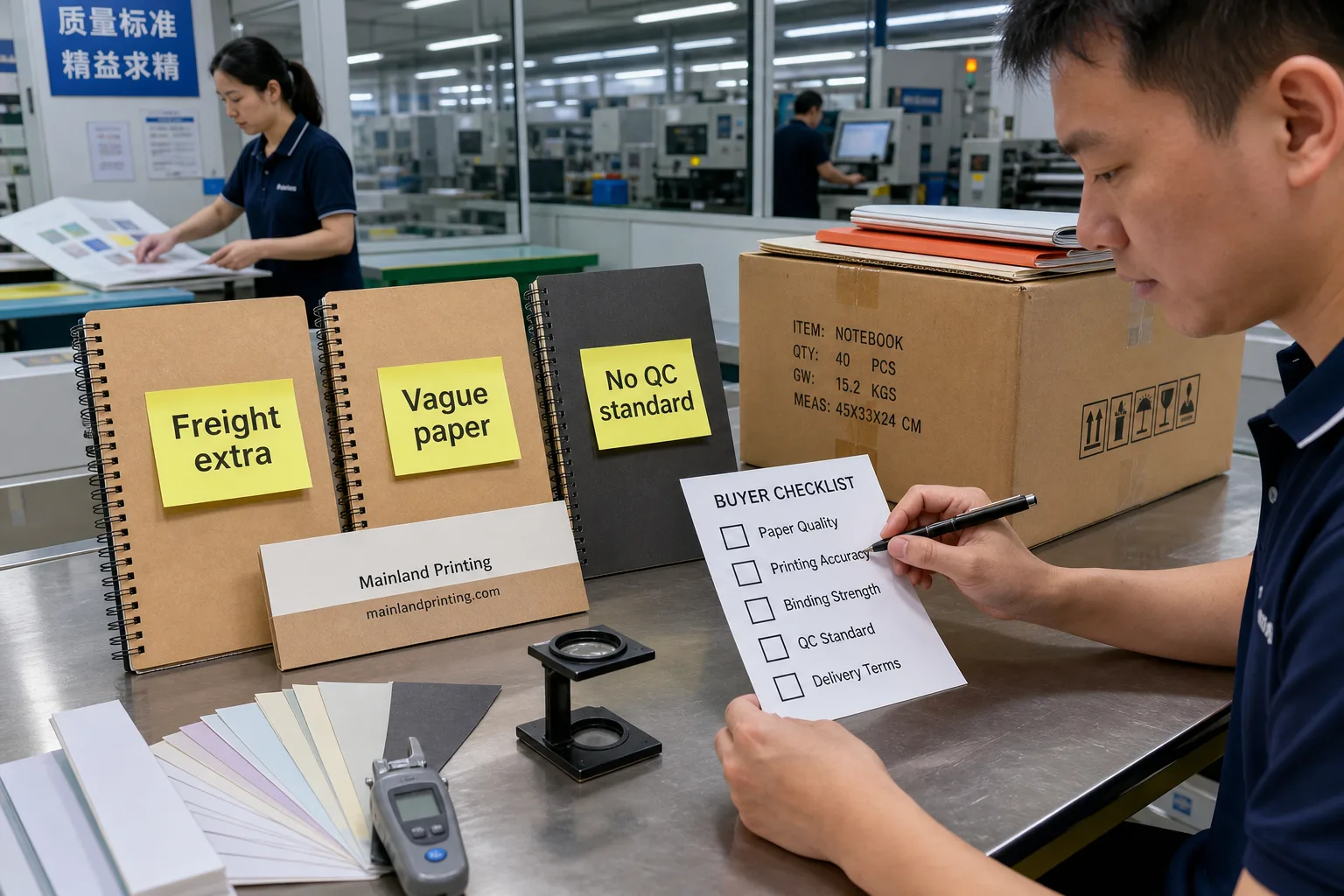
| Vague paper description | Substitutions after deposit | Confirm gsm, coating, and FSC preference |
| “Freight extra” | FOB price hides landed cost | Ask for DDP or CIF estimate |
| No QC standard | Defect sorting happens on your dock | Define AQL or inspection checklist |
| Unlimited revisions promised | Scope may shrink after first proof | Get revision limits in writing |
Sustainable paper claims should be verifiable. When buyers require certified stock, confirm chain-of-custody with resources such as the FSC certification standards rather than accepting generic “eco paper” language.
RFQ Checklist for Custom Notebook Projects
Send a complete RFQ and you will receive more comparable quotes—and fewer surprises after production starts.
- Quantity tiers: Target order size plus one higher reorder scenario.
- Trim size and page count: Exact dimensions and interior page total.
- Cover spec: Material, lamination, foil, emboss, elastic, pockets.
- Interior spec: Paper weight, ruling, perforation, or specialty sections.
- Binding: Perfect, wire-O, spiral, or case-bound requirement.
- Color: CMYK or Pantone references and proof approval method.
- Packaging: Bulk export cartons vs. retail-ready packs.
- Delivery: Target date, ship-to market, and incoterm preference.
- Compliance: Any labeling, barcode, or material documentation needs.
- Payment terms: Deposit timing tied to approved proofs and shipment.
If your notebook includes add-ons such as pen loops or sticky flags, evaluate whether those extras improve margin or create QC issues using guidance on notebook accessory ROI.
Risk Scenarios That Change Your Notebook Budget
Low unit pricing often shifts risk to the buyer after approval. Three common scenarios explain how budgets expand.
Scenario 1: The low MOQ trap. A supplier accepts 300 units but charges full cover setup as a separate line. Your effective unit cost jumps once prepress and tooling are added.
Scenario 2: The proof-to-production gap. A digital sample looks sharp, but offset production on uncoated stock shifts color and show-through. Reprints or paper upgrades were never priced in the original quote.
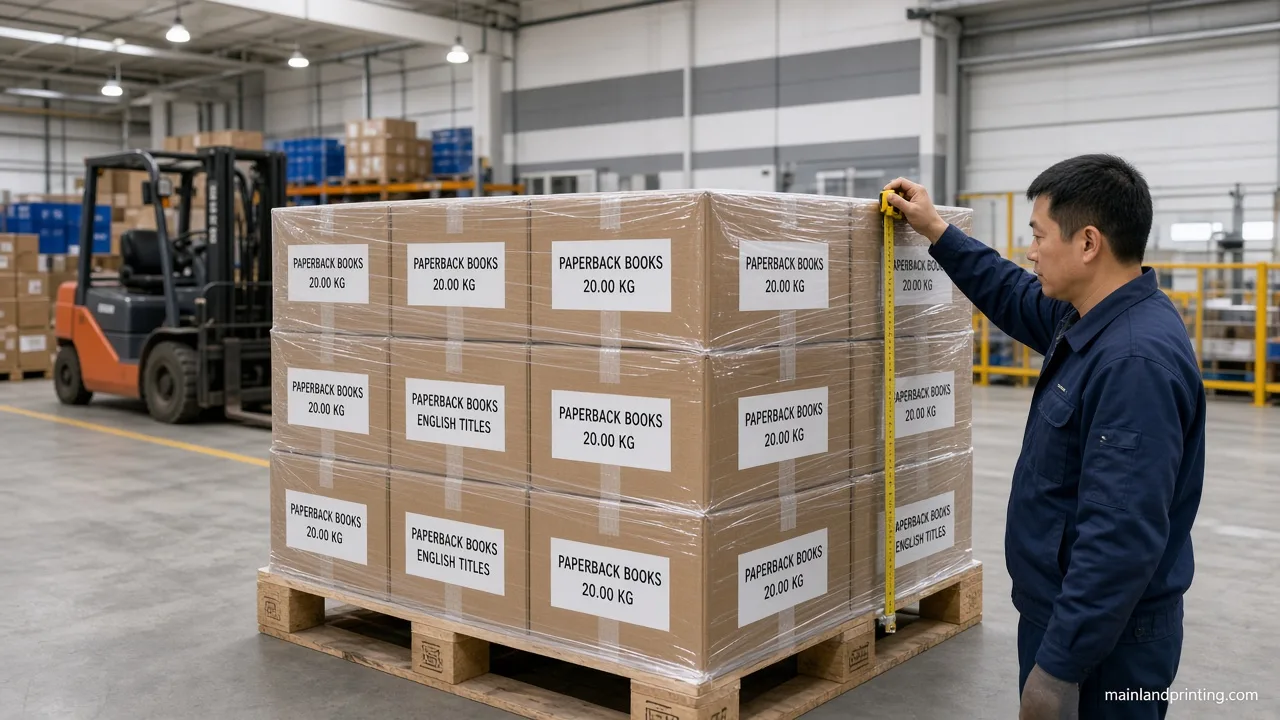
Scenario 3: The freight surprise. FOB unit pricing wins the comparison, but pallet dimensions trigger oversize fees and your warehouse receives cartons that need repacking before retail shipment.
Each scenario is avoidable when MOQ, specs, and freight are confirmed before deposit—not after the first carton ships.
Frequently Asked Questions
What is a typical MOQ for custom notebooks?
Many offset notebook projects start around 500–1,000 units, but binding, cover construction, and finish details can push MOQ higher. Digital runs may allow smaller tests at a higher unit cost.
Why is one notebook quote much cheaper than another?
Cheaper quotes often exclude proofs, packaging, QC, or freight. Compare line items and production specs—not just the per-unit number.
Should I pay for a sample before confirming MOQ?
A physical sample is usually worth the cost when cover materials, binding, or color fidelity are critical to your brand. Confirm whether sample fees credit toward mass production.
How do binding choices affect price?
Perfect binding is common for higher page counts, while wire-O and spiral add hardware and assembly steps. Case-bound notebooks typically carry the highest setup and unit cost.
What should brands confirm before paying a deposit?
Confirm MOQ tiers, included proof rounds, paper and cover specs, packaging, inspection standard, payment milestones, and freight terms in writing.