When a branded notebook quote is ready but your US dock still has no pack, barcode, or carton rules, freight-mode talk is premature. You can still lock those warehouse fields before any DDP line looks real.
Plan bulk custom notebooks to a US warehouse by freezing retail packaging, barcodes, multi-SKU carton splits, carton marks, and the dock receipt window before you compare ocean versus air. Treat DDP as coverage for carriage and duties—not as proof your 3PL will accept the pallets.
Keep reading and you will leave able to hand the plant a warehouse pack brief that survives receiving—and a reverse schedule from sample Clear to dock week you can defend in the quote thread.
Freeze Warehouse Pack Fields Ahead of Freight
When you open with “sea or air for notebooks?”, you skip the only date your warehouse will enforce: the week cartons must clear inbound.
Write the dock receipt window on the RFQ before you debate mode. Then ask the plant to backfill sample, press, pack, and transit inside that window.
| Send before freight talk | Why it changes the quote |
|---|---|
| Legal ship-to + warehouse contact | Wrong consignee = refused trailer |
| Dock receipt week | Sets reverse schedule; “ASAP” is not a window |
| SKU count + units per SKU | Drives carton count and label set |
| Retail pack type | Sleeve/shrink/box changes cube and labor |
| Barcode / ASN needs | Scan failures become chargebacks |
When you once booked ocean on a “DDP included” line with no dock week, the 3PL appointment slipped two weeks and air rescue erased the unit savings. Put the receipt week next to quantity on every revision, then verify the plant reverse schedule against that same dated window before you compare ocean versus air.
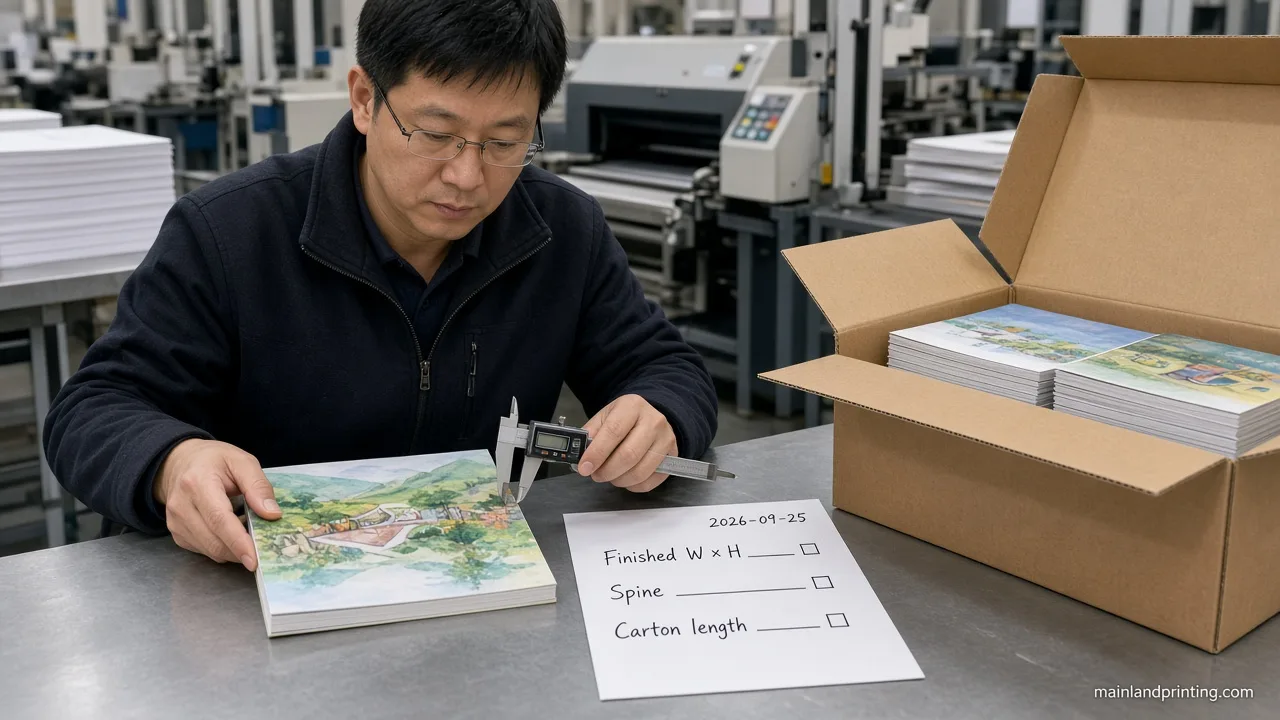
Ask for books-per-carton within ±2 of the approved pack photo, and carton L×W×H to the nearest 5 mm before you accept a dim-weight freight tier. Inspect one sealed sample carton photo against those numbers so the freight quote is not guessing cube.
If format and accessories are still open, freeze them with the custom notebook printing brief first—pack math follows the finished book, not a blank quote.
Name the Incoterms place the same way your warehouse prints it on the BOL request. A casual city name without a dock code is how “door delivery” becomes a refused trailer at a different gate.
Define Retail Packaging and Barcode Fields
When you treat packaging as “whatever the plant usually uses,” retail notebooks arrive without the wrap your shelf or gift kit needs—and barcodes that never get tested.
| Pack / code field | Write on the RFQ |
|---|---|
| Unit pack | OPP / sleeve / belly band / gift box / none |
| Inserts | Card, leaflet, or empty—size and fold |
| Barcode type | UPC-A / EAN / internal SKU code + quiet zone |
| Label placement | Back cover / shrink / belly band—photo required |
| Scan proof | One live scan video or photo per SKU before mass pack |
Retail codes are not decoration. A Universal Product Code only helps if scanners read it on the real wrap—not on a PDF alone. Measure quiet-zone clearance on the sealed pack and keep a live scan photo in the RFQ thread before you release mass packaging.
When you approved a cover sample but skipped shrink barcode placement, the first carton failed inbound scan and sat in “problem receiving.” Test the label on the final pack method and reject any “PDF only” barcode proof for retail notebooks.
Require a 48-hour hold after Sample Clear before plating if the retail wrap is new—so barcode quiet zones can be re-scanned on the sealed pack within that window.
If your retailer demands a different label template than your 3PL, put both on the RFQ. One “barcode OK” note cannot serve two scanners with two quiet-zone rules.
Keep unit-cost talk next to pack labor with the notebook MOQ pricing guide—gift boxes can move the ladder more than another hundred units.
Split Multi-SKU Notebooks Across Cartons
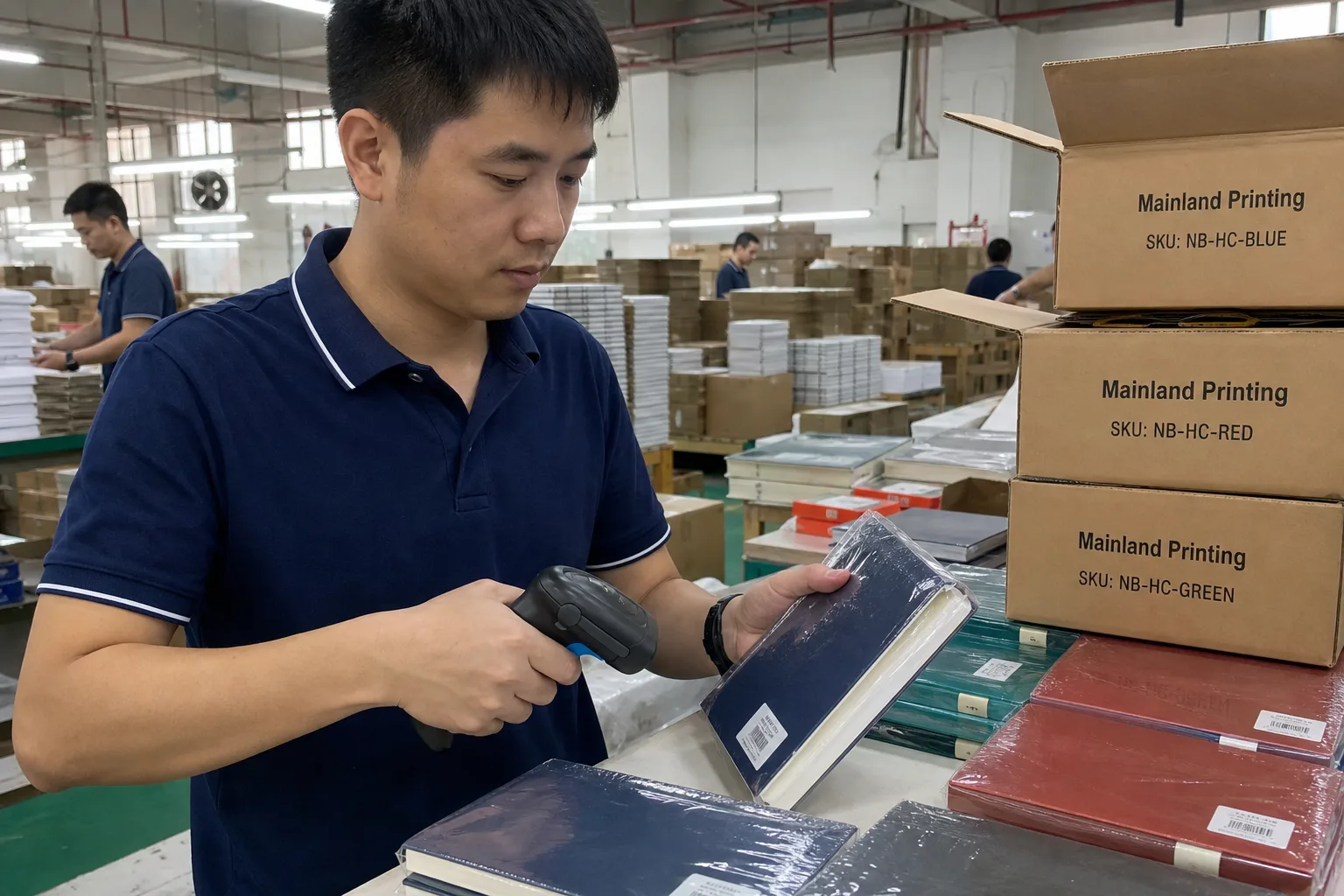
When three cover colors share one “assorted” carton note, your warehouse receives a treasure hunt—not inventory.
| SKU packing rule | Do this |
|---|---|
| One SKU per carton (default) | Mark outer with SKU + qty; photo the mark |
| Mixed carton (only if warehouse allows) | Print pack list on lid + inner separators |
| Master carton vs inner | State inners per master and labels on both |
| Version / lot code | Match Sample ID language from approval |
When you shipped “assorted covers” without a lid list, pickers mislabeled two colors into one bin and reorder photos blamed the factory. Default to one SKU per carton unless the 3PL writes mixed rules.
Tie version IDs to the same Sample ID you froze in the notebook sample approval checklist—pack marks should not invent a second naming system.
Photograph one open carton per SKU before the line seals. Without that photo, later “wrong color in carton” claims become opinion contests instead of pack audits.
Plan My Notebook Production and Warehouse Delivery
Share dock week, SKU list, retail pack, barcode needs, and carton rules so we can map production to a receivable inbound plan.
Build Scan-Ready Carton Marks for US Docks
When outer marks only say “notebooks,” receivers cannot book inventory against your PO lines.
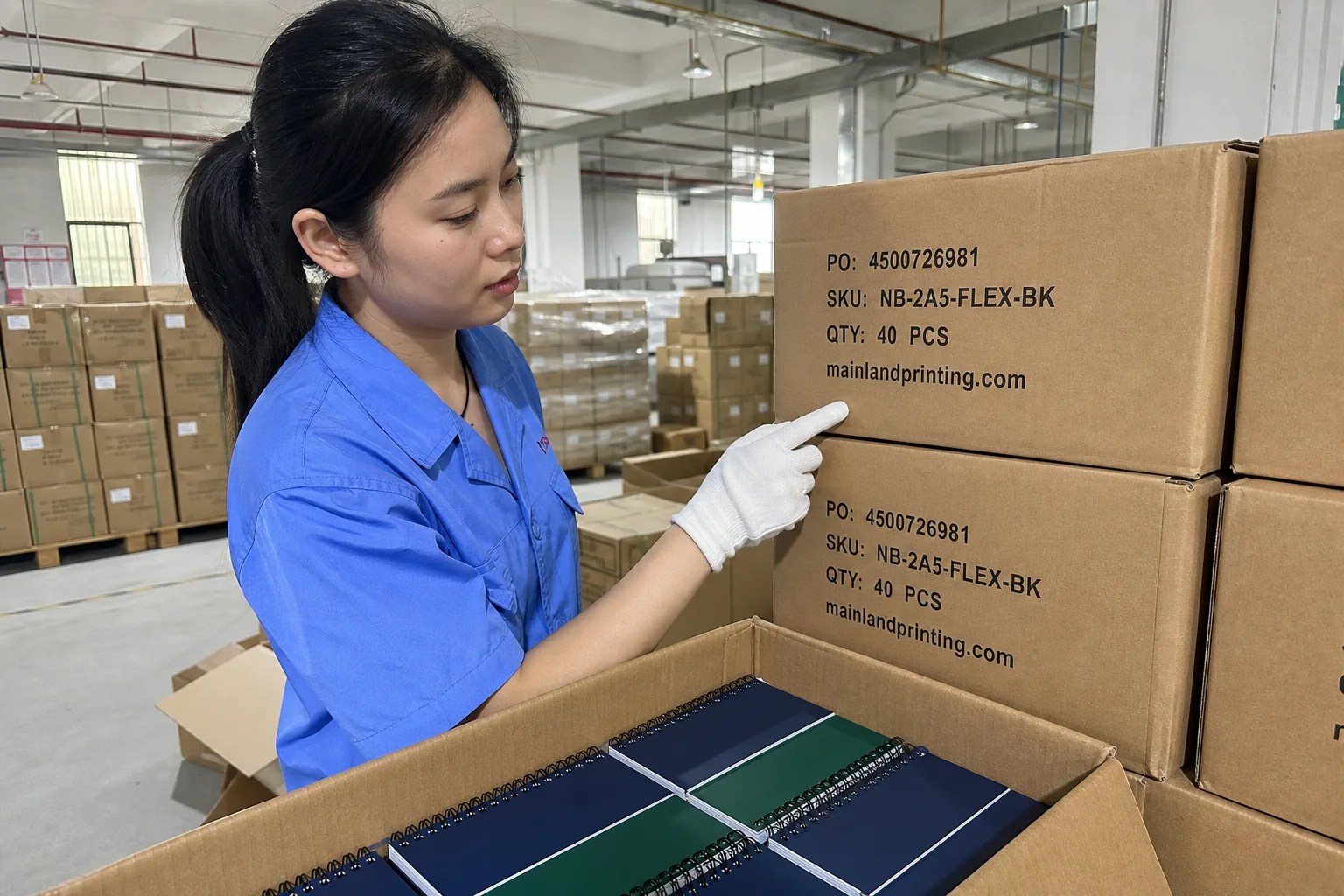
- Outer mark set: PO, SKU, description, qty, carton # of #, country of origin.
- Books per carton + L×W×H + gross kg: freeze before dim-weight freight.
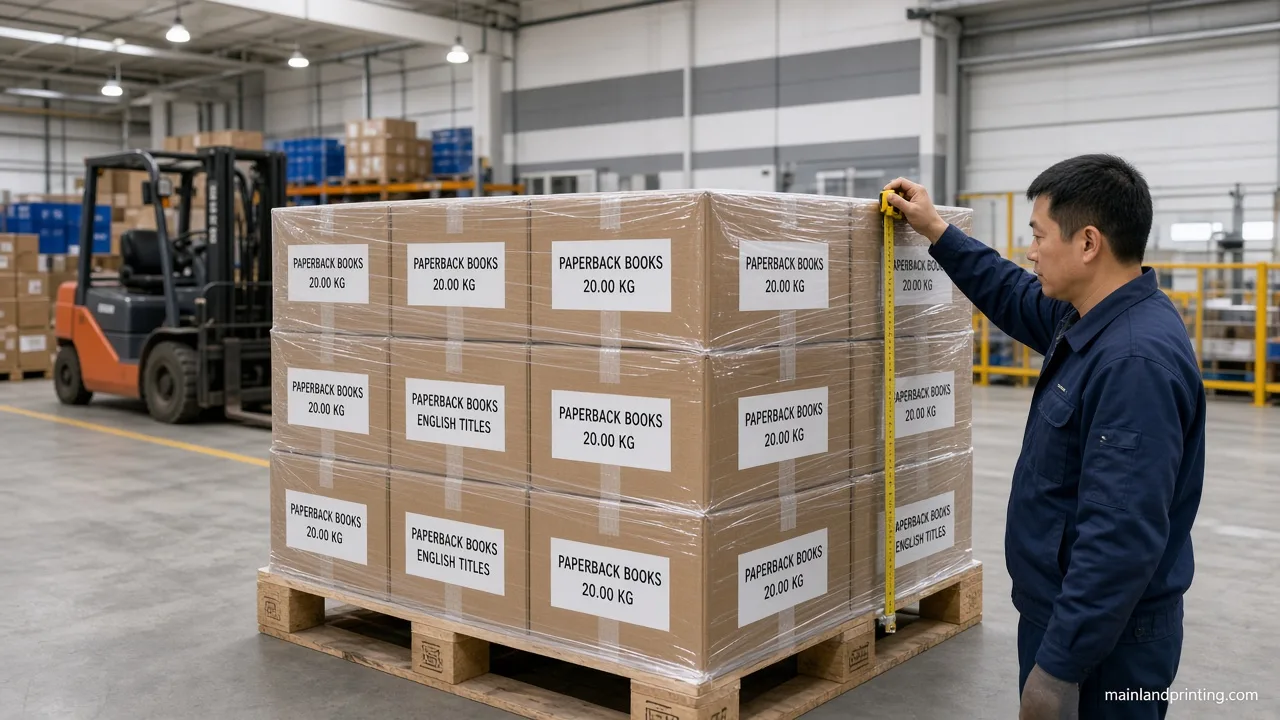
- Pallet map: cartons per layer, layers high, max height vs warehouse rule.
- Photo pack: one marked carton and one open carton per SKU before seal.
When you upgraded page count after freight was quoted, books per carton dropped and cube jumped. Reprice freight when pack geometry moves—or freeze page count before the freight tier.
Red flags before you release the pack line: “standard export carton” with no size, mixed SKUs with no lid list, or barcodes only on a PDF mock—not on the wrap.
Ask packing for one estimated carton count at your target quantity before you celebrate a low DDP unit. Elastic bands and gift boxes change cube faster than most unit-price slides admit.
Map DDP Coverage Against Warehouse Acceptance
When a quote says “DDP to warehouse,” it still has not promised your 3PL will accept the pallets.
Trade terms allocate who pays carriage and duties. Warehouse rules decide whether the dock opens. Read Incoterms as allocation language—see the U.S. Trade Administration overview of know your Incoterms—then layer your receiving checklist on top.
| DDP-style coverage often includes | Still your warehouse gate |
|---|---|
| Main carriage toward the named place | Appointment window and dock hours |
| Import formalities / duty handling as scoped | Label scan, ASN match, pallet height |
| A landed number on the quote | Refusal for mixed unmarked cartons |
When a “DDP” trailer arrived without appointments or carton marks, the 3PL billed storage while both sides argued Incoterms. Coverage does not replace a receivable pack—check appointment hours and mark photos the same day you accept a landed number, or you are buying duties without a dock plan.
Write what happens on refusal in one line: who pays storage, who rebooks, who reprints labels within 2 days. Silence here is how a small scan fail becomes a week of email and a 7-day hold on inventory.
For broader China-to-US print Incoterms context—not a substitute for this notebook pack plan—keep the DDP shipping buyers guide open after your warehouse fields are filled.
Reverse-Plan Sample Production Pack and Dock
When leadership wants one fantasy ship date, you need two dates: Sample Clear and dock week—then fill the middle backward.
- Freeze dock receipt week and warehouse checklist.
- Set Sample Clear date for the branded bound sample (pack method included if retail wrap is new).
- Backfill press, bind, accessory, and pack days.
- Book transit only after carton L×W×H and marks are approved.
- Hold plating if any Clear/Watch pack line is still open.
When you compressed only the sample week to protect ocean, Holds turned into airfreight. Protect Sample Clear on the same calendar as carton marks.
If marketing moves the on-sale date, move dock week and Sample Clear in the same email. Split threads are how freight gets booked against an expired window.
| Signal | Ask before you book freight |
|---|---|
| Clear | Dock week, pack fields, barcode scan proof, and carton geometry on one sheet |
| Watch | “DDP TBD,” assorted cartons, or barcodes only on PDF |
Use This Notebook Warehouse Intake Checklist
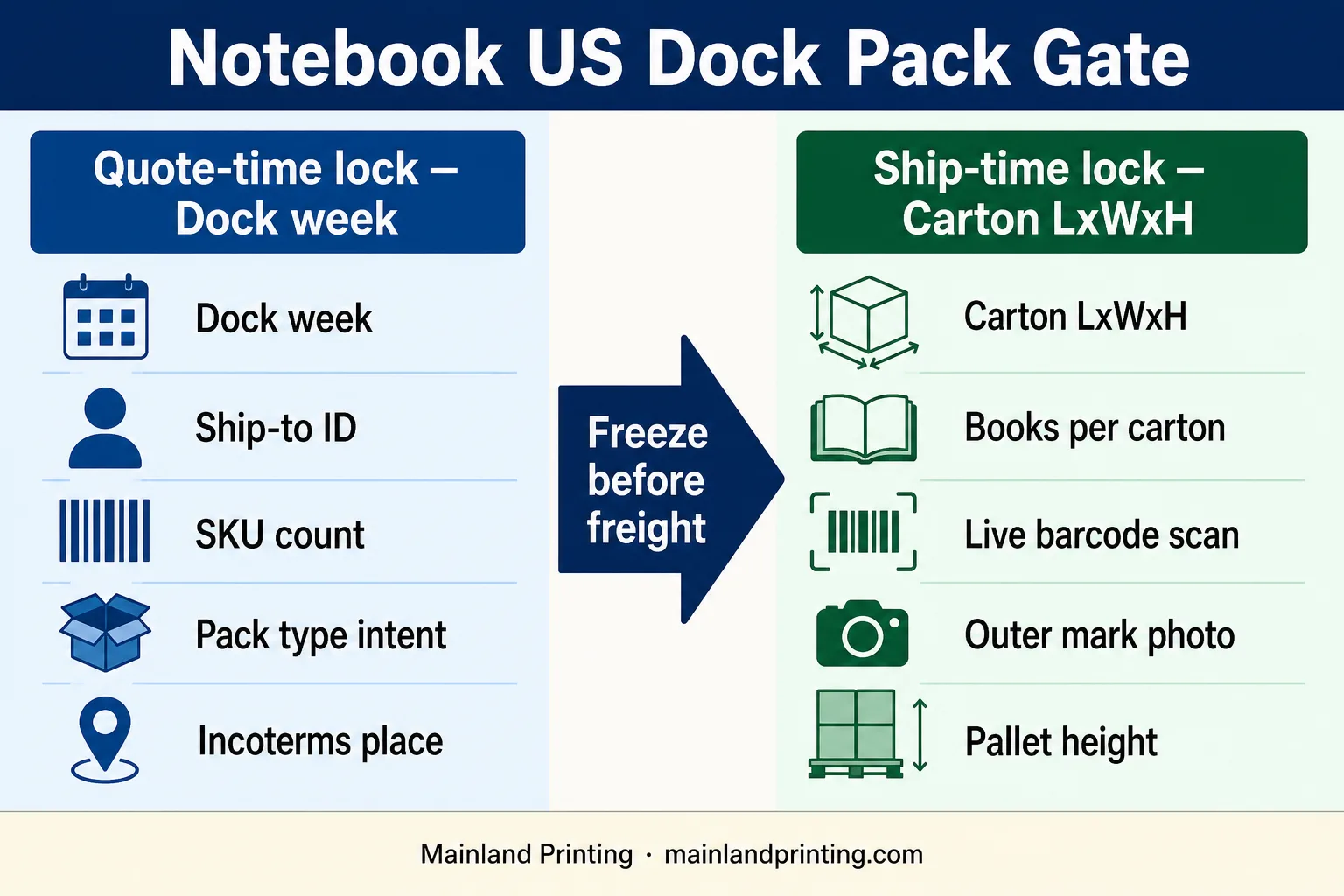
When you need one pasteable ticket for the quote thread, copy this checklist and tick it against the pack brief—not against hope.
| Check item | Confirm by |
|---|---|
| Dock receipt week | Dated window on RFQ |
| Ship-to + contact | Matches warehouse paperwork |
| Retail pack method | Named wrap + insert map |
| Barcode per SKU | Live scan on final wrap |
| SKU carton rule | One SKU/carton or written mix rule |
| Outer marks | PO/SKU/qty/carton # photo |
| Carton geometry | Books/carton + L×W×H + kg |
| Incoterms scope | Named place + what duties cover |
| Sample Clear date | Bound sample + pack method if new |
| Freight book trigger | Only after Clear pack sheet |
If hardcover carton engineering is also on your desk, keep that path separate in the hardcover warehouse DDP plan—this checklist stays on notebook retail pack and multi-SKU marks.
Paste the checklist into the RFQ as a living ticket. Each open line gets an owner and a retest date—not a vague “we will confirm packing later.”
Partial Clears with named Holds beat a fake full approval that books freight on Watch items.
Ship Notebooks Your US Dock Can Receive
You make bulk notebooks receivable when retail pack, barcodes, SKU carton rules, marks, and dock week sit on the quote before freight mode—and when DDP is read as coverage, not as a warehouse pass.
That pack brief is what turns a China print PO into inventory your 3PL can book without a treasure hunt or a refused trailer.
When the checklist is Clear, attach it to the notebook project thread with the Sample ID and keep mass and freight tied to that sheet—not to a bare “DDP please.”
That single sheet is what your plant, forwarder, and 3PL can all point to when something slips—so the argument stays on facts, not on who “thought DDP covered it.”