You are not stuck choosing which cover feels more “premium” in your hand. You are stuck matching a brand notebook to a job—gift, giveaway, desk use, or field notes—before unit price means anything.
Choose hardcover notebooks when keep-value, bag durability, and desk writing matter; choose softcover when volume, light carry, and short-cycle notes matter; choose Wire-O when full lay-flat or 360° flip matters more than a closed spine look—then lock page count, size, and packing before you quote.
Below you will see how to match format to the brand job, when each structure wins or fails, what a side-by-side matrix must show, and which specs to freeze before RFQ. Keep reading if you need a format call you can defend to budget and design.
Match the Format to the Brand Job First
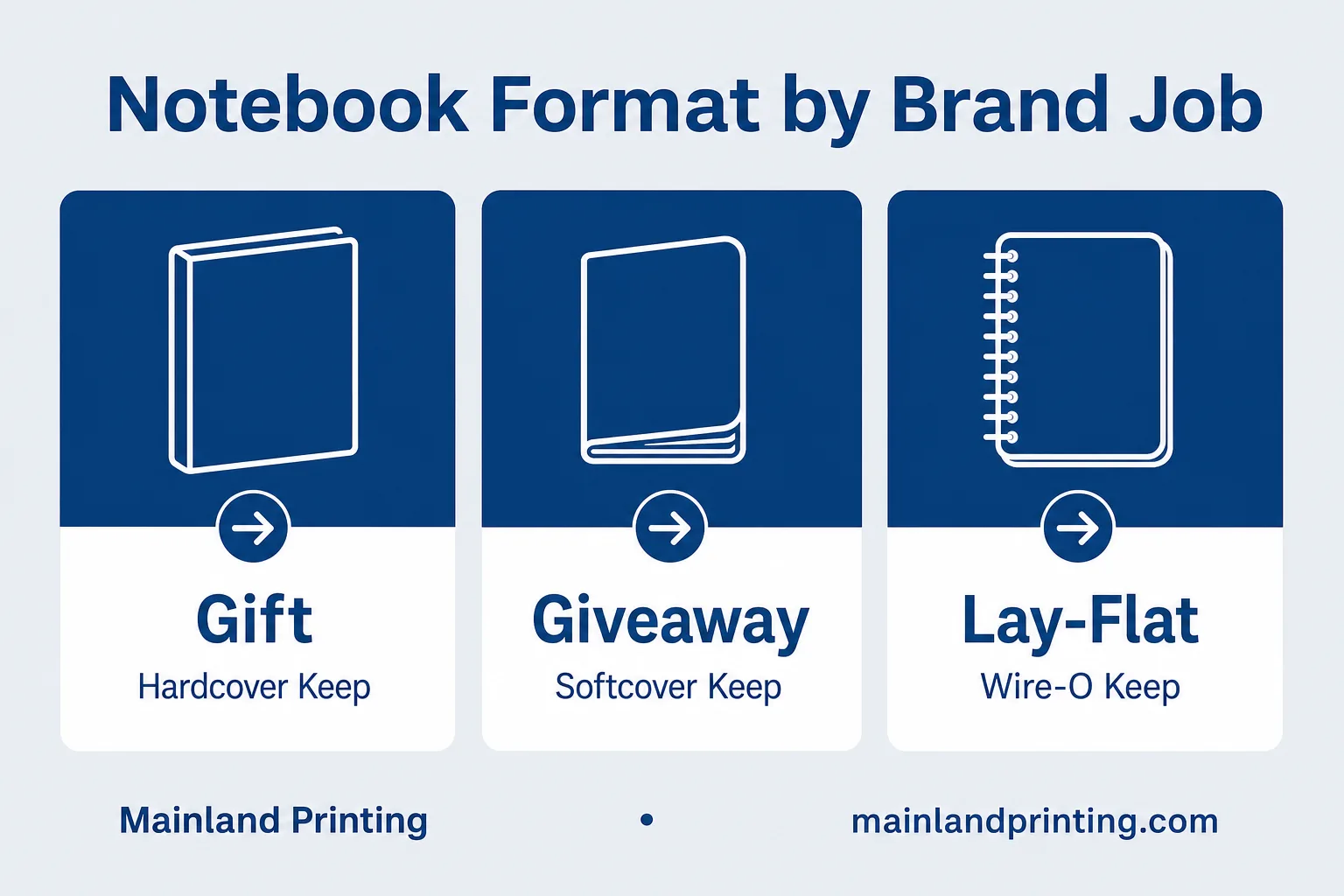
When you open with “hardcover or softcover?”, you skip the only question that predicts waste: what must this notebook do for the recipient in the next 30–90 days?
Write the job on the RFQ before you debate board thickness. Gift kits, booth handouts, and daily desk journals punish different cover choices.
If stakeholders disagree, force a one-line job statement everyone signs: “This notebook must [survive a tote / feel like a gift / lay flat in training].” Without that line, every sample becomes a taste contest.
| Brand job | Keep this format | Switch away when |
|---|---|---|
| Client / executive gift | Hardcover (keep-worthy, resists bag crush) | You need <200g mailers at high volume |
| Trade-show / event handout | Softcover (light, slim, people actually carry) | You promise “heirloom” feel on a one-day booth |
| Training / multi-week cohort | Hardcover or Wire-O (survives repeated opening) | Budget only allows thin card covers for months of use |
| Field notes / standing writing | Hardcover (firmer writing surface) | You need pages that fold fully back—then Wire-O |
| Desk journal / brand keepsake | Hardcover | Recipients travel light every day—revisit softcover |
When you once ordered softcover only because the unit price looked kind, then watched corners curl after one week in tote bags, the “savings” became a brand complaint.Name the job first; price second. Verify the job line in writing before you approve any cover wrap proof—especially when marketing still wants “premium” language on a giveaway budget.
If design already fell in love with a rigid sample while logistics needs 5,000 light handouts, Hold the hardcover path until the job column matches. Format fights that start with cover swatches usually end in a remake. Check carton count at 500 and 1,000 MOQ bands before you freeze board caliper near 2.0–2.5 mm.
Put the job label in the same cell as quantity on every revision. When marketing later upgrades “handout” to “VIP gift,” you change format in writing—not after the softcover plates are already made. Measure one packed sample weight in grams so freight is not a surprise 10–14 days into production.
Hardcover Notebooks — When Rigid Cover Wins
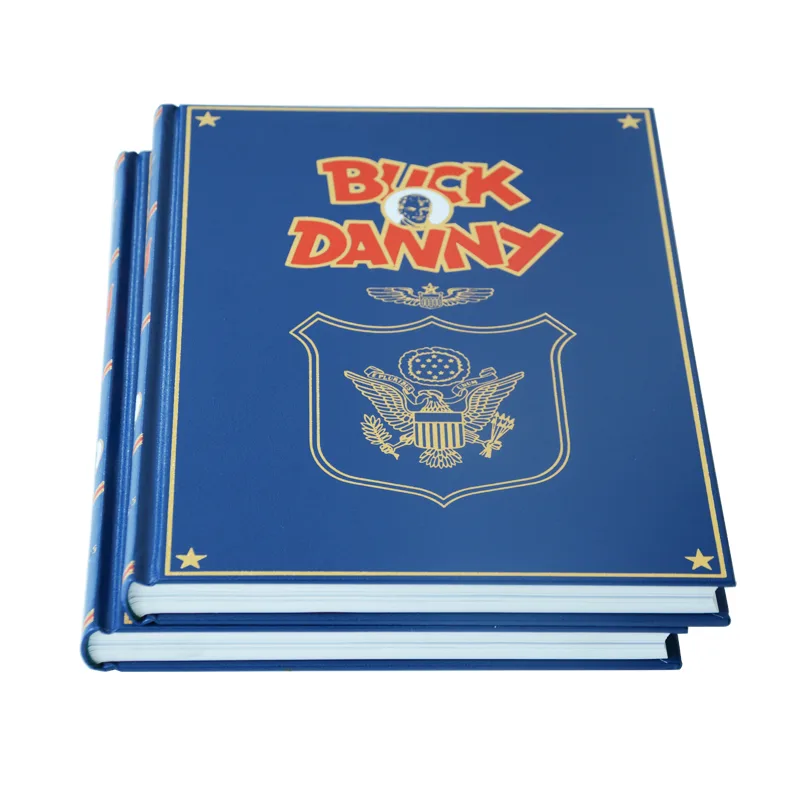
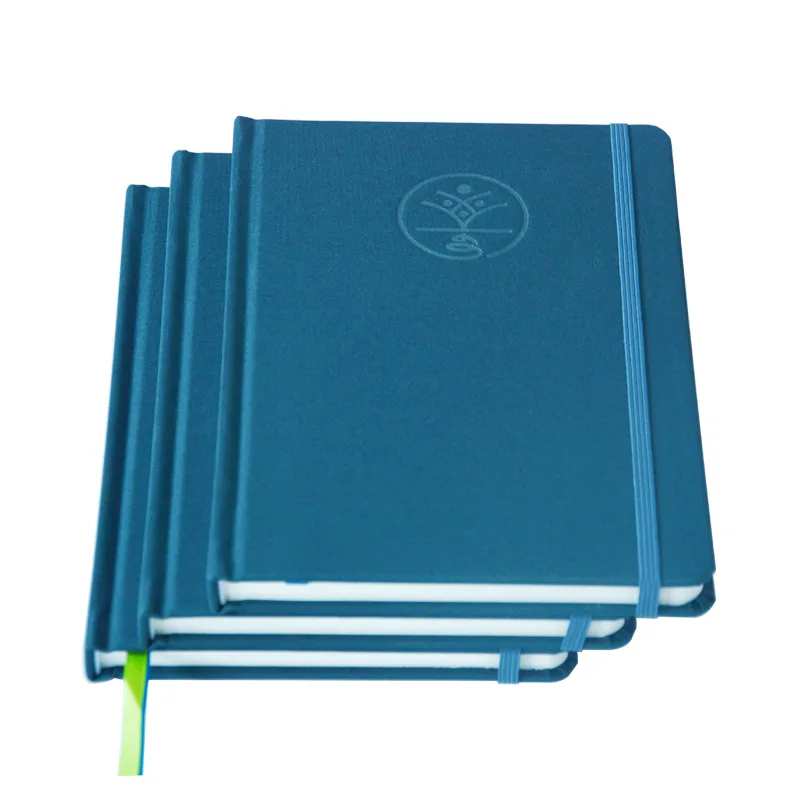
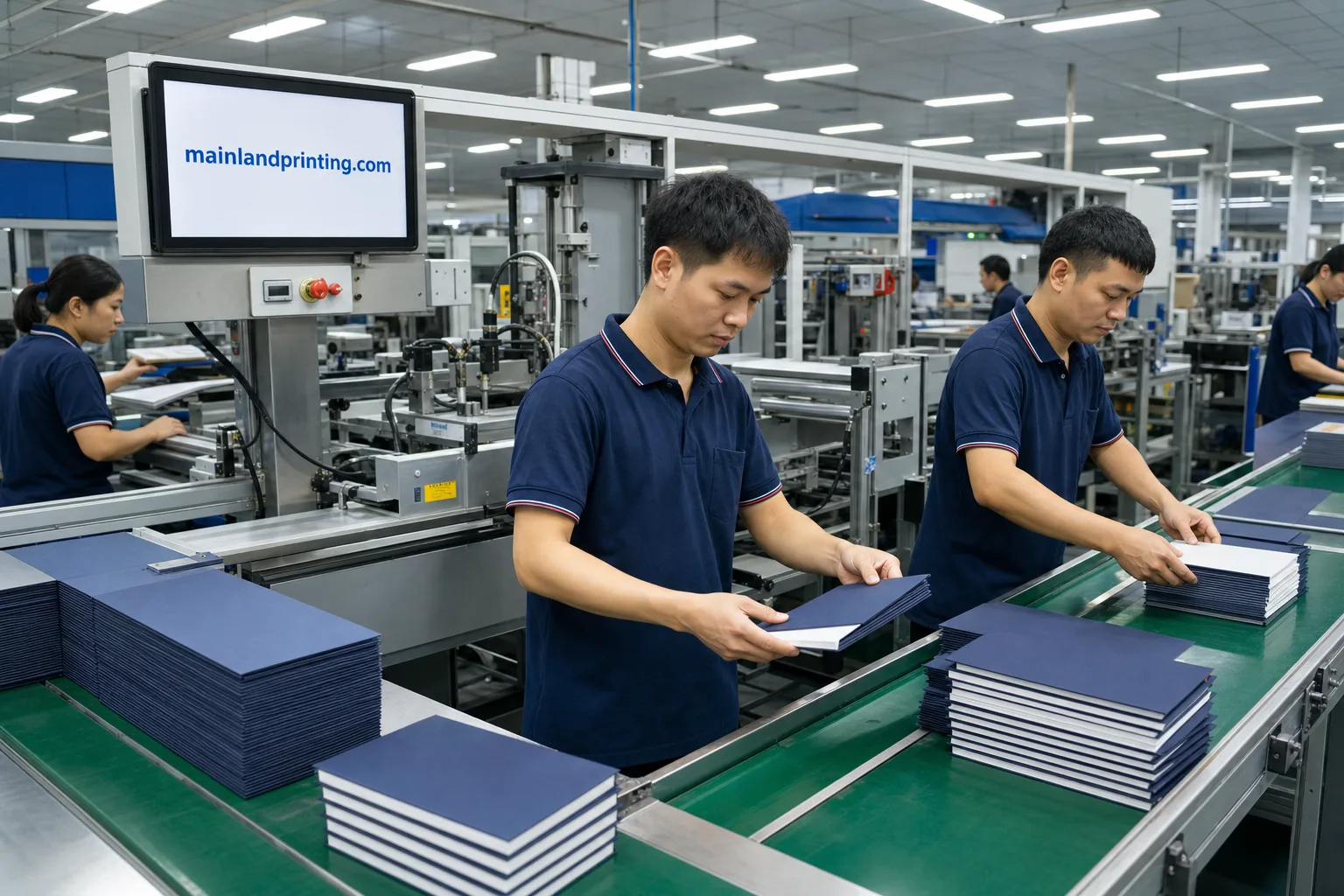
When you need the notebook to still look intentional after months in a bag, hardcover (case-style boards wrapped in printed paper, cloth, or PU) is the safer keep format.
- Durability: boards resist bent corners better than flexible card.
- Writing away from a desk: the cover gives a firmer surface on a lap or clipboard moment.
- Gift signal: recipients read “keep this,” not “use today, toss tomorrow.”
- Trade-off: higher unit cost, thicker cartons, heavier freight—model shipping early.
If your kit already includes bottles or heavy inserts, ask whether hardcover thickness still fits the mailer. A premium cover that forces oversized boxes can erase the gift margin.
Ask the plant for a packed carton weight estimate at your target quantity before you approve foil. Hardcover upgrades that look free on the unit line often show up as dimensional weight later.
This article is about notebook structures, not hardcover book blocks. If you are casing a reading book, use the hardcover book printing path instead of a notebook RFQ.
Softcover Notebooks — When Flexible Cover Wins
When you need people to take the notebook home without fighting weight, softcover (flexible card or wrap cover, often perfect-bound) usually wins high-volume brand programs.
- Portability: slimmer profile for backpacks and show bags.
- Cost at scale: fewer case-making steps than hardcover on many lines.
- Short-cycle use: conferences, seasonal campaigns, one-cohort workbooks.
- Watch-out: edges show wear faster; do not sell it as a two-year desk heirloom.
When you shipped softcover as “executive gifts” because artwork looked fine on screen, recipients compared it to last year’s hardcover kit and the program felt downgraded. Softcover is not a cheaper hardcover—it is a different job.
If your event bag already carries a bottle and a tote, softcover often survives the walk to the hotel better than a heavy case-bound piece people abandon at the booth. Test carry weight with one sample in the real bag, not on a conference table.
If you only need a thin stapled jotter under ~64 pages, say so early; some plants will route you to saddle options instead of forcing a softcover notebook quote. For softcover books (not notebooks), see softcover book printing so you do not mix product families on one PO.
Wire-O Notebooks — When Lay-Flat Wins
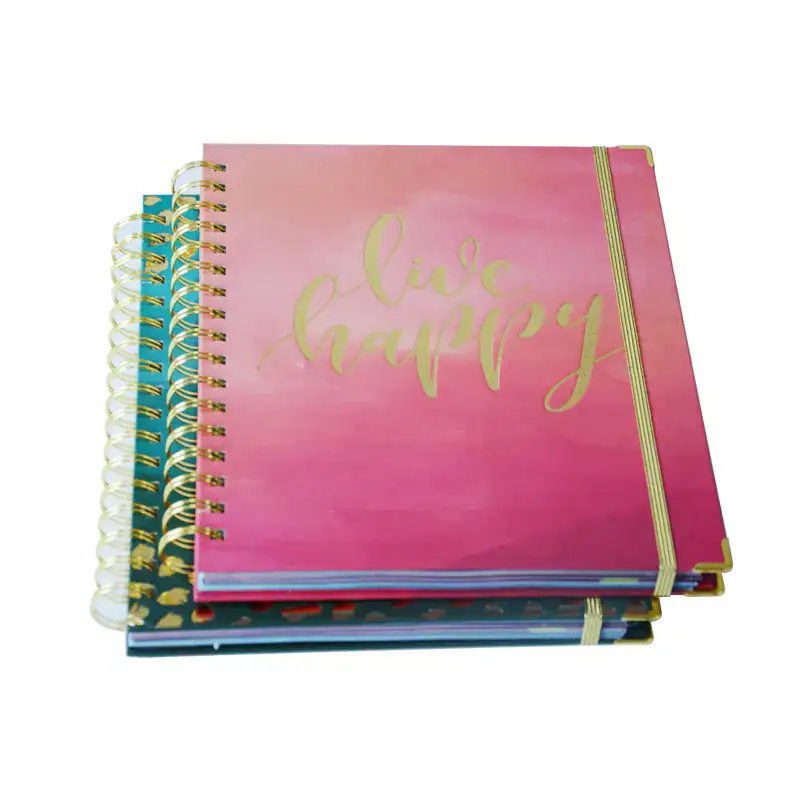
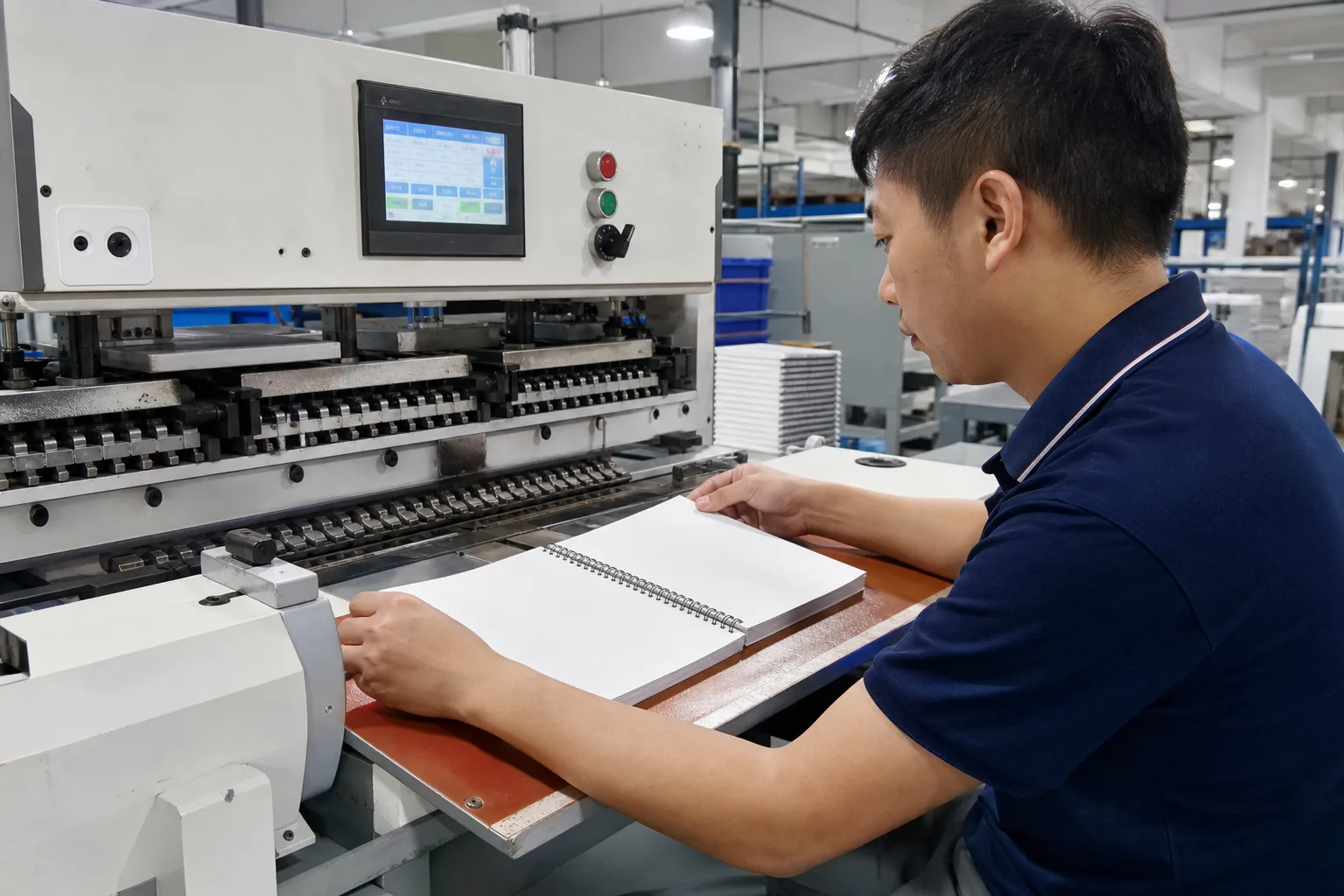
When your users must write across a full spread or fold pages back 360°, Wire-O (double-loop wire) often beats both glued softcover spines and rigid cases.
| Do | Don’t |
|---|---|
| Pick Wire-O for planners, lab notes, sketch-heavy workbooks | Expect a clean printed spine for retail shelf branding |
| Confirm wire color and pitch with cover art | Assume Wire-O = “cheap spiral schoolbook” without checking cover wrap |
| Ask for lay-flat proof photos at 180° open | Use Wire-O when the brief demands a sealed hardcover gift box look |
When you forced perfect-bound softcover because “notebooks shouldn’t look like school supplies,” then trainers could not keep spreads open on a lectern, the brand look won and the job lost.If lay-flat is non-negotiable, put Wire-O on the RFQ in the first email. Ask the plant to verify hole pitch against your cover template before plating—3–5 mm of wrong margin will crop logos when the book opens flat.
Wire can snag knit bags and soft mailers.If your fulfillment uses poly mailers, ask for corner guards or cartons that keep wires from punching through—do not discover that risk at the 3PL. Inspect a packed carton after a drop check; Wire-O programs often need 2–3 extra days versus softcover for bind and pack on the same plant.
- Do divert thick dated planners with complex sections to custom planner printing when the product is more calendar system than blank notebook.
- Do divert plastic-coil or book-block spiral projects that are not notebook gifts to spiral book printing so the factory quotes the right line.
- Don’t treat Wire-O, spiral coil, and hardcover as interchangeable SKUs on one vague “custom notebook” form.
- Don’t skip hole margin: art that sits too close to the wire will look cropped when open.
Need help choosing a notebook format for your brand run?
Share the job (gift / giveaway / desk / field), page count, size, and quantity tiers. Mainland Printing can map hardcover, softcover, or Wire-O before you lock artwork.
Side-by-Side Format Matrix
Use one matrix so design, procurement, and logistics argue from the same columns—not three email threads.
| Factor | Hardcover | Softcover | Wire-O |
|---|---|---|---|
| Best use | Gifts, desk, long keep | Volume handouts, light kits | Lay-flat workbooks, planners |
| Durability | High | Medium (edges wear sooner) | High for opening stress; wire can snag |
| Lay-flat | Good if sewn block; confirm | Limited on many glued spines | Excellent / 360° possible |
| Common add-ons | Ribbon, elastic, pocket, foil | Lamination, soft-touch, bellyband | Cover tabs, pocket, wire color |
| Cost / pack impact | Higher unit + heavier cartons | Lower unit + denser packing | Mid; protect wire from crush |
| Specs to confirm | Board, wrap, endpapers | Cover GSM, binding glue | Hole pitch, wire diameter |
For binding vocabulary shared across print products, skim the overview on bookbinding basics overview, then bring the notebook job back to this matrix—do not let book-trade jargon overwrite your brand use case.
If two quotes only show unit price with no format column, you are not comparing notebooks—you are comparing incomplete RFQs. Red flag: a supplier quotes “notebook” without naming hardcover, softcover, or Wire-O, then refuses to state cover board mm or wire diameter.
When you change format mid-quote, reprice packing and freight in the same round. A softcover-to-hardcover switch is not “add board”—it changes carton count and often the ship mode you thought you locked. Test one packed carton weight before you approve a 1,000-unit air estimate.
Specs to Lock Before You Quote
Before you ask for numbers, freeze the fields that change both structure cost and carton math.
| Spec | Ready when | Hold when |
|---|---|---|
| Format | Hardcover / softcover / Wire-O named | “Notebook, best looking option” |
| Size + page count | Trim + sheets locked | Page count “around 100” |
| Interior | Lined / dotted / blank + GSM | Paper unspecified |
| Cover finish | Wrap material + foil/deboss listed | Finish TBD after quote |
| Quantity tiers | At least two tiers (e.g. 500 / 1,000) | Single mystery quantity |
| Packing / ship mode | Mailer vs carton; destination region | No weight or carton target |
Copy this into your RFQ remarks: “Brand job: [gift/giveaway/desk/field]. Format: [hardcover/softcover/Wire-O]. Size/pages: [ ]. Interior: [ ]. Quantity: [tiers]. Packing: [ ].” If any bracket is blank, Hold the quote request.
Share one sample preference only after those fields are filled. A beautiful hardcover dummy cannot rescue an RFQ that still says “or softcover if cheaper.”
Run the Ready/Hold list once more after design adds foil or a pocket—add-ons change thickness and sometimes force you back to the format matrix.
When your format and specs are ready, start from custom notebook printing with the job line attached—not a bare “custom notebook, please quote.”
You now have a format call grounded in the brand job: hardcover for keep and desk strength, softcover for light volume programs, Wire-O when lay-flat wins—then specs locked before price.
- Write the job (gift / giveaway / desk / field) on tonight’s RFQ.
- Name one format—hardcover, softcover, or Wire-O—not “premium notebook.”
- Fill size, page count, interior, quantity tiers, and packing before you ask for numbers.
When that packet is ready, send it with your artwork brief and ask for a format-matched notebook quote—not a cover-swatch contest.