If your factory never ran adhesion compatibility testing on your specific cover stock before bulk production, your pen loops and inner pockets are a liability waiting to surface during transit — not a value-add. The following analysis provides the engineering truth behind accessory ROI: the exact cost thresholds, failure mechanisms, and pre-production checkpoints required to protect your investment at scale.
A $0.85–$1.20 full accessory suite (elastic band, pen loop, inner pocket, ribbon bookmark) supports a $4.99–$7.99 retail price uplift — a 25–40% gross margin improvement at 3,000+ units — but only when adhesive bonds meet ≥15 N/25mm peel strength on your exact cover material.
This guide provides a complete accessory decision matrix mapping unit cost, retail uplift, and primary failure risk across every core accessory type, so your procurement team can make a defensible budget case before the next print run.
We outline the hard ROI benchmarks your finance team needs, the factory-floor realities behind the adhesion compatibility trap, and a vendor brief framework with measurable acceptance standards that eliminate the most expensive post-delivery failure mode in custom notebook production.
Why Your Competitors’ Accessory Content Is Costing You Money
Here’s the uncomfortable truth: every competitor ranking above you for notebook accessory terms is answering the wrong question. They’re telling end-users how to attach a pen loop. They’re not talking to you — the person deciding whether adding accessories to your next print run is actually worth the budget.
That gap is costing you real money. When your content mirrors theirs, you attract the wrong audience and lose the buyer who’s already ready to place an order.
The Three Specific Ways Generic Content Fails You
- It lists features, not financial outcomes — no one explains that a $0.85–$1.20 accessory bundle can support a $4.99–$7.99 retail price increase at 5,000 units.
- It ignores manufacturing risk — specifically the “adhesion trap,” where accessories bonded to soft-touch laminate or textured vegan leather fail during shipping because no compatibility test was run before production.
- It skips the decision framework — there’s no logic helping you determine when an accessory earns its cost versus when it just adds complexity.
Your competitors are producing content for hobbyists. That leaves a clear opening for content built around a single, practical question: does this accessory improve your gross margin or hurt it?
That’s the question we’re going to answer directly, with real production data and a framework you can take into your next budget conversation.
Accessory Integration

Here’s what the product listings and enthusiast blogs never tell you: the decision to add accessories to your custom notebook isn’t a design choice. It’s a manufacturing decision that happens to have design consequences. Getting that sequence wrong is where most projects run into trouble.
The core issue is adhesive compatibility. A pen loop or inner pocket that looks perfect on a prototype can fail completely in bulk production if the adhesive wasn’t tested against your specific cover material. Soft-touch laminate, textured vegan leather, and coated kraft all behave differently under stress.
What Our Pre-Production Testing Actually Checks
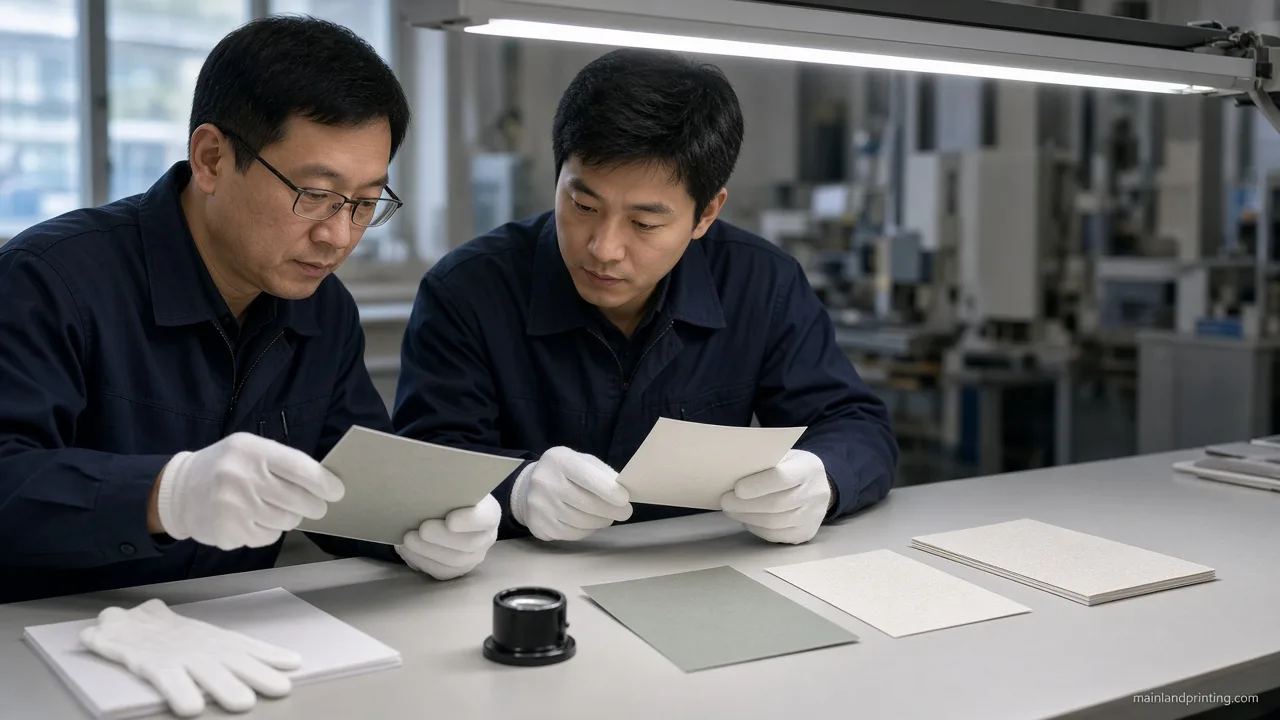
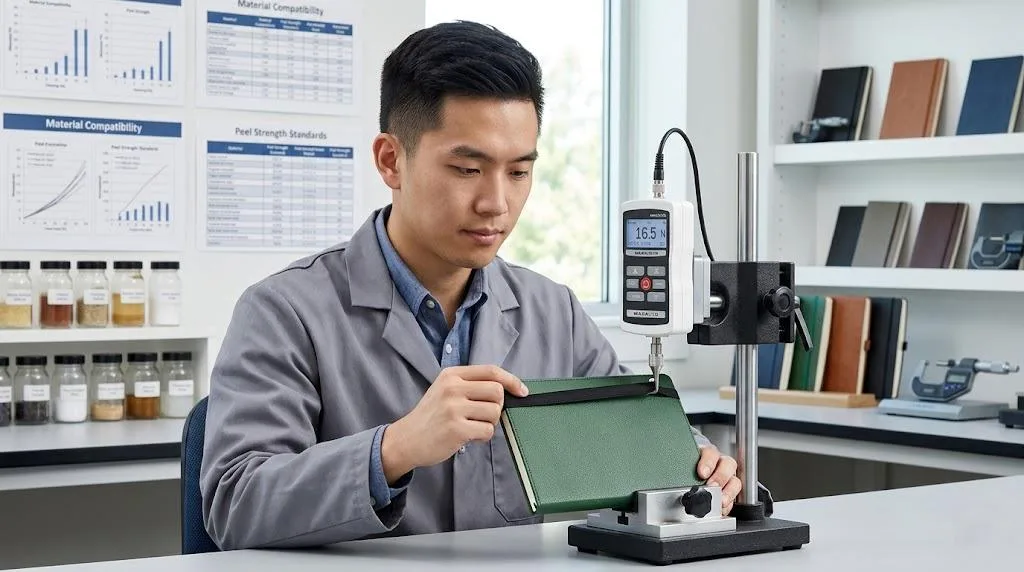
Before any accessory goes into a production run, our engineering team runs mandatory adhesion compatibility tests. This isn’t a visual check. It’s a documented, measurable process.
- Peel strength threshold: We target a minimum bond of 15 N/25mm on your chosen cover stock.
- Temperature resistance: Adhesive bonds are validated across a range of -10°C to 60°C to survive shipping and storage conditions.
- Elastic recovery rate: Closure bands must demonstrate over 90% memory recovery after repeated use cycles.
- Pocket construction method: We advise on glued vs. stitched-and-turned pockets based on your expected use case, not just cost.
You get a pass/fail report on all of this before your bulk production order is confirmed. That single checkpoint eliminates the most common cause of post-delivery accessory failures: a mismatch that nobody caught until it was too late.
The goal is simple. Every accessory you add should increase your product’s perceived value. It should never become a liability.
Single Core Table Here
Every accessory decision comes down to one question: does the value it creates for your end customer outweigh the true cost of adding it? Not just the unit price — the full cost, including tooling, assembly time, and adhesion risk.
Use this matrix to make that call quickly. It maps each core accessory against four decision factors your finance team will actually care about.
Notebook Accessory ROI & Risk Matrix
| Accessory | Unit Cost Add | Retail Uplift | Failure Risk | Invest If… |
|---|---|---|---|---|
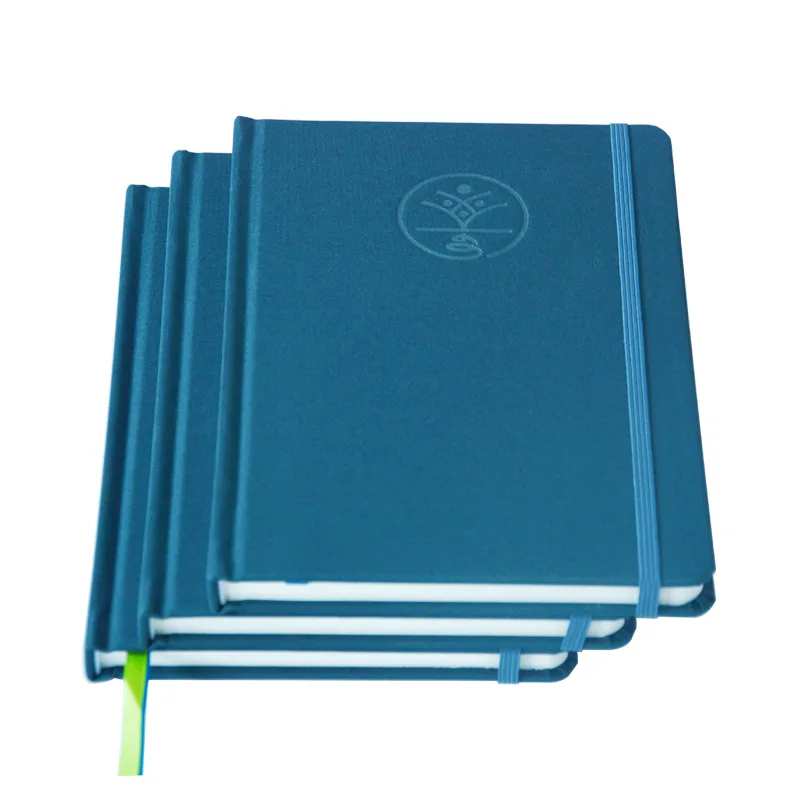
| Elastic Band | $0.15 – $0.30 | $1.50 – $3.00 | Elastic memory loss | Daily carry needed |
| Pen Loop | $0.10 – $0.25 | $1.99 – $4.00 | Adhesive peel | Complete writing kit |
| Inner Pocket | $0.35 – $0.65 | $2.50 – $5.00 | Glue delamination | Storing cards/receipts |
| Ribbon Bookmark | $0.08 – $0.18 | $0.99 – $2.00 | Fraying ends | Premium/gift product |
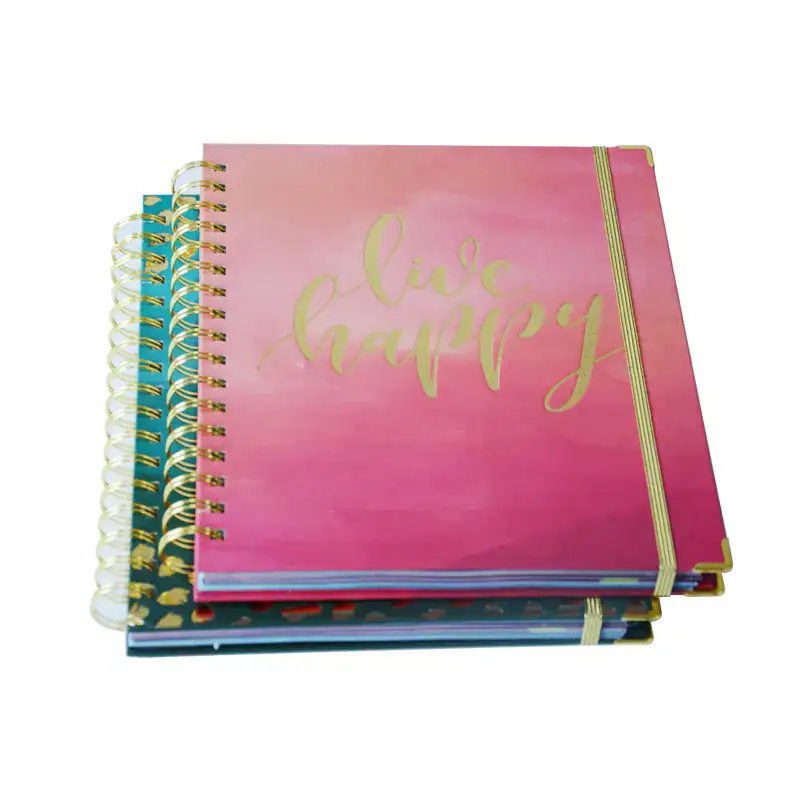
| Full Suite | $0.85 – $1.20 | $4.99 – $7.99 | Assembly complexity | High margin, 3k+ units |
One number stands out in that table: the full accessory suite improves gross margin by 25–40% at scale. That’s not a styling decision — it’s a financial one.
The failure risk column is equally important. Each of those risks is preventable, but only if your factory runs adhesion compatibility testing before the production run begins, not after.
The Adhesion Compatibility Trap
Here’s a failure mode we see repeatedly, and it almost always catches people off guard. You approve a beautiful sample — pen loop, inner pocket, elastic band all perfectly placed — and the bulk order ships. Then the accessories start peeling off within weeks. Sometimes during transit.
The root cause is almost never the adhesive itself. It’s a mismatch between the adhesive and your specific cover material.
Why Cover Material Changes Everything
Soft-touch laminate, textured vegan leather, and uncoated kraft stock each have fundamentally different surface energy levels. An adhesive that bonds at 18 N/25mm peel strength on coated stock may drop to under 9 N/25mm on a soft-touch surface — well below the threshold for long-term durability.
The variables that compound this problem include:
- Cover laminate type: soft-touch vs. gloss vs. matte finish
- Ambient humidity during assembly (high humidity degrades PSA bonds rapidly)
- Temperature range during shipping (adhesive creep above 45°C is a real risk)
- Accessory substrate: woven elastic behaves differently than a molded silicone loop
How We Prevent This Before Production Starts
Our pre-production DFM process includes mandatory adhesion compatibility testing on your exact cover stock. We run controlled peel tests and document the results in a pass/fail report — before your production order is confirmed.
This turns a hidden liability into a transparent, managed checkpoint. Your accessories should add perceived value to your product, not create a quality crisis after delivery.
Get a Custom Notebook Quote with Pre-Production Testing
Submit your notebook specs and receive a detailed quote that includes our mandatory adhesion compatibility testing. Ensure every accessory is a value-add, not a liability, from the first unit to the last.
Building a Vendor Brief for Accessory Success
Before you send a single spec to a factory, you need a vendor brief that speaks the manufacturer’s language. A vague request like “add a pen loop” is how you end up with a glued-on strip that peels off inside the shipping box. The brief is your quality contract.
Think of it as a two-part document. The first part defines the functional requirement. The second part defines the acceptance standard — the measurable threshold that separates a pass from a fail.
What Your Brief Must Specify
- Accessory type and attachment method: Glued, stitched, or heat-bonded? Each has a different cost and durability profile.
- Cover material compatibility: Specify your exact cover stock (e.g., soft-touch laminate, textured vegan leather). Adhesive performance varies dramatically across surfaces.
- Minimum bond strength: For glued pen loops and pockets, require a peel strength of ≥15 N/25mm on your specific cover material — tested before production is confirmed.
- Elastic recovery rate: For closure bands, specify >90% memory recovery after repeated use cycles to prevent permanent stretching.
- Temperature and humidity tolerance: Accessories must perform across a range of -10°C to 60°C, covering standard warehousing and retail environments.
The Pre-Production Checkpoint
At Mainland Printing, our DFM process requires adhesion compatibility testing on your chosen cover stock before any bulk run begins. We document peel strength results and issue a pass/fail report. This single step eliminates the most common and costly accessory failure mode.
A strong brief protects your budget and your brand. It gives the factory zero ambiguity — and gives you a clear basis for rejection if standards aren’t met.
Engineering into Marketing Claims
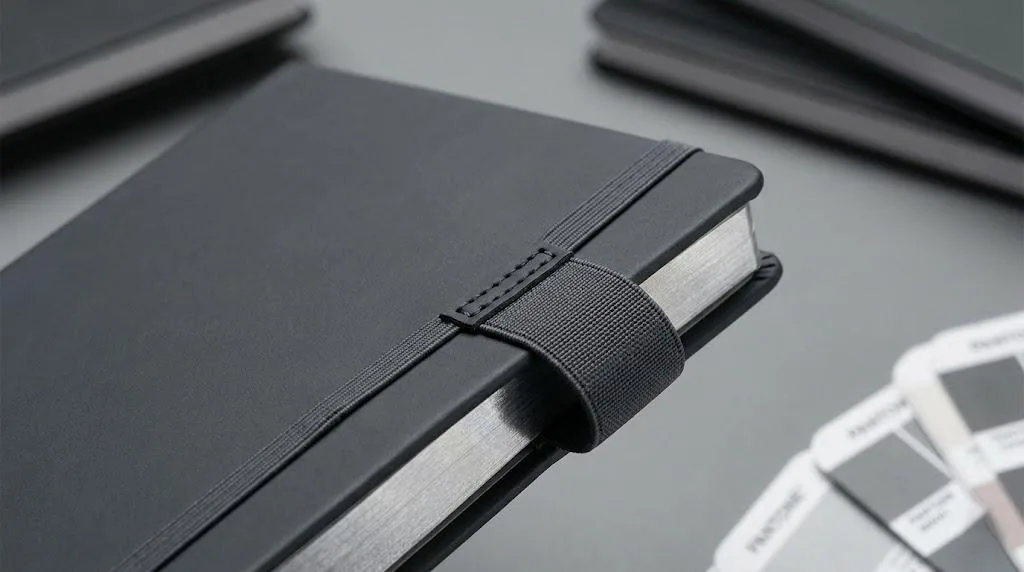
Here’s the disconnect that costs projects money: your factory gives you a spec sheet, and you’re left trying to turn “TPU adhesive bonding” into something your end-customer actually cares about. The translation step isn’t optional — it’s where perceived value is built or lost.
The good news is that the engineering data you already have maps directly onto the claims that move buyers. You just need the right conversion logic.
From Spec to Claim: A Direct Conversion Table
Every technical parameter has a corresponding customer-facing benefit. Here’s how the most common accessory specs translate:
- Peel strength ≥15 N/25mm → “Pen loop stays secure through daily use and travel”
- Elastic recovery >90% after 10,000 cycles → “Closure band holds its tension for years, not months”
- Temperature resistance -10°C to 60°C → “Accessories won’t fail in a hot car or cold warehouse”
- Oeko-Tex certified elastic → “Safe for skin contact — a credible claim for wellness or children’s brands”
The One Claim You Should Never Make Without Data
Avoid vague language like “premium quality” or “durable construction.” These phrases are invisible to buyers because every competitor uses them. Specificity is what creates trust.
When your product page says “bonded with industrial-grade TPU adhesive, tested to 18 N/25mm on coated cover stock,” that’s a claim a buyer can verify and repeat to their customers. That’s the chain of credibility that justifies a higher price point — and it starts with the data your factory already holds.
Conclusion: Accessories Are a Financial Decision
Notebook accessories are not a design afterthought. They are a calculated investment in your product’s perceived value and your brand’s gross margin.
The ROI calculation is clear: a well-engineered accessory suite can deliver a 25-40% margin improvement at scale. But that return depends entirely on pre-production testing to prevent adhesive failure.
Your next step is to apply this framework. Get Your Custom Quote with mandatory adhesion testing included, and turn every accessory into a guaranteed profit driver.