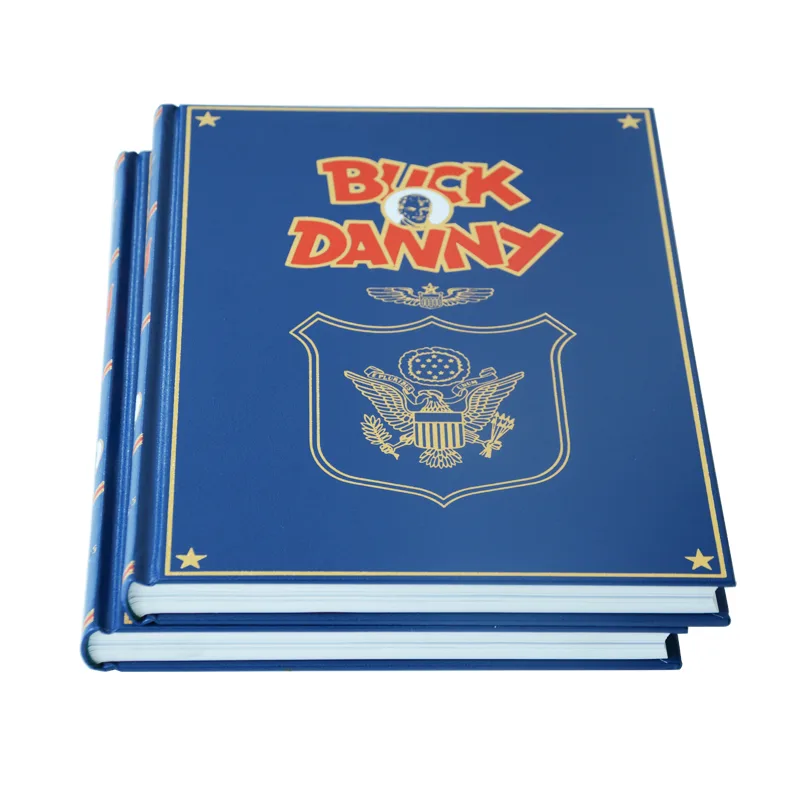
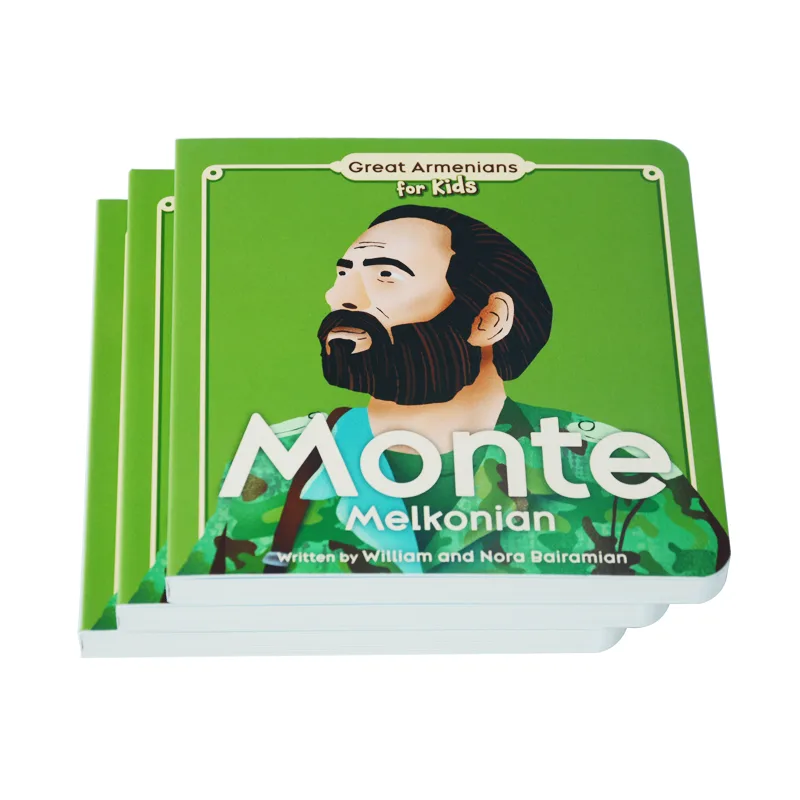
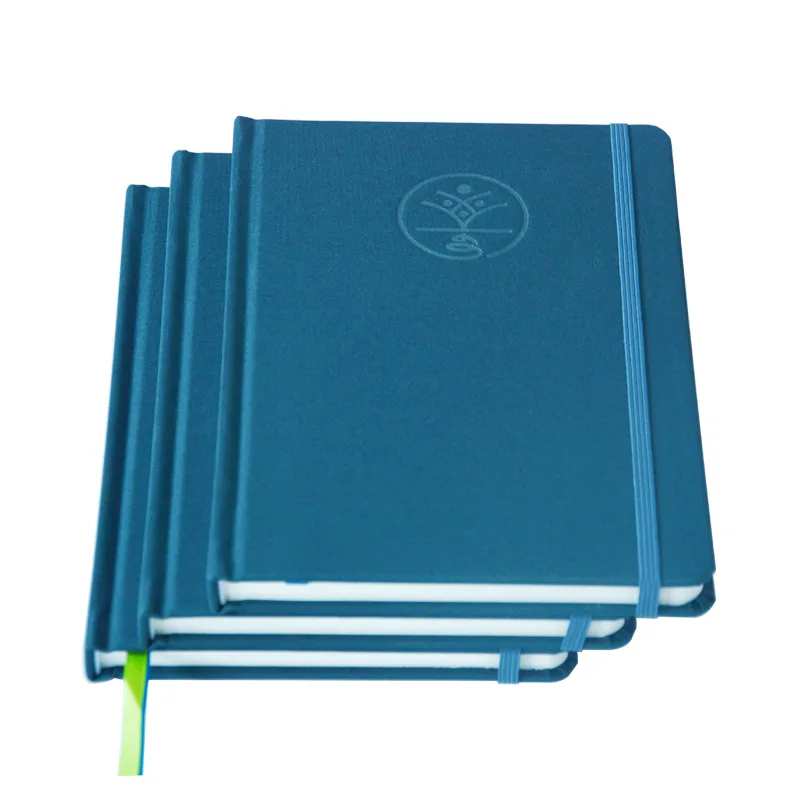
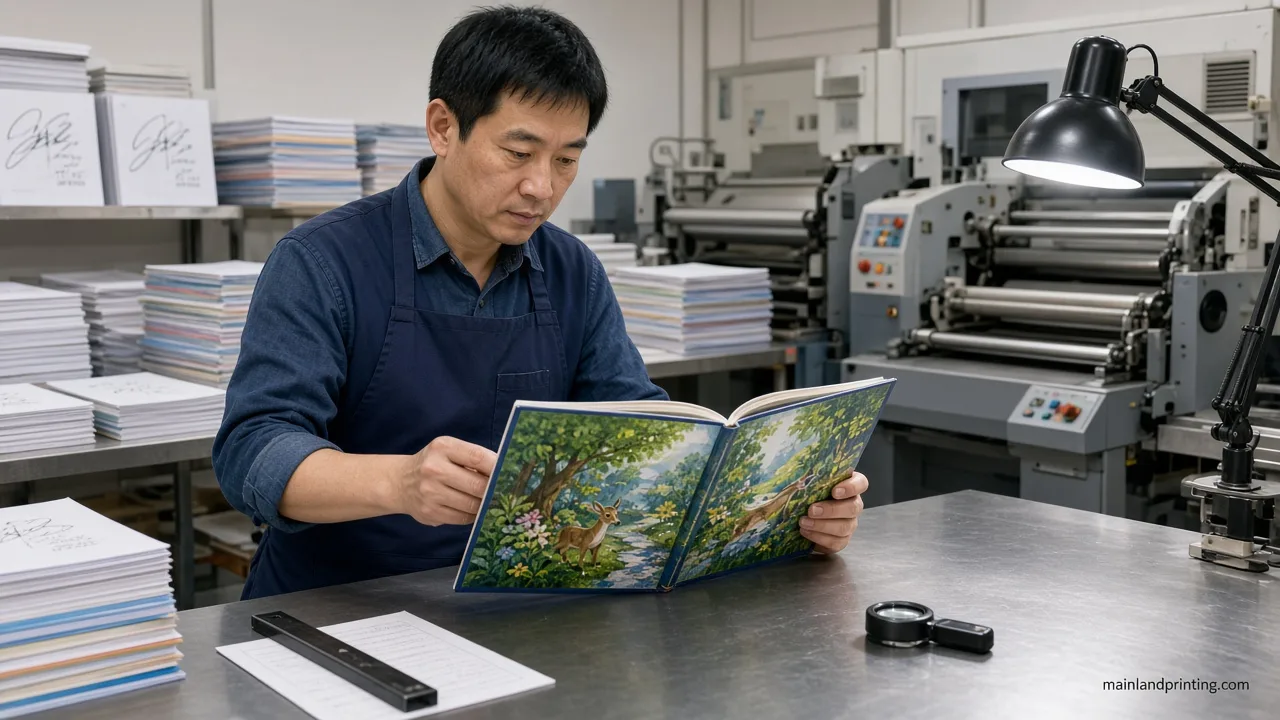
Choosing the wrong cover material for a premium print run can cause massive warping and delamination on the factory floor. We tested cloth, buckram, and PU leather at a 180°C thermal threshold to reveal exactly how they survive high-end debossing. Here is the data-driven breakdown you need to protect your next production batch.
At 180°C, Thermo PU undergoes chemical darkening ideal for deep burnishing. Library Buckram’s acrylic coating blisters at 165°C, destroying its waterproof matrix. Natural Cloth resists heat up to 250°C but suffers a 60% depth rebound, making it physically incapable of holding sharp debossing.
But surviving the heat is only half the battle. If your manufacturer uses standard EVA glue instead of PUR adhesive, that 180°C strike will trigger catastrophic moisture shock and trans-Pacific warping. Keep reading to discover the exact prepress tolerances you must demand from your supplier.
The 180°C Lab Test: Microscopic Deformations Revealed
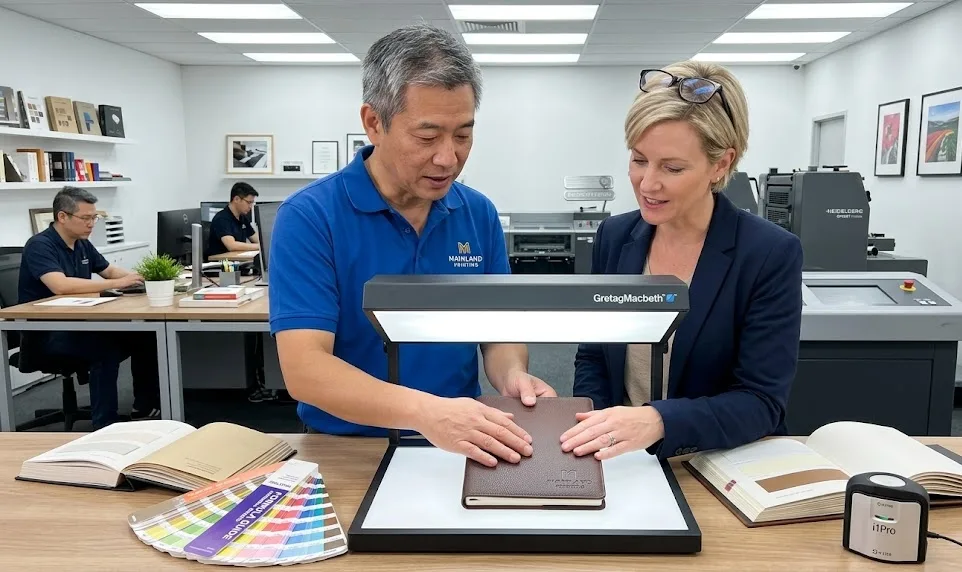
When a heated brass die strikes a substrate at 180°C, the resulting physical deformation is thermodynamic, not merely visual. cover material selection guide requires analyzing their microscopic breaking points under this exact thermal load.
Standard synthetic leather merely melts under heavy thermal processing, but premium thermo PU is engineered with heat-reactive resins. When subjected to 180°C with a strictly calibrated dwell time of 0.8 to 1.2 seconds, the substrate undergoes a controlled chemical darkening without breaching the surface polyurethane layer. This precise thermal reaction yields a stark color shift—measuring $\Delta E^*_{ab} > 15$ on a spectrophotometer—delivering the deep, sharp vintage contrast mandatory for luxury journals.
Buckram is universally specified for commercial durability. As established by Professor Emeritus Werner Rebsamen of the Rochester Institute of Technology in his extensive binding evaluations, heavy-duty buckram—specifically those sealed with an acrylic coating—provides unparalleled resistance to abrasion and frequent handling.
However, this protective barrier has a critical thermal limitation: its melting point sits rigidly between 150°C and 165°C. Forcing a 180°C burnishing test on buckram causes microscopic blistering. The excessive heat boils the acrylic coating, destroying its waterproof matrix and permanently compromising the structural integrity of the cover.
Uncoated natural cotton or linen bookcloth lacks a thermoplastic binder. Consequently, hitting natural cloth with a 180°C die produces absolutely no color shifting. More detrimentally, it fails to retain structural memory.
Due to the inherent elasticity of uncoated woven fibers, 40% to 60% of the initial debossing depth will rebound within 24 hours. A deeply stamped logo on the production line will inevitably flatten into a soft, shallow indent by the time it reaches the book cover finishing guide station.
Visualizing the physical limitations of your substrate prevents costly prepress errors. The table below outlines the exact thermodynamic boundaries of each material based on global offset printing standards.
Thermal Performance and Mechanical Durability Matrix
| Material | Thermal Reaction Threshold | 180°C Deformation Risk | Taber Abrasion Limit |
|---|---|---|---|
| Thermo PU | 170°C – 190°C | Chemical darkening, sharp edge retention | 800 – 1,200 cycles |
| Library Buckram | 150°C – 165°C | Coating blisters, loss of waterproof matrix | >2,000 cycles |
| Natural Cloth | 200°C+ (Ignition point) | Zero color shift, 40%-60% depth rebound | <500 cycles |
Quick Guide: If your priority is deep burnishing contrast, choose Thermo PU; if you face high-wear library environments, invest in Library Buckram.
Thermal Transfer and Moisture Shock
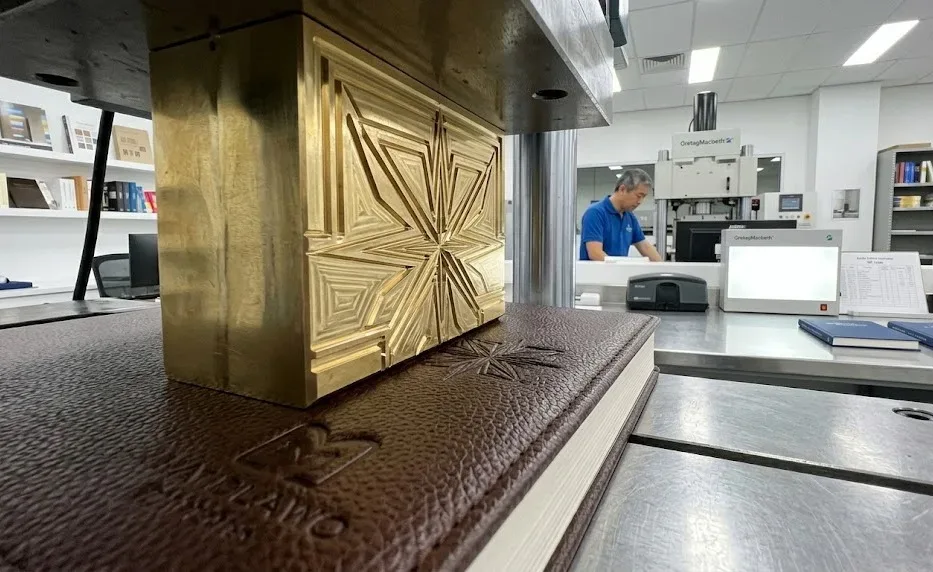
Focusing solely on the cover fabric while ignoring the underlying composite structure is a guaranteed path to a mass production disaster. When you push a heated die to 180°C, the thermal energy does not stop at the surface. It penetrates a standard 1mm cover material in under 1.5 seconds, striking the adhesive layer and the gray board substrate directly.
If your production line relies on standard EVA hot-melt glue—which possesses a softening point of merely 80°C to 100°C—that 180°C thermal shock will instantly reactivate and melt the adhesive. The immediate result on the factory floor is severe blistering and delamination.
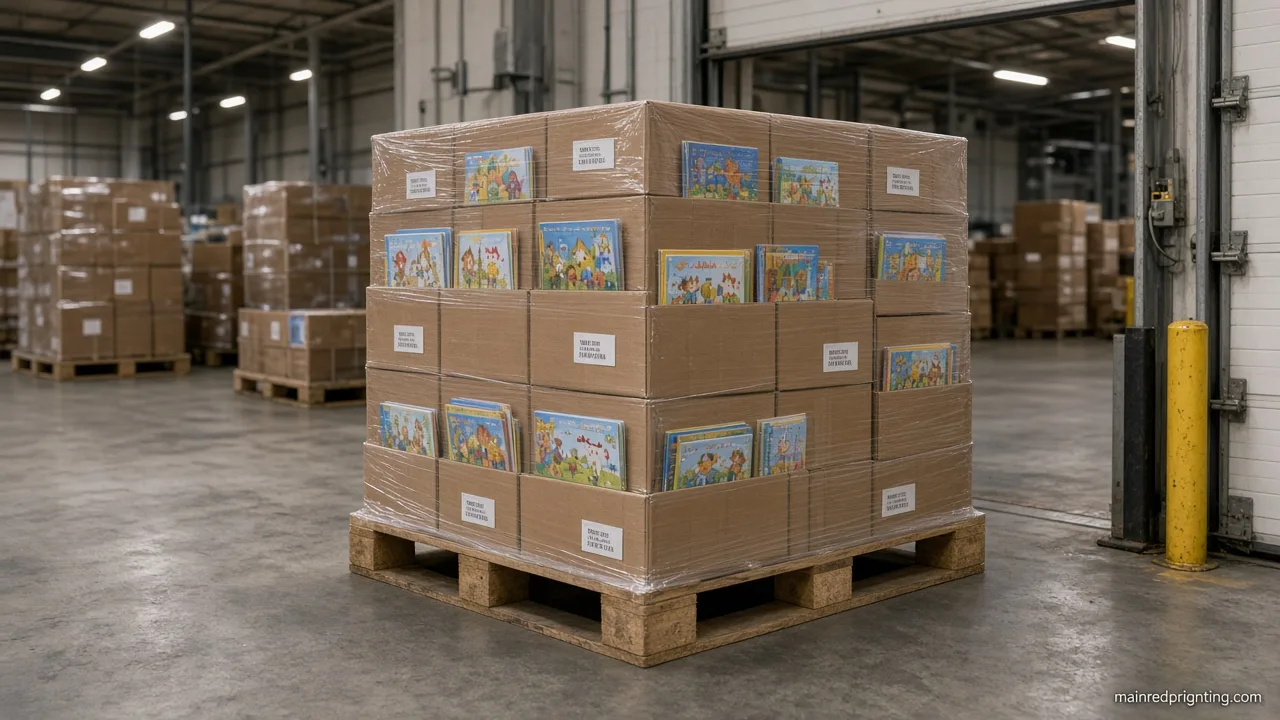
However, the hidden trap is far more destructive: moisture shock. The intense heat violently vaporizes the moisture content within a standard 1500 GSM gray board, dropping it below 2%. While the journals might look perfectly flat when packed, the moment they endure a two-month trans-Pacific ocean freight in highly humid containers, the desiccated boards will rapidly absorb ambient moisture.
The resulting expansion triggers irreversible cover warping, completely ruining the batch and leaving you with massive liability.
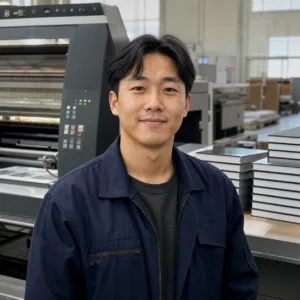
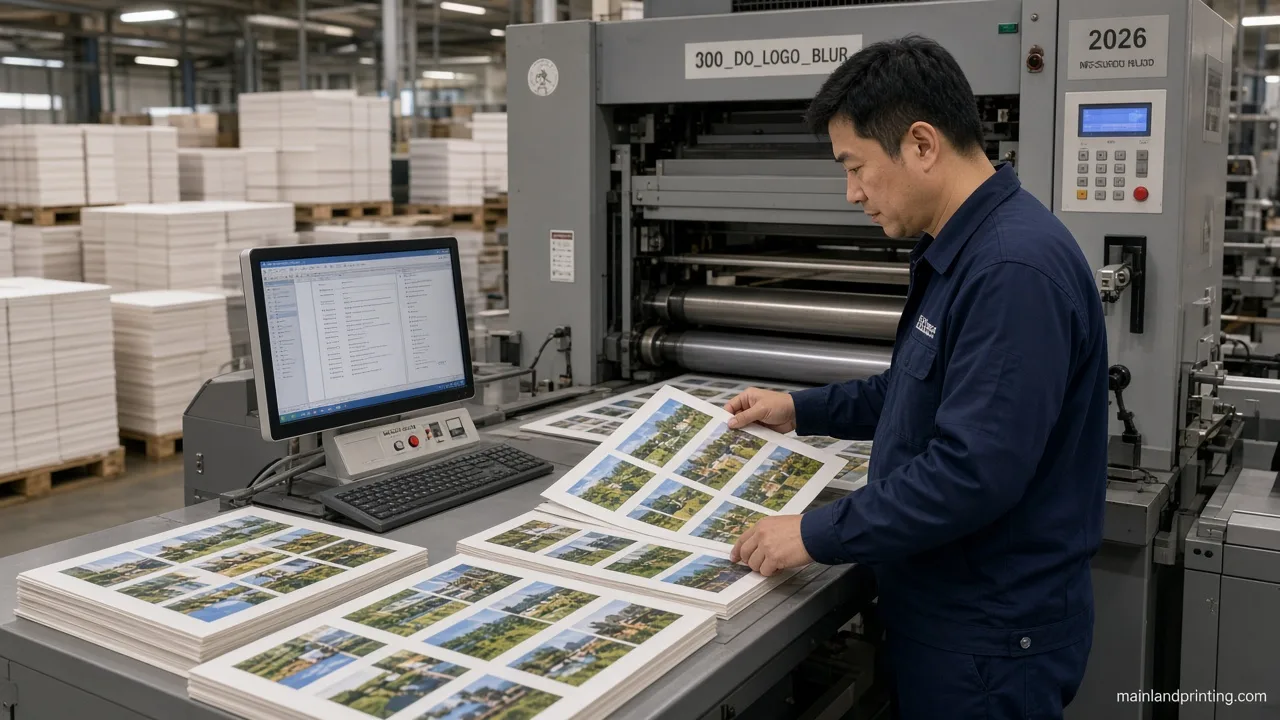
In a modernized Chinese printing facility equipped with advanced Heidelberg presses, mitigating this exact scenario requires over a decade of operational foresight and strict chemical isolation. When evaluating a complex thermo PU debossing project, a Senior Project Manager like Jack Wu and the Master Press Operator will immediately freeze the standard workflow during the proofing approval stage to execute critical prepress troubleshooting.
The baseline EVA glue is forcibly upgraded to Polyurethane Reactive (PUR Binding) adhesive. Because PUR relies on a moisture-curing cross-linking reaction, its thermal resistance easily exceeds 200°C once fully cured, effectively locking the fabric to the substrate and neutralizing the heat transfer risk.
Furthermore, strict environmental loops are enforced, utilizing forced cooling channels post-stamping to stabilize the gray board’s moisture content strictly between 8% and 12%, permanently eliminating the threat of ocean-freight warping.
To avoid structural degradation during global transit, authors and product managers should refer to our comprehensive guide on how to prevent book cover curling and glue failure under shifting environmental conditions.
Ready to Elevate Your Custom Journal Project?
Avoid mass production failure and thermal distortion. Get engineering-level advice on cover materials, PUR adhesives, and precision tool setup tailored to your exact design tolerances.
Pre-press Troubleshooting: 180°C Design Tolerances
To execute a flawless 180°C deboss, you must discard the assumption that digital vector files translate perfectly to thermal mechanics. When a designer submits a file featuring intricate 0.15mm hairline vintage starbursts for a PU cover, a mediocre supplier will simply apply standard machine pressure. This is a fatal engineering oversight.
Governed by the pressure equation $P = \frac{F}{A}$ (where $P$ is pressure, $F$ is machine force, and $A$ is the contact area), an exceptionally small contact area causes the localized pressure to spike exponentially under a constant machine force.
At 180°C, a standard embossing plate stops acting as a stamping tool and transforms into a thermal blade, slicing directly through the polyurethane layer and destroying the cover matrix. Designers can learn more about formatting complex graphics by reviewing our walkthrough on vector vs. bitmap for book printing to secure crisp, unblemished production results.
To prevent this exact prepress trap, rigorous design tolerances must be mandated. The absolute baseline for any positive or negative line weight under high-temperature processing is 0.2mm. Any vector falling below this threshold will suffer from severe lateral thermal expansion, resulting in a muddy, illegible burnish.
Furthermore, to control edge sharpness and distribute that intense pressure evenly, upgrading from a cheap zinc plate to a CNC-engraved brass die is non-negotiable. The superior thermal conductivity and sharp tolerances of brass are the only ways to guarantee that the 10,000th book looks identical to the approved proof.
For projects requiring complex debossing mixed with specialized surface accentuation, exploring advanced structural choices like book cover material for debossing can optimize production safety and yield superior high-volume consistency.
Cost-to-Lifecycle Decision Matrix
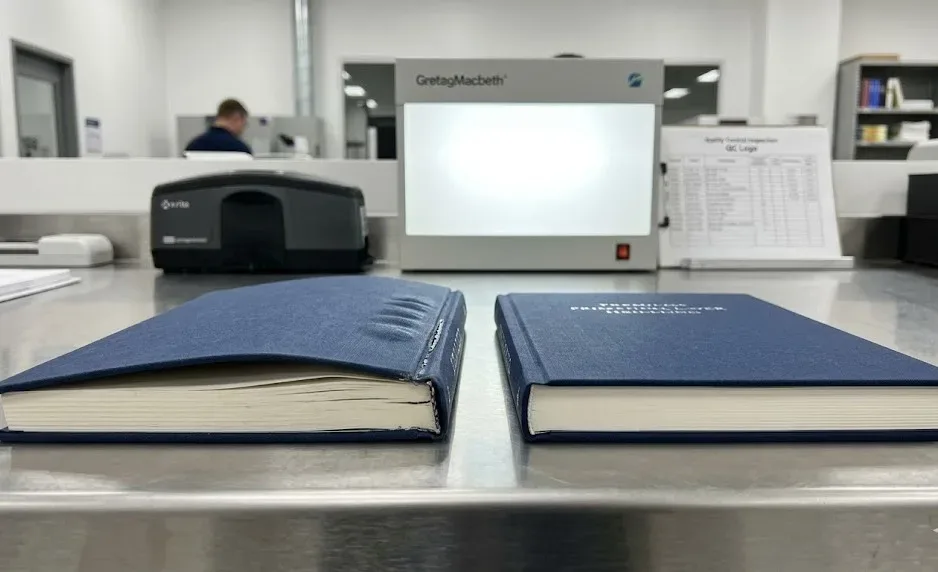
Matching the cover material to the exact product lifecycle dictates your ultimate ROI. When presenting the production budget to your stakeholders, avoid subjective aesthetic debates. Utilize this material compatibility matrix to justify your supply chain decisions against the intended end-user environment.
- Bespoke Stationery Design & Kickstarter Campaigns: Specify Thermo PU. The high-margin nature of crowdfunding demands an immediate, luxurious unboxing experience. The extreme $\Delta E$ color shift achieved from a highly controlled 180°C thermal deboss delivers that high-impact visual. Even though its Taber abrasion limit hovers around 1,000 cycles, the initial tactile impact justifies a premium retail price for limited-edition runs.
- Commercial Journals & High-Frequency Educational Use: Mandate Library Buckram. You will explicitly sacrifice deep thermal burnishing capabilities, as the acrylic coating will fail at elevated temperatures. However, you gain unmatched structural integrity. Capable of withstanding over 2,000 Taber abrasion cycles, buckram ensures the cover matrix and spine flexibility remain entirely intact after a year of aggressive daily handling, oil exposure, and mechanical friction.
- Independent Fine Art & Photography Books: Select Natural Cloth. In this category, you are making a deliberate trade-off: sacrificing stain resistance for unparalleled tactile authenticity. The natural fibers lack a thermoplastic binder, meaning they require gentle handling, but they deliver the exact breathable, vintage aesthetic required for archival or artistic offset printing standards.
The Print Buyer’s Vetting Checklist
To guarantee your premium notebook production survives the transition from a digital design file to global physical inventory, you must change how you interrogate your manufacturing partners. Stop asking suppliers if they “have experience.”
Instead, audit their technical capabilities and factory floor operations using these three strict parameters:
- Adhesive Chemistry Escalation: “When executing a 180°C burnishing process, do you continue utilizing standard EVA, or do you enforce a strict transition to PUR adhesive to prevent thermal delamination?”
- Substrate Stabilization Protocols: “What is your facility’s exact baseline moisture content tolerance for binding board, and how do your prepress teams mitigate trans-Pacific moisture shock during container freight?”
- Tooling Precision and Tolerances: “For intricate hairline debossing and foil stamping, do you default to standard zinc plates, or do you mandate CNC-engraved brass dies with a $\pm 0.1mm$ machining tolerance?”
Delivering premium hardcover manufacturing is never about blindly cranking up the machine temperature. It requires the strict, calculated orchestration of thermodynamic limits, adhesive chemistry, and mechanical prepress accuracy.
Whether you ultimately specify cloth vs. buckram vs. PU leather for your next global print run, ensuring your manufacturer operates strictly within these exact engineering thresholds is the only reliable way to protect your brand’s reputation and your bottom line.
Cover material samples travel with the first proof round in our hardcover book printing services, so burnish tests happen before stamping.