Finding a manufacturer that understands the chemistry of ink absorption is the difference between a premium product and a logistical nightmare. This guide provides the technical benchmarks and industrial insights you need to eliminate bleed-through and protect your brand’s reputation through custom book printing services.
The best paper for alcohol marker coloring books is a specialized bleed-resistant, surface-treated substrate, typically ranging from 100gsm to 120gsm. Unlike standard porous offset paper, this engineered paper features a non-absorbent coating that increases the solvent contact angle, causing alcohol-based inks to solidify on the surface rather than penetrating the fibers.
Professional results require pairing this paper with softcover book printing techniques and high-performance adhesives to ensure structural integrity on smooth, coated surfaces.
While selecting the right substrate is the critical first step, mass-producing these books involves complex industrial variables that most creators overlook. Continue reading to discover how press operator calibrations and specialized binding techniques can turn your artistic vision into a high-margin retail success.
Why “Thick” Paper is Failing Your Brand
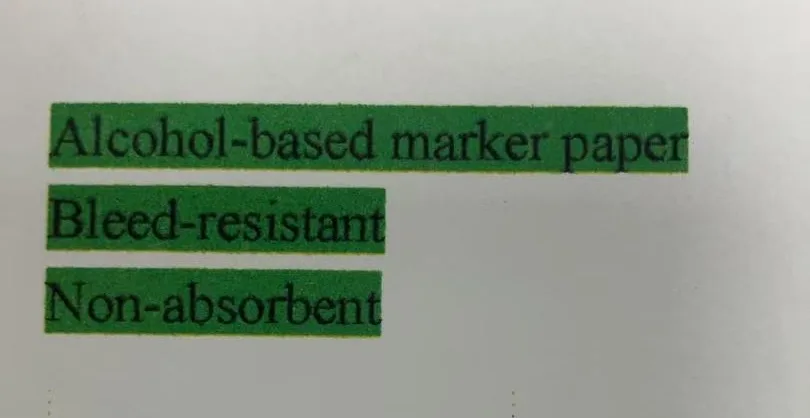
The most common mistake in book manufacturing is the “Grammage Trap,” where many publishers assume that increasing paper weight—moving from 120g to 180g—is a linear solution to ink penetration. In the industrial printing sector, we know this is a fallacy.
Bleed-through is governed by the Washburn Equation (Washburn’s equation), which proves that liquid penetration is determined by the pore radius of the paper fibers and the surface tension of the solvent, not just the thickness of the substrate.
If you use standard offset paper, you are providing a highway for alcohol markers, allowing the solvent to travel through the large pores via capillary action.
To truly solve this issue, you must shift your focus from adding raw thickness to implementing precision surface engineering.
Standard vs. Engineered Substrates
| Feature | Standard Offset Paper (140g+) | Bleed-Resistant Tech Paper (100g-120g) |
|---|---|---|
| Pore Structure | High Porosity (Open Fiber) | Low Porosity (Closed/Coated Fiber) |
| Ink Holdout | Poor (Ink sinks and spreads) | Excellent (Ink stays on surface) |
| Bleed-Through | High (Visible on reverse) | Near Zero (Marker-proof) |
| Shipping Cost | High (Heavy & Bulky) | 30% Lower (Optimized Weight) |
| User Experience | Rough, absorbent feel | Smooth surface, ideal for blending |
Quick Guide: If your priority is long-term brand reputation, choose Bleed-Resistant Tech Paper; if you face extreme budget constraints and print single-sided, standard offset may suffice.
The Physics of Marker-Proofing
To achieve professional results, you must understand the “Three Pillars of Ink Stability” when vetting a printing partner in China. These are the technical metrics you must demand:
- Surface Energy Control: The paper surface must have a specific chemical treatment that creates a high contact angle for alcohol solvents. This ensures the ink “beads” and dries on the surface rather than being sucked into the core.
- Edge Sharpness: On high-quality tech paper, the line remains crisp, whereas on standard paper, the alcohol spreads horizontally (feathering) and ruins the intricate details of your illustrator’s work.
- Opacity vs. Weight: High-quality manufacturing allows for high opacity at lower weights, which is critical for custom children’s book printing where you want zero “ghosting” from the previous page.
The Master Press Operations
As a factory owner with 18 years of experience, I can tell you that the paper is only half the battle. The hidden trap for publishers is the printing process itself, as bleed-resistant paper is non-absorbent by design.
This makes it a nightmare for traditional offset printing methods because the ink won’t dry efficiently.
“In offset printing, the complex interaction between the ink film and the paper’s topographic and chemical surface properties is the absolute determining factor for print quality. Controlling this interaction, especially on non-absorbent or heavily coated substrates, requires precise management of the printing press parameters.” — Prof. Dr.-Ing. Helmut Kipphan, Author of the Handbook of Print Media.
I once managed a project for a UK publisher who insisted on using a high-gloss, non-absorbent substrate. The sample looked beautiful, but the mass production was a disaster because the ink “set-off” (smeared) onto the back of the next sheet in the delivery pile.
How we fixed it: We utilized our Heidelberg Speedmaster with a specialized IR (Infrared) drying system and switched to quick-set vegetable-based inks, adjusting the Total Ink Coverage (TIC) to 260% in the prepress files.
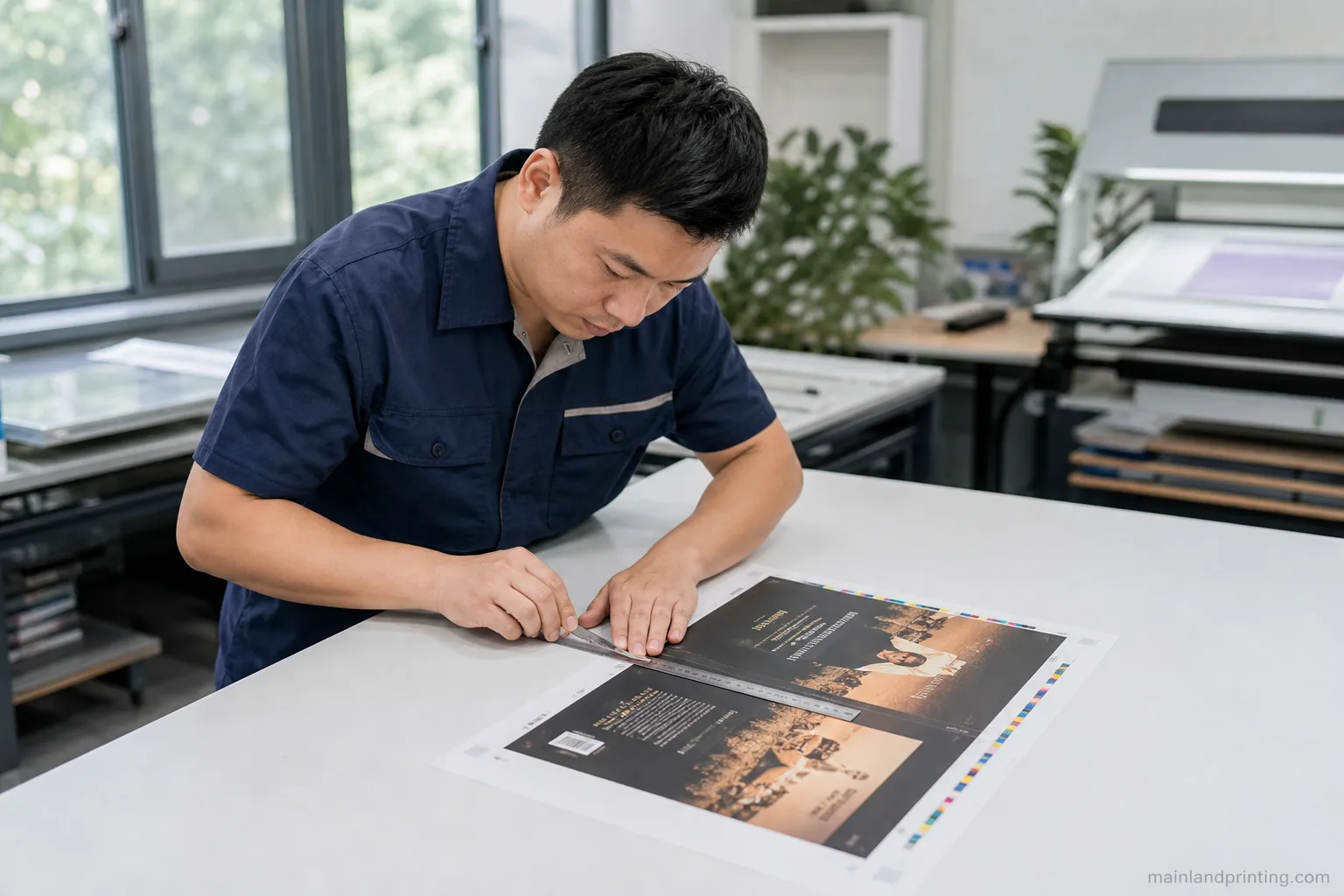
Most factories won’t tell you this—they’ll just print your file and let it smear. Professionalism means catching the error before the plates are made.
CASE STUDY: Scaling Up a Bestseller While Cutting Costs by 40%
Discover how we helped a creator transition from Amazon KDP to professional offset printing, solving the bleed-through problem while significantly reducing unit costs and shipping weight.
The Master PUR Binding
If you solve the bleed-through problem with smooth, tech-heavy paper, you inadvertently create a new problem: Binding Failure.
Traditional EVA glue cannot “bite” into smooth, non-absorbent paper, meaning when a user lays the book flat to color, the pages will simply fall out.
To avoid this, you must insist on PUR (Polyurethane Reactive) binding. PUR glue undergoes a chemical reaction with moisture in the air to create a permanent bond that is 4x stronger than standard glue.
- Demand PUR Binding: PUR is the gold standard for coated and non-absorbent stocks, remaining flexible even in extreme temperatures to prevent book spine failure.
- The Pull-Test Standard: Your factory must provide a pull-test report. A professional grade is > 10 N/cm, as anything less is a massive risk for a coloring book.
- Lay-Flat Engineering: Ensure the grain of the paper runs parallel to the spine. If the grain is “short” or “cross-grain,” the book will resist opening, causing the user to force it and break the spine.
Making the Math Work
Many procurement managers shy away from specialty “marker-proof” paper because the price per ton is higher. This is short-sighted, as high-quality manufacturing allows for strategic ROI that often offsets the initial paper cost.
The Economics of Quality:
- Double-Sided Capability: If your paper doesn’t bleed, you can print on both sides, which reduces your total page count by 50%.
- Weight Reduction: Moving from a 160g offset to a 100g tech paper reduces the total book weight. For a 2,000-copy order, this can save $2,000–$4,500 in international air or sea freight.
- Brand Equity: One Kickstarter “viral” complaint about bleed-through can cost you $10,000 in lost future sales. Marker-proof paper is an insurance policy for your reputation.
A Factory Owner’s Final Advice
In my 18 years of technical expertise, I have seen publishers lose everything because they chased the lowest price per unit without understanding substrate compatibility. My bottom-line advice for you is to stop asking for “thick paper” and instead send a set of professional alcohol markers (like Copic or Ohuhu) to your factory in China.
Demand a physical proof on their recommended bleed-resistant stock. If they can’t explain the difference between a surface-treated sheet and a standard offset sheet, they aren’t the right partner for your project.
At Mainland Printing, we don’t just “print books”—we engineer physical experiences. From symmetrical tension engineering in our binding to Delta E < 2.0 color accuracy on Heidelberg presses, we ensure that your creative vision survives the manufacturing process.
Ready to eliminate the bleed-through crisis in your next project? Contact our technical team for a custom substrate analysis and discover how we can optimize your production for the 2026 market.