Is Standard Paper Cannibalizing Your High-Volume Book Printing Margins?

Are you unknowingly sacrificing up to 20 percent of your total project budget to international freight fees simply to maintain a premium spine thickness? The following analysis provides the engineering truth behind paper caliper mechanics required to de-risk your raw material investment before the offset presses ever start running.

High bulk paper is a specialized substrate engineered to decouple physical thickness from shipping weight by introducing air into the wood fibers. This allows publishers to maintain premium spine width while reducing pallet mass by 30 percent, drastically lowering total landed logistics costs.

In this technical briefing, we provide a definitive comparison table to help your procurement team evaluate paper substrates accurately. We outline the hard ROI benchmarks of transitioning to high bulk stocks for international fulfillment. Finally, we explain the factory-floor realities of managing ink opacity and Total Area Coverage to prevent expensive production failure.

Why Standard Paper Destroys Your Shipping Budget

Macro Comparison Of Standard Offset Paper Stack Versus A High Bulk Paper Stack Of The Same Weight Showing Thickness Difference.

In my many years on the printing factory floor, I have watched countless independent publishers and Kickstarter creators fall into the exact same financial trap. They want their new release to feel substantial in the hands of their readers, so they specify a heavy, premium paper stock for the interior pages.

The physical book looks fantastic, but then the final freight invoice arrives, and their profit margins instantly evaporate.

This is the book printing weight paradox. You desperately need physical thickness to command a premium retail price, but traditional heavy paper triggers punishing logistics fees across every stage of fulfillment. Solving this problem requires a fundamental shift in how you specify your raw materials before the printing presses ever start running.

The Hidden Logistics Cost of Heavy Books

When you print books in bulk, you are essentially paying to move incredibly heavy pallets of dense wood pulp across the ocean. Standard offset paper is tightly compressed during manufacturing, meaning even a relatively thin book carries a massive amount of dead weight.

This density directly impacts your bottom line long before the books even reach your domestic warehouse.

Industry data highlights exactly how severe this logistics problem has become for modern retailers. For example, Amazon’s SEC filings show that their shipping costs have consistently grown as a percentage of sales every single year since 2009.

If the world’s largest, most optimized logistics network struggles with the physical weight of consumer goods, your independent publishing project will absolutely feel the margin compression.

To protect your budget, you must understand how freight forwarders calculate your bill. They charge based on actual weight or volumetric weight (calculated as Length × Width × Height / 5000), whichever is higher.

Because standard books are so dense, they almost always hit the maximum dead weight limit of a shipping container long before the physical space inside that container is actually full. You are paying for heavy air.

Why Spine Thickness Dictates Retail Value

You cannot simply solve this weight problem by dropping your page count or switching to a tissue-thin paper stock. In the retail book market, physical presence directly correlates with perceived value.

A buyer browsing a bookstore shelf makes immediate, subconscious judgments based entirely on the spine width of your publication.

If you print a 120-page novel on standard 80gsm offset paper, the final spine will be less than a centimeter thick. It feels like a flimsy pamphlet in the hands of your reader, and there is barely enough room to print the title legibly on the spine.

You simply cannot charge a premium retail price for a product that lacks physical substance.

This creates a frustrating standoff for creators. You need the book to feel thick, rigid, and professional, but you cannot afford the international freight costs associated with 120gsm standard paper. The solution lies in advanced paper engineering, not in compromising your design.

Ready to Reduce Your Landed Costs Without Losing Spine Thickness?

Optimizing your book’s weight is the fastest way to protect your profit margins. Our technical team can help you select the perfect high-bulk substrate and manage the ink profiles to ensure a premium finish with 30% less shipping weight.

Start Your Free Quote

The Engineering Behind High Bulk Paper

High bulk paper is a specialized substrate designed specifically to solve this weight-to-thickness ratio. During the mechanical pulping process, the paper mill intentionally introduces more air into the wood fibers and avoids over-calendering (the process of ironing the paper flat).

This creates a sheet that is physically thicker but significantly lighter than standard offset stocks.

In my factory, we frequently transition clients to high bulk options when their initial shipping quotes come back too high. The results are immediate and highly measurable.

You maintain the exact same physical dimensions for your book cover, but the pallets weigh drastically less when we load them onto the shipping container.

Decoupling Physical Thickness From Shipping Weight

The most critical mechanical property of high bulk paper is its rigidity. Normally, when you reduce the grammage (weight) of standard paper to save money, the sheet loses its structural integrity.

It becomes limp, transparent, and cheap-feeling. High bulk manufacturing prevents this degradation entirely.

“Since the high bulk paper has a large volume, it maintains its stiffness even at lower grammages.” — Holmen Board & Paper

This inherent stiffness is what allows us to decouple the physical thickness of your book from its shipping weight. You get the rigid, premium page-turn feel of a heavy art paper, but the actual mass of the book drops by up to 30 percent.

Your readers notice the premium thickness, but your freight forwarder only bills you for the reduced weight.

The Exact Math of Paper Caliper

To truly understand this logistical advantage, we need to look at the exact mathematics of paper caliper. Caliper measures the actual physical thickness of a single sheet, usually expressed in microns (µm).

Bulk is the ratio of that thickness to the paper’s weight (gsm).

Consider this real-world factory floor comparison:

  • Standard Paper Density: A standard 60gsm sheet typically has a bulk of 1.5, resulting in a caliper thickness of 90 µm.
  • High Bulk Engineering: A specialized 60gsm sheet with a bulk of 2.0 increases the caliper thickness to 120 µm.
  • The Final Result: The paper weighs exactly the same on the scale, but the physical sheet is 33% thicker because it contains more trapped air between the fibers.

If you want your book to have a 120 µm page thickness, you no longer need to buy an 80gsm standard paper. You can achieve the exact same spine width using a 60gsm high bulk stock, instantly slashing your raw material weight without changing the physical dimensions of your product.

Calculating Your True Total Landed Cost

Paper Specification Spine Thickness (300 pages) Weight per Book Freight Cost (5,000 units)
100gsm Standard Offset 18.5 mm 450 grams $1,850 (Baseline)
80gsm High Bulk (2.0) 19.2 mm 360 grams $1,480 (20% Savings)

When you evaluate a printing quote, looking solely at the unit manufacturing cost is a dangerous mistake. You must calculate your total landed cost, which includes the raw materials, the printing process, and the complex logistics required to get the books to your final destination.

Bulk book printing inherently reduces your cost per unit because offset presses run continuously after the initial setup phase. Furthermore, printing companies purchase paper and binding materials in massive quantities, passing those volume discounts down to you.

However, those manufacturing savings can easily be wiped out if you ignore the logistics side of the equation.

Factoring International Freight and Final Mile

International ocean freight is only the first hurdle in your logistics chain. Once your books arrive at the destination port, they must be transported via truck to your fulfillment warehouse, and eventually shipped via final-mile carriers to your individual readers.

Every single gram you save on the factory floor compounds across this entire journey. If you save 90 grams per book using high bulk paper, a standard run of 5,000 books weighs 450 kilograms less.

That weight reduction lowers your ocean freight, reduces your domestic LTL (Less Than Truckload) trucking fees, and drops your final-mile postage rates into a significantly cheaper pricing tier.

Balancing Opacity Against Heavy Ink Coverage

While high bulk paper offers incredible logistical advantages, it does require careful technical management on the press. Because the paper contains more air and less dense wood fiber, its natural opacity can be slightly lower than standard heavily coated stocks.

If your book features heavy, dark CMYK ink coverage—such as full-page photographs, graphic novel panels, or solid black backgrounds—there is a risk of ink bleeding through to the other side of the page. This is known as ghosting, and it ruins the reading experience.

To prevent this, we must carefully manage the Total Area Coverage (TAC) of your ink profile. Here is how we adjust for high bulk substrates on the production floor:

  1. Profile Adjustment: We convert your design files using a specific ICC profile that limits the maximum ink density to 280% or lower, preventing the paper from becoming oversaturated.
  2. Undercolor Removal (UCR): We utilize specialized prepress software to replace heavy combinations of cyan, magenta, and yellow with a single black ink channel in the shadow areas, reducing the total volume of liquid ink applied to the sheet.
  3. Controlled Drying Time: We extend the curing time on the factory floor, allowing the ink to sit on top of the porous fibers rather than soaking deeply into the core of the sheet.

Flawless Execution Without Ghosting or Flimsy Spines

Transitioning to high bulk paper is not a decision you should make blindly based on a spreadsheet. It requires rigorous physical testing and a printing partner who intimately understands the mechanical limitations of the substrate.

In my facility, we refuse to push a high bulk project to the mass production floor until we have validated both the physical structure and the ink behavior. Quality control must happen before the aluminum printing plates are ever burned.

Engineering the Perfect Physical Dummy Book

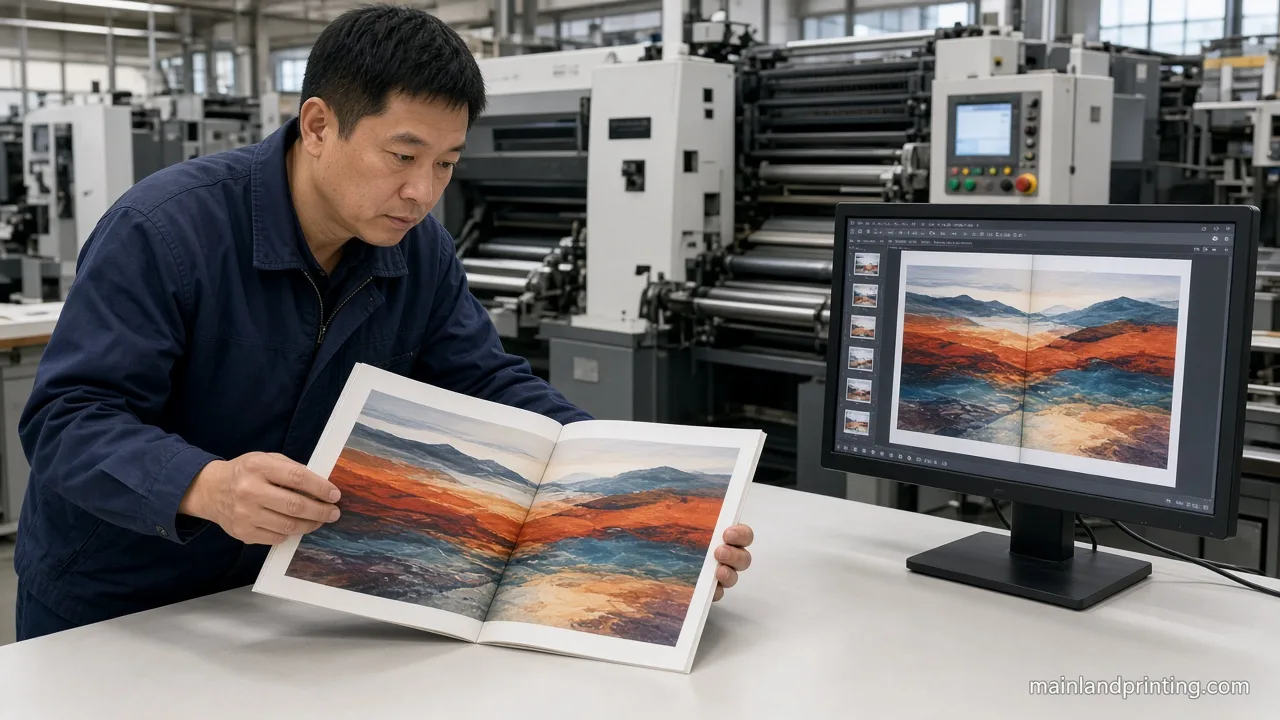
Professional Project Manager Showing A Blank Dummy Book Spine To A Client During A Technical Printing Consultation.

The very first step in our quality control process is creating a physical dummy book. This is a completely blank prototype bound using your exact specified high bulk paper, your exact page count, and your chosen cover material.

We ship this dummy directly to your office so you can hold it in your hands. You need to physically verify that the book feels substantial, that the spine width matches your cover design template perfectly, and that the pages have the correct stiffness when turned.

If the dummy feels too light or the spine is too thick for your intended binding method, we adjust the bulk ratio immediately. You should never guess how a specialized paper will behave in the real world, because a millimeter of difference in spine thickness will misalign your entire cover file.

Validating Opacity With Heidelberg Wet Proofs

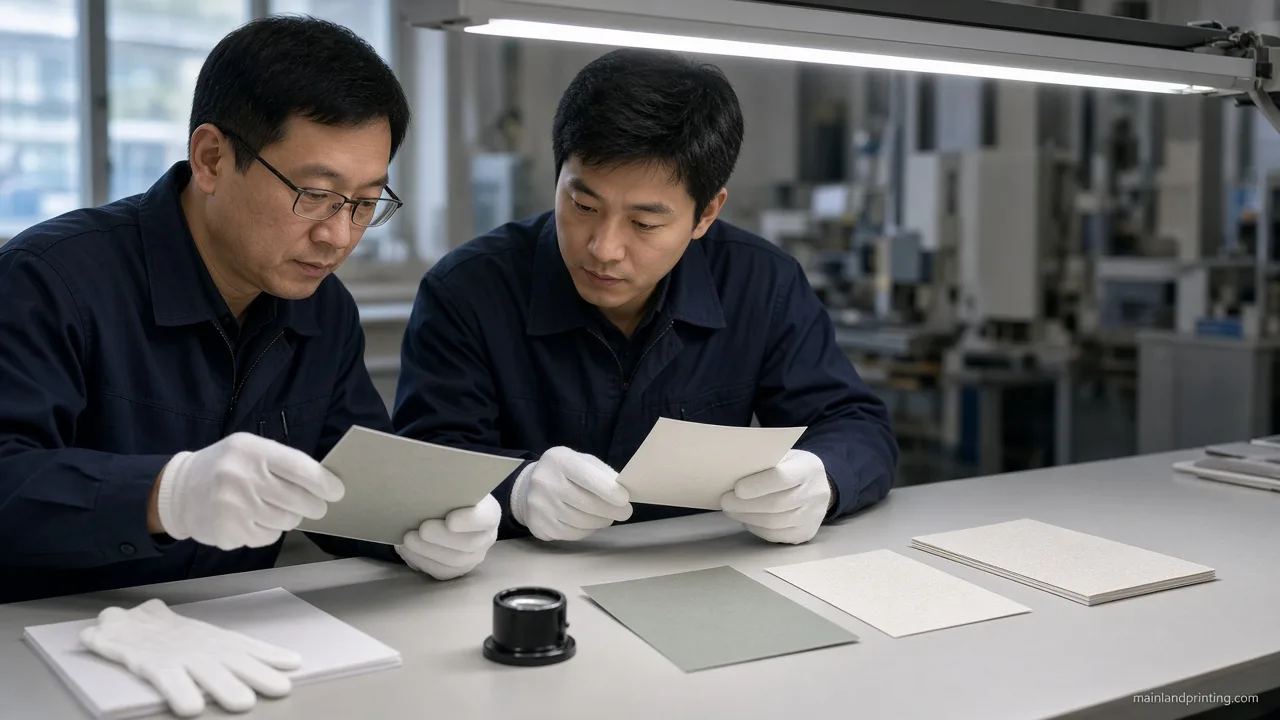
Chinese Printing Technician Inspecting A Wet Proof Sheet For Ink Opacity And Color Accuracy In An Offset Printing Factory.

Once the physical dimensions are approved, we must validate the ink opacity. Standard digital proofs are completely useless for this step.

A digital inkjet printer cannot replicate how liquid offset ink will interact with the porous, airy surface of high bulk paper.

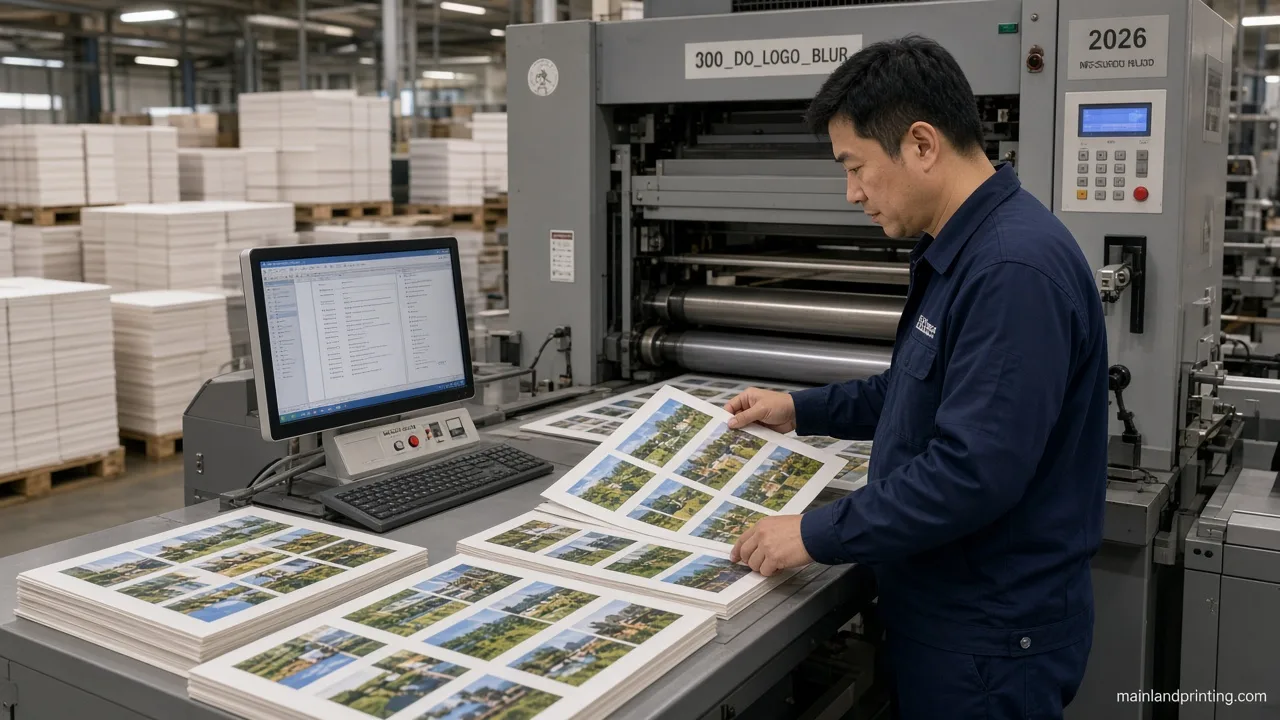
Instead, we require a traditional wet proof. We take a few highly saturated pages from your actual file, burn real aluminum printing plates, and run them through our Heidelberg offset press using the exact high bulk paper you selected.

This wet proof shows you exactly how the final book will look. We check for dot gain (tonal value increase), color accuracy, and most importantly, any signs of ghosting on the reverse side of the page.

If the opacity holds up under heavy ink loads, we lock in the specifications and move to full production with absolute confidence.

Conclusion: Solving the Paper Weight Paradox

High bulk paper is the ultimate engineering solution for independent publishers looking to maximize retail value while minimizing logistics fees. By decoupling physical thickness from actual mass, you can drastically reduce your international freight and final-mile postage without sacrificing the premium feel of your book.

Over the last 10 years on the factory floor, we have perfected the precise ink management and physical prototyping required to run these specialized substrates flawlessly. Our rigorous wet proofing and dummy creation processes ensure your pages remain opaque, crisp, and structurally sound from the first print to the last.

Stop letting standard heavy paper destroy your project margins before your books even leave the port. Reach out to our technical team today to request a custom quote and discover exactly how much you can save on your next print run.)

Picture of Javis Wu

Javis Wu

Head of Client Solutions

With over a decade of printing experience, I'm passionate about guiding publishers and creators through complex projects to achieve a flawless final product.

Share the Post:

Get Your Factory-Direct Quote

Response within 12 hours. Save up to 40% on bulk orders.

🔒 100% Privacy. No Hidden Costs.

滚动至顶部

Get Your Factory-Direct Quote

Response within 12 hours. Save up to 40% on bulk orders.

🔒 100% Privacy. No Hidden Costs. Free Sample Options.

Where should we send your High-Res Swatch Book?

Explore 24+ premium colors with essential 180°C burnishing and CA65 compliance data.

Get Your Exclusive Design Templates

Tell us your book size,page count,request paper,binding type,we will provide you an exclusive design template within 12 hours.

Ask For A Quick Quote

We will contact you within 12 hours, please pay attention to the email with the suffix “@mainlandprinting.com”