Are low-frequency ship vibrations and the abrasive sandpaper effect quietly stripping the foil stamping and woven fibers from your premium inventory during transit? This analysis provides the uncompromising engineering truth required to completely de-risk your maritime logistics and protect your manufacturing investment.
To prevent friction damage during ocean freight, cloth-wrapped books require a strict immobilization framework. This mandates 15-micron POF shrink film for chemical isolation, exact-fit K=K cartons with +2mm clearance to eliminate kinetic shifting, and rigid palletization.
In this technical guide, we provide a definitive Comparison Table to help your procurement team standardize their packaging specifications. We also outline the Hard ROI Benchmarks and specific Factory-Floor Realities necessary to prevent catastrophic production failures.
Preventing Friction Damage In Cloth Books
Shipping cloth-wrapped books across the ocean requires absolute precision in your packaging strategy. A standard 10,000-mile maritime journey introduces extreme physical stress to your delicate inventory. If you rely on generic maritime logistics protocols, you risk catastrophic damage to your entire print run before it ever reaches port.
Many independent creators reference our Ship Books from China: The Ultimate Guide (2026) when planning their initial logistics. However, premium cloth covers demand a highly specialized approach that goes far beyond basic freight forwarding. You must engineer a packaging environment that actively neutralizes kinetic energy and severe climate fluctuations.
The core challenge lies in the unique physical properties of woven cover materials. Unlike standard gloss or matte laminations, linen and cotton blends possess an inherently abrasive surface texture. We must address this specific material vulnerability at the factory floor level to ensure pristine final delivery.
Ocean Freight Risks For Cloth Covers
When you manufacture high-end publications, the transit phase represents the highest period of risk for your investment. Standard China book printing protocols often overlook the specific vulnerabilities of woven textiles during extended ocean freight. The combination of prolonged transit times and constant motion creates a hostile environment for unprotected books.
A fully loaded cargo vessel subjects its contents to continuous, multidirectional kinetic forces for 30 to 40 days. During this time, every single item inside the shipping container experiences relentless shifting and settling. For books bound in fine cloth, this environment acts as an accelerated wear-and-tear testing chamber.
The structural integrity of your cover design is immediately compromised if the books are allowed to interact with their surroundings. Foil stamping, debossing, and the woven fibers themselves are highly susceptible to degradation under these conditions. Understanding the exact mechanics of this degradation is the first step in preventing it.
The Sandpaper Effect Explained
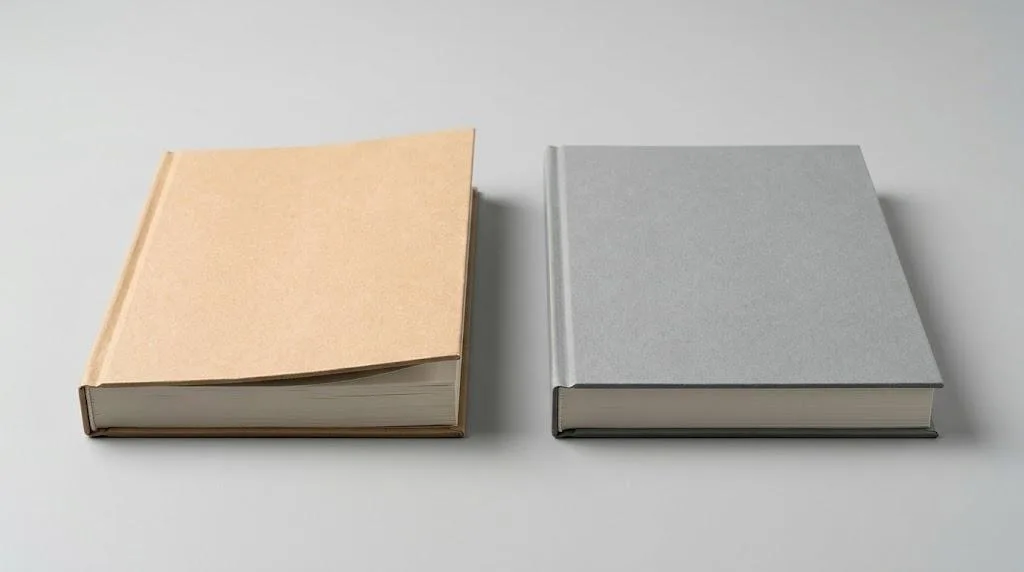
The most devastating phenomenon your inventory faces is known on the factory floor as the sandpaper effect. When cloth-bound books are packed loosely, the woven fibers of adjacent covers interlock and grind against one another. This continuous friction acts exactly like fine-grit sandpaper stripping away the surface finish.
This abrasive action rapidly destroys delicate cover embellishments and structural fibers. Foil stamping is rubbed completely off the cover, while the underlying cloth weave becomes frayed and permanently discolored. You can learn more about these material interactions in our Book Printing Basics resources.
Furthermore, this friction grinds raw corrugated cardboard dust deep into the porous weave of the cloth. Once this microscopic paper dust embeds itself into a dark linen cover, it is virtually impossible to clean off. The entire batch is rendered unsellable due to this preventable mechanical failure.
B2C Fulfillment Methods Fail
A common mistake is attempting to scale single-book e-commerce packaging strategies for bulk ocean freight. Generic logistics providers often recommend bubble wrap or padded mailers, which are entirely inadequate for heavy palletized loads. These B2C methods lack the structural rigidity required to survive the immense compression forces inside a cargo container.
When you stack thousands of books, the sheer weight crushes standard bubble wrap, eliminating any protective buffer. This failure allows the books to shift violently during transit, immediately triggering the sandpaper effect described earlier. True bulk protection requires industrial-grade immobilization, a standard we strictly enforce across all our Printers and Print Quality guidelines.
Additionally, consumer-grade packing materials trap ambient air, which contains unpredictable levels of moisture. When temperatures fluctuate at sea, this trapped air causes condensation directly against the book covers. You must abandon B2C packing concepts and adopt rigid, B2B engineering tolerances.
Material Science Of Book Transit
Protecting your project requires a deep understanding of the physical forces operating inside a steel shipping container. The container itself acts as a massive thermal and kinetic conductor, amplifying the harsh marine environment. We must look at the specific physics of maritime transport to engineer an effective defense.
The structural components of your book react dynamically to these external forces. Paper, binding glue, and cover textiles all possess different coefficients of expansion when exposed to heat and kinetic stress. You can explore the specific tolerances of these materials in our Binding & Paper documentation.
By treating the packaging process as an exercise in applied material science, we can predict and neutralize these threats. We do not rely on guesswork; we rely on calculated physical barriers and precise chemical isolation.
Low Frequency Ship Vibrations
The most insidious threat to your inventory is not a sudden drop, but the constant hum of the cargo vessel. Massive diesel engines generate continuous micro-vibrations that travel through the steel hull directly into the shipping containers. These vibrations resonate through the wooden pallets and into the individual book cartons.
“The primary cause of product scuffing during maritime transit is continuous low-frequency harmonic vibration generated by the vessel’s propulsion system.” — ASTM International performance testing
This harmonic resonance causes unprotected books to vibrate at a microscopic level for hundreds of hours. Over a 40-day voyage, these tiny movements accumulate into significant abrasive damage. We engineer our Printing Methods & Processes to specifically counter this continuous kinetic energy.
Why PVC Shrink Wrap Melts
Many independent creators request eco-friendly loose packing, or fall victim to cheap factories using outdated PVC plastics. Standard PVC shrink wrap is highly reactive to the extreme temperatures found inside summer shipping containers. When internal container temperatures reach 140°F (60°C), PVC undergoes a disastrous chemical breakdown.
Under these high temperatures, PVC plasticizers leach out, causing the film to become brittle or melt entirely. The melted plastic adheres directly to the cloth fibers and foil stamping, fusing the packaging to the book cover. We extensively document this risk in our guide: book shrink wrap guide.
Attempting to peel this degraded PVC off the book will tear the cloth weave and strip the foil completely. You must strictly prohibit the use of PVC in your manufacturing agreements to prevent this chemical fusion. Only specific, thermally stable polymers can survive these extreme transit conditions.
Immobilization And Isolation Framework
To guarantee your books arrive in pristine condition, we utilize a strict Immobilization and Isolation Framework. This protocol operates on a single, uncompromising decision rule: if a book can move even a fraction of a millimeter, it will suffer damage. We must physically lock the product in place while chemically isolating it from the environment.
| Protection Layer | Engineering Spec | Primary Function |
|---|---|---|
| Micro-Isolation | 15-Micron POF Film | Prevents cloth-on-cloth friction and blocks localized humidity. |
| Structural Immobilization | K=K Cartons (+2mm clearance) | Eliminates internal shifting and absorbs external compression. |
| Macro-Climate Control | 1.2kg Desiccant Poles | Absorbs ambient container moisture to prevent structural warping. |
Implementing this framework requires exact factory-floor engineering tolerances, not generic packing supplies. By controlling both the micro-environment around the book and the macro-environment of the carton, we eliminate all transit variables. You can review how this impacts your overall manufacturing investment in our Costs Pricing & Budgeting section.
Polyolefin Shrink Film Specifications
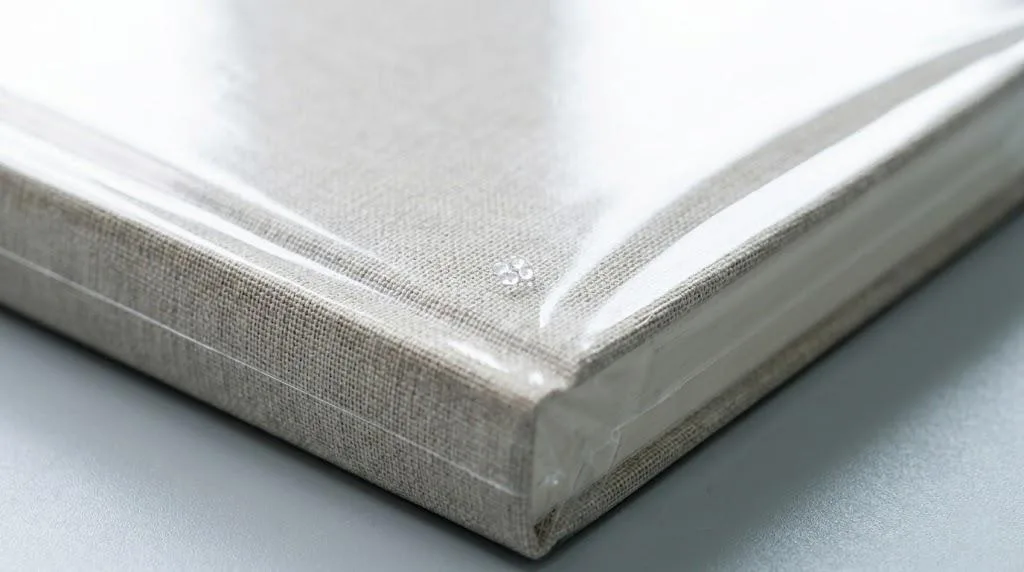
The foundation of our isolation strategy is the mandatory use of 15-micron POF (Polyolefin) shrink film. Unlike dangerous PVC, POF is a premium, chemically inert polymer that remains completely stable under extreme heat. It will never melt into your cloth covers, regardless of summer container temperatures.
This specific 15-micron thickness provides the perfect balance of puncture resistance and structural flexibility. It creates a skin-tight barrier that physically separates the abrasive cloth weaves of adjacent books.
Furthermore, POF film acts as a critical first line of defense against localized moisture. It seals the paper edges and the binding glue away from any condensation that might form inside the carton. This micro-climate control is essential for maintaining the book’s structural integrity.
Custom Corrugated Carton Tolerances
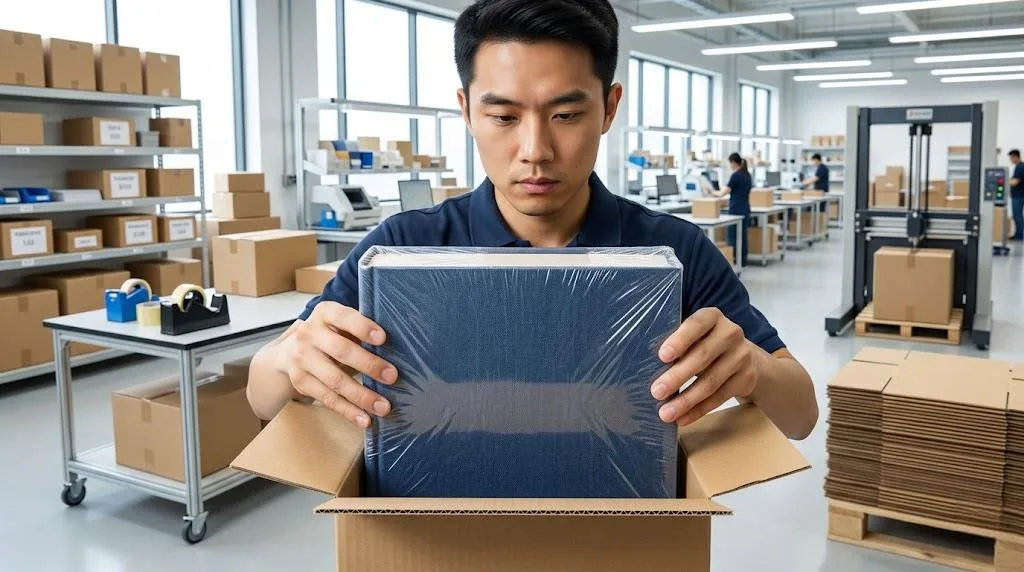
Once isolated, the books must be completely immobilized using custom-engineered K=K (5-ply double-wall) corrugated export cartons. We do not use off-the-shelf box sizes; every carton is die-cut specifically for your project’s exact dimensions. This bespoke approach is a core tenet of our Self Publishing quality control standards.
- Strict Clearance Limits: Cartons are engineered with a maximum internal clearance of exactly +2mm to +3mm larger than the grouped books.
- Zero Shifting: This microscopic tolerance ensures the books slide in smoothly but cannot move laterally once the box is sealed.
- Crush Resistance: The 5-ply double-wall construction absorbs external impacts and prevents the heavy books from bursting through the sidewalls.
If a book has even 5mm of empty space to move inside its carton, the low-frequency ship vibrations will destroy it. The exact-fit K=K carton acts as a rigid exoskeleton, transferring all kinetic energy into the cardboard rather than the books. This precise engineering is what separates professional manufacturing from amateur fulfillment.
Silica Gel Moisture Engineering
Ocean freight exposes your shipment to massive swings in humidity, creating a phenomenon known as container rain. To combat this, we engineer a two-tier moisture absorption system starting at the carton level. We place specific 50g silica gel desiccants inside every single exact-fit carton before sealing.
These internal desiccants aggressively absorb any trapped ambient humidity, preventing the cloth covers from warping or bleeding dye. We complement this by hanging massive 1.2kg desiccant poles throughout the steel shipping container itself. You can see how humidity impacts cover materials in our Book Design technical guides.
These industrial poles are capable of absorbing up to 200% of their own weight in airborne moisture. By aggressively drying the macro-environment of the container, we ensure the micro-environment inside your cartons remains perfectly stable. This dual-layer chemical isolation guarantees your pages remain crisp and your covers remain flat.
Export Palletization And Unitization Standards
The final stage of our protection protocol involves unitizing the individual cartons into an immovable, monolithic block. Proper palletization ensures that dockworkers, forklifts, and cranes handle the wooden base, never the fragile boxes themselves. This macro-level structural engineering is vital for surviving the chaotic environment of international ports.
A poorly wrapped pallet will shift during crane loading, causing the lower tiers of cartons to buckle and collapse. We utilize strict geometry and heavy-duty binding materials to lock the load into a single, rigid structure.
By enforcing these strict unitization standards, we eliminate the human error associated with manual carton handling. Your shipment moves as a fortified fortress, completely insulated from the physical hazards of the global supply chain.
ISPM Certified Wooden Pallets
International customs regulations require absolute compliance regarding the organic materials used in your shipping pallets. We exclusively utilize ISPM-15 certified wooden pallets that have been heat-treated to eradicate pests and mold. Failing to use certified wood will result in immediate customs rejection and costly quarantine delays.
These heavy-duty pallets provide a rigid, non-flexing foundation that prevents the bottom layer of cartons from sagging. A solid base is critical for maintaining the vertical alignment of the stacked boxes, ensuring optimal load distribution. We verify all certification stamps during our moisture equilibrium protocol and final logistics audits.
Furthermore, the treated wood resists absorbing ambient moisture from the container floor. This prevents dampness from wicking up into the bottom tier of your exact-fit cartons, protecting your most vulnerable inventory.
Maximum Height And Weight Limits
To prevent catastrophic crushing of the bottom inventory, we strictly cap all export pallets at a maximum height of 1.2 meters. Books are incredibly dense; stacking them any higher creates a vertical load that exceeds the compression strength of the lower cartons. This height restriction is a mandatory standard across all our Printing in China operations.
Once stacked, the entire 1.2-meter load is secured using rigid edge protectors and 4-way heavy-duty stretch wrap. The edge protectors prevent the industrial strapping bands from biting into the corrugated cardboard and damaging the books inside. The 4-way stretch wrap applies immense inward pressure, locking the cartons together so they cannot vibrate independently.
This final layer of heavy-duty wrapping effectively turns hundreds of individual boxes into one solid, immovable cube. When the forklift engages the ISPM-15 pallet, the entire unit moves smoothly, absorbing transit shocks as a single engineered entity.
Conclusion: Securing Your Cloth Book Investment
Protecting cloth-wrapped books during ocean transit requires uncompromising material science and strict factory-floor engineering. By implementing 15-micron POF isolation, exact-fit K=K carton tolerances, and rigid ISPM-15 palletization, you effectively neutralize the devastating friction and climate threats inherent to maritime shipping. This precise immobilization framework guarantees your premium inventory survives the 10,000-mile journey entirely unscathed.
Our dedicated quality control teams oversee every millimeter of this packaging protocol, ensuring your final product reflects the exact craftsmanship you envisioned. We do not leave your logistics to chance; we engineer your success from the printing press to the final port.
Reach out to our technical team today to request a custom quote and discuss the specific packaging engineering required for your next premium publication.