If you are planning a children’s book, the printing quote can feel confusing because the same story can be produced as a board book, a softcover picture book, or a hardcover book with very different cost behavior.
The short answer: children’s book printing cost is driven by format, page count, paper weight, binding, finishes, proofing, quantity, packing, and freight.Board books usually cost more per copy because thick board, lamination, rounded corners, and assembly add material and labor, while picture books depend more on paper choice, color accuracy, and binding method.
What matters is not the lowest unit price on a quote. What matters is whether the quote includes the specifications and risk controls your project actually needs.
This guide breaks the cost down from board books to picture books, then gives you a practical way to compare quotes before you approve a proof or pay a deposit.
Buyer takeaway: Treat children’s book cost as a specification decision, not a single price. Ask what changes if you adjust format, page count, paper, binding, finish, proofing, and delivery terms; that is where the real budget control sits.
Why Children’s Book Printing Cost Is Different
Children’s books are more visual, more tactile, and often more durability-sensitive than standard text books. Full-color pages, illustrated spreads, heavier paper, rounded corners, lamination, and child-safe use cases can all push cost beyond a generic book quote.
A cost article about general book printing cost can explain broad price factors, but children’s books need a separate view because the format changes the manufacturing path.
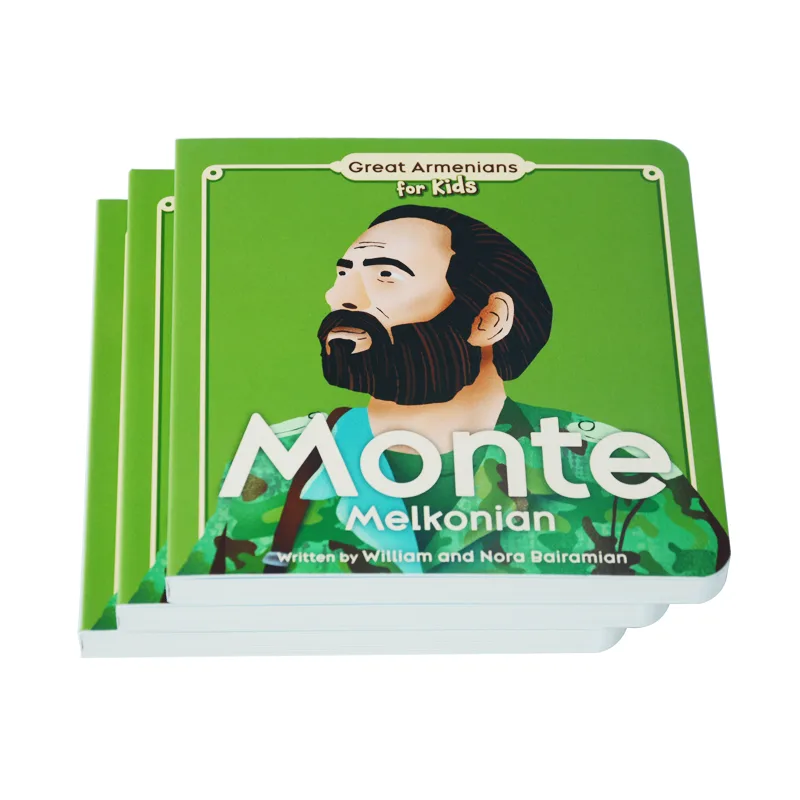
For example, file specs design checklist. It uses thick board pages, laminated surfaces, and a binding workflow that feels closer to product assembly than ordinary bookbinding.
A 32-page picture book may use fewer heavy materials, but it can require stricter color proofing, coated paper selection, and careful layout checks so illustrations cross the gutter correctly.
Board Book, Picture Book, and Hardcover Cost Drivers
The fastest way to understand cost is to compare formats side by side. Each format has a different cost center, so a quote that looks expensive may simply be reflecting a more demanding structure.
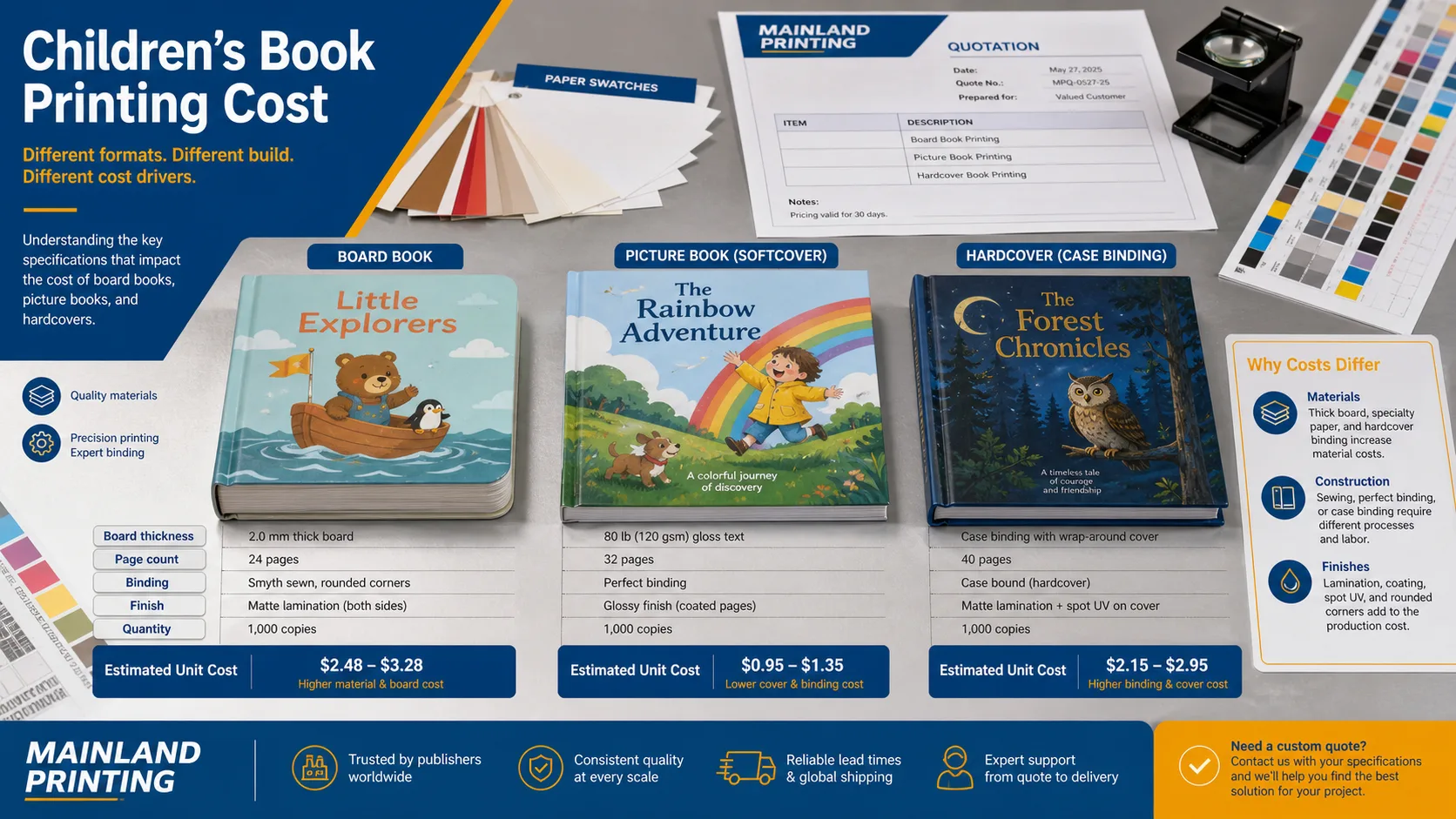
A board book is usually driven by board thickness, lamination, rounded corners, spread count, and hand-feel. Its cost is often less flexible because durability is part of the product promise.
A softcover picture book is usually driven by trim size, paper grade, color printing method, cover stock, and binding. It gives you more room to adjust paper and finish without changing the whole product identity.
Before you treat Softcover and Hardcover unit lines as interchangeable, lock the sales channel and shared-spec dual quote with hardcover softcover choice so cost comparisons stay fair.
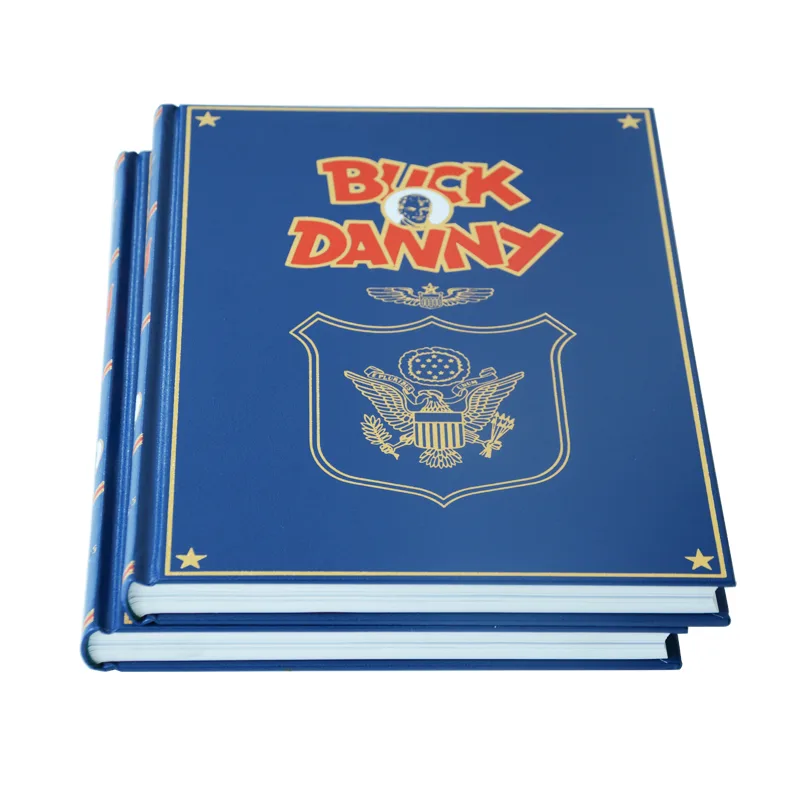
A hardcover children’s book is driven by case binding, cover wrapping, endpapers, spine structure, and finishing. It may feel premium, but it also adds setup and labor that should be visible in the quote.
| Format | Main Cost Driver | Best For | Quote Risk |
|---|---|---|---|
| Board book | Thick board, lamination, rounded corners, assembly | Toddlers, durable handling, gift products | Specs look simple but material and finishing are heavy |
| Softcover picture book | Paper grade, page count, color proofing, binding | Illustrated stories, classroom books, launch runs | Low quote may hide weak paper or proofing |
| Hardcover children’s book | Case binding, cover wrap, endpapers, finish | Premium editions, gifts, libraries, retail display | Binding and cover details may be under-specified |
How Quantity Changes the Real Unit Cost
Quantity changes unit cost because setup, plate making, machine preparation, and proofing are spread across more copies. That is why the same specifications can feel expensive at a small run and more reasonable at a larger run.
This does not mean you should always print more. A higher quantity lowers unit cost but increases cash tied in inventory, storage exposure, and the cost of fixing mistakes if the first edition needs changes.
For children’s books, the smart question is: what quantity lets you validate demand while still using the right production method? If you are comparing offset and short-run options, the guide to offset vs digital printing can help frame the trade-off.
If you already know the book will be reprinted, ask the printer to show first-run cost and repeat-run cost separately. Some one-time setup or proofing costs should not be treated the same as recurring production cost.
Paper, Color, and Binding Choices That Move the Quote
Paper choice affects more than price. It changes opacity, page feel, color saturation, spine thickness, shipping weight, and how premium the book feels in the buyer’s hands.
For a picture book, coated paper can make illustrations look brighter and sharper. For a storybook with more text, uncoated or matte paper may feel warmer and reduce glare.
Board books use thick board, so the page material itself becomes a major cost factor. Small changes in board thickness, lamination, and spread count can affect both manufacturing cost and freight weight.
Binding is the other big lever. Saddle stitch, perfect binding, sewn hardcover, case binding, and board book assembly are not interchangeable. Use a binding guide such as book binding types to align structure with age group, durability, and retail positioning.
When in doubt, ask for two or three specification options instead of one quote. A good supplier can show what changes if you adjust paper, binding, or finish while keeping the same trim size and quantity.
Read the Printing Quote Line by Line
A complete quote should make the cost layers visible. If everything is compressed into one unit price, you cannot tell whether the supplier included proofing, packing, freight, or special finishing.
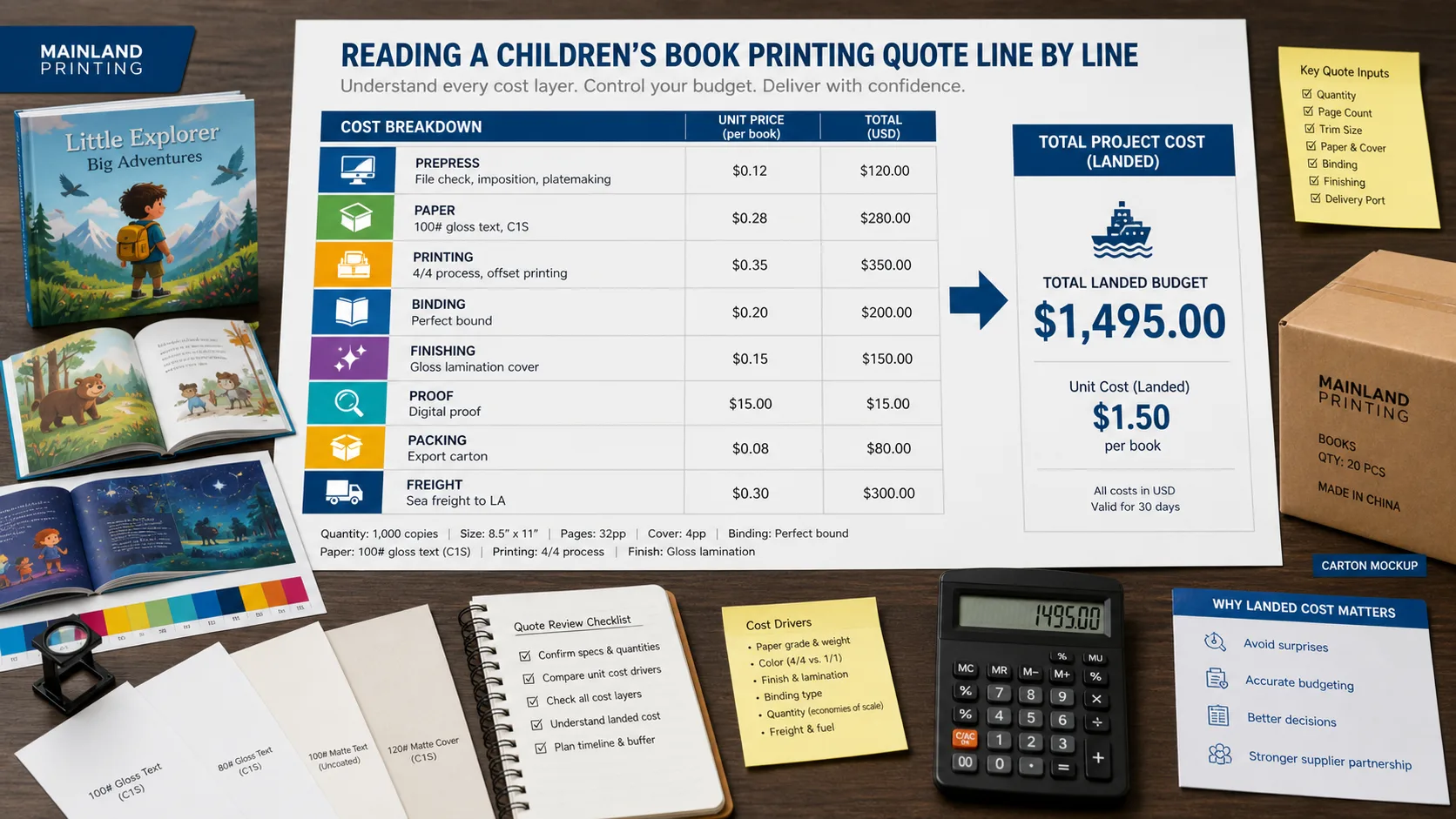
Start by separating unit production cost from total project cost. Unit production cost tells you the manufacturing price per copy; total project cost tells you what you must actually budget.
Then check whether proofing is included. For illustrated children’s books, a digital proof is not the same as a printed color proof. If color is critical, define what kind of proof you need before comparing quotes.
Finally, look at delivery terms. A quote can look lower if freight is excluded or if the delivery term stops at the factory, port, or warehouse. For international projects, shipping terms can change your real landed cost as much as paper or binding.
The Quote Review Framework
Use this framework before you accept a children’s book printing quote. It turns a price into a decision checklist.
| Check | What to Confirm | Why It Matters |
|---|---|---|
| Specification match | Trim size, page count, paper, cover, binding, finish | Small spec changes can make quotes impossible to compare |
| Proofing | Digital proof, printed proof, dummy sample, approval rounds | Proof gaps often become rework costs |
| Cost layers | Prepress, plates, paper, printing, binding, finishing, packing | A low unit price can omit necessary services |
| Freight terms | Port, destination, duties, insurance, final delivery | Freight can change the real landed budget |
| Compliance notes | Age group, market, tracking label, testing expectations | Children’s products may need extra documentation |
For US-facing children’s products, review the CPSC children’s products guidance and confirm whether your book, kit, packaging, or accessories create product-safety obligations beyond ordinary printing.
Hidden Cost Signals Before You Pay a Deposit
The cheapest quote is not always the cheapest project. It may simply move the cost into proof changes, paper substitutions, packing upgrades, or freight surprises later.
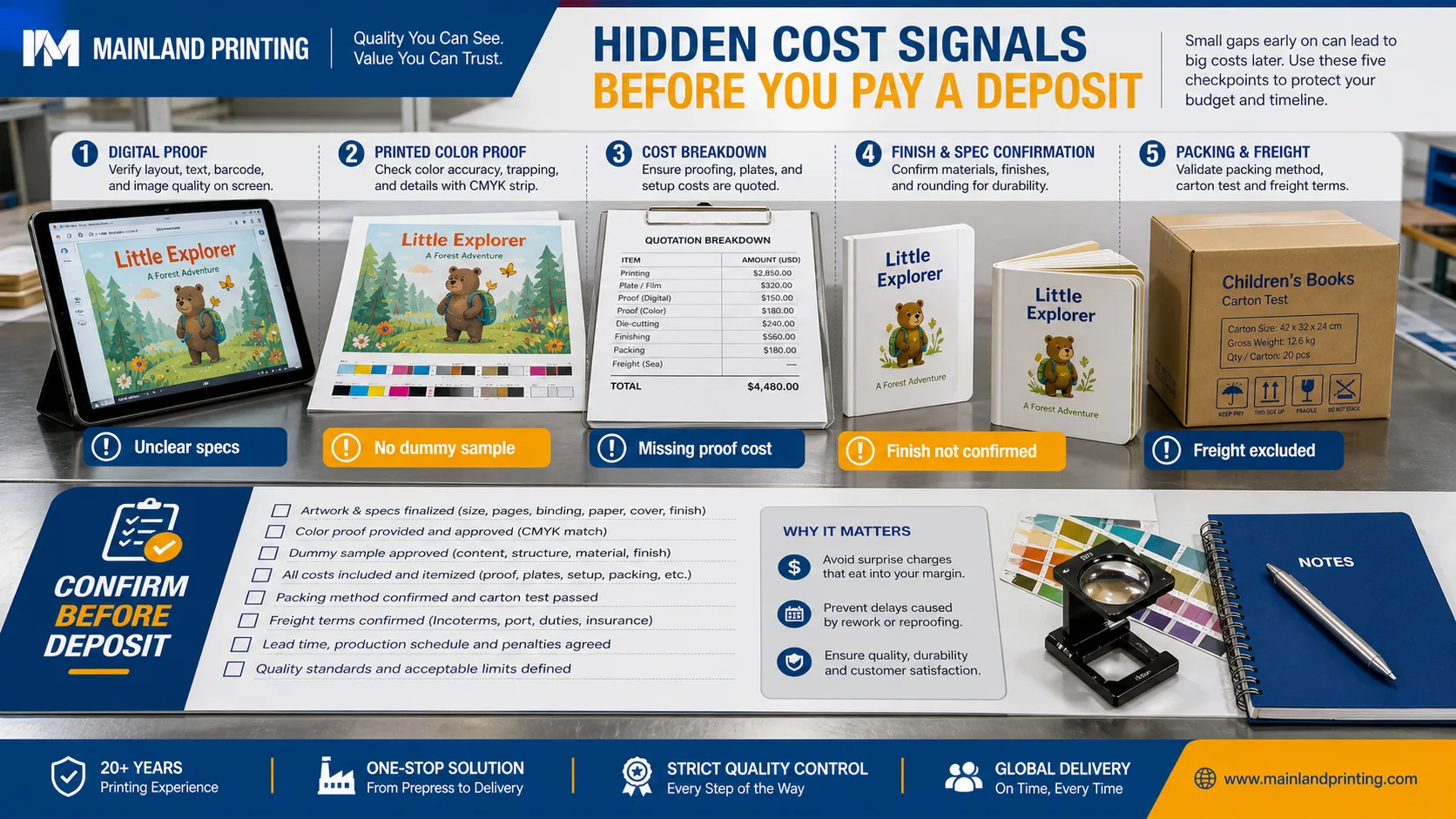
Watch for vague phrases such as ?standard paper,? ?normal packing,? ?shipping later,? or ?proof included? without details. These phrases are not always bad, but they are too vague for a reliable cost comparison.
Also watch for missing sample language. A board book should often be checked with a white dummy or physical sample because thickness, rounded corners, and page stiffness are hard to judge from a PDF.
For children’s products, tracking labels and market-specific requirements can also matter. The CPSC explains that tracking label guidance applies to children’s products where required, so confirm packaging and label placement early if your sales channel expects it.
RFQ Checklist for a Reliable Cost Estimate
A good RFQ saves time because it lets the printer quote the real project instead of guessing. It also reduces the chance of a later price revision.
- Book format: board book, softcover picture book, hardcover, activity book, or custom structure.
- Trim size and orientation, including whether the size is standard or custom.
- Page count, cover page count, and whether endpapers are needed.
- Interior paper type, paper weight, coating preference, and color expectation.
- Cover material, lamination, spot UV, foil, embossing, or other finish.
- Binding method, durability expectation, and target age group.
- Proofing requirement: PDF proof, printed proof, white dummy, or production sample.
- Quantity options, such as 500, 1,000, and 2,000 copies, so you can see scale effects.
- Packing method, carton weight limits, pallet requirement, and delivery country.
- Any retailer, marketplace, school, library, or safety documentation expectations.
If you are new to the quote process, Mainland Printing’s guide to book printing quotes gives a broader view of what a complete supplier response should include.
How to Reduce Cost Without Making the Book Feel Cheap
Cost reduction should start with specifications, not quality cuts. The goal is to remove waste while protecting the reading experience, durability, and retail value.
One efficient move is to standardize trim size. Custom sizes can increase paper waste, carton inefficiency, or setup complexity, especially if the project does not need a special shape.
Another move is to choose finishes only where they add buyer value. Full lamination may be essential for board books, but a premium cover finish on every edition is not always necessary.
You can also manage paper cost by matching paper to use case. A premium art-style picture book may deserve heavier coated paper, while a classroom reading title may perform better with a practical stock that balances opacity, color, and shipping weight. Use a paper guide such as book printing paper to compare options.
Finally, reduce rework risk before production. File preparation, color proof approval, and clear binding specs are less exciting than paper upgrades, but they can protect your budget more effectively than bargaining over a few cents per copy.
Need a children?s book quote you can actually compare?
Send your format, page count, paper preference, binding, finish, quantity, and delivery country. Mainland Printing can help you compare specification options before you commit to production.
What This Means for Your Next Quote
If you only ask, ?How much is children’s book printing?? you will get a broad answer. If you ask what drives the cost, you can control the quote more intelligently.
Start with format because board books, picture books, and hardcovers are built differently. Then lock the paper, page count, binding, finish, proofing, quantity, and delivery terms before comparing suppliers.
The right quote should help you see trade-offs. It should explain what costs more, what can be simplified, and what should not be reduced because it protects quality or reduces risk.
Frequently Asked Questions
Why are board books more expensive than picture books?
Board books usually cost more because each spread uses thick board, lamination, rounded-corner finishing, and a more assembly-heavy binding process. A picture book often uses thinner coated text paper and a simpler saddle-stitched, perfect-bound, or hardcover structure.
What information should I send for a children’s book printing quote?
Send trim size, page count, book type, paper and cover specs, binding, finish, quantity, proofing requirement, packing needs, delivery country or port, and any safety or tracking-label requirements.
Should I compare quotes by unit price or total project cost?
Use unit price only as a first filter. Compare total project cost after proofing, plates, packing, freight, duties, and revision costs are included, because a low unit price can hide missing services.
Does a hardcover children’s book always cost more than paperback?
Usually yes, because case binding adds board, cover wrapping, endpapers, and more labor. But quantity, page count, paper weight, and finishes can make a high-spec paperback more expensive than a simple hardcover.
How can I reduce children’s book printing cost without hurting quality?
Standardize trim size, avoid unnecessary finishes, confirm files before proofing, choose paper by use case, group reprints when possible, and ask suppliers to show which specifications are driving the price.