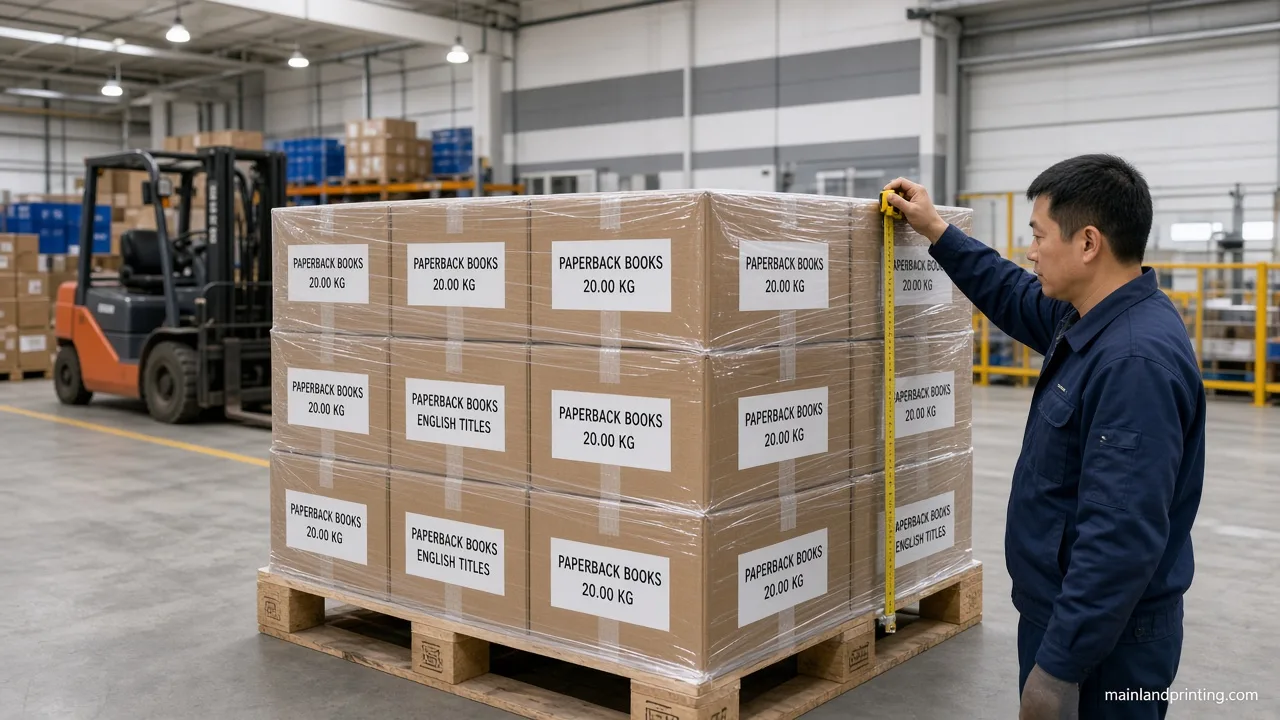
If you are deciding between US domestic vs. China offshore printing for your next big book run, you are probably terrified of making a costly manufacturing mistake.Do not worry, because I have managed commercial print supply chains from the factory floor for over a decade. Here is the exact data you need to secure premium hardcover quality while radically maximizing your publishing margins.
For runs under 1,000 copies, US domestic printing offers faster turnarounds. However, for orders exceeding 3,000 units, China offshore printing provides modern offset press technology, complete in-house bindery integration, and 40% to 55% lower total Printing Cost Comparison.
But successfully shifting your supply chain overseas is not just about chasing the lowest bid. Want to know the exact physical tests you must demand from a factory before your books hit the ocean? Keep reading to discover my foolproof offshore quality control protocol.
Why Hardcover Books Require Modern Presses
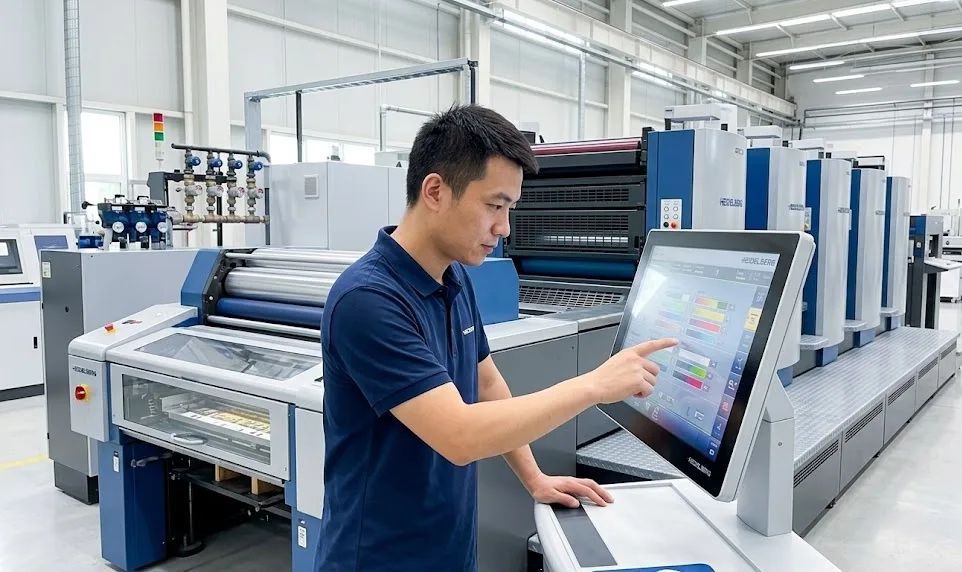
A pervasive myth in publishing is that offshore book printing is strictly a labor arbitrage play. The reality is heavily rooted in capital expenditure and hardware depreciation.For standard black-and-white trade paperbacks, the age of the printing press hardly matters. But for a 3,000-copy, full-color graphic novel or a high-end photography book, the equipment generation gap is the difference between a masterpiece and a muddy, unsellable disaster.
The technical culprit here is a physical reality known as dot gain. During the offset book printing process, liquid ink is transferred onto paper under hundreds of tons of physical pressure, causing the ink to naturally spread outward into the porous paper fibers.
On older equipment lacking modern sensor feedback, this spread becomes completely unpredictable, often exceeding a 20 percent expansion rate.Your heavy ink coverage areas lose all crispness, and deep shadow details turn into illegible dark blobs. Conversely, on modern equipment, closed-loop color management systems scan the printed sheets at high speeds, making micro-adjustments to the ink keys in real-time.
At Mainland Printing, our factory floors are anchored by a continuously updated fleet of modern Heidelberg and Komori presses.This hardware physically forces the dot gain into a strict 10 to 15 percent tolerance zone, guaranteeing a sharp, consistent CMYK color gamut reproduction from the first copy off the line to the three-thousandth.
The Hardware Divide
| Metric | Aging Domestic Presses | Modern Offshore Presses | Impact on Final Product |
|---|---|---|---|
| Dot Gain Control | > 20% (Often manual adjustment) | 10% – 15% (Automated closed-loop) | Heavy ink areas remain crisp; shadows do not plug up. |
| Color Tolerance | Noticeable shift across a large run | Negligible shift | The 50th book matches the 3,000th book exactly. |
| Registration Precision | Prone to micro-shifting | Automated micrometer alignment | Text over colored backgrounds remains razor-sharp. |
Quick Guide: If your priority is absolute visual precision for high-ink, detailed illustrations, choose modern offshore presses over aging regional infrastructure.
When you rely on outdated domestic equipment, your pre-press team is constantly fighting the machine to hold color. By leveraging modern offshore presses, you eliminate the hardware bottleneck entirely.
The “Hidden” Cost of Segmented Production vs. In-House Integration
When you request a quote for custom board book printing or a graphic novel featuring foil stamping, embossed covers, and complex binding from a US domestic printer, you are usually looking at a compounded price tag.What the sales representative will not explicitly state is that the printing and the bindery services are often handled by entirely different companies in different states.
This segmented supply chain introduces severe operational bottlenecks. Every added specialized process incurs an exponential markup, and more dangerously, it creates a massive blind spot for print quality control.If the foil flakes or the spine cracks, the printer blames the bindery, and the bindery blames the printer. You are left holding the defective inventory.
While US domestic printers are highly capable with standard trade hardcovers, premium editions requiring intricate finishing often hit a capacity wall. Many US facilities simply lack the centralized infrastructure to handle multi-pass foil and custom binding at scale without outsourcing to third-party binderies. — Peter Ahlstrom, Vice President of Production at Dragonsteel
This is exactly where offshore printing transitions from a budget-line item to a structural engineering advantage. At a modern Chinese facility, bulk book manufacturing is defined by true in-house integration.
- Direct Press-to-Bindery Flow: The heavy paper stock moves directly from the offset press to the folding machines without ever being loaded onto a truck.
- Integrated Specialty Finishes: Foil stamping, debossing, and edge gilding are executed by technicians who communicate directly with the printing press operators.
- Unified Quality Standards: One senior project manager oversees the exact paper grain alignment from the moment the raw material is cut to the moment the book is cased in.
The Chemistry of Binding and the “Perfect Dummy” Trap
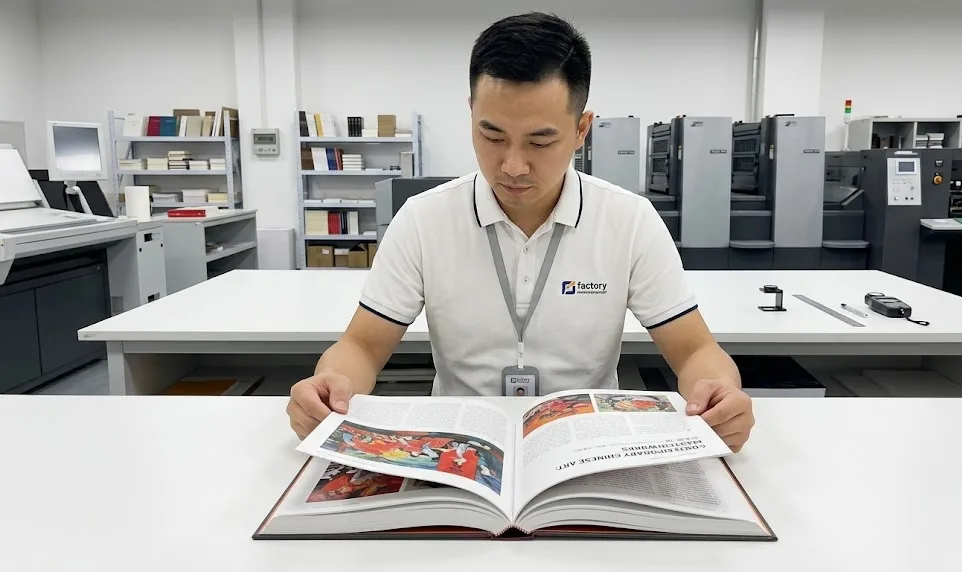
To understand why this centralized control is critical, let me share a physical failure I have diagnosed repeatedly over my 10+ years operating Mainland Printing. It involves the most dangerous trap in overseas print management: the perfect physical dummy.
A few years ago, a tabletop RPG creator came to us after a disastrous 3,500-unit run managed by an overseas broker. The broker had air-freighted a flawless physical blank dummy to the creator. The 400-page, 157g coated paper felt incredibly premium in the hand. The creator signed off immediately.
Two months later, the pallets arrived in Los Angeles. The books were completely destroyed. The interior pages had developed severe wavy edges, and worse, the spines cracked audibly upon the third page-turn, shedding loose sheets instantly.
The failure was a matter of pure physics, amplified by a segmented supply chain. The broker had outsourced the bindery services to a budget facility that utilized traditional EVA hot-melt adhesive without Smyth sewn binding. EVA glue becomes rigid and brittle under temperature shifts.When those pallets spent 35 days on the ocean, fluctuating between extreme equatorial heat and freezing North American nights, the paper fibers aggressively absorbed and released moisture. The brittle EVA adhesive simply snapped under the physical tension of the heavy coated paper. The fact that the initial blank dummy was sent via air freight completely bypassed the environmental stress of an ocean voyage, masking the underlying structural weakness.
The raw truth is that a physical dummy delivered via an air-conditioned flight cannot simulate the brutal environmental realities of ocean transit. Contractual parameters safeguard structural integrity, never verbal assurances.
We re-engineered his subsequent run using fundamental material science. To prevent spine failure on high-volume, heavy-stock projects, you must demand the following physical specifications:
- Mandatory Smyth Sewn Binding: For any hardcover book production exceeding 300 pages on heavy stock (128g or above), the signatures must be physically sewn together with thread.
- PUR Perfect Binding: We strictly pair Smyth sewing with PUR (polyurethane reactive) adhesive. When PUR glue is applied, it undergoes a chemical cross-linking reaction with the ambient moisture in the air.
- The Result: Once cured, PUR forms an incredibly flexible, nearly indestructible bond that never turns brittle, regardless of temperature extremes. You can open a 500-page art book flat to 180 degrees, and the spine will hold indefinitely.
Ready to Execute Premium Hardcover Book Manufacturing?
Stop risking your professional reputation on segmented supply chains and unverified overseas brokers. Partner directly with our factory experts to access modern offset machinery, unified quality control, and certified PUR-locked durability.
Our Bulletproof Project Management Protocol
The single greatest barrier preventing production directors from optimizing their printing supply chain is the fear of the unknown.Handing over a highly anticipated project to a facility 7,000 miles away often feels like stepping into a black box. If an error occurs in the pre-press file preparation, or a custom trim size is miscalculated, the geographic distance makes corrections incredibly costly.
To eliminate this risk, you cannot rely on verbal promises of print quality control. You must enforce a rigid, industrial-grade standard operating procedure.At Mainland Printing, we replace the anxiety of offshore manufacturing with a fully transparent, bilingual project management protocol. This is not a customer service initiative; it is a mandatory physical defense system deployed across four distinct production nodes:
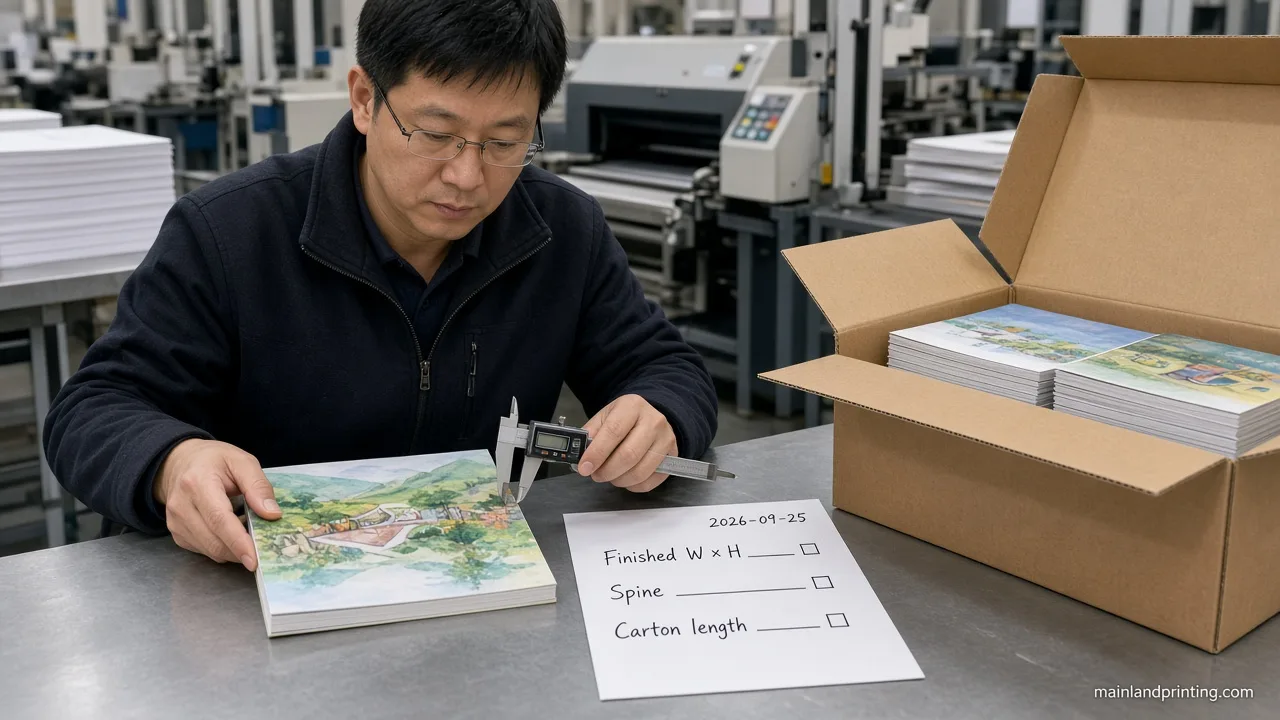
- Node 1: Physical Blank Dummy Stress Test — We air-freight a blank dummy utilizing the exact paper stock and bindery process. This allows your team to physically test the spine pull strength, verify the paper weight, and confirm the dimensional tolerances for your fulfillment packaging before a single drop of ink is applied.
- Node 2: Digital Proofs and Color ICC Alignment — We transmit high-resolution digital proofs. Our bilingual project managers intercept fatal file errors—such as RGB to CMYK conversion failures, excessive rich black loads that will not dry, or insufficient bleed margins—ensuring the pre-press file preparation is structurally sound.
- Node 3: Wet Proofs and Live Manufacturing QC — We extract authentic wet proofs straight from the offset press during the initial hours of operation. For color-critical projects, we establish a live video feed to the factory floor, allowing your team to verify color tolerances directly with the pressman before the bulk run is authorized.
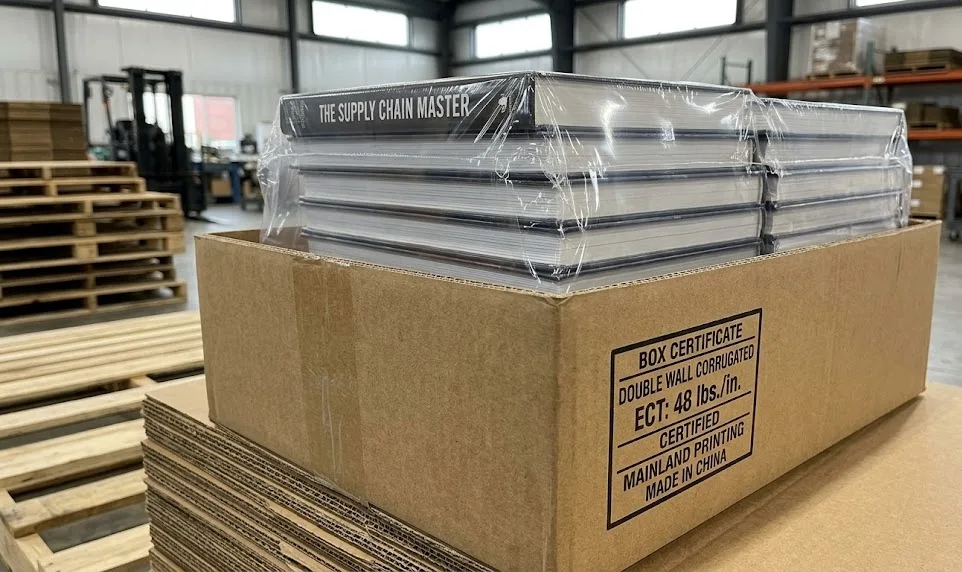
- Node 4: Deep Ocean Freight Defense — We execute a purely physical defense against moisture shock. Every book is 100% vacuum shrink-wrapped, packed into ECT-48 edge crush test double-corrugated cartons, and supplemented with industrial silica desiccants to completely block moisture intrusion during the 35-day ocean transit.
Translating Physics into Publishing Margins
When you step back into that boardroom to present your manufacturing strategy, do not simply tell the executive team that you found a way to cut printing costs by 45 percent. Frame the decision entirely around capital efficiency, risk mitigation, and product supremacy.
The most successful independent publishers and Kickstarter book fulfillment creators understand that the true ROI of offshore printing is not about hoarding the saved budget. It is about reallocating a fraction of those funds to aggressively upgrade your product specifications to dominate your retail category.
True manufacturing efficiency lies in converting raw production savings into high-margin physical assets. A book designed with upgraded specifications commands retail dominance and bulletproof longevity.
- Highlight the Hardware Advantage: Explain that shifting to a modern offshore facility guarantees lower dot gain and superior image sharpness due to newer printing press technology.
- Demonstrate Risk Mitigation: Present the 4-step QA protocol. Show them that by utilizing digital proofs, wet proofs, and live video QC, the process is actually more transparent than dealing with a segmented domestic supply chain.
- Propose Product Upgrades: Show how the eliminated domestic add-on costs allow the project to upgrade from standard 128g paper to premium 157g coated stock, add a secondary foil stamping process, and mandate Smyth sewn binding—all while still significantly widening the overall publishing margins.
You are no longer asking your boss to take a risk on cheap overseas labor.You are presenting a highly controlled, deeply engineered commercial printing strategy that utilizes modern offset technology, neutralizes supply chain bottlenecks, and delivers a mechanically superior hardcover book. By choosing highly scalable book printing services, you bypass regional infrastructure deficiencies completely.
If you are ready to stop fighting with outdated presses and segmented domestic binderies, it is time to evaluate your next large volume book printing run with a true manufacturing partner.Your readers demand premium quality, and your margins demand flawless execution. Ensure your supply chain is engineered to deliver both.