Struggling to balance cheap printing costs with expensive warehouse storage fees? You are not alone. In this guide, I will show you exactly how to optimize your book print order frequency to protect your company’s cash flow without ever risking a stockout.
Inventory velocity is more critical than unit cost in book printing because excessive bulk orders tie up capital and trigger massive long-term storage fees. An agile split-run strategy balances lower upfront cash lockup with steady inventory replenishment, maximizing total total profitability.
Want to see the exact blueprint for setting up a bulletproof rolling print pipeline? Keep reading to discover the hidden FBA penalties you are currently paying—and the digital color-matching secret that makes split runs completely risk-free.
Why Chasing the Lowest Price Is a Procurement Trap
Scaling your offset print run to artificially depress the unit price feels like a massive procurement win—until the physical reality of the cargo hits the destination port.
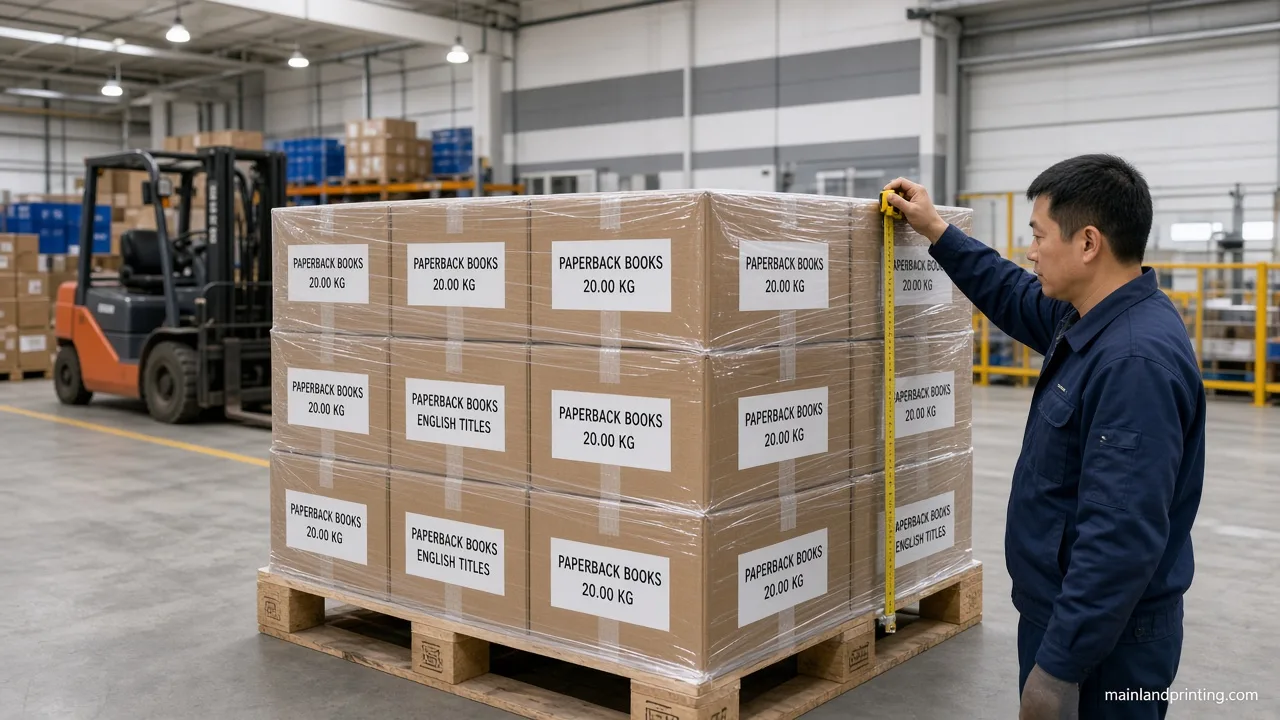
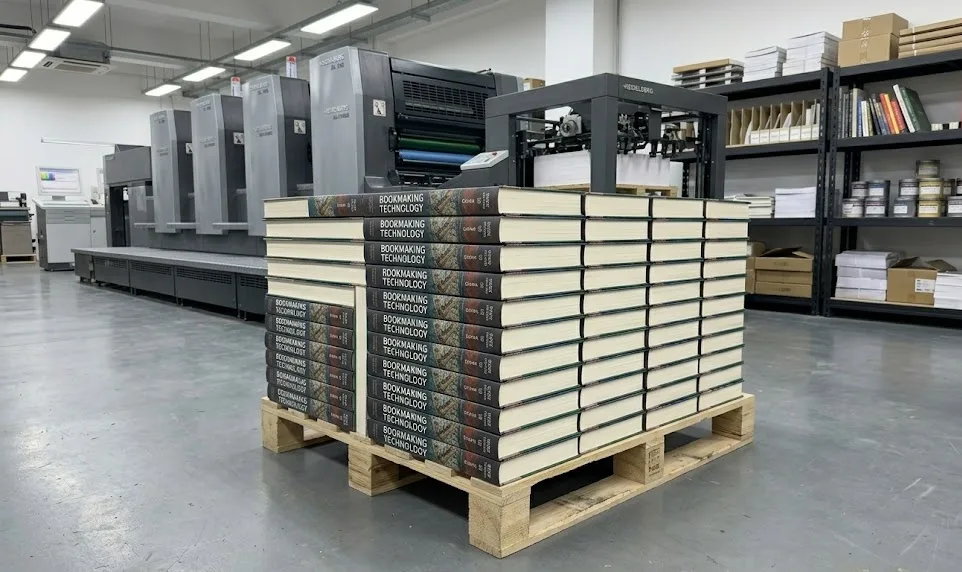
Books are exceptionally heavy, dense commodities. A 5,000-copy run of a 300-page hardcover is not just a spreadsheet line item; it translates to roughly seven standard industrial pallets weighing nearly eight tons.
The persistent problem of optimizing logistics means that a cheaper unit price is instantly negated by increased warehousing, handling, and capital holding costs. — Professor Richard Wilding, Cranfield School of Management
The moment your inventory velocity drops and those massive pallets sit in an Amazon FBA or 3PL facility for over 90 days, compounding long-term storage fees begin aggressively eating your margins.
The Hidden Physical Penalties of Bulk Printing
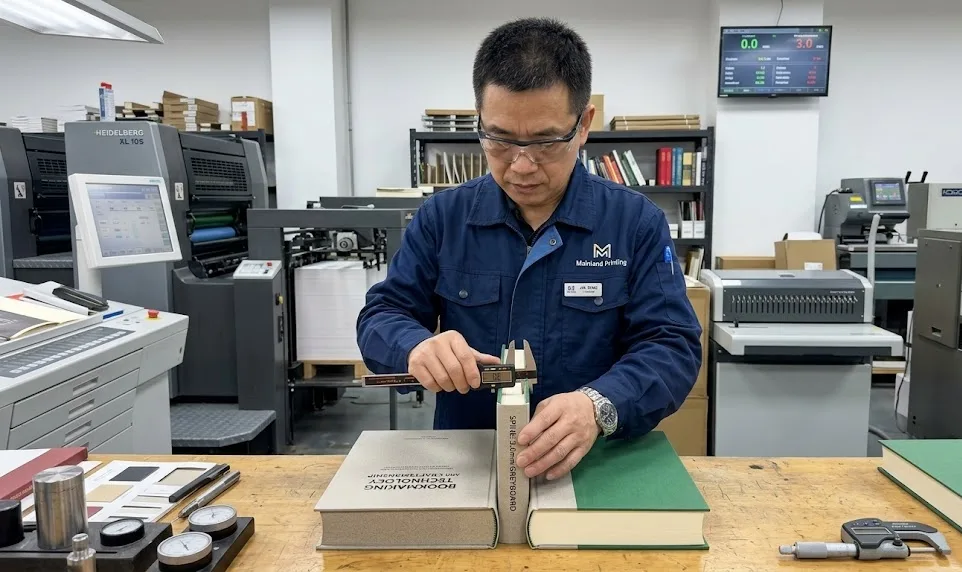
Beyond the financial penalties, excessive holding times introduce severe physical risks to the product itself. When evaluating a massive print run, you must calculate these physical liabilities:
- The Weight-to-Turnover Ratio: Heavy hardcover books incur peak pallet storage fees. If the books do not sell within the first financial quarter, the monthly storage penalty often exceeds the cents saved per unit on the printing press.
- Environmental Degradation: Coastal warehouses experience massive humidity fluctuations. Extended storage without climate control fundamentally alters the physical properties of paper and glue.
- The Sunk Cost of Obsolescence: If market demand shifts, or if a minor editorial error is discovered, thousands of units instantly transform into unsellable dead stock that you must pay to destroy.
In my over ten years of running factory floors and managing B2B supply chains, I have watched countless independent publishers fall into the material degradation trap. We once stepped in to rescue a high-profile Kickstarter creator who printed 6,000 oversized art books upfront simply to save a dollar per unit.
Those seven pallets sat in a humid East Coast logistics center for five months. Because their previous supplier ignored tension balance engineering—specifically failing to align the paper’s grain direction with the 3.0-millimeter greyboard’s moisture expansion rate—the environmental shift caused a catastrophe.The copperplate paper cover and the inner lining absorbed moisture at different rates. The result was severe cover warping with a deformation rate exceeding 20 percent.
Thousands of their cost-effective books transformed into trash, proving that the initial unit cost savings were instantly wiped out by massive disposal fees and lost revenue.
When you tie up your cash flow in excessive offset print runs, you are not saving your company money. You are financing a warehouse to hold your depreciating assets.
When this PO is still a paperback softcover run, freeze quantity bands and comparable quote fields with the paperback printing cost ladder before you raise the order to chase unit price.
The True Cost of Capital Lockup
Standard North American supply chain metrics dictate that annual inventory carrying costs consume between 20 percent and 30 percent of your total inventory value.This figure extends far beyond basic warehouse rent. It encompasses insurance, handling fees, potential shrinkage, and most importantly, the critical opportunity cost of dormant capital.
Inventory is fundamentally evil. You kind of want to manage it like you’re in the dairy business. If it gets past its freshness date, you have a problem. — Tim Cook
If you print 6,000 units but require twelve months to sell through the entire batch, the cash locked in those final 3,000 units is dead capital. That is cash that cannot be utilized to develop new products or market existing ones.
To provide your CFO with a defensible, data-driven procurement strategy, look at the actual cash flow mechanics of a massive single order versus an agile split-run approach.
Financial Showdown: Bulk Order vs. Agile Split Run
| Assessment Metric | Strategy A: Single Bulk Order (6,000 Units) | Strategy B: Agile Split Run (2,000 Initial + Reprint) |
|---|---|---|
| Invoice Unit Cost | Optically Low ($3.60 per book) | Marginally Higher ($5.40 per book) |
| Upfront Capital Lockup | $21,600 (Massive financial exposure) | $10,800 (Frees up 50% of your cash immediately) |
| Physical FBA Footprint | 7 standard pallets (High risk of Long-Term Storage Fees) | 2 standard pallets (High turnover, completely bypasses penalties) |
| Market Demand Risk | Severe (Unsold units become a liability) | Minimal (Reprint volume scales precisely with actual sales data) |
| Opportunity Cost | Zero agility. Capital is dead for 12 months. | Freed capital deployed into Amazon PPC for immediate ROI. |
| Quality Degradation | High risk of cover warping over 9 months in storage. | Zero risk. Product reaches end-user fresh off the press. |
Quick Guide: If your priority is preserving upfront capital and maximizing liquidity, choose Strategy B; if you have a guaranteed, fast-moving enterprise contract, only then consider Strategy A.
The strategic advantage of the agile split run is absolute liquidity. By intentionally accepting a marginally higher unit cost on the initial 2,000-copy order, you retain $10,800 in liquid capital. Instead of parking that cash in a warehouse, you deploy it directly into aggressive marketing.This immediate injection drives up your velocity, pushing you through the units rapidly. Consequently, you maintain a high Inventory Performance Index score, bypass storage penalties entirely, and render the slight increase in your initial unit cost financially irrelevant.
Defeating Stockouts and Color Shifts
Why do seasoned procurement managers resist split runs even when the financial math makes sense? It comes down to two deep-seated fears: catastrophic stockouts and severe color shifts between batches.Traditional manufacturing has conditioned buyers to believe that reprinting is a massive gamble. And if you are using an outdated facility, it is.
If you rely on a legacy factory where the press operator manually adjusts ink keys by eyeballing a previous sample, failure is guaranteed. Paper is porous plant fiber; it breathes and reacts to its environment. Furthermore, ink is a fluid whose viscosity changes based on factory temperature.If your first batch runs in the humid summer and your reprint hits the press in the dry winter, the moisture content changes how the paper absorbs the fluid ink. The resulting dot gain expansion means the first batch might look perfectly balanced while the reprint shifts noticeably red or blue.
You cannot fix physical fluid dynamics with human eyesight, which is why manual color reproduction across different quarters is mathematically bound to fail.
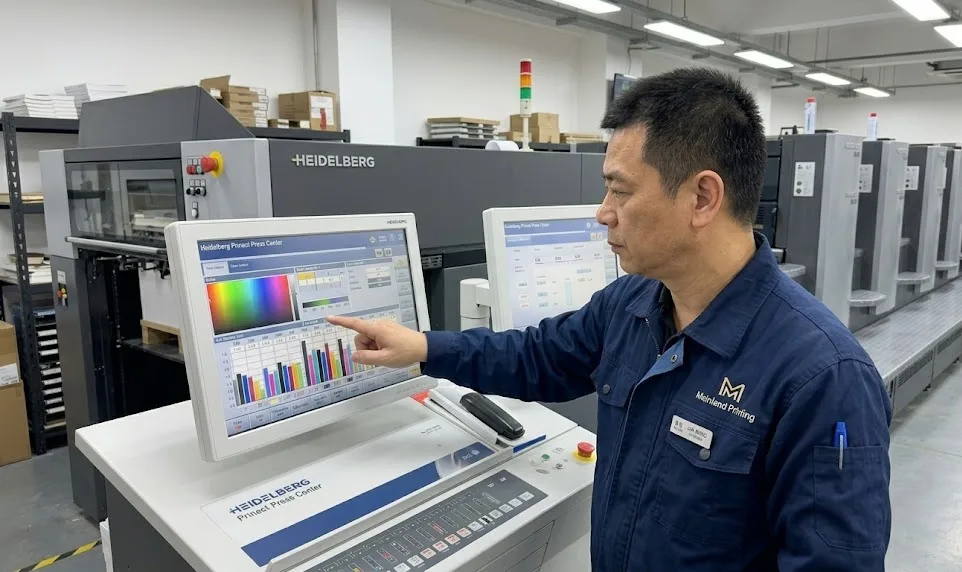
To safely execute an agile supply chain, your printing partner must replace human guesswork with a digital quality assurance contract. At a modern facility focused on exact replication, we utilize Heidelberg and Komori offset presses integrated strictly with CIP4 automated digital color management.During your initial 2,000-copy run, the computer records the exact opening metrics of all thirty-two ink zones across the press. Months later, when you trigger a reprint, the machine does not rely on a visual sample. It simply recalls that historical digital profile from the server. The press valves replicate the exact ink distribution from the first run, keeping the visual color variance across batches strictly controlled to a Delta E of 2.0 or less.
Ready to Launch Your Premium Hardcover Project Risk-Free?
Stop gambling with massive upfront print runs. Lock in precision Heidelberg color profiles and eliminate batch-to-batch variance with our tailored manufacturing solutions.
Setting Up a Rolling Print Pipeline
Now that the physical quality risk is neutralized by technology, you must implement a rolling pipeline to prevent stockouts.A high-velocity inventory strategy requires precision timing to bridge the gap between ocean freight transit and factory reprint response times. Do not guess when to reorder. Use this strict operational framework.
Standard ocean freight from China to the United States takes thirty to forty days. Because your digital plates and color profiles are already locked in a modern system, manufacturing turnaround time for a reprint drops to roughly seven to ten days.Set a hard threshold: when your active inventory in a North American logistics center drops to 40 percent of your total projected sales, immediately trigger your next print run. By executing this trigger, your new batch is manufactured and on the water before your existing stock depletes, creating a seamless replenishment cycle without tying up excess cash.
Furthermore, this rolling pipeline heavily mitigates the strict regulatory and macroeconomic risks of the modern North American market. Bringing 6,000 books through United States Customs at once creates a massive, single-point vulnerability.If your bulk shipment faces an intensive inspection regarding Lacey Act declarations or unexpected global supply chain disruptions, your entire Q4 revenue is detained indefinitely.
Splitting shipments allows smaller, agile batches to clear customs rapidly. By partnering with a facility that guarantees verified Forest Stewardship Council (FSC) chain-of-custody tracking and certified non-toxic inks on every single run, you ensure continuous, compliant product flow.If a minor paperwork delay occurs on a 2,000-unit batch, your business survives. If it happens to a 6,000-unit batch, you face a catastrophic cash flow crisis.
Transforming Procurement from a Cost Center to a Value Driver
Your objective as a procurement leader is no longer simply hunting for cheap printing. The era of buying bulk books just to satisfy a vanity metric on a commercial invoice is over.
By adopting an agile reprint model supported by modern Heidelberg digital color management, you completely neutralize the physical risks of color shifting and cover warping. More importantly, you transform your department’s role.
The next time you sit in that boardroom caught between sales and finance, do not pitch a marginally lower printing unit cost. Present a high-velocity inventory strategy.Show them how executing smaller, precision-timed print orders protects the company’s cash flow, mitigates customs compliance risks, and secures total supply chain stability. That is how you win the boardroom, and that is how you build a resilient publishing brand.