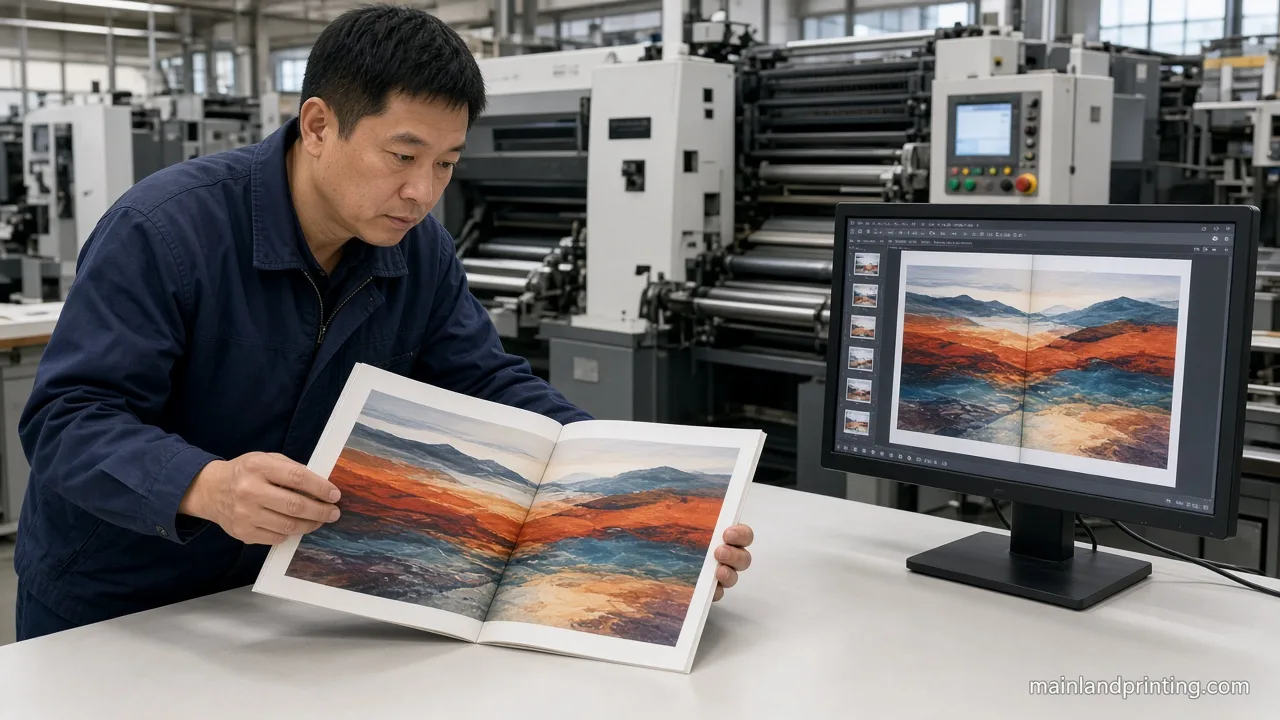
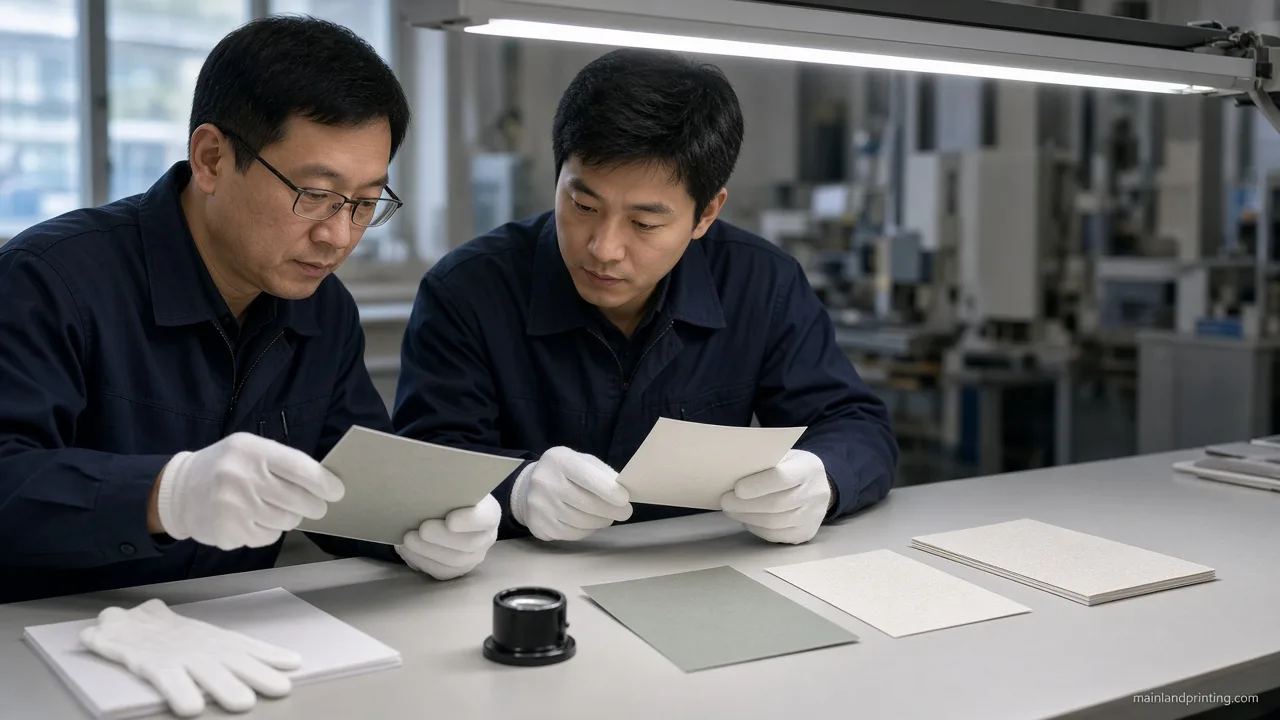
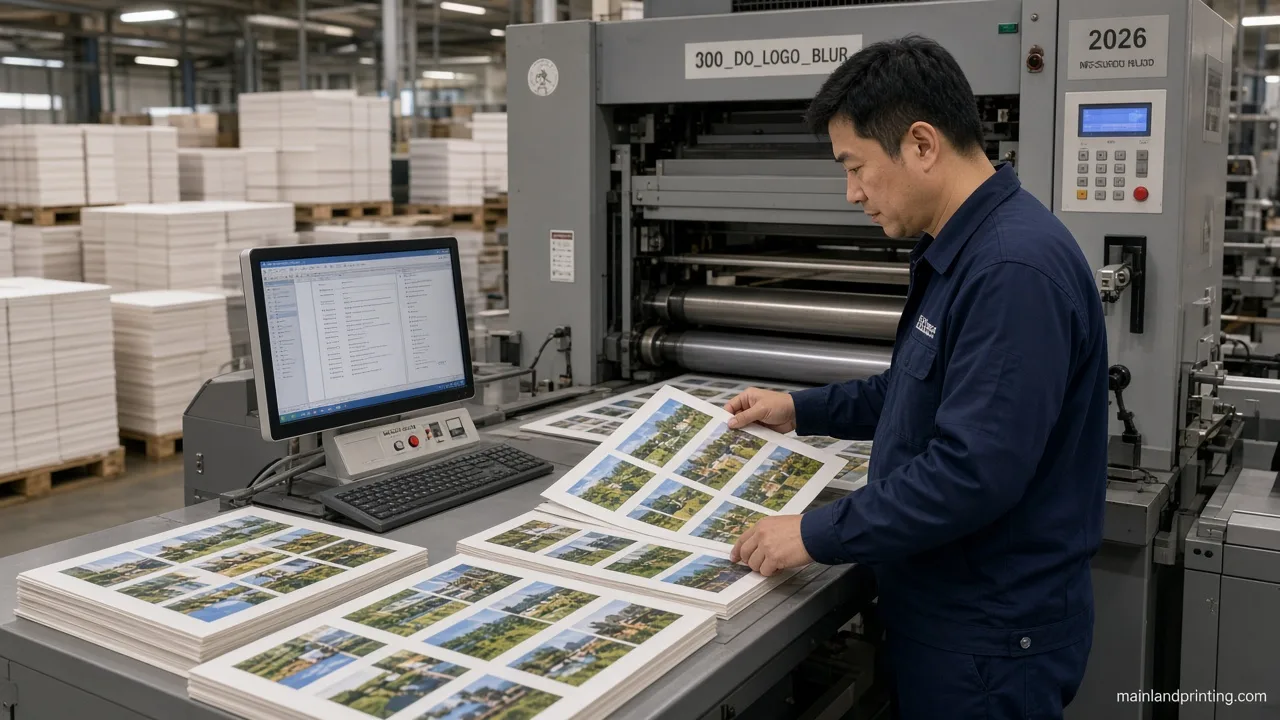
Are you paying $9.00–$12.00 per unit on a “short run” and walking away with zero reusable production assets — essentially funding a prototype at commercial prices?
The substrate physics of 2mm greyboard create a hard cost floor that standard print economics cannot explain, and understanding that engineering reality is the only way to protect your budget before you commit.
Board books cannot follow standard POD logic: digital/hybrid methods plateau at $8.50–$12.00 per unit regardless of quantity, while offset production at 1,000–1,200 units amortizes $800–$1,500 in fixed tooling, drops unit cost to ~$7.50, and delivers a permanent reprint die.
Below, we outline a precise decision matrix and the hard ROI benchmarks you need to determine exactly when your fixed engineering investment starts working for you — not against your margins.
The Universal “500-1,000 Unit” Rule and Its Fatal Flaw
You’ve probably seen this advice everywhere: “Order under 500 units? Go digital. Over 1,000? Use offset.” It sounds clean and logical. The problem is, this rule was built for paperbacks — and applying it to board books is like using a sedan’s fuel economy data to budget a freight truck.
For the broader production path, review this board book printing before you finalize specifications, supplier selection, and budget expectations.
Board books don’t follow standard printing in china cost guide economics. The reason comes down to one word: substrate.
Why the Standard Crossover Point Breaks Down for Board Books
For a typical paperback, the dominant cost variable is ink and impressions. Cut the run in half, and your unit cost roughly doubles. Board books work differently. Their cost structure is dominated by thick greyboard — approximately 2mm, or the equivalent of 1,600gsm — and that material has a fixed cost floor that doesn’t compress the way paper does.
Here’s what that means for your project in practical terms:
- High-speed digital presses face technical limitations on substrates above 400gsm — true board printing is often not feasible digitally.
- The “digital option” for small runs is typically a hybrid method: digitally printed sheets, hand-laminated onto board — a process that plateaus at $8.50–$12.00 per unit regardless of quantity.
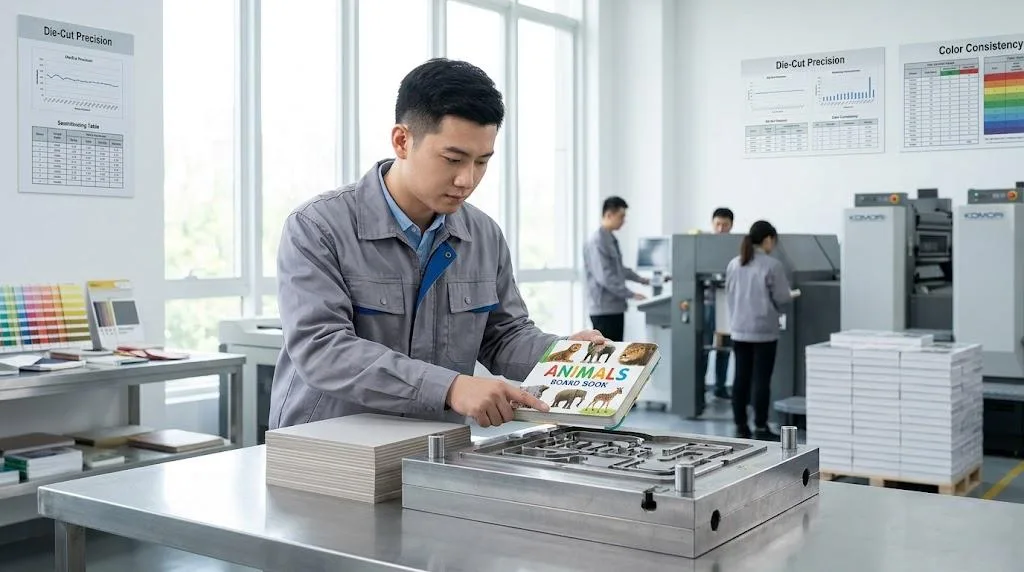
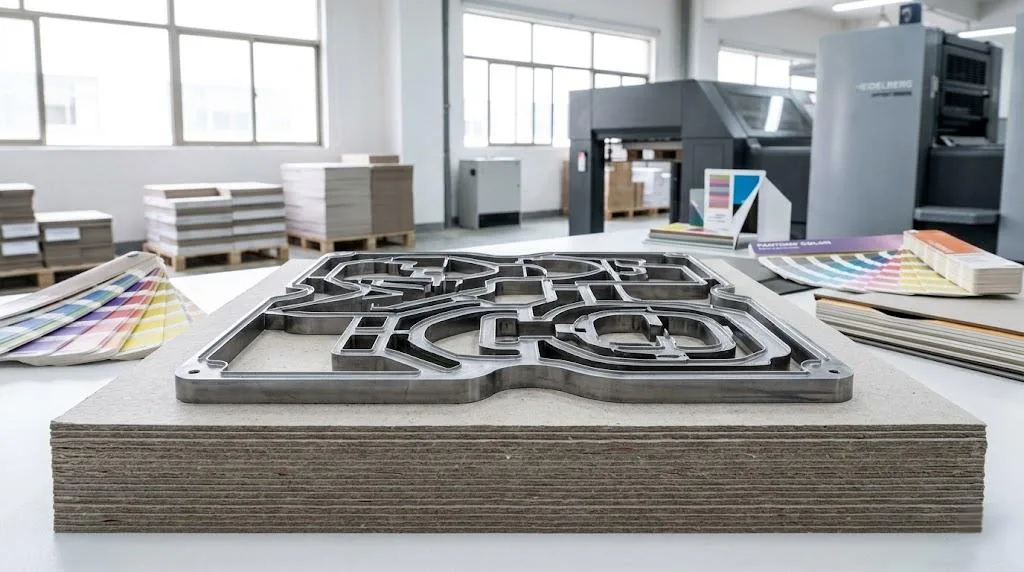
- Offset printing for board books also carries one-time engineering costs — precision die-cut forms, creasing matrices, and safety-corner tooling — averaging $800–$1,500 per new title.
So the real question isn’t “500 or 1,000 units?” It’s: at what quantity do your amortized fixed costs drop below that persistent hybrid cost floor?
For standard board book formats, Mainland Printing’s production data consistently places that verified crossover point between 800 and 1,200 units — driven by sheet optimization logic, not a generic rule of thumb.
Real Cost Drivers in Board Book Manufacturing
Here’s a frustration we hear constantly: you get a quote for 500 board books, it feels expensive, so you assume printing is just costly. But the real issue isn’t printing — it’s that you’re paying board book printing cost factors for a product you intend to sell. Understanding where the money actually goes changes every decision you make.
Board book economics are fundamentally different from paperback printing. The cost structure is driven by three distinct layers, and confusing them is where budgets quietly fall apart.
The Three Real Cost Layers
- The Substrate Floor — Thick greyboard (typically 2mm) dominates your per-unit cost. Unlike paperback printing where ink and impressions drive price, here the material itself sets a hard cost floor that digital printing cannot escape.
- One-Time Engineering Costs — Precision die-cut forms, creasing matrices, and childrens book printing safety guide tooling typically run $800–$1,500 per new title. This is a fixed investment, not a per-unit charge.
- Sheet Yield Efficiency — Offset printing gains its economic advantage through gang-run sheet imposition. A standard 1040×720mm sheet can hold 16 board book spreads. Your real cost per unit drops as your run fills those sheets more completely.
This is why the “500-unit digital run” often costs $8.50–$12.00 per unit and leaves you with no reusable production assets. You’ve spent the money, but you own nothing that makes the next run cheaper.
The smarter question isn’t “how do I print fewer books?” It’s “at what quantity does my fixed engineering investment start working for me?” That’s the calculation worth running — and it’s exactly what we’ll break down next.
A Side-by-Side Cost Analysis: 800 Units vs. 1,200 Units
Here is where the numbers stop being abstract and start affecting your actual budget. The gap between 800 and 1,200 units looks significant on paper, but the cost story is more nuanced than you might expect.
Let’s put real figures on the table. Based on Mainland Printing’s production data for a standard 8″x8″, 10-spread board book, here is what the two scenarios typically look like:
- 800 units (hybrid/short-run method): Approximately $9.00–$12.00 per unit. Total outlay: roughly $7,200–$9,600. No reusable tooling assets created.
- 1,200 units (true offset production): Approximately $7.50 per unit. Total outlay: roughly $9,000. Includes a permanent precision die stored for future reprints.
The total cost difference between the two runs is often less than 25%. But the per-unit savings and the tooling asset you acquire make the 1,200-unit path the stronger long-term investment.
Why the Gap Closes So Quickly
Board book production has a fixed engineering cost. At 800 units, that cost hits each book harder. At 1,200 units, it spreads thin.
Sheet optimization plays a role too. A standard large-format offset sheet can impose 16 board book pages simultaneously. Printing 1,200 units fills those sheets with near-zero material waste, while an 800-unit run often leaves unused sheet capacity you still pay for.
The bottom line: your 1,200-unit order is not excess inventory. It is the price of acquiring a production asset that cuts your reprint costs by 60–70% on every future order.
| Cost Factor | Hybrid Short-Run (800 Units) | True Offset (1,200 Units) |
|---|---|---|
| Unit Cost | $9.00 – $12.00 | ~$7.50 |
| Total Outlay | $7,200 – $9,600 | ~$9,000 |
| Tooling Asset | None | Permanent Die |
| Future Reprint Cost | Starts at $9.00+ | Drops 60–70% |
The Mainland Printing Decision Framework for Rational Investment
Here’s the uncomfortable truth most suppliers won’t tell you: the generic “order 1,000 units and switch to offset” rule was built for paperbacks. It simply doesn’t apply to board books, where the cost structure is fundamentally different from the ground up.
Board book economics are driven by substrate, not impressions. That 2mm greyboard dominates your unit cost before a single drop of ink is applied. This changes everything about where the vet book printing company china crossover point sits.
Your Three-Point Investment Checklist

Rather than guessing, run this analysis against any quote you receive. It gives you a rational, apples-to-apples comparison every time.
- Establish your digital cost floor first. Request a quote for 500 units. This number—typically $8.50–$12.00 per unit for a standard 8″×8″ board book—is your high-water mark benchmark.
- Isolate the tooling cost. Ask any offset supplier to separate the one-time engineering fee (die, creasing matrix, safety-corner tooling) from the per-unit print cost.
- Run the asset acquisition analysis. Compare the total cost of 800 hybrid units against 1,200 true offset units. If the price delta is under 25–30%, the offset run is the rational choice—because you’re not just buying books, you’re acquiring a permanent reprint die stored at our facility.
That die is the part most clients overlook entirely. Your first offset run buys you a production asset. Every reprint after that arrives at a significantly lower tooling cost, because the engineering work is already done.
The trap isn’t ordering too many books. It’s paying prototype prices repeatedly for a product you intend to sell at scale.
Stop Funding Prototypes at Commercial Prices
Our Board Book Printing team provides a consultative quote that shows both paths side-by-side. We calculate your Total Cost of Ownership across multiple runs, isolating the fixed engineering investment so you can see the exact unit quantity where your tooling starts paying for itself.
Securing Your Long-Term Reprint Pathway
Here’s something most first-time board book projects don’t consider until it’s too late: the real value of your initial offset run isn’t just the books you receive. It’s the physical tooling you own afterward.
When Mainland Printing produces your first offset run, we engineer and manufacture a precision die-cut form and creasing matrix specific to your book’s dimensions. That tooling doesn’t disappear after your order ships. It gets stored, tagged, and held for your next run.
What This Means for Your Second Print Run
Your reprint cost structure looks fundamentally different from your first run. The one-time engineering and tooling investment is already paid. What remains is essentially just materials and press time.
- Reprint per-unit costs typically drop 60–70% compared to your first run’s amortized tooling cost
- No re-engineering, no new die creation, no safety-corner re-proofing
- Sheet imposition is already optimized—your files go straight to press
- Lead time on reprints is measurably shorter than a new project setup
Conclusion: Invest in Assets, Not Just Inventory
Applying this framework protects your budget and builds a foundation for long-term profitability. It shifts your first print run from a simple expense to a strategic investment.
The technical checkpoints we’ve outlined ensure your product quality is secured from the first unit to the ten-thousandth. This gives you the confidence to scale your brand.
When you’re ready to move forward with a project engineered for both safety and cost-efficiency, Get Your Custom Quote and let’s discuss your specific board book requirements.