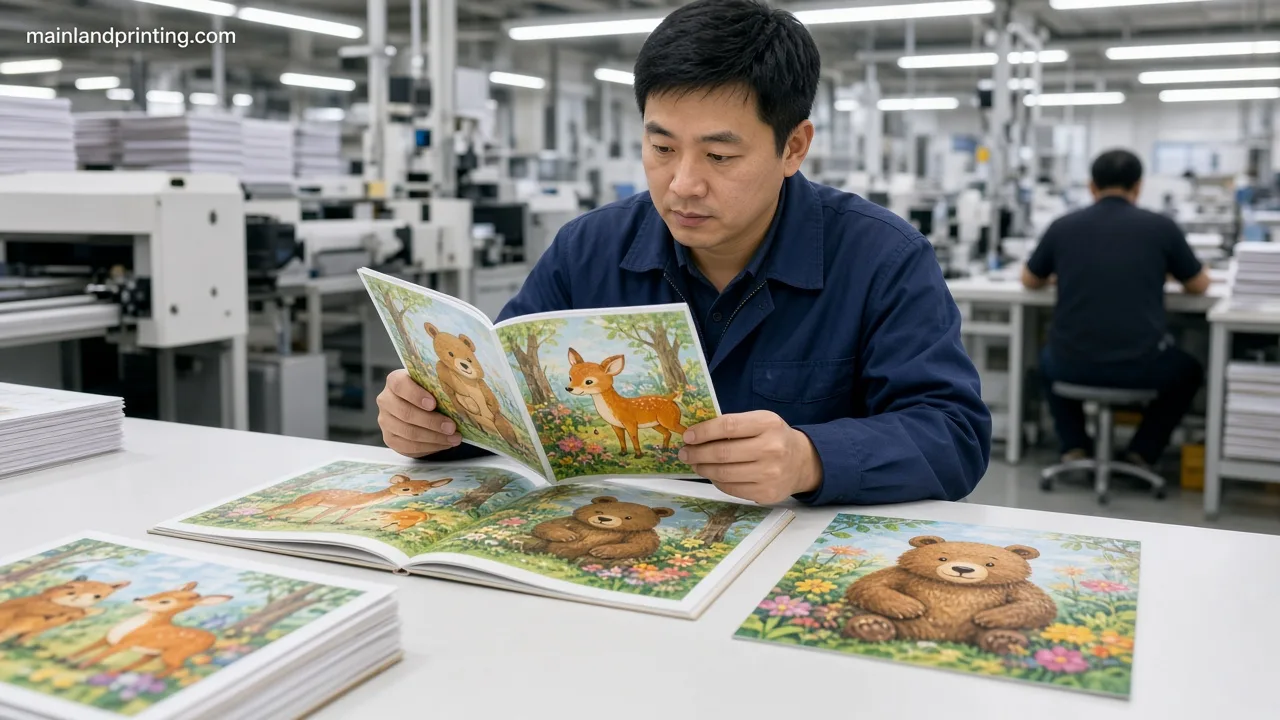
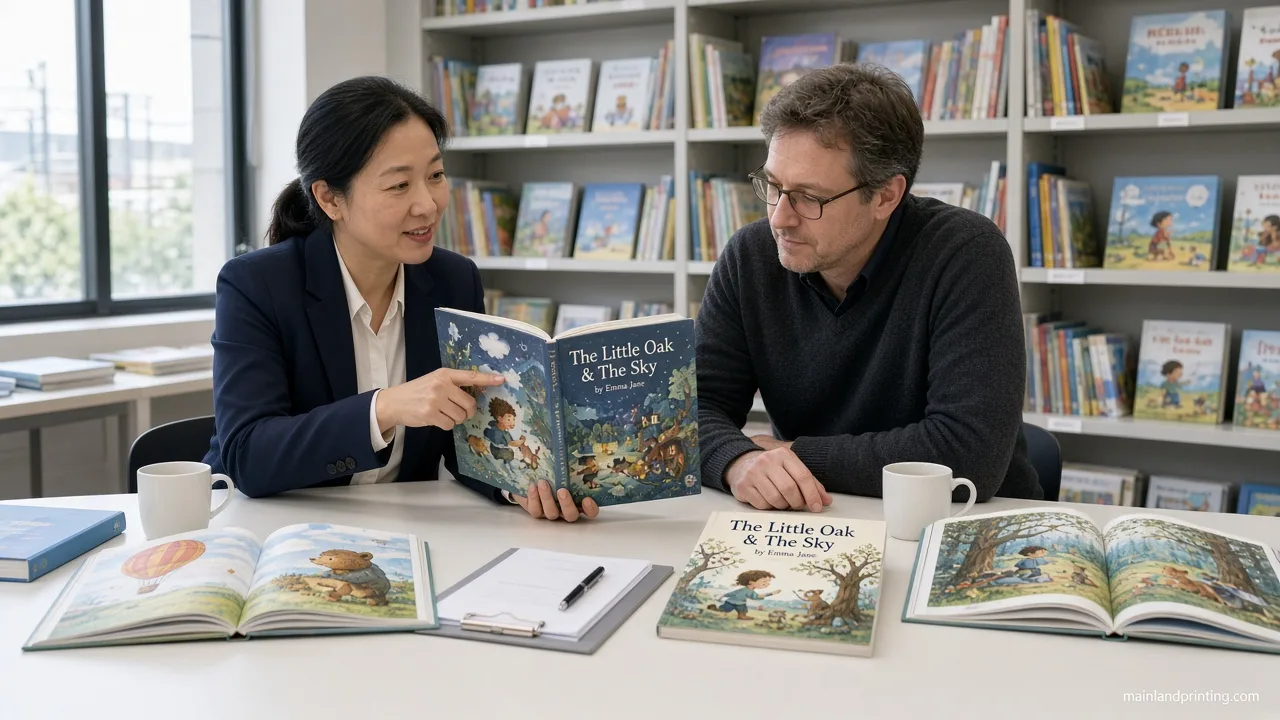
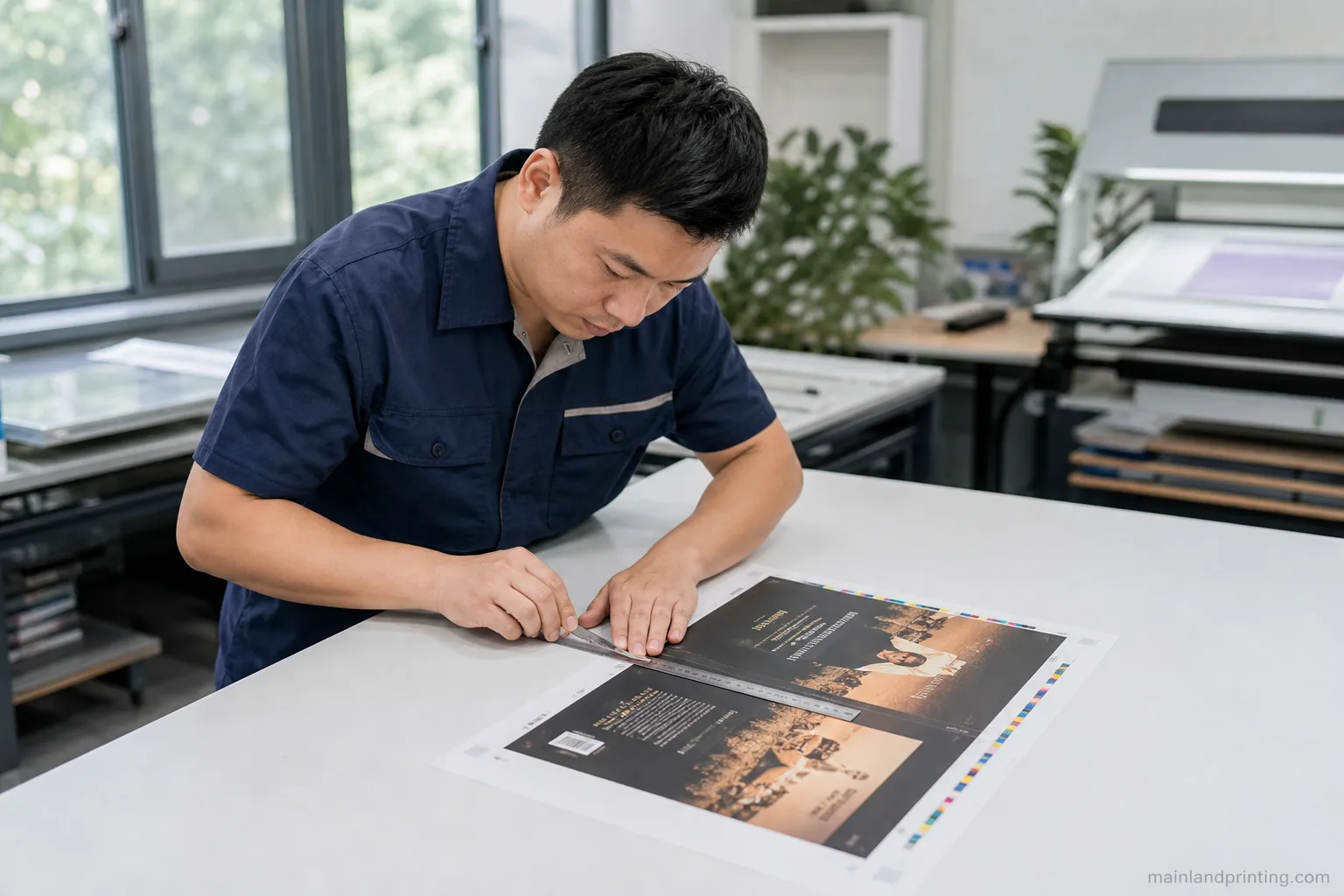
When a full-color ages 4+ picture book is ready for print but trim and orientation are still open, guessing a “default” size from a template rarely survives the first spread check.You can still lock square, landscape, or portrait from the art, pick a common trim in that family, and confirm shelf and carton fit before the quote hardens.
Children’s book sizes for printing follow orientation first—square, landscape, or portrait—not one US default. Pick a common trim in that family once spreads and distribution are clear. Custom trims stay available when panoramic art or regional shelves require them.
You will leave able to name a defensible trim on the RFQ, explain why landscape or square fits your spreads, and keep that size lock steady through binding and file prep without reopening orientation in every email.
Scope Ages 4+ Picture Book Size Decisions
Use this guide when the reader handles paper pages and the project is a full-color picture book—not a chew-and-tear toddler board title. Ages 4+ size choices assume standard paper signatures; thick mounted board books use different construction and need a separate product brief.
When toddler thickness or rounded-corner safety is still the real question, divert now instead of forcing a paper-page trim list onto the wrong format.
Mainland Printing plans square, portrait, and landscape children’s books on common trims—square 6×6 through 10×10, portrait 5.5×8.5 through 8.5×11, landscape 8.5×5.5 through 11×8.5—with fully custom sizes when your spreads need them.
This does not treat board-book thickness as the primary decision path, deep-dive bleed or CMYK templates, or paper finish as the main topic here.
Paper and coated stock choices continue on the picture book paper guide.
| Project signal | Next step |
|---|---|
| Ages 4+ paper-page picture book, full color | Stay here: lock orientation, then trim width × height |
| Ages ~0–3, thick mounted pages, rounded corners | Leave this guide; open a board-book construction brief instead |
| Need bleed, safe area, or CMYK depth | Hand off to the file specs checklist after trim is named |
Many first offset runs land near 100–500 copies; MOQ can be discussed on the RFQ when quantity is still TBD. Inspect board diversion early so toddler titles do not burn a layout cycle on the wrong trim family.
Choose Square Landscape or Portrait for the Art
Lock orientation before you debate individual inches. There is no single US standard picture-book trim—printers and platforms publish overlapping size lists, and your orientation choice should drive the short list.
Does not claim one trim wins every genre; does not invent platform market-share percentages.
When spreads are illustration-ready enough to quote and trim is still open, write width × height and orientation on the RFQ.
For a publisher-side trim overview, see also picture book size complete guide (educational; not a substitute for your art and channel checks).
When spreads are still sketched in multiple orientations, pause and map how each double-page spread reads in the hand—not only on a vertical monitor.
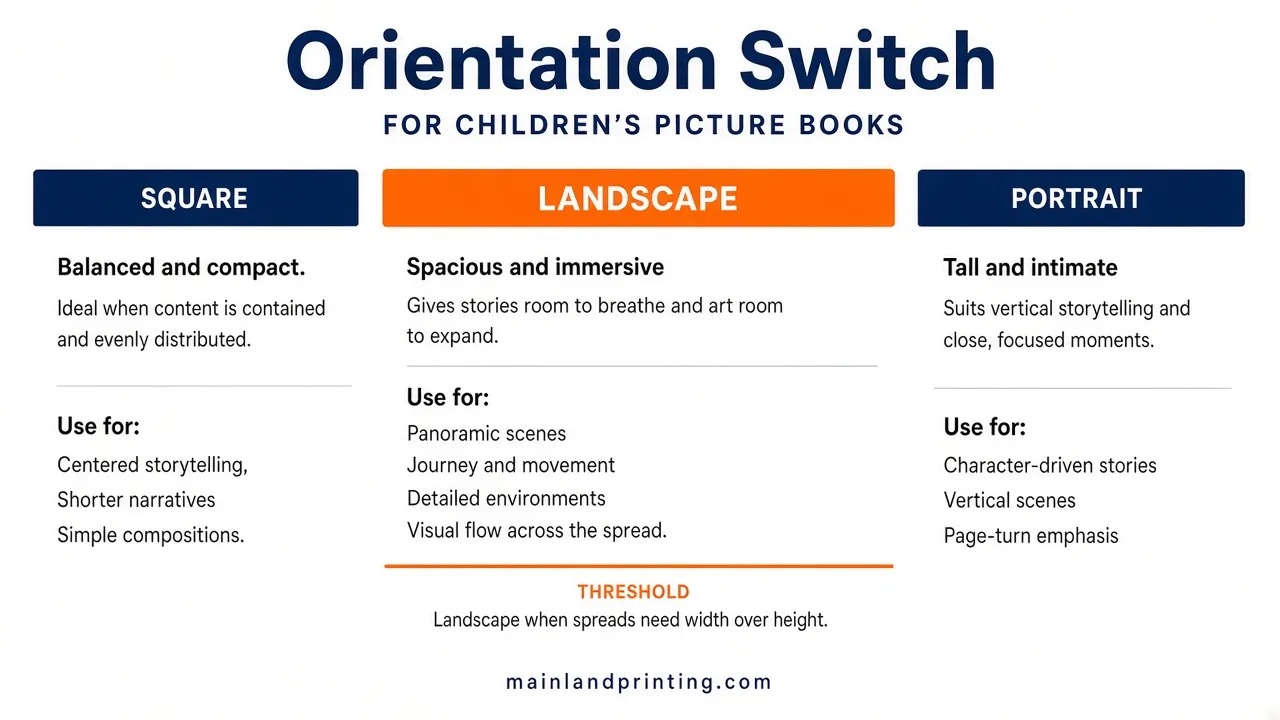
Match orientation to how the art reads: square for centered subjects, landscape for panoramic spreads, portrait for vertical motion or denser text blocks.
Choose landscape when a double-page spread needs width more than height.
| Orientation | Choose it when |
|---|---|
| Square | Central characters, balanced scenes, and mixed vignettes without a strong horizontal or vertical bias |
| Landscape | Panoramic full spreads, wide environments, or cinematic left-to-right motion |
| Portrait | Tall figures, vertical action, or layouts that carry more text below the art block |
| Still mixing all three in one PDF | Hold the quote; split orientation before you lock trim or spine calculations |
Put finished trim width, height, and orientation on the RFQ before you ask for unit price—buyers already quote explicit sizes such as 11×8.5 landscape or 8.5×8.5 square when the art is ready.
Does not invent win rates; does not claim every RFQ lists every common trim.
Red flag: Naming “8×10” without stating whether width or height leads—portrait 8×10 and landscape 10×8 are different products on press.
Confirm finished trim W×H and spine on the same proof sheet before plate — orientation typos usually show up there first.
Landscape Children’s Book Printing Tradeoffs for Offset
Landscape picture books reward wide art, but they also stress platform menus and shipping math. Some POD workflows steer authors toward portrait presets; offset printers more often run true landscape trims such as 10×8 or 11×8.5 when the RFQ names width first.
When panoramic art loses impact in square or portrait, treat landscape as worth the file and carton tradeoff.
When your proof depends on a POD template that only lists portrait sizes, confirm whether the final run will stay on that platform or move to offset before you illustrate to the wrong spread box.
Treat landscape as worth the file and carton tradeoff when cross-page art loses impact in square or portrait—then confirm the exact landscape trim on the quote, not a rotated portrait preset.
Does not invent POD policy tables; does not promise every landscape trim ships at the same carton rate.
Does not promise every POD vendor blocks landscape; does not publish universal freight tables.
Confirm 11×8.5 landscape as width × height on the RFQ, not a portrait size rotated in software.
| Planning path | Landscape implication |
|---|---|
| Short-run POD proof | Menu may limit true landscape; verify spread dimensions before final art |
| Offset batch (often 100+ copies) | Common landscape trims such as 9×6, 10×8, and 11×8.5 are routinely quoted |
| Mixed HC and SC quotes | Keep the same landscape trim on both binding lines so art does not fork |
Wide trims can increase carton length and shelf depth versus a square of similar area—pair landscape locks with the shelf check in the next section before you approve a print quote.
Square Children’s Book Dimensions That Stay Practical
Square formats center the subject and feel balanced in small hands. They are a frequent RFQ choice when art does not need extra width or height—common planning sizes include 6×6, 8×8, 8.5×8.5, and 10×10 inches, with metric-minded buyers sometimes specifying near 21×21 cm equivalents.
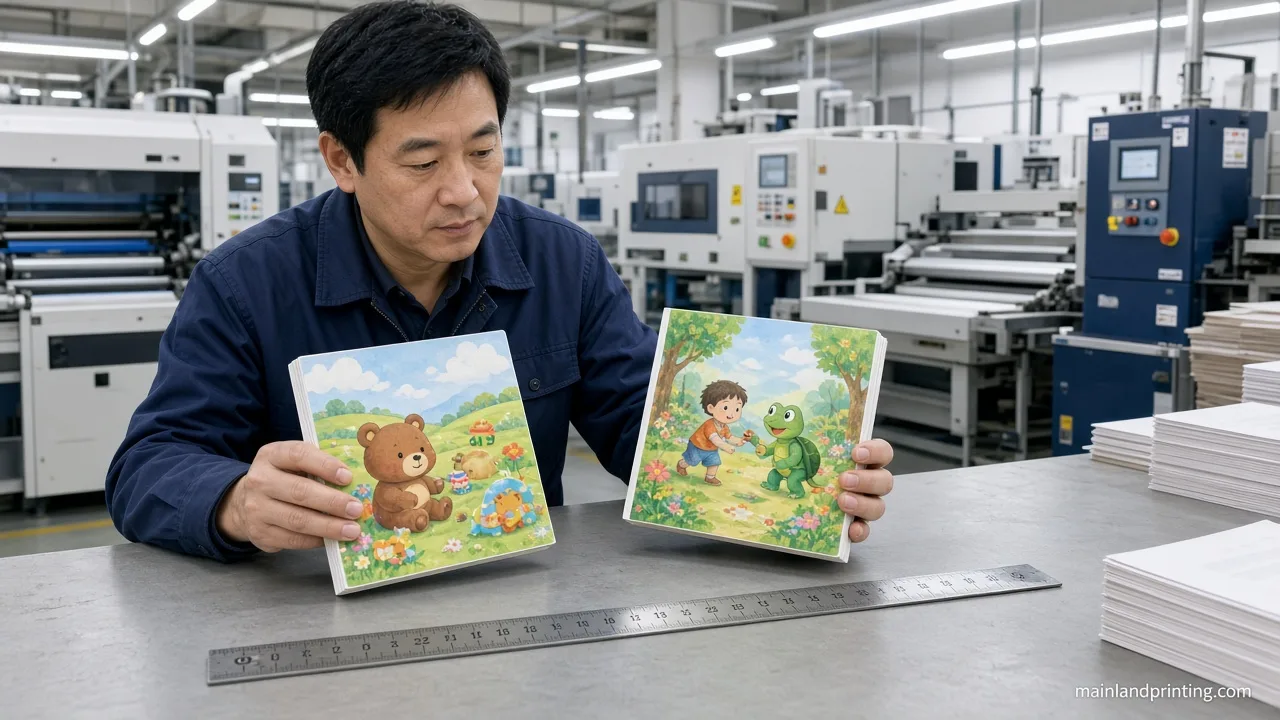
When every spread is a single centered vignette, square often reduces layout debt; when a single spread must read as one wide scene, square may crop the story.
Use square when art is balanced around a focal point and cross-page panoramas are rare—then pick the inch or centimeter trim that matches your distributor’s carton limits.
Move off square when a double-page spread must read as one continuous horizon.
| Square trim (inches) | Use it when |
|---|---|
| 6×6 or 8×8 | Compact gift formats or younger ages 4+ with simpler spreads |
| 8.5×8.5 | Mid-size square RFQs with detailed full-color art and moderate freight |
| 10×10 | Premium display square when carton weight and shelf height still pass your plan |
Portrait planning trims such as 5.5×8.5, 6×9, 8×10, and 8.5×11 remain the usual choice when text blocks grow or vertical motion dominates—lock one orientation family before you mix portrait and square in the same quote ladder.
Check Trim Size Against Shelf Files and Cartons
Trim size is the finished page size after cutting. Safe area, spine, and cover wrap calculations all reference that final trim—confirm them on the named size, not on a placeholder template.
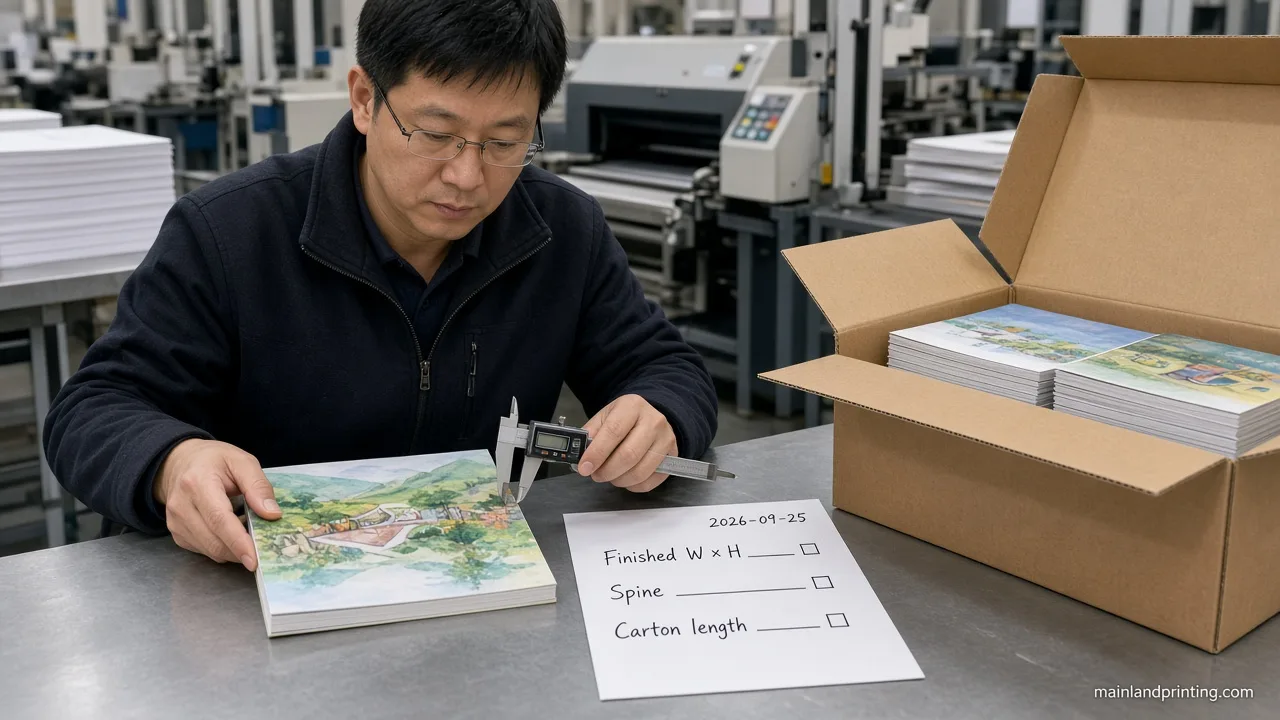
When distribution lists a maximum shelf height or inner carton length, run the trim against those files before you approve illustrations at full bleed width.
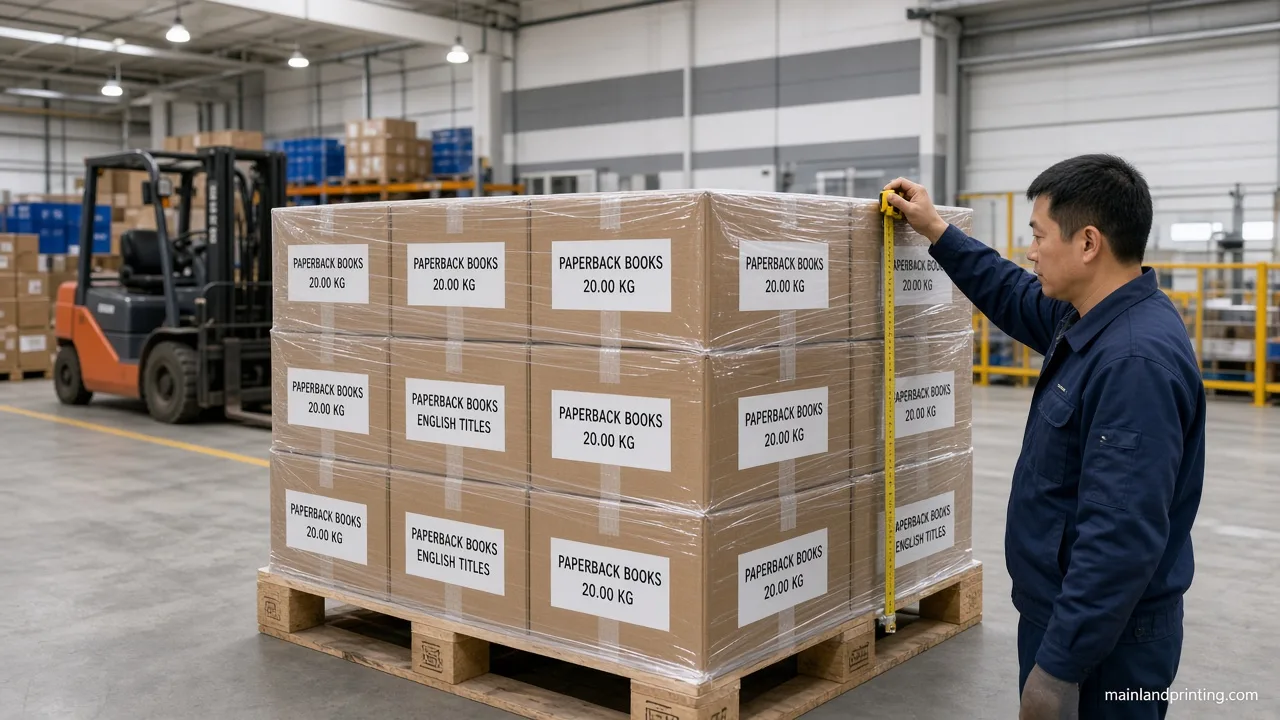
Run shelf height, carton length, and weight against your locked trim before you treat a size as “standard” for your channel—even popular trims fail when a warehouse slot or shipper girth limit is tighter than the art.
Does not publish a universal warehouse pass rate; file bleed depth stays on the checklist URL.
Does not publish retailer-specific slot dimensions; bleed and color depth stay on the file checklist.
If the trim fails a carton or shelf rule, fix size before you re-export spreads—not after plates are approved.
| Check | Pass when |
|---|---|
| Retailer or library shelf file | Finished book height and depth fit the slot you plan to sell into |
| Master carton and shipper girth | Copies per carton and landed freight still match your quantity ladder |
| Print files | Bleed and spreads match the file specs checklist for the named trim |
Plan My Picture Book Size and Format
Share orientation, trim width × height, page count, binding intent, quantity ladder, and destination. Mainland Printing can align a children’s book plan before you approve art to final size.
Plan My Picture Book Size and Format
Lock Picture Book Size Before You Quote
Relative to size listicles, this page adds an orientation-first RFQ path, landscape POD-vs-offset tradeoffs, and shelf/carton checks before you treat any trim as “standard.”
A defensible size lock names orientation, trim width × height, and page count as separate RFQ fields, then keeps that tuple with the production brief. That is what “children’s book sizes for printing” means in practice—not chasing a mythical single US default, and not rotating a portrait preset to fake landscape.
Once orientation and trim clear art, shelf, and carton checks, you can scale the run without reopening square-versus-landscape in every email. Return to the children’s book planner with a size-backed sheet so quoting compares the same physical product.
If paper finish is still open, continue on the picture book paper guide. If binding format is still open, resolve hardcover vs softcover first. Size choice is finished when the trim—not the mood board—matches how the story reads in the hand.
Picture Book Size FAQ for Printing Buyers
What is a children’s book trim size?
Children’s book trim size is the finished page width and height after cutting—for example 8.5×8.5 square or 11×8.5 landscape. Lock trim and orientation before you finalize bleed and spreads on the file checklist.
Is there a standard size for picture books in the US?
No single US standard applies to every title. Printers and platforms list overlapping trims; choose orientation from the art, then a common size in that family, and confirm channel shelf and carton rules for your distribution plan.
Can I print a landscape children’s book through POD or offset?
Many POD menus favor portrait presets (self-pub size guides such as BookBaby book size guide still list landscape children’s options), while offset quotes routinely run true landscape trims such as 10×8 and 11×8.5 when width × height is written clearly on the RFQ.Match the proof path to the production path before you commit final art.
When should I choose square children’s book dimensions?
Choose square when scenes center on one subject and wide panoramas are rare—sizes such as 8×8 or 8.5×8.5 are common RFQ choices. Switch to landscape when a double-page spread must read as one continuous horizontal scene.