If you are a US publisher sourcing printing in China, your real challenge is not finding a factory; it is choosing a partner that can deliver the right quality level, at a predictable landed cost, on a schedule your launch plan can survive.
A reliable China printing decision starts with one rule: compare complete project outcomes, not isolated unit prices. Define technical specs before quoting, score suppliers with weighted criteria, and set quality gates from prepress through final carton so you can control both budget and reprint risk.
Decision summary: this guide gives you a working framework you can use today, including quote comparison logic, risk signals, and an RFQ checklist that helps your team move from “interesting offer” to “contract-ready supplier.”
Define Specs Before Requesting Any Quote
Many pricing problems begin before the first email is sent. If your request does not lock key specifications, every supplier is pricing a different product, and low numbers become impossible to verify.Before you ask for quotes, define trim size, page count, print run, color profile, paper grade, binding style, finish options, and packing method.
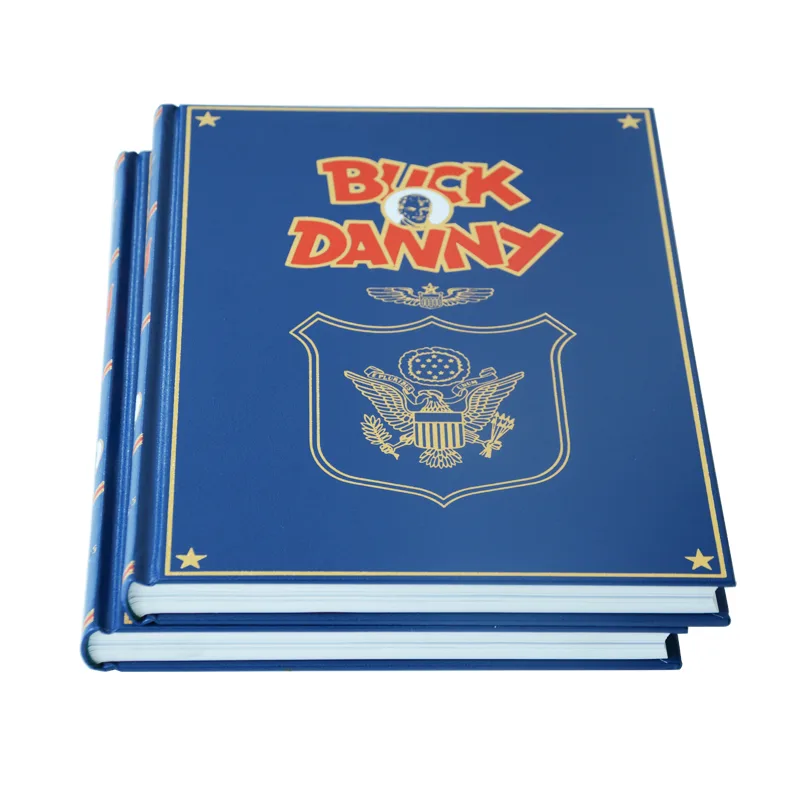
When publishers skip these details, the quote looks fast but the project slows later because assumptions must be rebuilt. If you need a baseline for binding tradeoffs, review how hardcover binding options affect handling, durability, and setup requirements across small and mid-size runs.
Minimum order guidance: there is no universal MOQ that fits every title. In practice, MOQ depends on format, press setup efficiency, and carton economics. Treat MOQ as a planning variable, not a fixed market law.
One practical approach is to issue a one-page quote brief template to all vendors and reject responses that alter the structure. This saves review time because your team can compare like-for-like inputs, and it reduces the chance that critical details are buried in separate email threads.
Build a Landed Cost Model Before You Compare Unit Prices
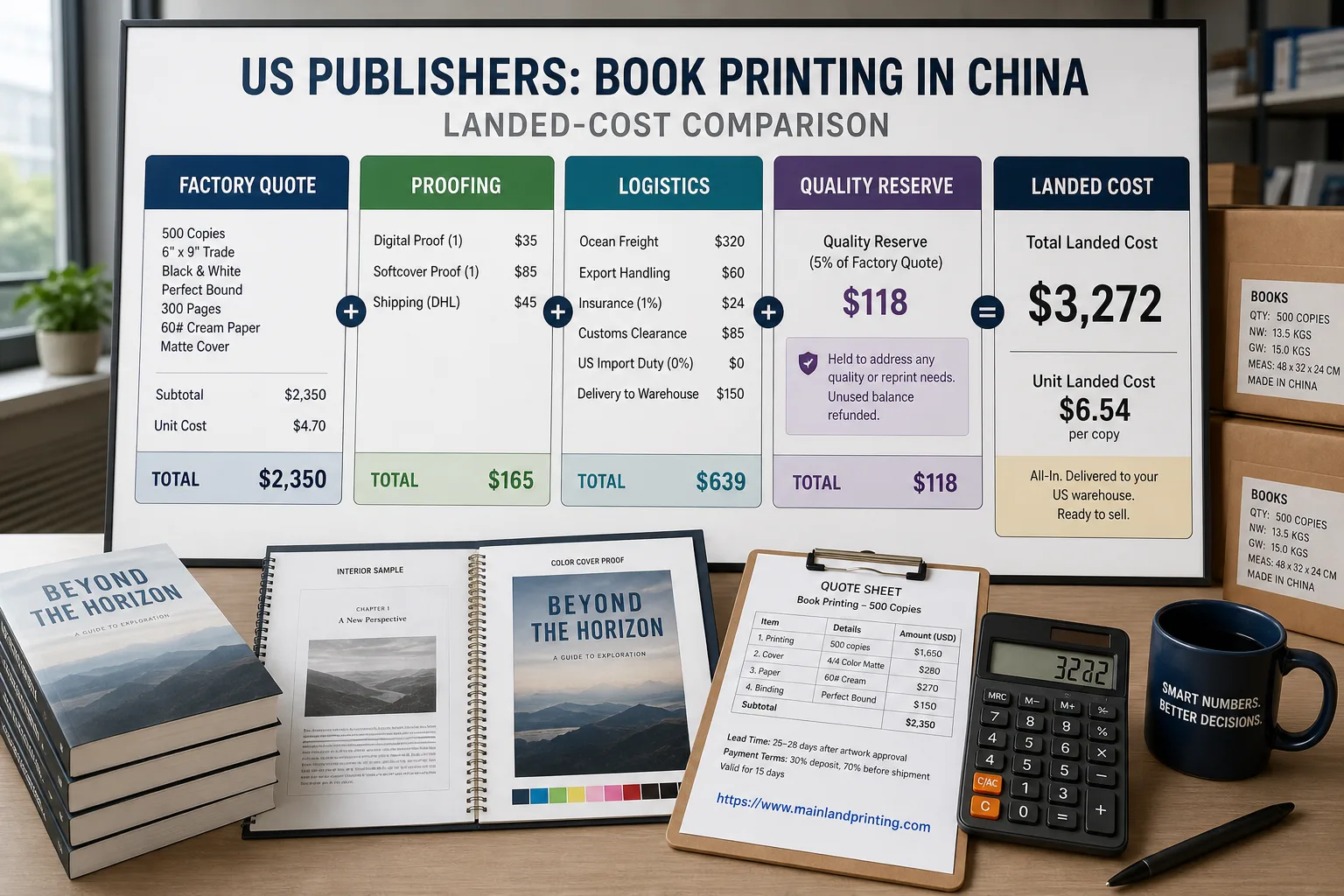
Per-unit print price is useful, but it is only one line in your real budget. A procurement decision for US distribution should be based on landed cost per sellable copy. That means printing, proofing, finishing, packaging, freight, destination handling, and expected quality-loss allowance.
When freight and destination handling sit in that landed cost, use the hardcover warehouse delivery to lock warehouse facts before you freeze a DDP hardcover quote.
| Cost Layer | What To Lock | Typical Risk If Missing |
|---|---|---|
| Factory quote | Paper spec, binding, finishing limits | Late add-ons and revised unit price |
| Preproduction | Proof rounds, color targets, approval cycle | Schedule drift and avoidable rework |
| Logistics | Incoterm, carton dimensions, mode split | Budget shock at destination |
| Quality reserve | AQL level, remake terms, claim window | Unplanned replacement spend |
As a rule, if one supplier is far cheaper but cannot state carton assumptions and proof cycle limits, you are not comparing cheaper production; you are comparing a complete quote to an incomplete one.
Understand the Five Drivers That Move Price and Risk
For US publishers, price movement usually comes from five drivers: run size, page architecture, substrate and finish stack, binding complexity, and logistics profile. The first three are obvious. The last two are often where hidden cost appears.
- Run size efficiency: setup cost dilution changes fast between 500 and 3,000 copies.
- Material stack: paper grade, cover board, and coating all change both look and transport weight.
- Binding choice: glued, sewn, or casebound options shift durability and unit economics.
- Tolerance discipline: tighter tolerances need stricter controls and sometimes slower throughput.
- Freight strategy: shipment timing and container utilization can erase factory savings.
If your project includes coated visual pages, compare finishing paths with your team early and align them with expected shelf life. A practical reference is this breakdown of book printing cost contributors, then adapt it to your actual freight and inventory model.
Compare Quotes With a Weighted Scorecard, Not a Single Price Column
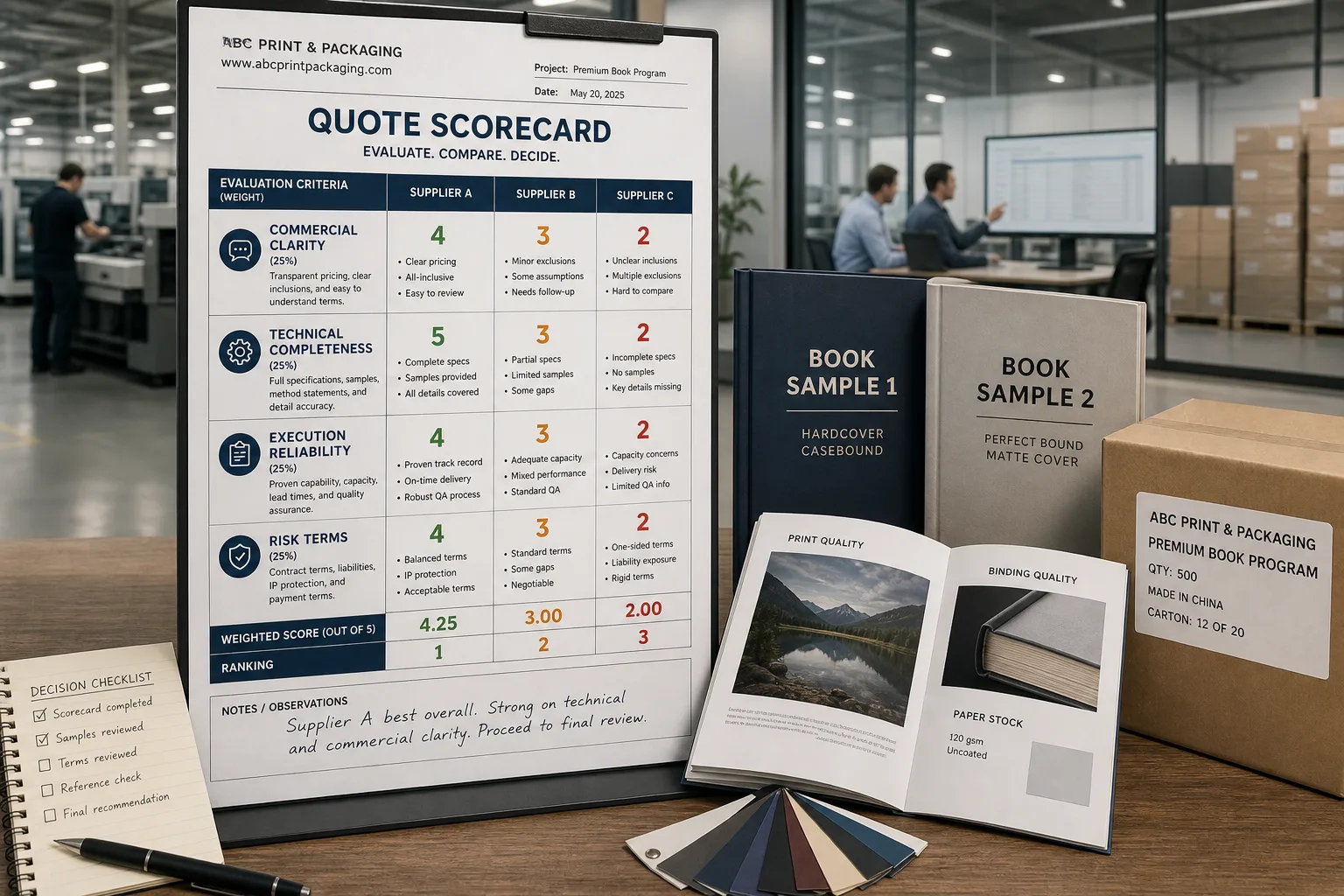
A structured scorecard makes quote reviews faster and easier to defend internally.Give each quote a weighted score across four dimensions: commercial fit, technical completeness, execution reliability, and risk transfer clarity. This helps teams reject vague offers early and focus on suppliers that can actually deliver.
| Dimension | Weight | Pass/Fail Trigger |
|---|---|---|
| Commercial clarity | 30% | Fail if cost exclusions are not explicit |
| Technical completeness | 30% | Fail if paper/binding spec is ambiguous |
| Execution reliability | 25% | Fail if timeline lacks approval milestones |
| Risk transfer terms | 15% | Fail if remake/claim terms are undefined |
On press-side projects, one recurring signal is that vague quotes frequently understate make-ready and finishing setup. When a vendor cannot state how corrections are handled after proof approval, treat it as a contract risk, not a communication gap.
Place Your First Approval Gate at Prepress
What must be approved before plates or files are locked
Your first quality gate should happen before production starts, not after cartons are packed. Require one controlled approval packet containing print-ready files, color intent, paper code, binding map, and final packing logic. If any of these items is still open, production should not be released.
This stage is also where many reprint disputes are avoided. Teams that document specs and sign-off versions can resolve issues quickly because both sides are judging against the same reference set.
Set Quality Gates From Prepress to Final Carton
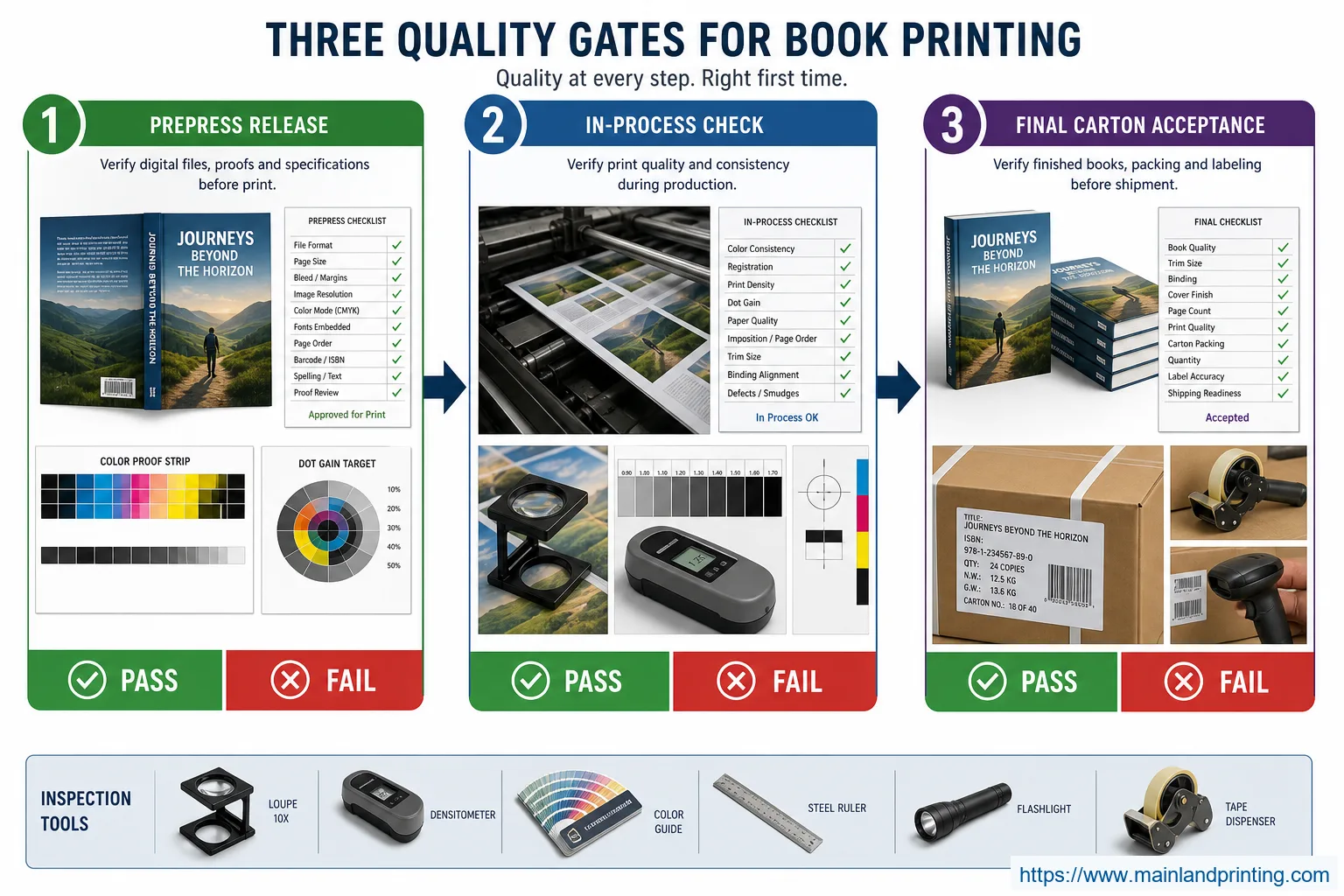
Quality control is strongest when each stage has a clear release condition. Instead of one final inspection, use three gates: prepress release, in-process verification, and pre-shipment acceptance. Each gate should define what is measured, who approves, and what happens when variance appears.
- Gate 1: File, substrate, and binding map verified against approved packet.
- Gate 2: In-process checks confirm color trend and binding integrity remain stable.
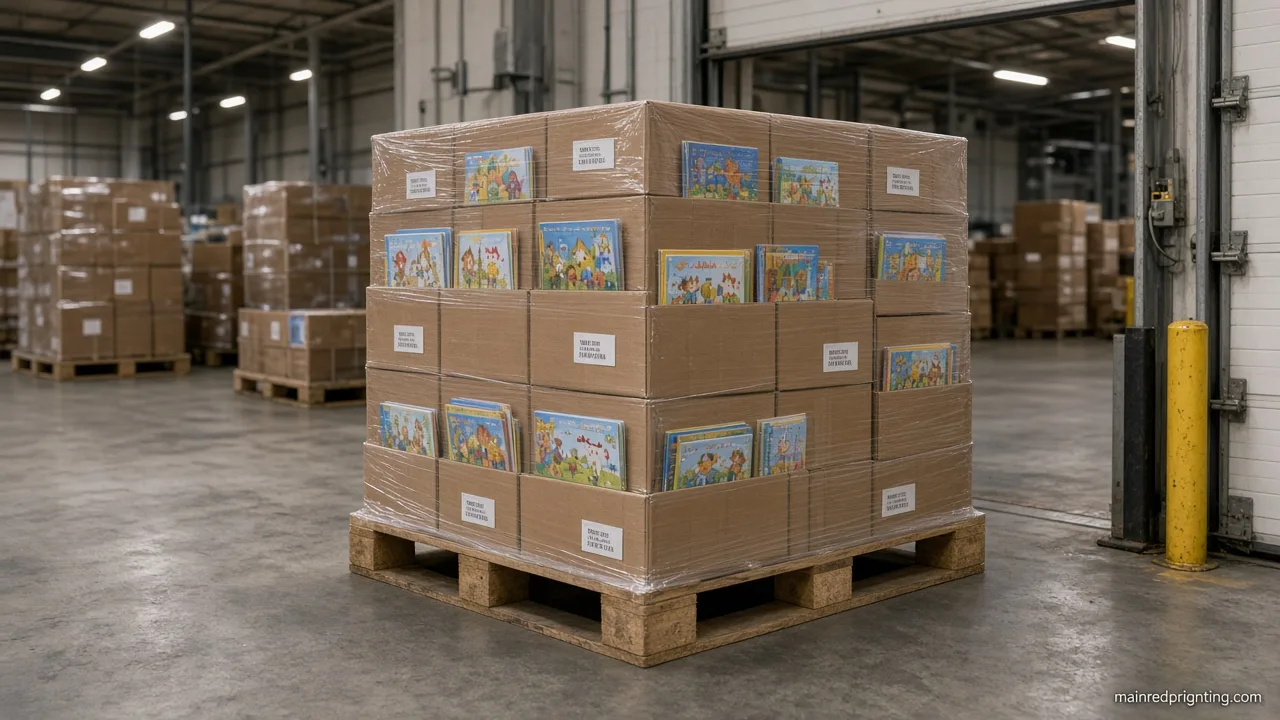
- Gate 3: Carton sample and labeling align with shipment and warehouse intake needs.
At this point, align your acceptance standards with external references, such as publishing standards resources, so internal and supplier expectations are framed by recognized definitions rather than ad hoc interpretation.
| Secondary Pass/Fail Table | Pass/Fail Trigger Standard | Fail Trigger |
|---|---|---|
| Pre-shipment carton review | Labeling, count, and pallet map match approved packing list | Any mismatch that blocks receiving workflow |
This secondary pass/fail table supports arrival inspection: if labels, carton marks, or pallet mapping do not match the approved version, the shipment should trigger rejection or rework immediately.
Red flags: supplier refuses to confirm proof revision limits, omits carton assumptions, or leaves remake responsibility undefined.
Plan Shipping and Receiving as a Publishing Timeline Decision
Logistics is not a post-production detail. For US publishers, release timing, warehouse windows, and campaign dates should determine whether you prioritize ocean efficiency, split shipments, or staged receiving. A low factory quote loses value if books miss a launch window.
For long-life inventory, handling and storage guidance also matters. Public preservation references like the Library of Congress book preservation guidance are useful when defining carton, humidity, and handling requirements for titles that must maintain condition over time.
On the operations side, ask suppliers to show how pallet labels, carton marks, and packing lists map to your receiving workflow. This small step often prevents expensive warehouse delays, especially when mixed SKUs, multiple title variants, or partial container releases are involved.
Use a Contract-Ready RFQ Checklist Before You Pay a Deposit
A contract-ready RFQ should convert assumptions into verifiable commitments. Before deposit, check that every quote includes exactly matched technical specs, documented approval milestones, sampling method, defect handling, and reprint responsibility windows.
- Technical schedule aligns with your release date and includes approval lead times.
- Final spec sheet includes paper code, caliper, binding method, and finish limits.
- Carton and pallet standards support your receiving process in the US.
- Claim procedure includes timing, evidence format, and financial remedy method.
- Change-order rules define cost and schedule impacts before execution.
If you need a practical sequence for production prep, this guide to book file preparation helps align design, prepress, and manufacturing expectations before the order goes live.
FAQ
What MOQ should US publishers expect?
MOQ depends on format, paper stack, and finishing complexity. Ask each supplier for MOQ by spec version, not by generic title category, so your quote comparison remains valid.
How can I prevent low-price quote surprises?
Force every quote to include freight assumptions, proof cycle limits, and defect remedy terms. Any missing item should be treated as a pricing risk and marked fail in your comparison sheet.
When should I release deposit?
Release deposit only after prepress files, tolerance rules, and carton standards are approved in writing by both sides.
Need a quote you can confidently approve?
Share your trim size, page count, target run, and delivery window. Our team can structure a quote that matches technical requirements, quality gates, and shipping logic for US distribution.
Choose a Supplier Using Evidence, Not Promises
Strong publishing procurement is operational, not promotional. Use complete specs, score quotes against weighted criteria, enforce approval gates, and connect logistics planning to your release calendar. This is how you reduce surprise costs while protecting print quality and schedule reliability.
When your team evaluates suppliers with evidence instead of headline pricing, you gain better negotiation leverage and cleaner execution. The result is fewer emergency decisions, fewer post-arrival surprises, and a more predictable path from final files to books in market.
For US publishers, book printing services from China make sense once the run covers freight, and this guide marks the break-even point.