A board book sample is not a courtesy preview. It is the last checkpoint where you can still reject the wrong laminate, the wrong board feel, or the wrong safety path before a deposit locks production.
Approve a board book sample only after you match the sample type to your project stage—dummy for structure, plate or printed sample for color and laminate, and safety certificates for retail—and run a written Pass/Fail checklist on opening, corners, board thickness, and color delta before you pay the production deposit.
This guide maps printed samples, dummy samples, and plate proofs to first runs, shape tests, and retail compliance, then walks through the Sample Type Decision table, the Sample Approval Checklist, and the Safety Testing Timing table so you know exactly what to sign off.
Which Checkpoint Fits Your Run?
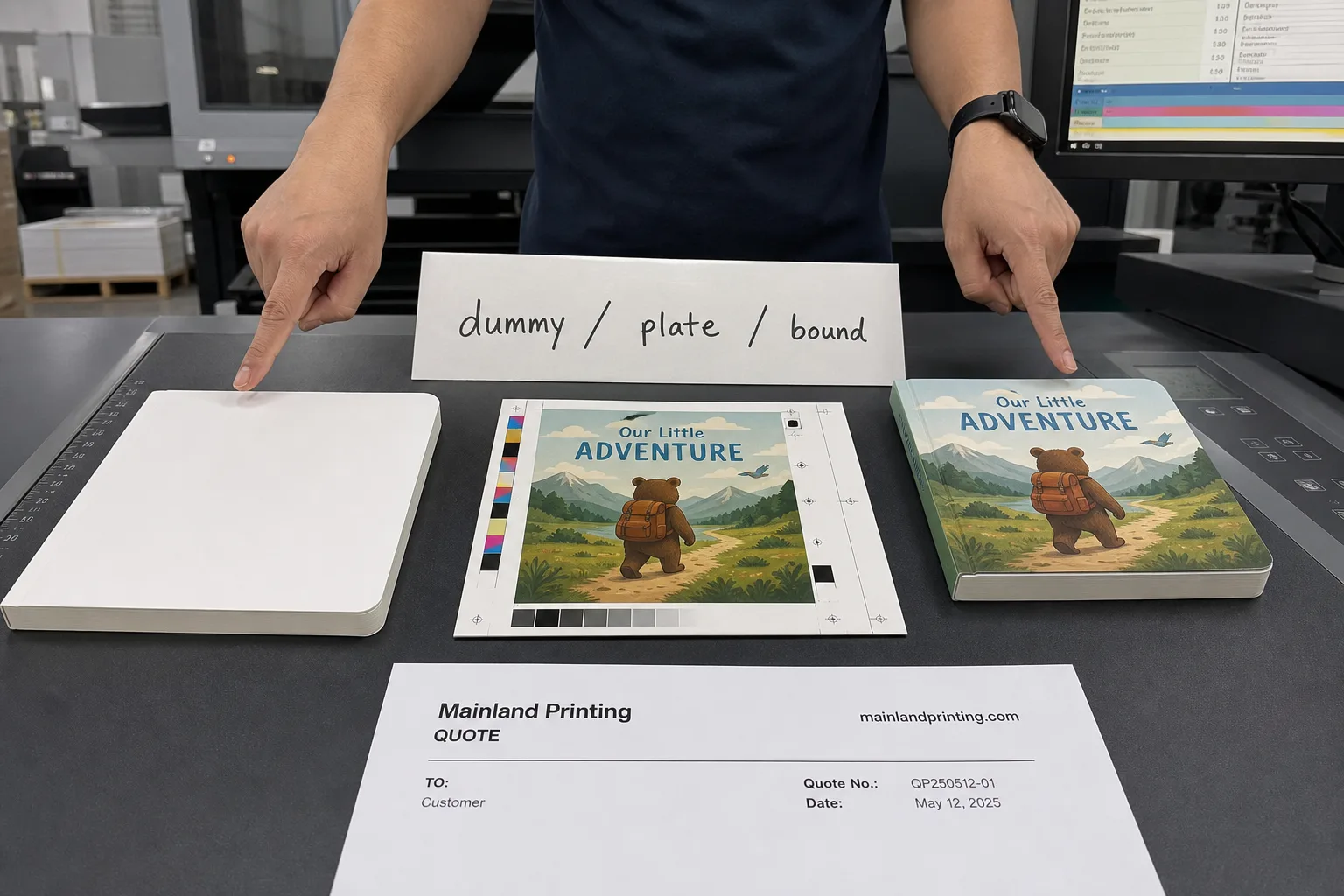
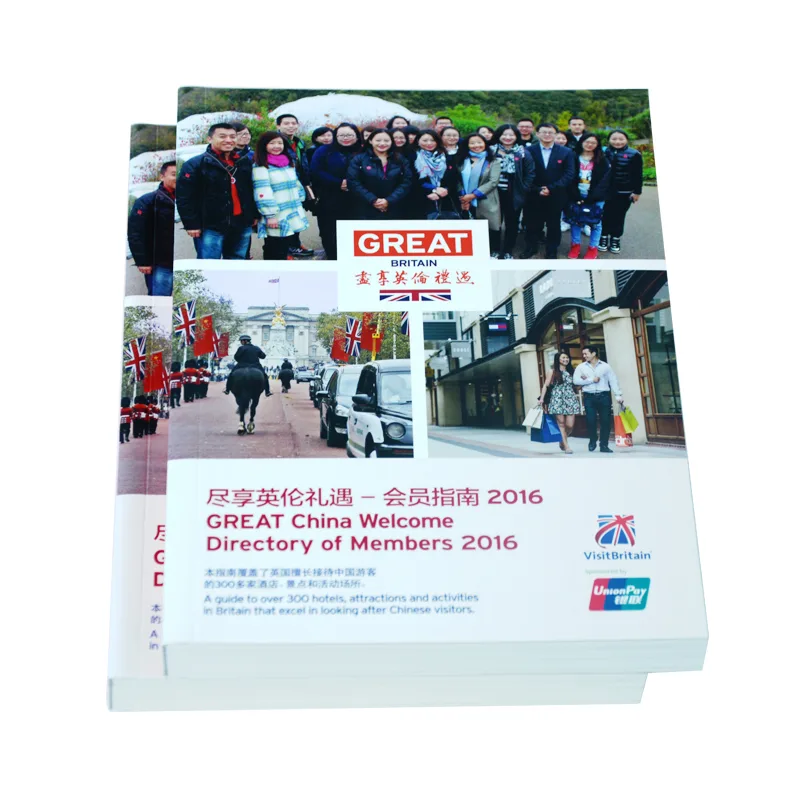
Suppliers use three different objects and call them all “samples.” A dummy sample is usually an unprinted or white mock-up built to final trim, board stack, and corner radius. It proves size, hand-feel, and die-cut shape without committing ink.
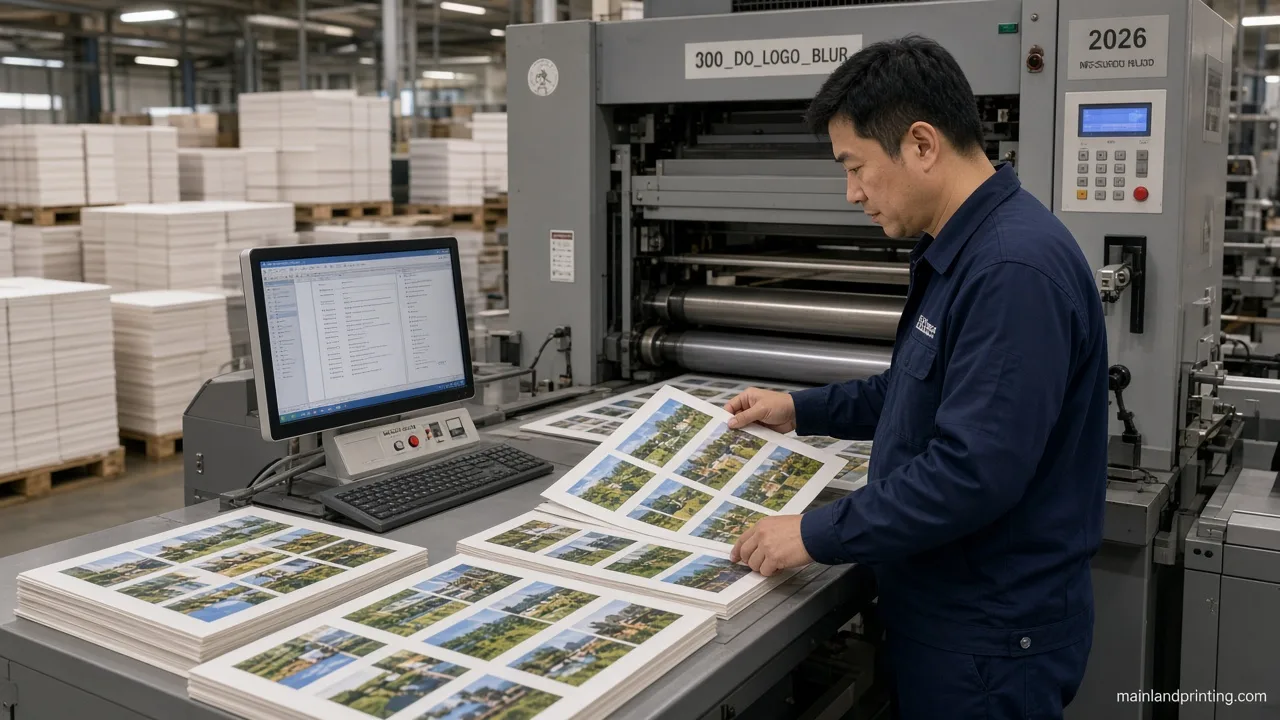
A plate proof is a press sheet from an offset master plate. It shows color and laminate on real production stock, but the sheet is often half the final board thickness because two printed sheets are later glued and compressed into one rigid page.
A printed bound sample is the closest preview of the finished book. It costs more and takes longer, but it is the only route that shows page opening, spine behavior, and repeated handling in one object.
| Sample type | What it proves | What it cannot prove | Best use case |
|---|---|---|---|
| White dummy / structural mock-up | Trim size, corner radius, die-cut outline, page count feel. | Color match, laminate rub, ink scuff, final board compression. | Custom shapes, new trim sizes, first-time board book specs. |
| Offset plate proof sheet | CMYK color on production paper, laminate choice, artwork registration. | Final board thickness, binding opening, repeated toddler handling. | Color-critical art, dark backgrounds, gloss vs matte decisions. |
| Printed bound sample | Full opening feel, laminate on edges, corner finish, cover rub. | Nothing replaces mass-run QC, but it removes most structural surprises. | Retail launch, Kickstarter fulfillment, premium gift editions. |
A common stall point is treating a white dummy as color approval. The dummy can pass size and shape while the first printed run exposes laminate whitening at rounded corners or gloss glare on dark covers.
On Mainland Printing programs we ask buyers to name the approval object in the PO line: structural dummy only, plate proof with laminate, or bound pre-production sample. That single line prevents a supplier from shipping the cheapest object and calling it “approved.”
When you compare board book printing quotes, attach the sample type to each price tier so a lower unit cost does not hide a missing bound proof.
Buyer takeaway
Name the approval object in writing before you pay any sample fee. A white dummy cannot substitute for color sign-off, and a plate sheet cannot substitute for binding feel.
Need the right board book sample before you commit?
Send trim size, page count, laminate preference, and your retail market. Mainland Printing can recommend dummy, plate, or bound sample routes before you approve production.
Pass Signals and Fail Triggers
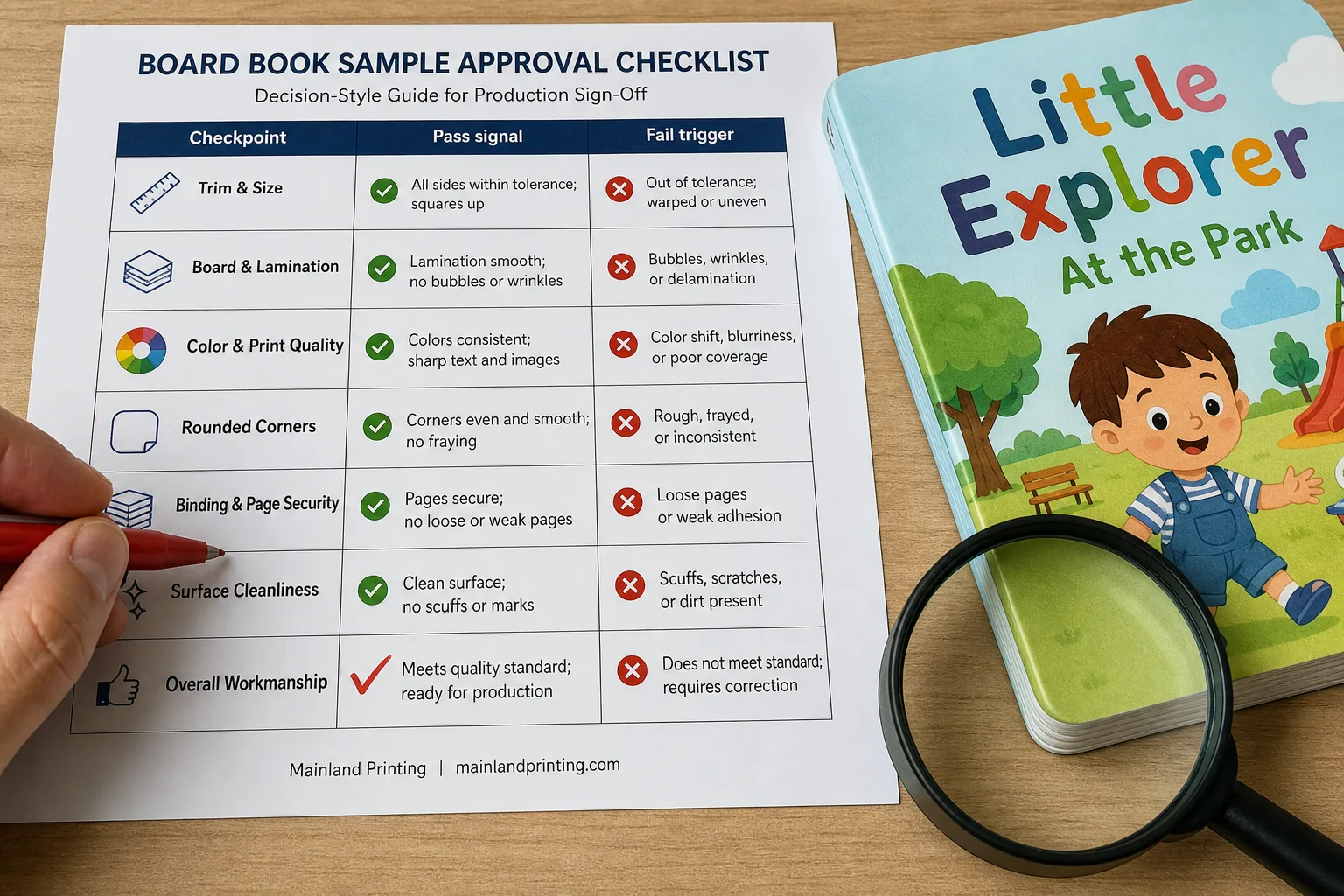
Do not approve from a photo or a PDF alone when the product will be handled by toddlers, packed in cartons, and sold under retail compliance rules. Use the checklist below on the physical object you intend to match in mass production.
Record results in writing, even if the supplier sends an online approval form. A checkbox without measured notes creates disputes when the first container arrives.
| Checkpoint | Pass signal | Fail trigger |
|---|---|---|
| Trim and registration | Artwork sits inside the safe zone; bleed looks even on all sides. | Text or faces drift toward the trim edge after binding. |
| Page opening | Pages open without excessive force and lie flat after release. | Front spread fights the hinge or cracks laminate at the gutter. |
| Corner radius and edge | Rounded corners feel smooth; no lifted laminate or exposed board. | Sharp edges, burrs, or white stress lines after light rubbing. |
| Board feel | Matches agreed thickness target, commonly 1.5–2 mm per leaf after compression. | Sample feels thin, hollow, or delaminating at the edge. |
| Color and laminate | Skin tones, dark backgrounds, and spot colors fall inside your agreed delta. | Gloss glare hides detail, matte shows fingerprints instantly, or ink scuffs in 10 passes. |
| Carton and packing plan | Supplier confirms master carton count and inner packing before deposit. | No packing mock-up and no cube estimate for your delivery market. |
Run the Sample Approval Checklist row by row on the live sample, not on a marketing render. Skipping the board-feel row is how buyers inherit a book that looks correct in photos but feels wrong in hand.
Red flag: the supplier pushes deposit before you finish the checklist or refuses a second plate pull after a laminate fail. Treat that as a stop signal, not a scheduling inconvenience.
If any Fail trigger appears, request a corrected sample or a plate re-pull before you sign. Paying a deposit while a hinge or laminate issue is “probably fine” moves rework cost from the supplier to your launch calendar.
What to Confirm Before You Sign Off
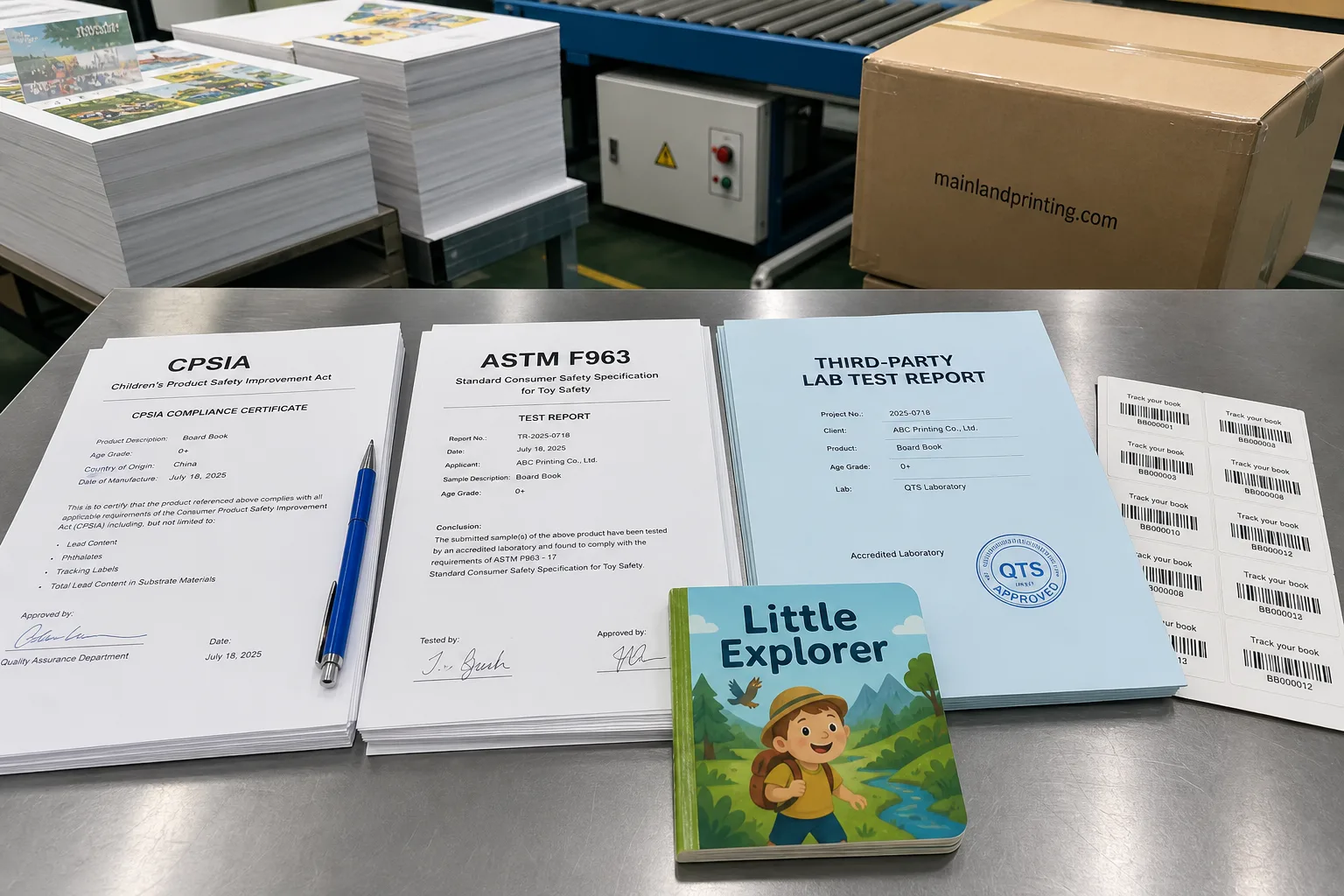
Retail buyers, Amazon sellers, and Kickstarter creators often learn about CPSIA and ASTM F963 after the sample looks beautiful. Safety documentation should run in parallel with physical approval, not after containers ship.
U.S. children’s products generally require compliance with the Consumer Product Safety Improvement Act and applicable ASTM toy safety standards. Your approval packet should list which tests apply to ink, substrate, and small-part behavior for your exact board book construction.
| Sales channel | Test timing vs sample approval | Documents to request before deposit |
|---|---|---|
| Direct online / DTC | Start material screening at sample stage; finalize CPSIA test report on production lot. | Ink and board material declarations, lab quote, estimated lead time for lot testing. |
| Independent bookstore / wholesale | Buyer may require third-party lab report tied to SKU before PO release. | CPSIA-compliant test report, tracking label plan, certificate of conformity draft. |
| Kickstarter / preorder fulfillment | Lock material set at sample approval; do not swap ink or board after backer sign-off. | Written material lock, test scope for final lot, timeline that fits campaign promises. |
Official guidance from the CPSIA public law text and the eCFR Part 101 framework helps you ask better questions about tracking labels, test labs, and certificate language.
For deeper production-risk context on corners, die-cutting, and handling, cross-check your material lock with Mainland Printing’s board book safety standards guide before you treat a sample as retail-ready.
Sample-to-Production Timeline and Fee Expectations
Timing drives which sample type you can afford. A plate proof often arrives in two to three weeks including air freight, while a bound pre-production sample may need extra hand assembly after color is locked.
Typical industry fees cluster near USD 120–180 for plate or digital proof packages. Confirm whether the fee credits toward production and whether one correction round is included.
Budget the sample stage inside your total project math. Pair this timeline with a book printing quote review so proof fees, MOQ tiers, and freight terms stay in one comparison sheet.
Frequently Asked Questions About Board Book Sample Approval
What is the difference between a dummy sample and a printed board book sample?
A dummy proves structure: trim, shape, page count feel, and corner radius without final color. A printed sample proves ink, laminate, opening, and handling on production-intent materials. Use the dummy first for new sizes or die-cut shapes, then move to plate or bound samples before you approve color for retail.
How accurate is a board book proof compared to final production?
Offset plate proofs are usually the closest color reference because they use the same print method as the run. Digital bound proofs can show layout and typos well but may shift color versus offset.Industry guidance often cites roughly 85–95% color match for toner-based proofs versus offset production, so approve laminate and dark-background behavior on the plate or production-intent sheet when color is critical.
Do I need CPSIA testing before approving a board book sample?
You may approve structure and color before final lot testing, but you should not approve materials you are unwilling to test.Lock ink, board, and laminate at sample stage, confirm the test scope with your lab, and treat missing safety documentation as a Fail trigger on the checklist if your channel requires certificates before sale.
How long does board book sample approval take?
Most projects need two to four weeks from file OK to a reviewable plate or bound sample with air shipping, plus your internal review window.
What should I check before approving a board book sample?
Work through the Sample Approval Checklist: trim, opening, corners, board feel, color and laminate rub, and packing plan. Add the safety test plan for your sales channel before you sign or pay the deposit.
When the sample type, checklist, and safety documents align, you are approving a production path—not just a good-looking mock-up.