When a workbook, planner, or training manual has to lay flat on a desk and survive bags, carts, or overnight shipping, the binding choice is the part that shows up in every quote—and the part buyers often label with three different names for the same spine.
Wire o vs plastic coil binding comes down to crush recovery versus a more formal metal look, so you lock the use case first, then name one system on the RFQ before printers price different spines.
This guide helps you match Mainland’s Wire-O and plastic spiral options to how the book will be carried and presented, clear up RFQ wording, and send a sample checklist that keeps quotes comparable.
Match the Binding to How the Book Will Be Used
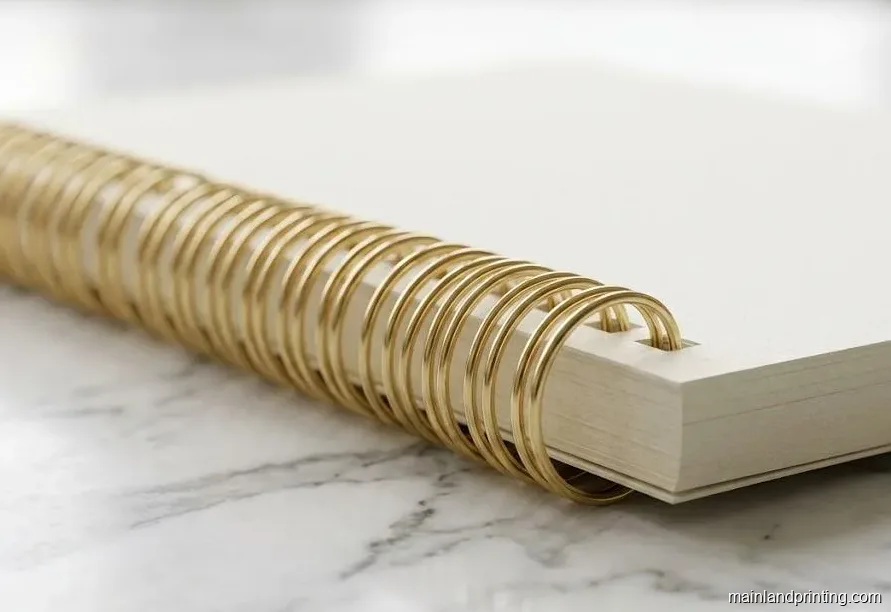
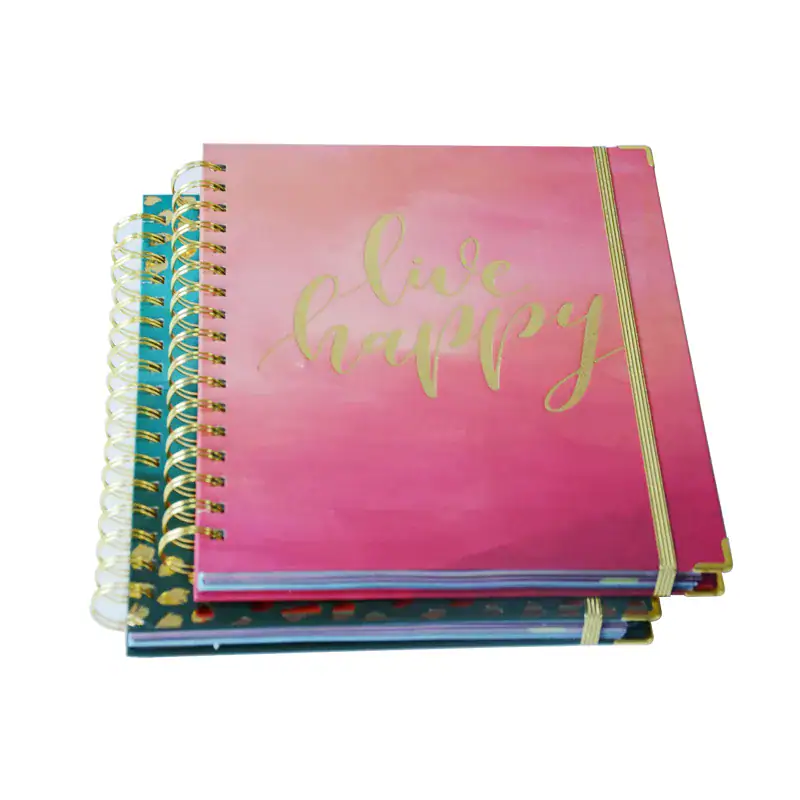
Metal Wire-O suits corporate reports, branded planners, luxury journals, and portfolios; plastic spiral suits student workbooks, training manuals, internal drafts, and high-volume runs.Color options follow Mainland’s published lists—Wire-O in black, white, silver, or gold; plastic coil in black, white, clear, blue, or red—unless a live quote confirms extras. This is a use-case map, not a ban on Wire-O workbooks or plastic coil planners when the brief prioritizes the other trait.
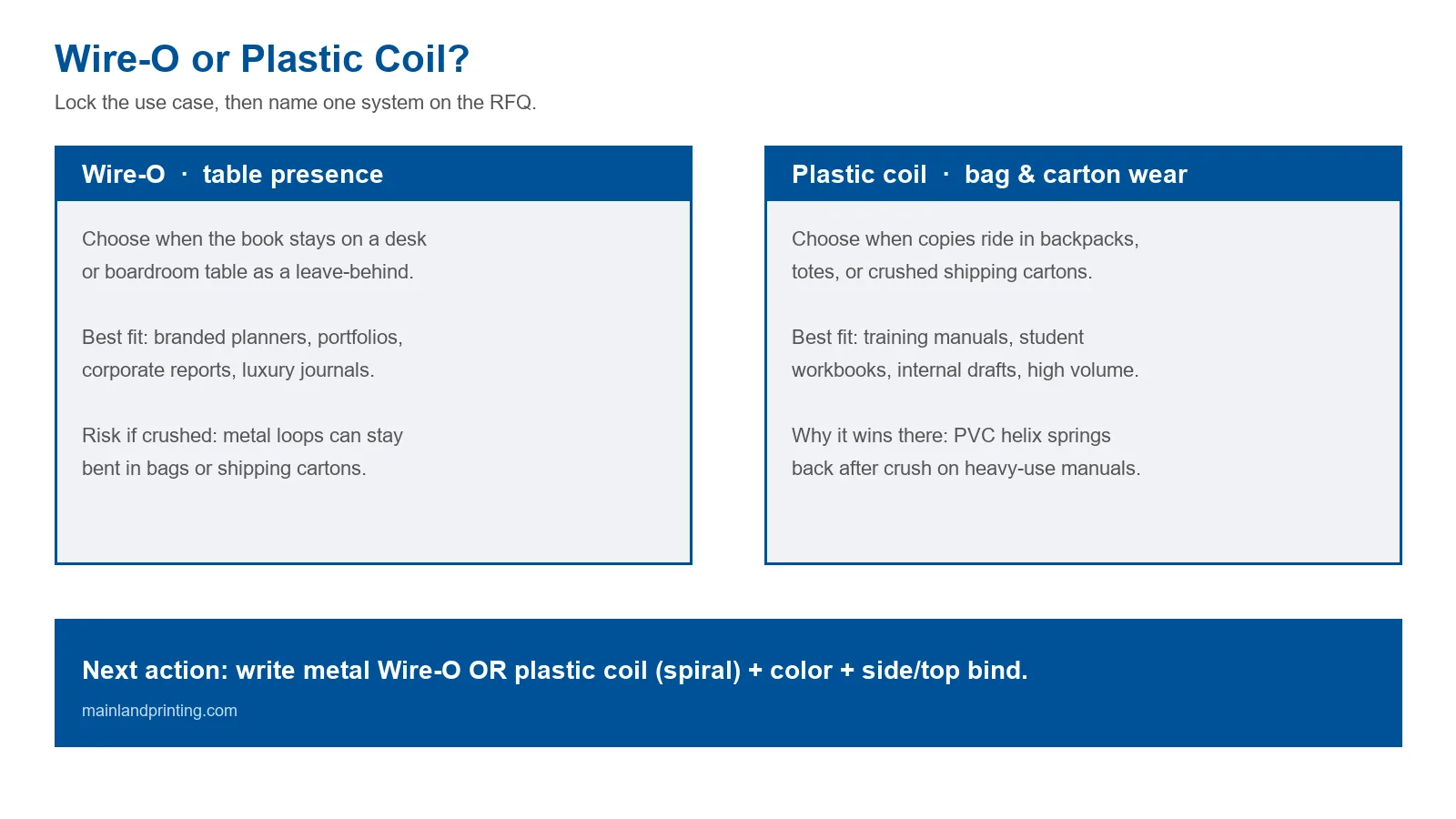
Plastic spiral coil is the durability pick for heavy-use workbooks and training manuals because it springs back if crushed; Wire-O looks more formal but can stay bent if mishandled.That split fits Mainland’s spiral product FAQ for student manuals and field books versus boardroom leave-behinds; shipping bags and backpacks still need a physical sample check. Competitor pages that crown Wire-O as always tougher are marketing opinions—not Mainland’s crush-resistance rule for plastic coil.
If the finished book is mostly a client leave-behind that stays on a conference table, Wire-O is usually the cleaner metal edge.If coaches toss copies into backpacks between sessions, plastic coil is the safer first call. Appearance-only questions—Hidden Wire-O versus a visible twin-loop spine—belong on Mainland’s Hidden Wire-O strategy page, not in this material choice.
| Project situation | Binding lean |
|---|---|
| Training manuals / student workbooks in bags daily | Plastic coil first for crush recovery |
| Branded planners / portfolios on a boardroom table | Wire-O first for polished metal look |
| Internal drafts and high-volume reprints | Plastic coil unless a client-facing cover brief wins |
| RFQ mixes “spiral,” “Wire-O,” and “coil” in one line | Stop and name one system before anyone prices |
The table above is a first lean, not a finish line—still confirm color, bound edge, and a hand sample before you approve the run.
When Plastic Coil Wins for Training Manuals
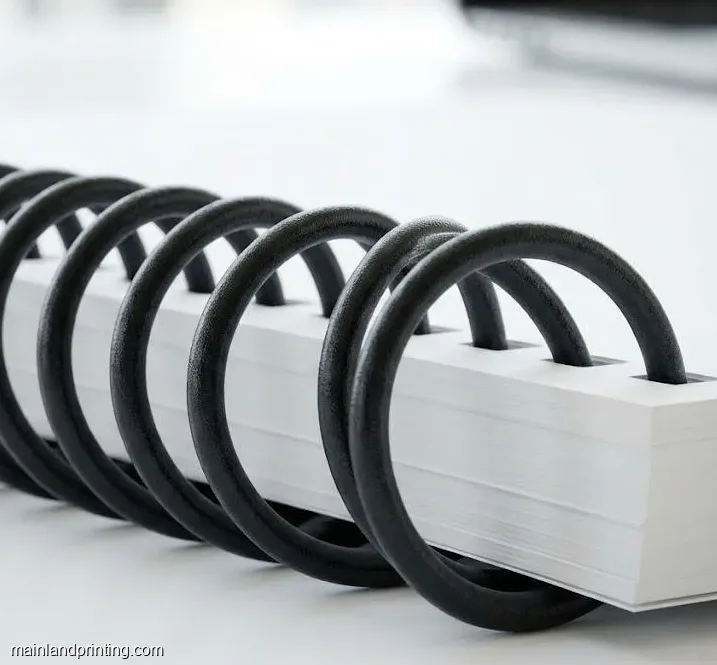
After a week of workshops, the binding that still opens flat without a permanent kink is the one that keeps manuals usable.Plastic coil’s continuous helix recovers from crush better than a twin-loop wire that can stay bent once flattened in a carton—that is why Mainland’s FAQ points heavy-use manuals toward plastic spiral first.
Plastic coil is a continuous PVC helix; Wire-O is a double-loop metal wire crimped closed at both ends, so pages do not reinsert the way a coil can.Trade guides use that construction difference for cookbooks and student books versus presentation booklets; treat page-count ceilings as OEM guidance until Mainland confirms the job. OEM sheet-count bands are not Mainland absolute limits; coil diameter still follows finished thickness on the quote.
Keep write-on interiors on uncoated stock when pens are part of the session, and leave the coil color as a deliberate brand or cost line—not an afterthought on the RFQ.Mainland’s published training-manual recommendation is 80 lb / 120 gsm uncoated for pen work; coated stocks still belong on image-heavy sections as their own quote line.
Side-bound Letter or A4 manuals are the default classroom shape, but top-spiral calendars and flip charts are a different RFQ row—same plastic-vs-Wire-O decision, different punch edge. Name the bound edge every time so vendors do not price a side coil when you meant a top flip.
Need a spiral binding recommendation for your run?
Send the use case, trim, page count, and preferred Wire-O or plastic coil color—Mainland will quote the same spine on the spiral line.
Planner Look Versus Daily Wear
Branded planners that sit next to a laptop in client meetings often earn the metal Wire-O finish even when the interior is fill-in pages. Daily wear planners that live in totes lean plastic coil so a crushed spine does not stay oval for the rest of the year.
Buyers already ask for binding options as metal coil, Wire-O, or coil pitch on the same planner RFQ—so decide the look-versus-wear tradeoff before you list three synonyms and hope the factory guesses which one you meant.
Say Wire-O or Plastic Coil Clearly on the RFQ
Leave at least 12 mm to 15 mm (about 0.5″) of inner margin so spiral punch holes do not cut into text or graphics.The clearance sits on Mainland’s spiral FAQ for punched edges; top-bound or landscape jobs still keep that clear zone on the bound edge. Margin clearance is a prepress rule, not a page-count or pitch absolute.
On the RFQ, write one binding system in plain words: metal Wire-O or plastic coil (spiral), plus color, side or top bind, trim, page count, and whether pages must survive bag crush. If the brief still says “spiral / O-wire / Wire-O” in one breath, pick one before pricing starts—mixed labels are how you get mismatched spines back.
A comparable pack also lists cover stock and finish, interior color mix, tabs or dividers if any, packaging marks, and the ship-to city.Those fields do not choose the spine for you, but they stop “cheaper” quotes that quietly drop tabs or change the bound edge. See Publishing Xpress on coil vs Wire-O for construction vocabulary only—their sheet-count bands are not Mainland limits.
Physical sample checks that catch problems early: open the book flat and write near the gutter with the same pen the trainee will use; squeeze the spine the way it sits in a shipping carton for ten seconds; flip the outer corners to see if the coil snags or the Wire-O loops gape; confirm the punch line sits outside the 12–15 mm clear zone on the bound edge.Mainland’s published standard MOQ for custom spiral-bound notebooks is 100 copies on the offset path, but that floor is a planning cue, not a unit price—quantity ladders and cost variables live on the spiral workbook print cost guide.
Lock the Choice Before You Order
You now have a use-case lean, a crush-versus-look rule from Mainland’s spiral line, and an RFQ wording pack that stops synonym collisions. Approve Wire-O when the book’s job is table presence; approve bobine de plastique when bags and cartons are part of the product life; then send one named spine to quote.
Share trim, page count, binding system and color, bound edge, and ship-to notes with Mainland’s spiral bound book printing team so the recommendation and the price refer to the same book—not two different spines with the same PDF.Once the sample clears the carton squeeze and the gutter write test, you can scale quantity without reopening the material argument.