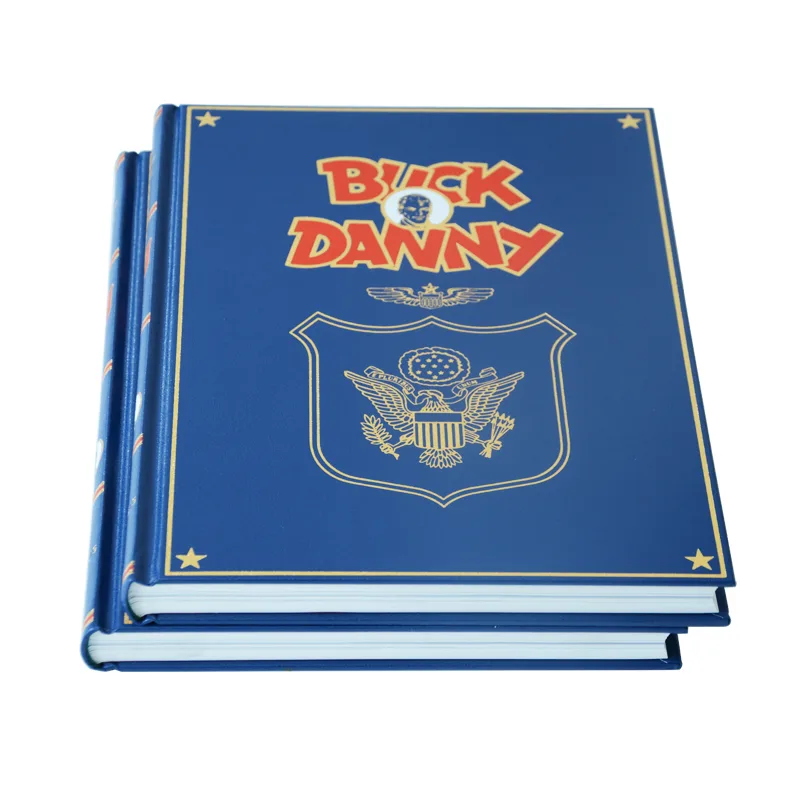
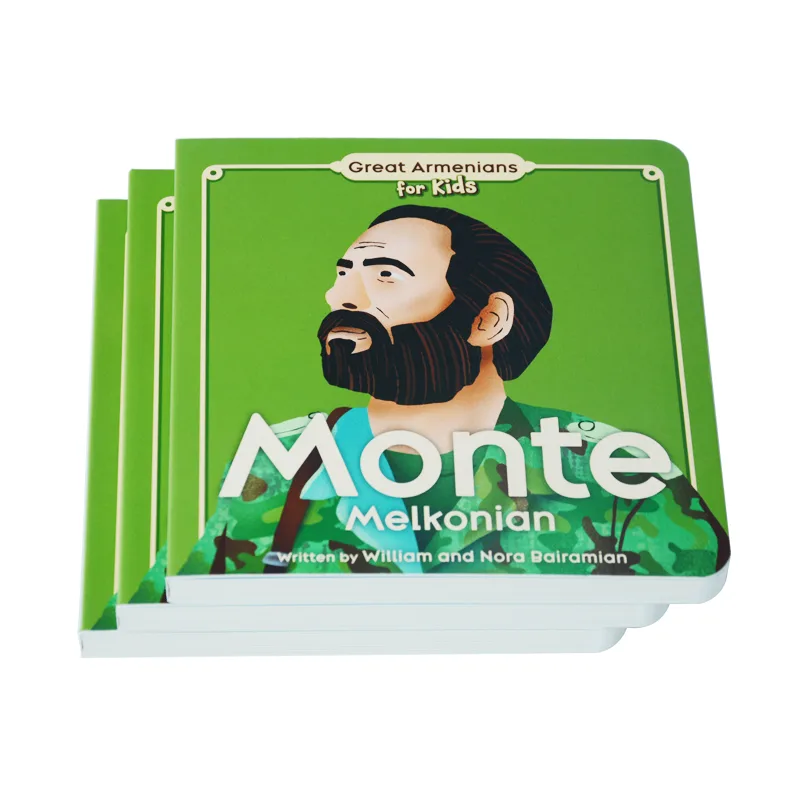
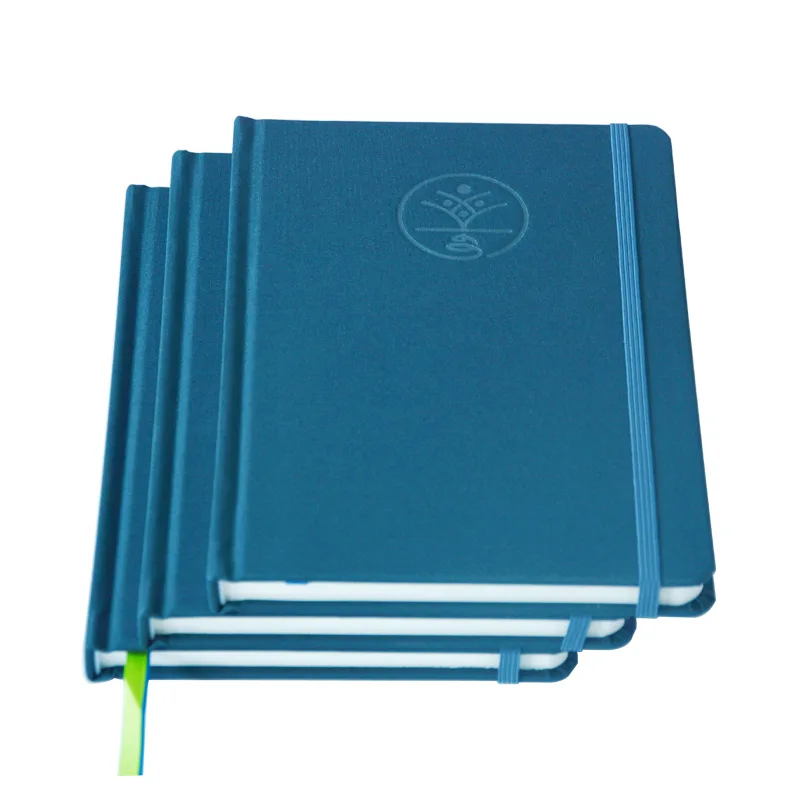
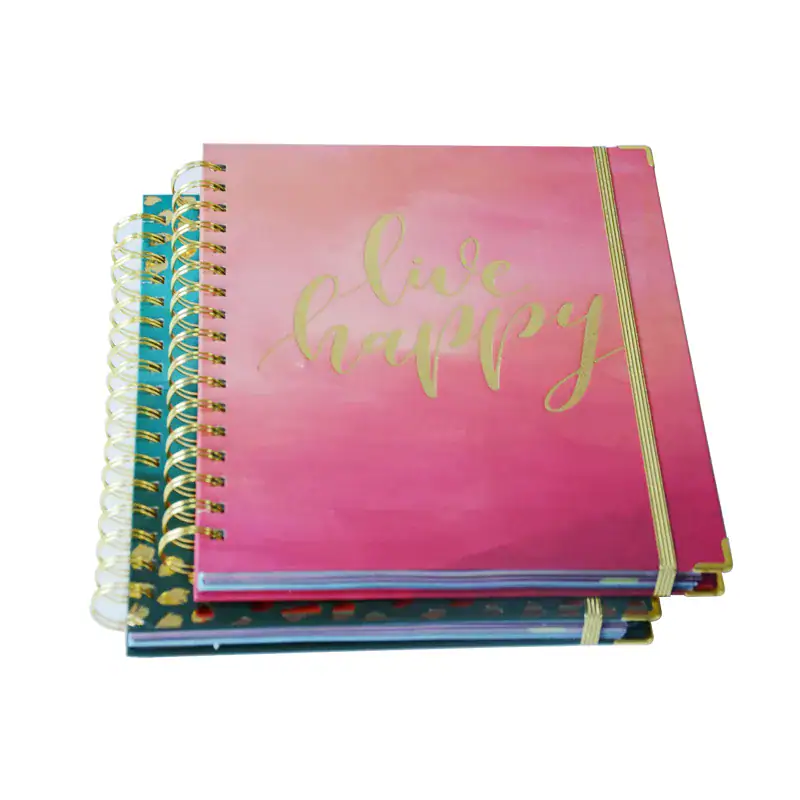
When an art book is close to press, the open question is not whether a proof exists. It is which sample can confirm color, which can confirm paper tint, and which risks still wait for a construction check.
Approve art book color, paper, and finishes by sample type: a PDF soft proof for layout and text, a paper sample for tint and construction, and a contract or press color proof when CMYK image match must drive the press. Sign OK to print only for what that sample actually shows.
You leave with a sample plan you can send: which piece confirms color, which confirms paper, and which confirms finish or fold, before anyone writes OK to print.
Match Each Art-Book Risk to the Right Sample
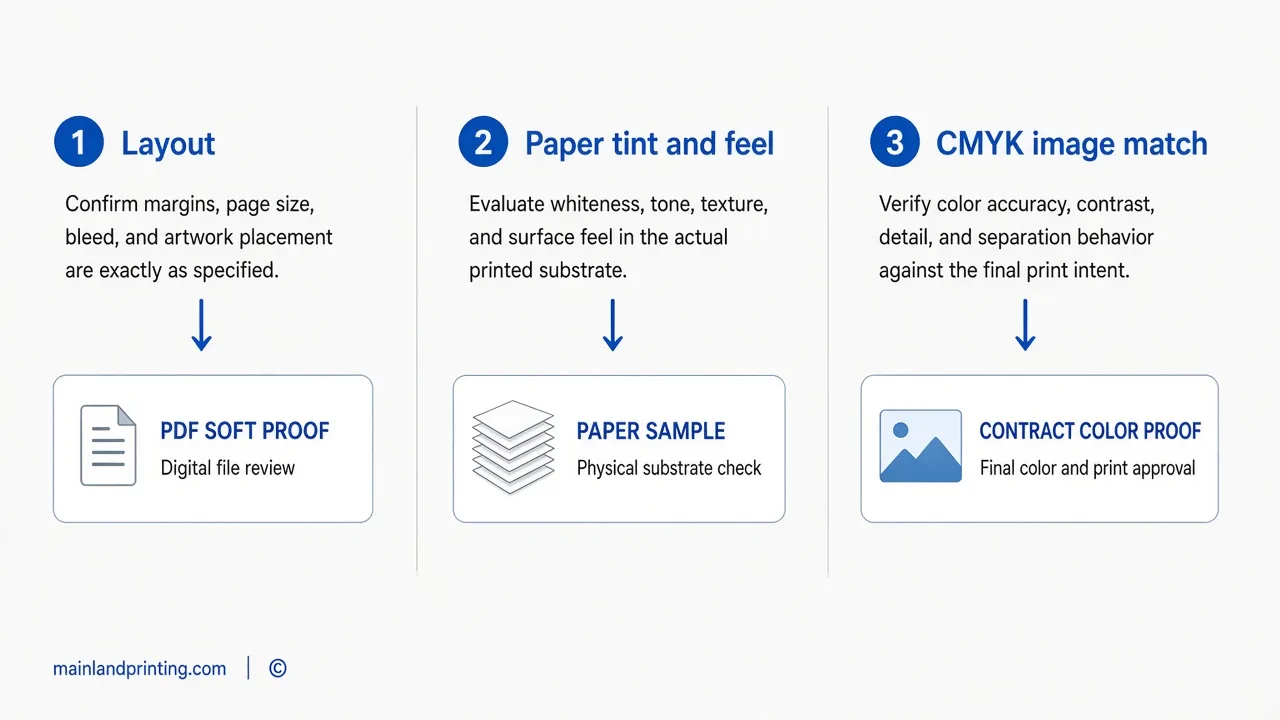
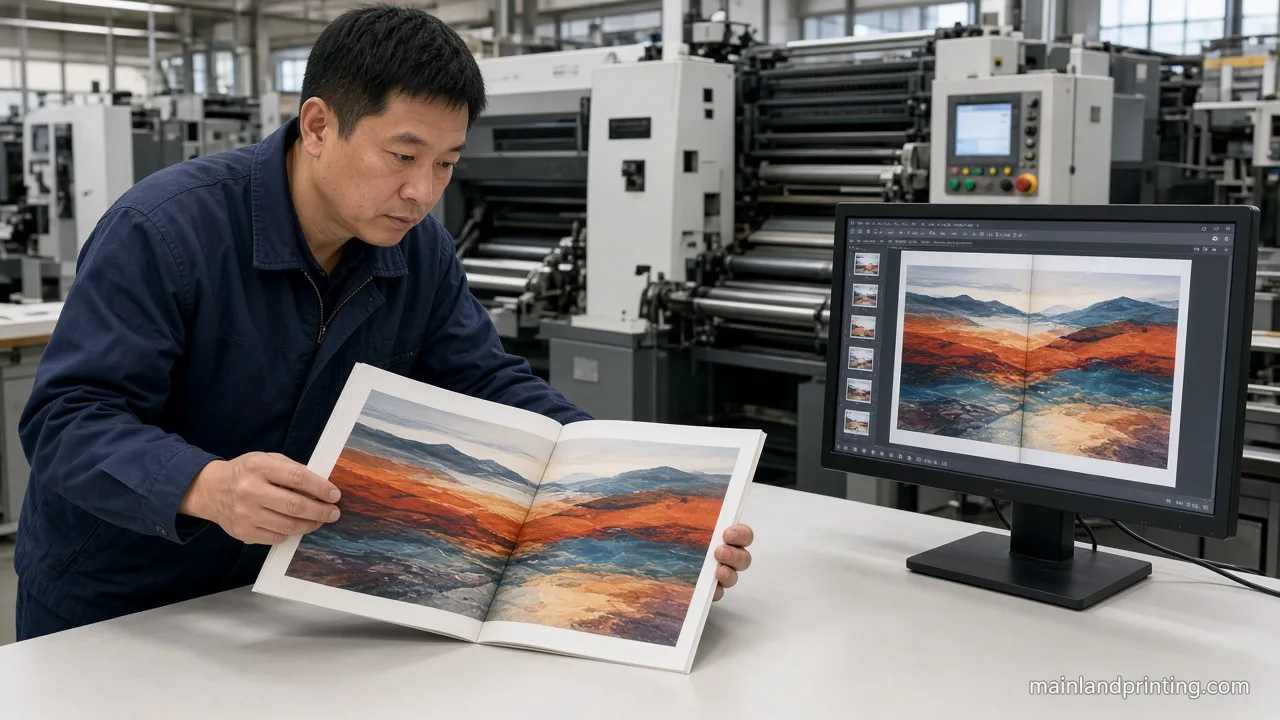
A screen PDF and a press sheet answer different questions. Bookmobile’s art-book printing guidance puts the screen limit in plain terms:
Electronic proofs still display the cover and pages to you in RGB color on a computer screen, not printed in CMYK on paper, which is how your final book will actually be produced.
For this reason, electronic proofs are useless if you are really trying to maximize the quality of your printed images.
A PDF soft proof still helps catch layout and text errors, and it does not replace a paper or contract color check on critical art images.
When CMYK image match has to drive the press, ask for a contract color path rather than another screen review.
Contract color proofs are printed on special proofing systems which are calibrated to match the look and color balance of the CMYK offset press on which the book will actually be printed.
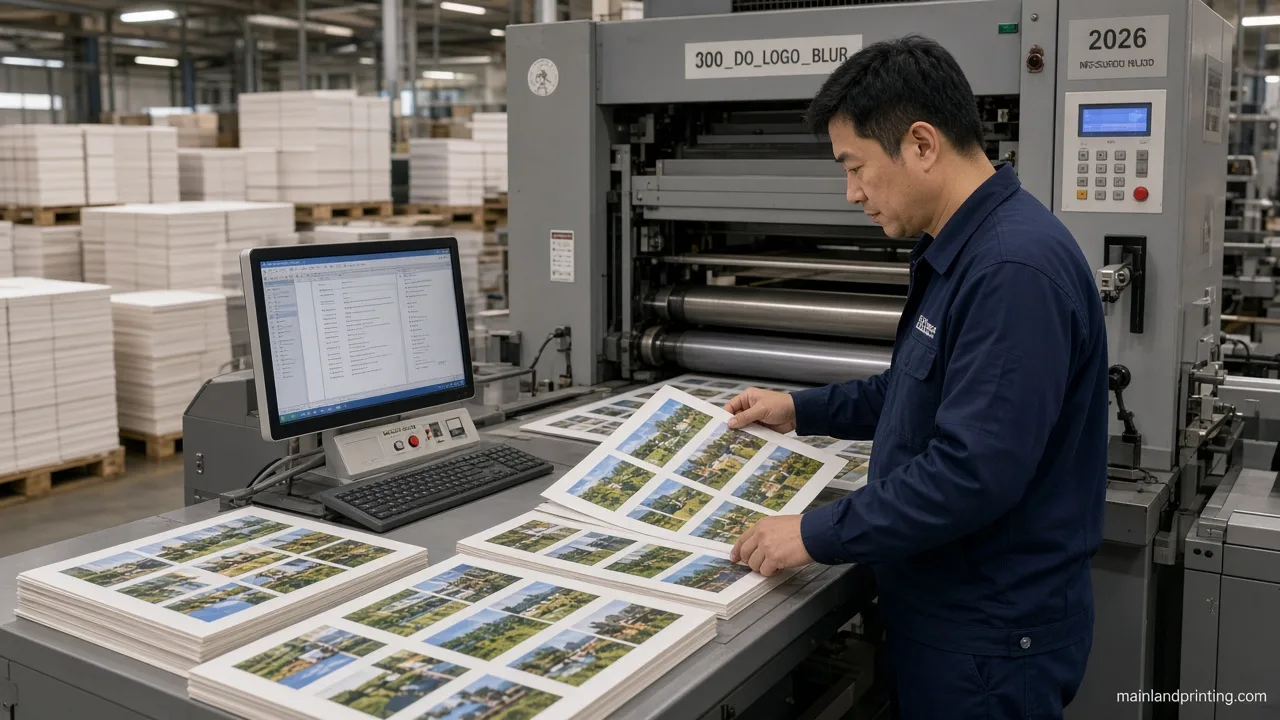
When you approve contract color proofs, you send them back to the printer, and they are placed in a special viewing booth right next to the offset press.
Contract proofs are typically excellent representatives of how your book will print, except that the proofs are usually not printed on the paper the book will run on.
That last limit is why paper tint and board feel still need a paper or construction sample even after a strong contract color proof.
Check each risk against the sample type that can show it before you treat any proof as finished. The table separates what each sample can lock.
| Risk to confirm | Sample that can show it |
|---|---|
| Page order, type, crop, and missing pages | PDF soft proof |
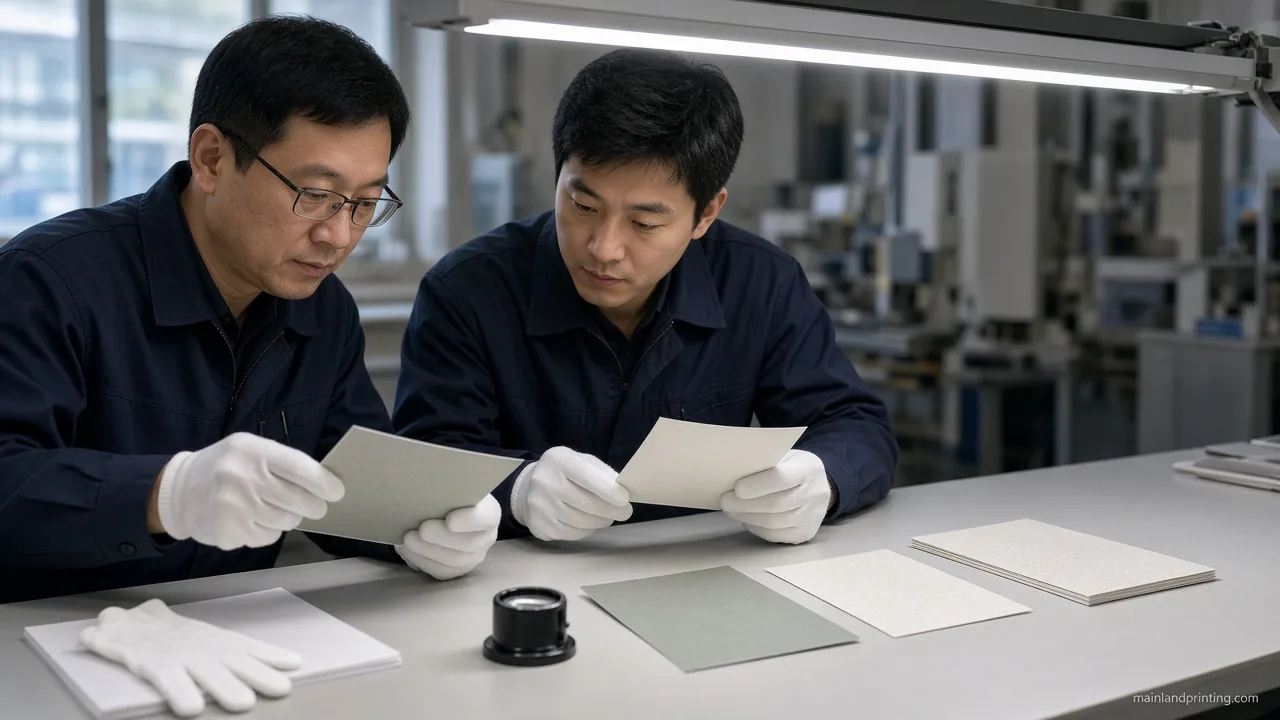
| Paper tint, opacity, and board feel | Paper or construction sample |
| CMYK image color balance for critical plates | Contract or press color proof |
| Cover finish, foil, jacket wrap, and binding open | Physical cover or bound dummy |
| Crossover faces and horizon lines at the fold | Bound dummy or folded spread |
General soft-versus-hard proof vocabulary still lives on the book proofing methods page. This guide only assigns art-book risks to the sample that can show them.
Run the Art Book Approval Checklist on the Sample That Can Show It
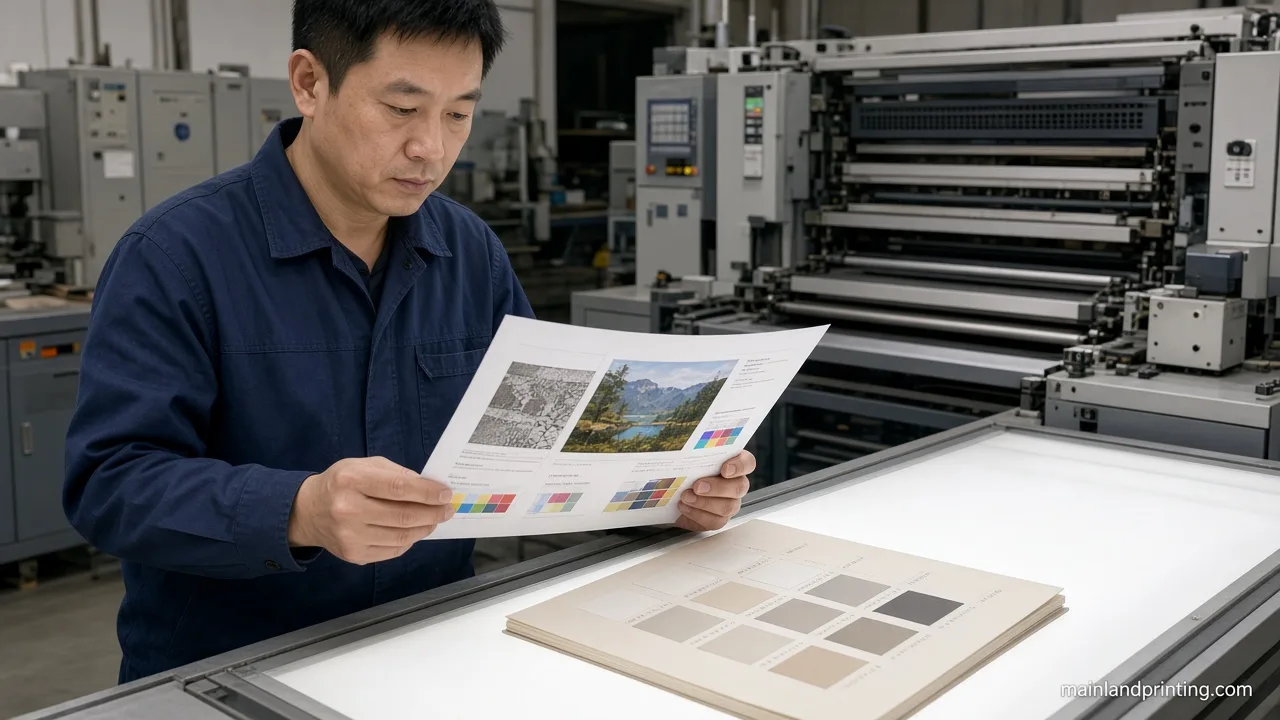
After the matrix is clear, open the sample and mark only the risks that sample can show.
Critical plates need a color path; paper tint needs the swatch beside that proof, because contract proofs are usually not printed on the final book paper.
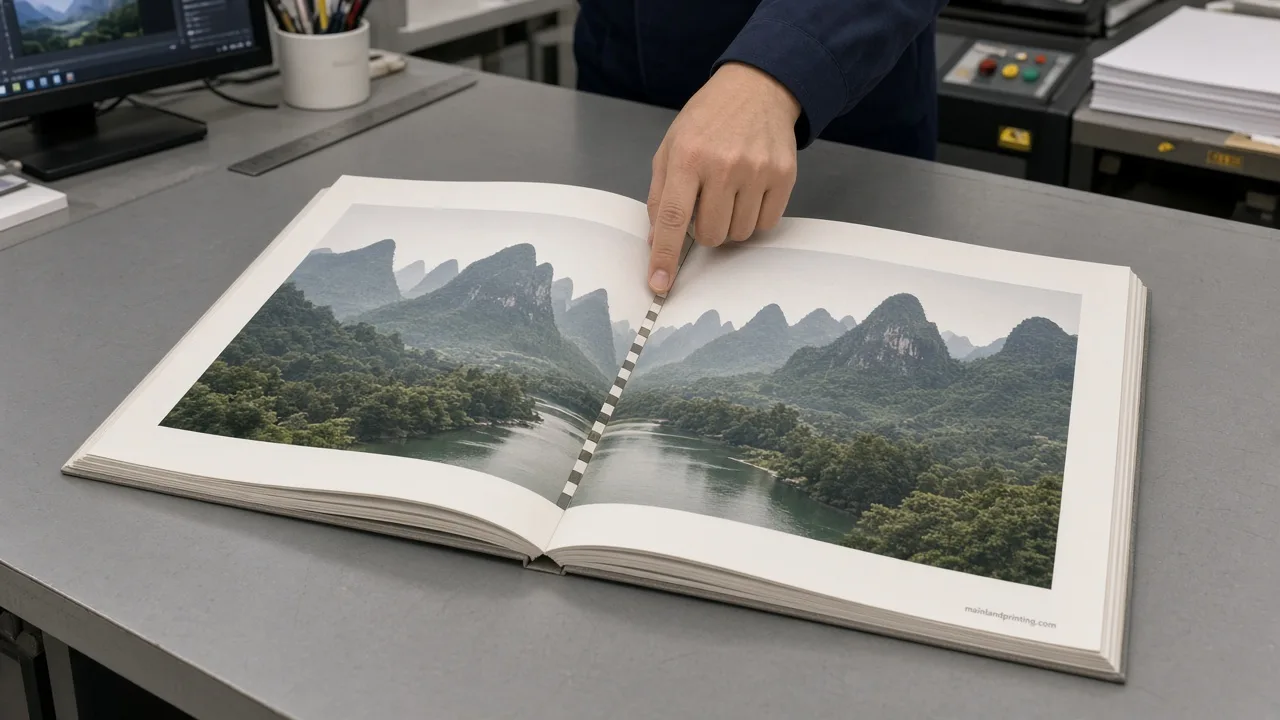
Faces, captions, and horizon lines that sit on the fold belong on a bound dummy or folded spread, not on a flat PDF alone.
Inspect the contract proof beside the paper swatch, then verify the fold on a bound dummy before you sign.
- Images, deep blacks, and skin tones on the color proof that will sit beside the press.
- Paper tint and opacity on the paper sample that matches the book stock.
- Crossovers on a bound dummy or folded pair of pages.
- Cover finish, foil, jacket wrap, and how the book opens.
- Packing marks that would scuff a soft cover or jacket in transit.
File naming, bleed, and PDF/X handoff stay on the art book printing file checklist.
Binding family choice for how much of the fold disappears is a separate decision, covered in the art book binding choice.
This checklist only asks whether the approved sample actually showed the risk you care about. Send trim size in mm with page count when you ask which sample will confirm each risk.
Sign OK to Print Only After the Checklist Shows on the Sample
Once the visible rows are marked, the approval language has to match what was seen. Bookmobile states the press handoff this way:
OK to Print means OK to print as is with no changes.
You have checked the proofs and every single thing is perfect as far as you are concerned.
That written approval does not excuse risks that never appeared on the sample you signed, and it does not make a PDF stand in for paper tint.
Write the OK on the sample that carried the risk. A PDF OK covers layout and text. A paper-sample OK covers tint and feel. A contract-proof OK covers the CMYK color path shown on that proof.
If a crossover or cover finish never appeared on the signed piece, keep that line open instead of stretching one signature across every later risk.
Measure the open book at the gutter when you inspect a crossover, and check that the face or horizon you care about still clears the fold.
Send Your Art Book Sample Plan
When color, paper, and finishes each have a sample that can show them, the next ask is an art book printing review with that plan attached.
Send the trim in mm, page count, binding family, which sample confirms color, which confirms paper, and which confirms finish or fold.
That package is what impression de livres d'art can price and schedule against. It does not invent a free-sample promise, and it does not treat a screen PDF as the final sheet.
Ready to lock the sample plan before press?
Send trim size in mm, page count, binding family, and the sample types you will approve for color, paper, and finish.