When two paperback quotes both say “perfect bound” but name different glues, you are not comparing the same binding job. You can still lock a glue choice that matches your pages, paper, and how hard readers will open the book—before you approve production money.
Choose EVA when your paperback stays on lighter uncoated text, moderate page counts, and light handling. Choose PUR when you need coated or heavier stock, frequent open-flat reading, or stronger page-pull. Lock the glue name—not just “perfect bound”—on the quote before you approve production.
Keep reading and you will leave able to match glue to your own page count and paper—and to refuse a vague perfect-bound line until the sample and RFQ fields clear the same way.
Separate Perfect Binding from the Glue Choice
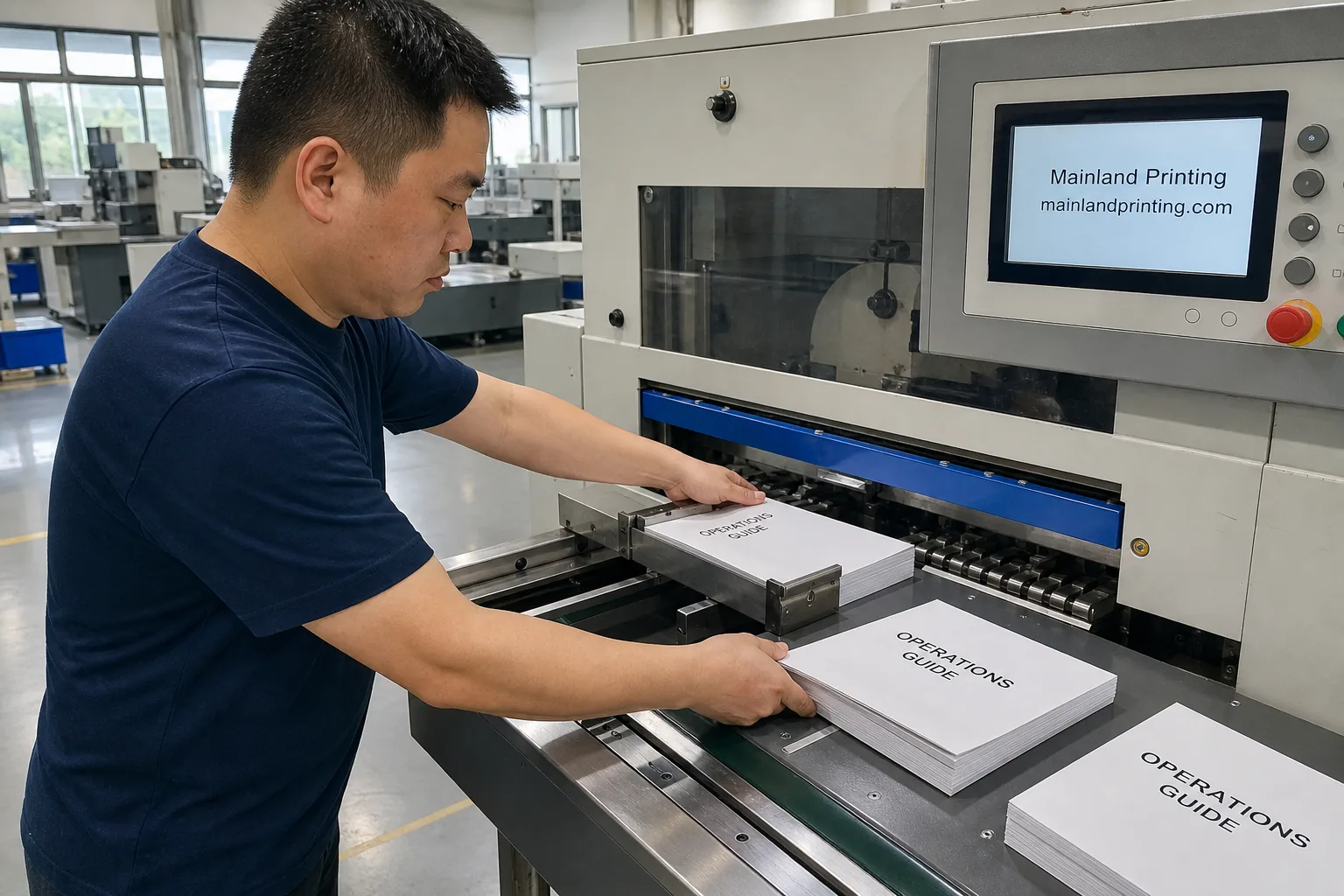
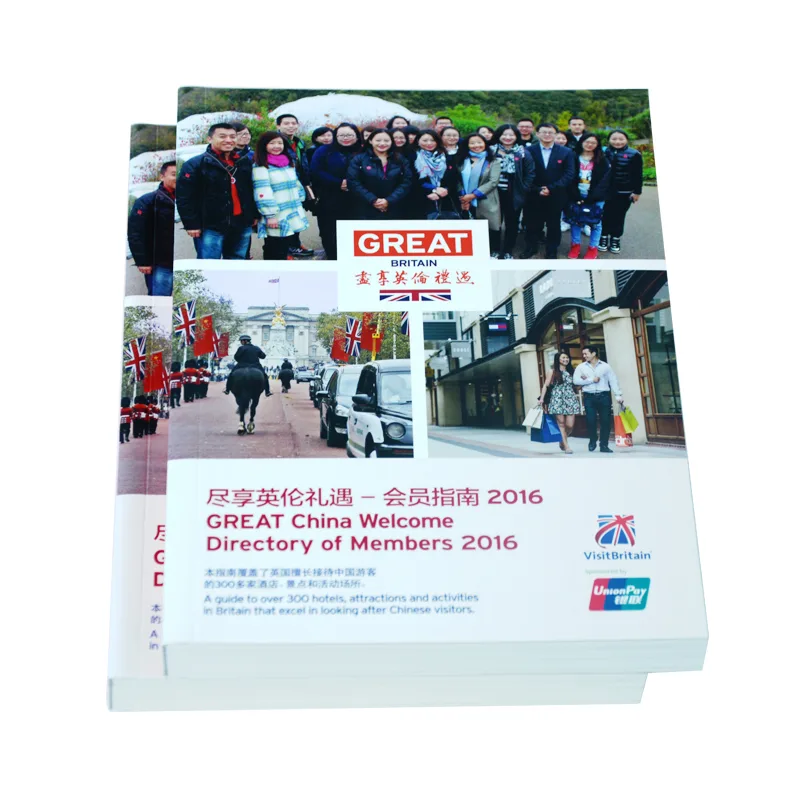
When you see “perfect binding” on a quote, you are looking at a softcover method—not a glue brand. Perfect binding means milled pages glued into a wrap cover with a square spine; EVA and PUR are two adhesives that can run on that line.
EVA is a thermoplastic hot-melt that sets as it cools. PUR is a moisture-reactive polyurethane that continues to build strength after the book leaves the binder. Both can produce a clean paperback; they are not interchangeable when paper, heat, or heavy opening stress changes.
If your page count is still short and you are weighing staples versus glue, step out of this glue debate first and use the perfect vs saddle stitch path. Low-page booklets belong there—not in an EVA-versus-PUR fight.
Industry finishing notes on EVA versus PUR adhesives repeat the same split: chemistry differs, so the right choice follows stock and use—not a slogan that “PUR always wins.”
Choose EVA or PUR by Page Count and Use
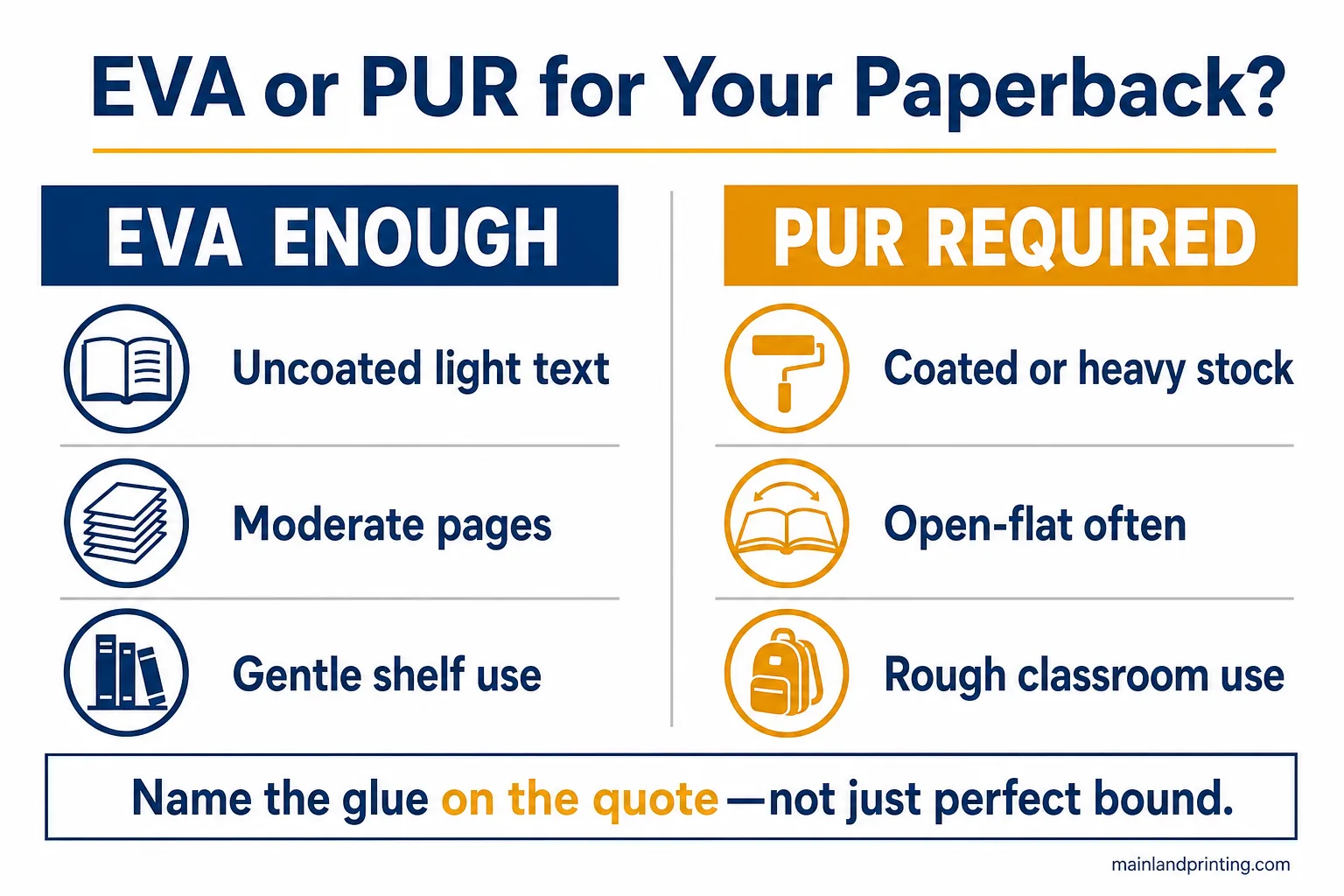
When you only ask “which glue is stronger?”, you skip the project question that actually moves your budget: how many pages, how often the book opens, and how rough the handling will be.
| Your paperback situation | Glue to lock on the quote |
|---|---|
| Trade novel / light text, uncoated interiors, gentle shelf use | EVA is often enough if spine prep is solid and page count stays moderate |
| Training manual or workbook opened flat many times a week | PUR — prioritize openability and page-pull over a small glue premium |
| Higher page count softcover (thick text block, heavy daily use) | PUR — thicker blocks stress EVA sooner when readers crack the spine |
| Short-life catalog or promo paperback with light handling | EVA can win on cost when lifetime and open stress stay low |
| Education pack shipped to classrooms, bags, and shared desks | PUR — treat rough handling as a binding requirement, not an afterthought |
When you once upgraded every title to PUR because a blog said it was “60% stronger,” a simple 200-page uncoated novel absorbed a glue premium you never needed. Name use intensity next to page count on the RFQ, then let the plant recommend EVA or PUR against that line—not against a generic “durable” checkbox.
If two titles share one print run but different handling—one shelf novel, one classroom workbook—do not force one glue for both. Split the binding line or accept that the harder-use title sets the adhesive for the shared block.
For the softcover shell, trim, and cover weight around that glue choice, keep the project on the impression de livres à couverture souple brief so binding stays tied to a full paperback spec.
Match Glue to Paper and Openability Needs
When your interiors jump to coated or heavier stocks, the glue debate stops being theoretical. EVA can struggle on slick surfaces; PUR is built to grip coated and varnished sheets with a thinner film that still flexes when you open the book hard.
| Paper and open need | What you should specify |
|---|---|
| Uncoated offset, light open, grain parallel to spine | EVA acceptable if spine milling and notching are confirmed on sample |
| Gloss or matte coated text, aqueous or UV on cover | PUR — write coated stock + glue on the same quote line |
| Readers must press the book nearly flat for notes | PUR — ask for openability check on the bound sample, not a promise in email |
| Hot cars, cold docks, or long warehouse dwell | PUR — EVA can soften in heat or crack in cold after cure |
| Heavy coated interiors above light text weights | PUR — do not assume modern EVA “is good enough” without a pull test |
When you once ran a full-color training book on coated stock with EVA to save a few cents, pages loosened after a week of classroom open-flat use. Put stock type and “must open flat: yes/no” on the RFQ before you compare unit prices, then reject any quote that only says perfect bound.
If heat, cold, or long transit is also on your risk list, read the sister note on PUR EVA spine risk—that page covers transit stress; this page locks the project glue choice first.
Need a binding recommendation on your paperback specs?
Send page count, paper, openability need, and quantity—Mainland Printing will mark EVA or PUR on a comparable softcover quote.
Write Binding Fields Into Comparable Quotes
When your RFQ only says “perfect bound, durable,” two plants can price different glues and you will never see why the numbers diverge. Force the glue name into the same field set you already use for trim and paper.
| RFQ field to send | Why it changes the quote |
|---|---|
| Glue: EVA or PUR (named) | Removes silent glue swaps under “perfect bound” |
| Page count + trim size | Drives spine stress and adhesive film needs |
| Interior stock (coated / uncoated + gsm) | Coated sheets usually push you toward PUR |
| Open-flat requirement (yes / no) | Turns marketing “flexible” into a testable ask |
| Use intensity (shelf / classroom / warehouse) | Explains why PUR premium is or is not justified |
| Sample binding must match mass glue | Stops digital samples glued differently from bulk |
When you once compared three softcover quotes without a glue column, the cheapest line used EVA on coated text and failed after first classroom use. Add the six fields above to every revision, then ask each plant to confirm the glue on the sample ticket matches the mass PO.
Ask for the adhesive name in the same currency as trim and gsm—on the quote PDF, not only in chat. If a plant cannot name EVA or PUR, treat the line as incomplete even when the unit price looks attractive.
Keep quantity and delivery dates on the same sheet. Binding choice can change cure time and sample lead; your reverse schedule should reflect PUR’s longer full cure when classroom open tests matter before ship.
Confirm Binding Specs Before You Approve Production
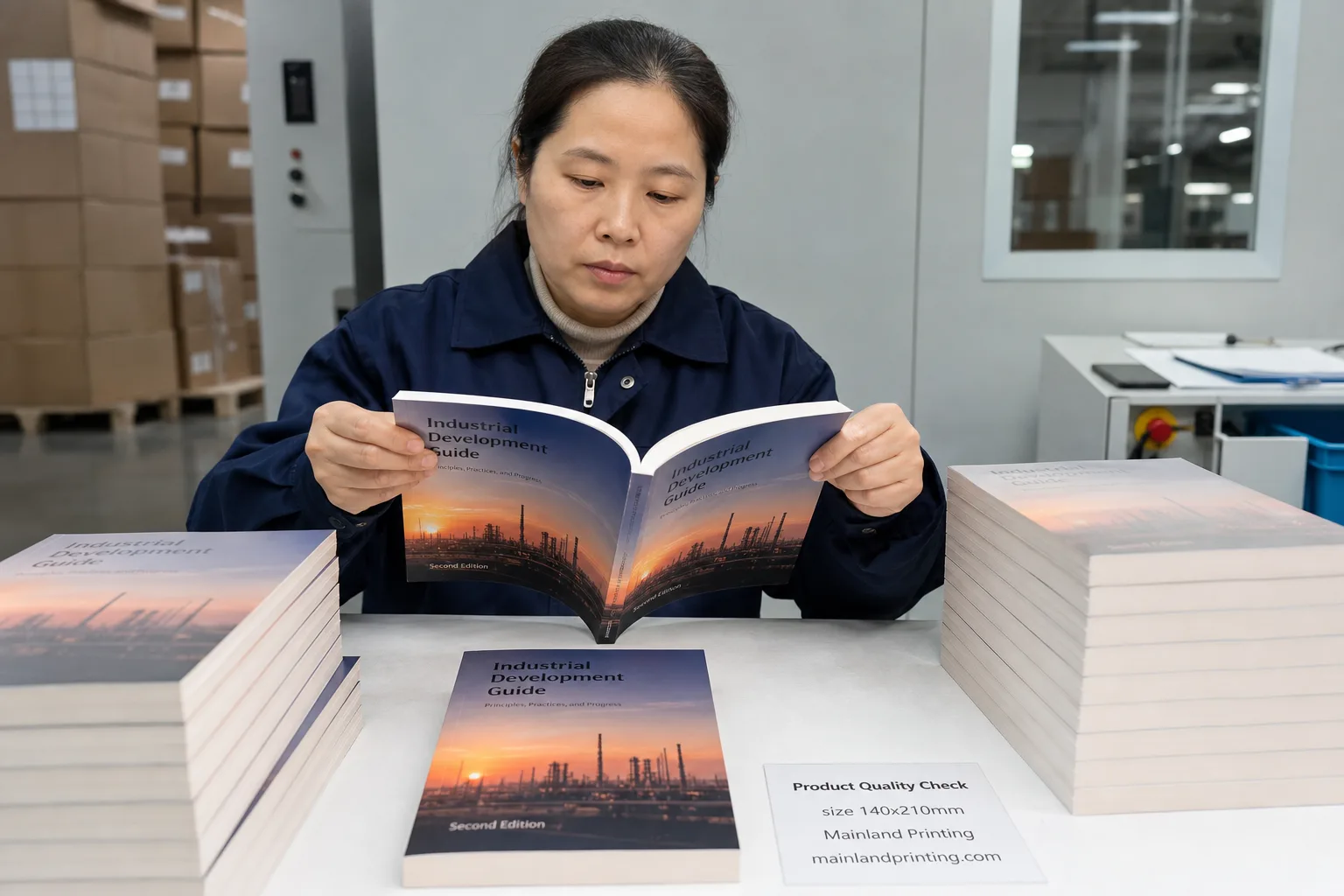
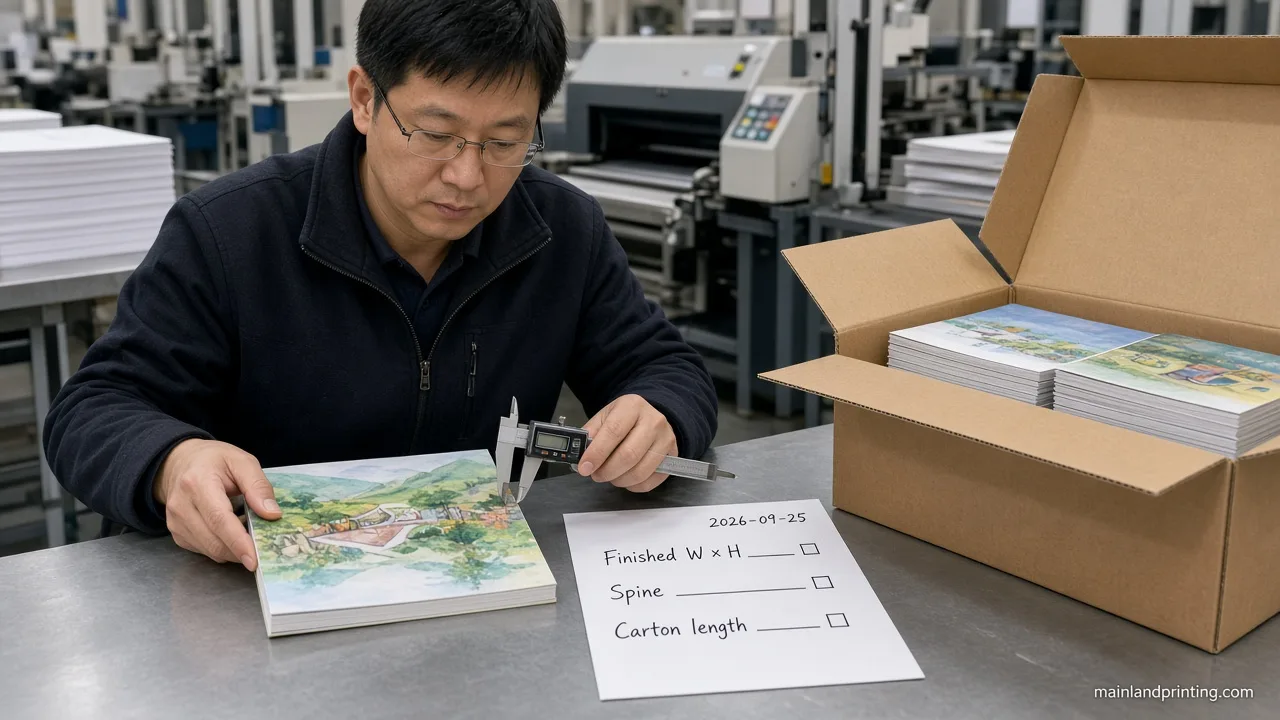
When the sample arrives, you are not only checking color. You are deciding whether the glued spine will survive your real readers. Use a short Clear / Watch gate before you release bulk. A blank glue line on the ticket is a red flag—stop before you approve quantity.
| Check on the bound sample | Clear or Watch |
|---|---|
| Glue name on sample ticket matches RFQ (EVA or PUR) | Clear only if names match; Watch if ticket is blank or “perfect only” |
| Open book firmly toward flat; spine stays intact | Clear if no crack or page lift; Watch if crackle or early lift |
| Gentle page-pull on center signatures | Clear if pages hold; Watch if sheets release with light force |
| Coated sheets show clean glue line without ooze into gutter | Clear if gutter stays readable; Watch if glue smear or weak bond |
| Plant confirms mass run uses the same adhesive lot type | Clear with written confirmation; Watch if “similar glue” language appears |
When you once approved a beautiful printed sample without reading the glue line on the ticket, bulk arrived on a different hot-melt and pages lifted in week two. Hold the PO until Clear rows above are dated, then keep that ticket photo with the signed proof.
Film a short open-flat clip on your phone during sample review if your team is remote. A still photo of the cover will not show early spine crackle the way a firm open pass will.Inspect the spine for a clean glue line within about 0.5–1.0 mm of film thickness talk from the plant, and verify open-flat hold after 24 hours if you specified PUR cure time.
If cover boards, flaps, or lamination still move after glue is locked, settle those on the softcover path before you change adhesives again—glue cannot fix an unfinished cover brief.
Lock Your Paperback Glue Before You Scale the Run
You now have a closed loop: separate perfect binding from the glue name, match EVA or PUR to page count and use, align paper and openability, write those fields into comparable quotes, and Clear the bound sample before bulk.That loop is what keeps a softcover program from buying strength you do not need—or skipping strength you do.
Treating the glue column as a production gate means your next paperback PO is approvable on facts, not on “durable” marketing language. When the RFQ and sample ticket name the same adhesive, you can scale quantity with a spine you already stress-tested.
Send the filled binding fields with your softcover specs when you are ready for a comparable Mainland Printing quote—then keep the Clear sample ticket beside the signed proof through delivery.