Stop guessing on your next board book project. This guide moves beyond the initial quote to give you a complete framework for mastering total board book costs. We provide the data, checklists, and strategies you need to control your budget and avoid costly surprises.
Board book costs are determined by three main categories: 1) Fixed costs like printing plate and setup fees, which decrease per unit as quantity increases. 2) Variable costs, including paper, size, and page count, which make up 40-55% of the total. 3) Value-add and risk costs, such as interactive elements, mandatory CPSIA safety testing ($300-$800), and international freight (8-18% of total cost).
Now, we’ll break down each of these cost factors with real numbers and show you how to evaluate suppliers to protect your project from hidden fees.
The Anatomy of Cost: A Complete Financial Map Behind a Quote
To truly master your budget, you need to look beyond the unit price on a quote.
The first step is to shift your focus from the factory price to the Total Landed Cost—the all-inclusive price of getting the books from the factory floor to your US warehouse.
This figure includes manufacturing, shipping, customs, and insurance, giving you a complete financial picture and preventing any end-of-project surprises.
Fixed Costs: The Power of Volume

Every print job starts with fixed setup costs, which remain the same whether you print 500 or 5,000 books.
These include expenses for preparing the printing plates, machine setup, and creating die-cut molds, typically ranging from $800 to $1,500. This is where the Minimum Order Quantity (MOQ) becomes critical.
When you place a small order, these high initial costs are spread across fewer books, making the per-unit price quite high. As your order volume increases, the cost per unit drops dramatically.
Consider this typical price curve:
-
500 books: $6.50 per unit
-
1,000 books: $4.20 per unit (a 35% drop)
-
3,000 books: $2.80 per unit (another 33% drop)
As a general rule, doubling your order quantity from the MOQ can reduce your unit cost by 25-40%. This data is your most powerful tool for explaining the value of larger print runs to your management team.
Variable Costs: The Core Components
Variable costs are tied directly to the physical specifications of your book, with raw materials like paper making up 40-55% of the total manufacturing expense.
- Paper and Size: Standard sizes like 6×6 or 7×7 inches are designed to maximize the use of a printer’s large press sheets, achieving over 95% material utilization. A custom size might look great, but if it drops the utilization rate to 80%, you are essentially paying for 15% of paper that becomes waste.
- Page Count and Finishing: While adding pages increases costs, it’s not always linear. Similarly, choosing between matte and gloss lamination can affect the final price, though usually less dramatically than paper choices. The key is to understand how each decision contributes to the final unit cost.
Value-Add & Risk Costs: The Hidden Variables
Finally, you have costs that are often overlooked in initial estimates but can significantly impact your budget.
- Interactive Elements: Features like lift-the-flaps or pull-tabs add value but also increase costs due to manual assembly, and you can explore a full guide to interactive features to see how each option impacts your budget. You can categorize them by complexity:
-
Entry-Level (15-30% cost increase): A few simple lift-the-flaps.
-
Mid-Level (30-70% cost increase): Multiple flaps, simple pull-tabs, or wheels.
-
High-Level (70-200%+ cost increase): Complex pop-ups or electronic modules.
-
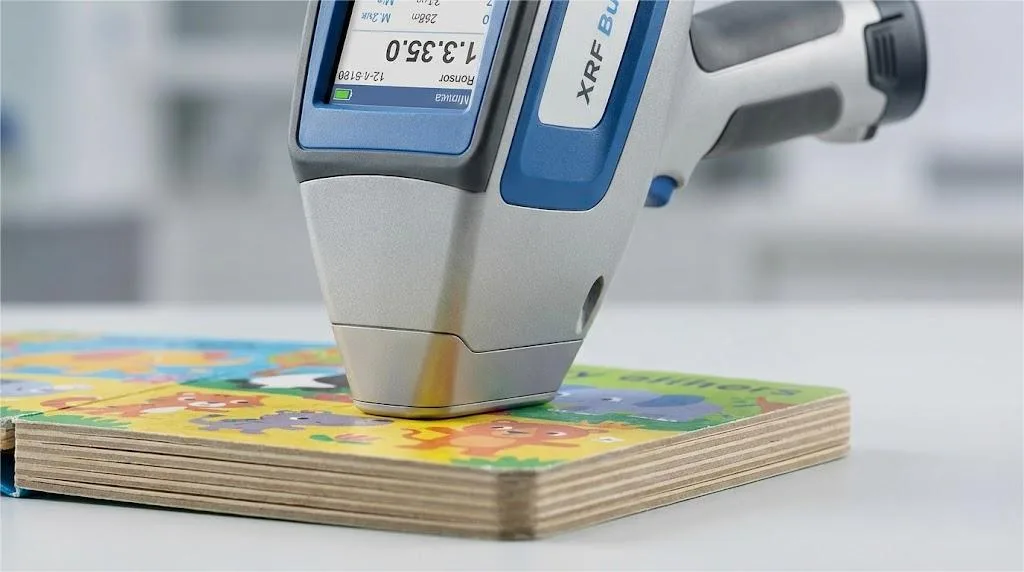
- Safety Compliance: For the US market, CPSIA safety testing is mandatory. Budget $300 to $800 per project for third-party lab testing. This is a non-negotiable cost to ensure your product is safe and legal for sale.
- Logistics and Tariffs: Shipping, customs, and freight can account for 8-18% of your total production cost. This figure can fluctuate based on global fuel prices and trade policies, so it’s a critical variable to monitor.
| Cost Category | Key Drivers | Typical Impact |
|---|---|---|
| Fixed Costs | MOQ, Setup Fees | Unit cost drops 25-40% when doubling quantity |
| Variable Costs | Paper, Size, Page Count | 40-55% of total manufacturing cost |
| Value-Add & Risk | Interactive parts, Safety tests, Shipping | Can add 25-200%+ to the unit cost |
Evaluating Suppliers: A Three-Step Process
Choosing a supplier is more than just comparing prices; it’s about selecting a partner who will safeguard your project and your professional reputation.
A low price from an unreliable supplier can lead to costly errors and delays. To make the right choice, you need to look beyond the quote and assess their capabilities holistically.
Step 1: Assess Communication and Expertise
Pay close attention to how a potential supplier communicates. Do they simply take your specs and return a price, or do they act as a consultant?
A proactive partner will analyze your project and suggest ways to optimize it. For example, they might recommend a slight size adjustment to improve paper utilization or offer a more durable binding method.
As Glen Stewarts, President of Trendex, notes, when manufacturing overseas, “you are not just buying a product; you are buying a partnership in project management.”
A 5% lower price from a factory with poor communication will ultimately cost you far more in delays and errors.
Step 2: Scrutinize the Samples
Never underestimate the power of a physical sample. It is the single most effective way to verify quality before committing to a full production run.
A client once tried to save $150 by skipping the final prototype for an interactive book with a spinning wheel. When the bulk order of 30,000 books arrived, they discovered the wheel was too stiff for a child to turn, rendering the book’s main feature useless.
That decision to save a small amount on a sample cost the company over $30,000. Prototypes, especially for books with interactive elements, are the best investment you can make in your project’s success.
Step 3: Verify Safety and Compliance

In children’s publishing, safety is non-negotiable. Your supplier must demonstrate a deep understanding of and adherence to all required standards, particularly the CPSIA (Consumer Product Safety Improvement Act) in the United States.
Don’t just take their word for it. Ask for current compliance certificates and past CPSIA test reports for similar projects they’ve produced.
An experienced supplier will have this documentation readily available. This isn’t just about ticking a box; it’s about protecting your brand and your customers from the devastating fallout of a product recall.
Ready for a Flawless Board Book Run?
From safety compliance to vibrant colors, our experts ensure every detail of your board book is perfect. Let’s translate your creative vision into a beautiful, high-quality book that children and parents will love.
Shifting Cost Control Left: A Production Guide for Creatives
The most effective cost control doesn’t happen when you’re negotiating with printers; it happens before the project ever gets to you, rooted in the initial format selection strategy.
Production managers often receive a design where costly features are already locked in. By guiding your creative teams early, you can shift cost management from a reactive task to a proactive strategy.
The key is to help your designers and editors understand how their creative choices translate into real-world costs. Here are a few critical areas to discuss with them at the project’s outset:
- The Wisdom of Standard Sizes: Explain how choosing standard dimensions like 6×6 or 7×7 inches maximizes paper utilization. Illustrate how a custom size can increase material waste by 15% or more, a cost that provides no value to the final product.
- The Art of Interactive Elements: Help your team understand the cost tiers of interactive features. Simple die-cuts are low-cost, while complex pop-ups can double the book’s price. Suggest a “modular design” approach where the same die-cut mold is used on multiple pages, spreading the tooling cost across the entire book.
- The “Design Freeze” Imperative: Share the story of the “insignificant” change. A client once requested a tiny, 5-millimeter shift to a die-cut window right before production. This seemingly small adjustment required a new die-cut plate, delayed the project by four days, caused them to miss their shipping window, and ultimately pushed the delivery back three weeks. Use this real-world example to establish a firm “design freeze” date.
By providing this production-friendly guidance, you empower your creative team to make informed decisions that align their artistic vision with the project’s financial realities.
The Supply Chain in 2025: A New Global Strategy
In today’s global market, the conversation about printing has evolved. The question is no longer simply, “Which country is cheapest?”
Instead, strategic production managers are asking, “How can I build a flexible production system that delivers on cost while protecting my company from supply chain risks?” This requires a more sophisticated approach than simply defaulting to a single manufacturing source.
For decades, China has been the undisputed leader in producing complex, interactive board books, accounting for over 70% of global capacity. This isn’t just about cost; it’s about a mature ecosystem of skilled labor, specialized material suppliers, and high-precision toolmakers.
However, the landscape is changing. Nearshoring production to countries like Mexico has become a viable strategic move. While Mexico’s manufacturing costs can be 20-35% higher, its key advantage is speed. A truck shipment from Mexico can reach a US warehouse in 7-14 days, compared to the 30-50 days required for ocean freight from Asia.
This leads to a new, more resilient layered supply chain strategy:
-
First Prints & Complex Projects: Use China’s unparalleled ecosystem to ensure the highest quality for new and intricate books.
-
Reprints & Time-Sensitive Orders: Leverage Mexico’s speed to quickly restock proven sellers, treating the higher unit cost as an insurance premium against lost sales.
By adopting this flexible model, you move from a cost-focused approach to a strategy-focused one, building a supply chain that is both efficient and resilient.

Conclusion: Mastering Costs, Not Just Managing Prices
Ultimately, gaining control over your board book project is not about chasing the lowest price. It’s about understanding the entire cost ecosystem, defending your production process with clear guidelines, and choosing partners who enhance your capabilities.
By shifting your focus from the unit price to the Total Landed Cost, you can anticipate variables, manage risks, and make strategic decisions that protect your budget and timeline.
Your role extends beyond simply executing a print job; you are the architect of the book’s physical creation. Arming yourself with a deep knowledge of how materials, design choices, and logistics influence the final numbers allows you to guide your entire team toward a more successful outcome.
True mastery lies in transforming your understanding of board book costs into a strategic advantage, ensuring every project is not only creatively successful but also financially sound.