Choosing between a board book and a hardcover is more than a creative decision—it’s a critical business move that impacts your budget, cash flow, and overall market success. This guide provides the data-driven framework and industry insights you need to make the most profitable choice for your next children’s book project.
The primary difference between a board book and a hardcover book is the target audience and production requirements. Board books are a durable format for children ages 0-3, characterized by higher minimum order quantities (MOQs) and lower retail prices. Hardcovers are suited for narrative stories for children ages 3-7, offering a lower MOQ and a higher retail price point, but with less durability.
Now that you understand the fundamental differences, it’s time to learn the advanced strategies successful publishers use to minimize risk and maximize profit for every title.
Buyer Takeaway: Choose Format by Reader Age, Use Case, and Unit Economics
- Board books and hardcovers serve different readers, buyers, safety expectations, and price points.
- A format decision should compare age suitability, durability, page count, safety, retail channel, and margin.
- Do not choose hardcover only for prestige or board book only for toughness; match the format to the sales context.
A Strategic View of Format Selection
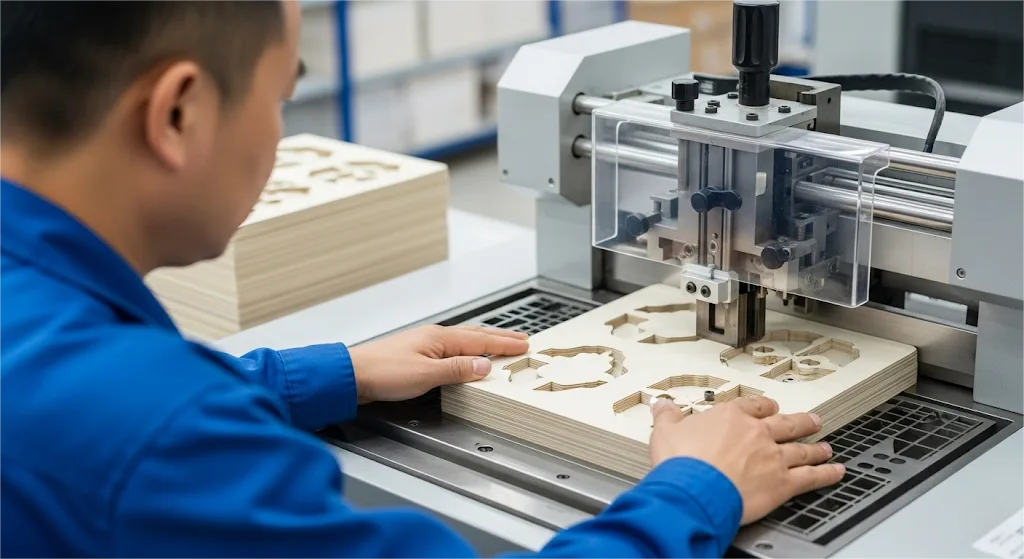
To make the right choice, you need to look beyond the physical differences and reframe the decision from a cover structure perspective.
This means understanding not just your reader, but your buyer, and recognizing that a book’s format sends a powerful signal to the market.
Target Readers vs. Target Buyers
It’s clear that board books are designed for the hands of children aged 0-3, while hardcovers cater to the 3-7 age range. But the person reading the book isn’t always the one buying it.
You need to consider the motivations of the purchaser. A parent buying a hardcover picture book often sees it as an educational investment in their child’s literacy and appreciation for art. A grandparent, on the other hand, might purchase a board book as a safe, durable, and welcome gift for a baby shower.
Is your book an educational tool, a beautiful story, or a perfect gift? The answer will heavily influence your format decision.
The Real Numbers
Let’s look at a typical 24-page, 7×7-inch children’s book project. The numbers reveal a critical story about risk and cash flow when considering the cost to print a board book versus a hardcover.
| Feature | Board Book | Hardcover Book |
|---|---|---|
| Minimum Order Quantity (MOQ) | 1,000 – 2,000 units | 500 – 1,000 units |
| Unit Cost (@ 500 units) | Not Applicable / High Cost | $6.50 – $9.00 |
| Unit Cost (@ 1,000 units) | $4.00 – $6.00 | $5.00 – $7.50 |
| Total Initial Investment | $4,000 – $12,000 | $3,250 – $9,000 |
| Production Turnaround | 10 – 14 weeks | 8 – 12 weeks |
While a board book’s unit cost can be lower at high volumes, its higher MOQ demands a significantly larger upfront investment. For a small press, this ties up precious capital for a longer period, not only due to the print run but also the extended 10-14 week production cycle.
A hardcover offers more flexibility with a lower entry cost, reducing your initial financial exposure.
The “Book as Toy” Concept
It’s crucial to understand this fundamental distinction: a hardcover is a book, but a board book is often perceived as an educational toy. This insight changes everything.
As independent editor Harold Underdown explains, board books are ideal for concept-driven content like alphabets or colors, where the book functions as an object for interaction. Hardcovers, conversely, are better suited for narrative-driven stories with developed plots and detailed illustrations that a slightly older child can appreciate.
Your format choice signals to buyers what kind of product they are getting. Is your creation a story to be cherished or an object to be played with? This positioning will determine its place in a bookstore and its appeal to your target buyer.
The Channel-First Strategy
Many publishers, especially those new to the industry, make a critical mistake: they create the book first and then try to figure out where to sell it. A more successful approach is to reverse this process.
Before you commit to a format, you must decide where you want your book to be sold. This “channel-first” strategy allows the market, not just your personal preference, to guide your decision.
Where Does Your Book Belong?
Different retail channels have distinct preferences and requirements. Understanding them is key to your success.
- Libraries and Schools: This channel overwhelmingly favors hardcover books. Librarians and educators value durability for repeated readings and standard sizing that fits neatly on shelves. A hardcover format signals that your book is a lasting piece of literature suitable for their collections.
- Boutique Toy Stores and Baby Shops: This is board book territory. These retailers are looking for products that are safe, durable, and can be merchandised alongside toys and gifts. A board book’s tactile, playful nature makes it a perfect fit for this environment.
- Major Chain Bookstores (e.g., Barnes & Noble): These stores carry both formats, but they place them in entirely different sections. Hardcovers are typically found in the “New Picture Books” or general children’s literature sections, judged on their story and illustrations. Board books are located in the “Baby & Toddler” area, where they compete with other concept-driven and interactive titles. Your choice of format literally determines your competition and the audience you will reach within the store.
By first identifying your ideal sales channel, you can work backward to select the format that gives you the best chance of gaining placement and succeeding in that specific environment.
Don’t produce a beautiful hardcover and then wonder why toy stores aren’t interested. Know your destination before you start the journey.
| Priority Channel | Primary Format | Key Consideration |
|---|---|---|
| Libraries & Schools | Hardcover | Durability, Standard Sizing |
| Toy & Baby Stores | Board Book | Safety, Giftability, Play Value |
| Chain Bookstores | Both (Different Sections) | In-store placement, Target Audience |
Advanced Strategy
The choice between a board book and a hardcover doesn’t have to be a one-time, permanent decision. For the right project, it can be a strategic sequence.
Instead of asking “Which format is better?”, the more sophisticated question is, “Which format is better, right now?” This approach treats your book not as a single product, but as an intellectual property (IP) with a long-term lifecycle.
The Two-Step Strategy: Prestige First, Profit Follows
Many of the most iconic children’s books followed a deliberate path to success. It’s a proven model you can adopt:
- Stage One (Months 0-18): Launch with a Hardcover. The initial release as a high-quality hardcover is designed to build prestige. The goal here is not mass-market sales, but to capture the attention of librarians, educators, award committees, and book reviewers. A successful hardcover run establishes the book’s literary and artistic merit, validates its quality, and creates a foundation of credibility.
- Stage Two (After 18+ Months): Introduce the Board Book. Once the hardcover has proven its value and gained recognition, you can introduce a board book version. This second launch targets a completely different market: the mass-market consumer in retail stores, gift shops, and online. You leverage the reputation built by the hardcover to drive high-volume sales of the more accessible and affordable board book.
We’ve seen this model work time and again. A client of ours, an independent press specializing in art-forward picture books, released a beautifully illustrated hardcover. While sales were modest, it won a small but respected industry award. Armed with this validation, they approached a major distributor with a proposal for a board book edition.
The distributor, seeing the IP was already de-risked and critically acclaimed, placed a large advance order. The board book went on to outsell the hardcover by a ratio of 15-to-1, turning a respected title into a highly profitable one. This is how you can transform a single book into a long-lasting brand, like the famous case of Eric Carle’s *The Very Hungry Caterpillar*.
Execution & Risk Management

Once you’ve made your strategic decision, the focus shifts to execution. This is where your project can either succeed brilliantly or fail expensively.
Managing your production and supply chain effectively is just as important as choosing the right format, especially when it comes to book printing in China.
The reality of modern children’s book printing, especially for the complex craft of board books, is that the supply chain is highly concentrated in China. This creates a “China Paradox”: you have access to the world’s best technology, most skilled labor, and competitive pricing, but it also exposes you to significant vulnerabilities.
Shipping delays, port congestion, and shifting international trade policies are no longer abstract risks; they are business realities you must plan for.
The solution is not to find an alternative—because for high-quality, cost-effective board books, a true alternative rarely exists—but to manage the existing reality. This means building potential delays of 4-6 weeks into your publishing timeline from the very beginning.
It also means partnering with an experienced printing expert who can help you navigate this landscape and vet reliable factories. Don’t be tempted by the lowest price; a slightly higher cost that comes with reliability and transparent communication is a far better investment.
Avoiding Production Disasters
Here is a costly lesson learned from experience: not all printers who can produce a beautiful hardcover can manufacture a quality board book. The most common and catastrophic failure is warping.
Board books are made by laminating multiple layers of paperboard together. If the factory doesn’t properly control moisture, glue application, and drying time, the books can bend and warp during their long journey in a shipping container. A warped book is a defective book, and no retailer will accept it.
I once saw a publisher receive a shipment of 5,000 board books. The pre-production sample was flawless. The bulk order? A nightmare. At least 20% of the books were visibly warped. The factory refused a full refund, hiding behind “acceptable manufacturing tolerances.” The publisher lost thousands of dollars and weeks of time sorting the mess.
How to protect yourself:
- Demand Production Samples: Never approve a project based on a factory’s portfolio. Ask for samples of recent board book projects they have produced for other US or European clients.
- Get a “Draw-Down” Sample: Before the full print run, request a sample from the actual production line, not a handmade prototype. This is your best indication of final quality.
- Define Quality in Your Contract: Your purchase order should explicitly define standards for warping, corner rounding, and page alignment. You can learn more in our guide to quality control in book printing.
Finally, always remember safety compliance. Books for children under three sold in the US must comply with CPSIA (Consumer Product Safety Improvement Act) standards, which include testing for lead, phthalates, and physical durability.
Ensure your printer can provide documentation of compliance. It’s a non-negotiable step in protecting your readers and your business.
Board Book vs. Hardcover Decision Matrix
Use this matrix before choosing the format.
| Decision factor | Board book | Hardcover |
|---|---|---|
| Reader age | Best for toddlers and rough handling. | Best for older children, gift editions, and longer stories. |
| Durability | Very durable pages; lower page count. | Durable case, but pages can tear. |
| Content length | Short, visual, simple layouts. | Longer text, richer illustrations, more pages. |
| Retail position | Early learning, baby gift, toy-like product. | Premium picture book, library, gift, publisher catalog. |
Safety, Cost, and Channel Checklist
Use this to connect format with business risk.
| Checkpoint | Question | Why it matters |
|---|---|---|
| Safety | Will toddlers mouth, bend, or throw the book? | Board books need stronger safety thinking. |
| Cost | Does the format fit target retail price and margin? | Hardcover and board book cost structures differ. |
| Channel | Is the buyer a parent, school, library, or gift shopper? | Channel shapes format expectations. |
| Reorder | Can the format be replenished at the required margin? | Format affects inventory planning. |
Format Selection Flow
A quick buyer path for format choice.
| If the project is… | Choose first | Then verify |
|---|---|---|
| For ages 0-3 | Board book | Safety, corner rounding, page thickness, finish. |
| A premium storybook | Hardcover | Binding, cover finish, paper, jacket/case design. |
| A gift product | Compare both | Retail price, packaging, perceived value. |
| A school/library title | Hardcover | Durability, spine, sewn binding, paper opacity. |
Buyer FAQ
Is a board book more durable than a hardcover?
For toddlers, yes. Board books resist rough handling better, but hardcovers can support longer content and a more premium book experience.
For the broader production path, review this custom hardcover books before you finalize specifications, supplier selection, and budget expectations.
Which format costs more?
It depends on page count, size, materials, quantity, and finishing. Board books use thick board pages, while hardcovers use case materials and book blocks.
Which format is better for picture books?
Hardcover is often better for longer illustrated stories, while board books are better for short early-learning books.