The budget meeting is in two weeks, the product line has four hundred SKUs, and the three configurator prices you collected do not even agree on what a “catalog” is—one assumed 8 pages, one assumed 100, and none of them explained which of your choices moved the number.
Product catalog printing costs turn on five variables—page count, quantity, paper, binding, and trim size—and the lever you control most is quantity: offset starts winning around 500 copies, the per-copy price drops hard by 1,000, and 2,000–5,000 is the strong-value band, so plan the run by counting where your catalogs actually go, not by chasing the lowest headline number.
By the end of this guide you will have a five-variable framework you can defend to finance, a 500/1,000/3,000 decision tied to your real distribution list, an edition-and-reprint rule that stops dead-stock waste, and one spec sheet that makes every quote comparable—domestic or China.
What Actually Drives Catalog Printing Cost
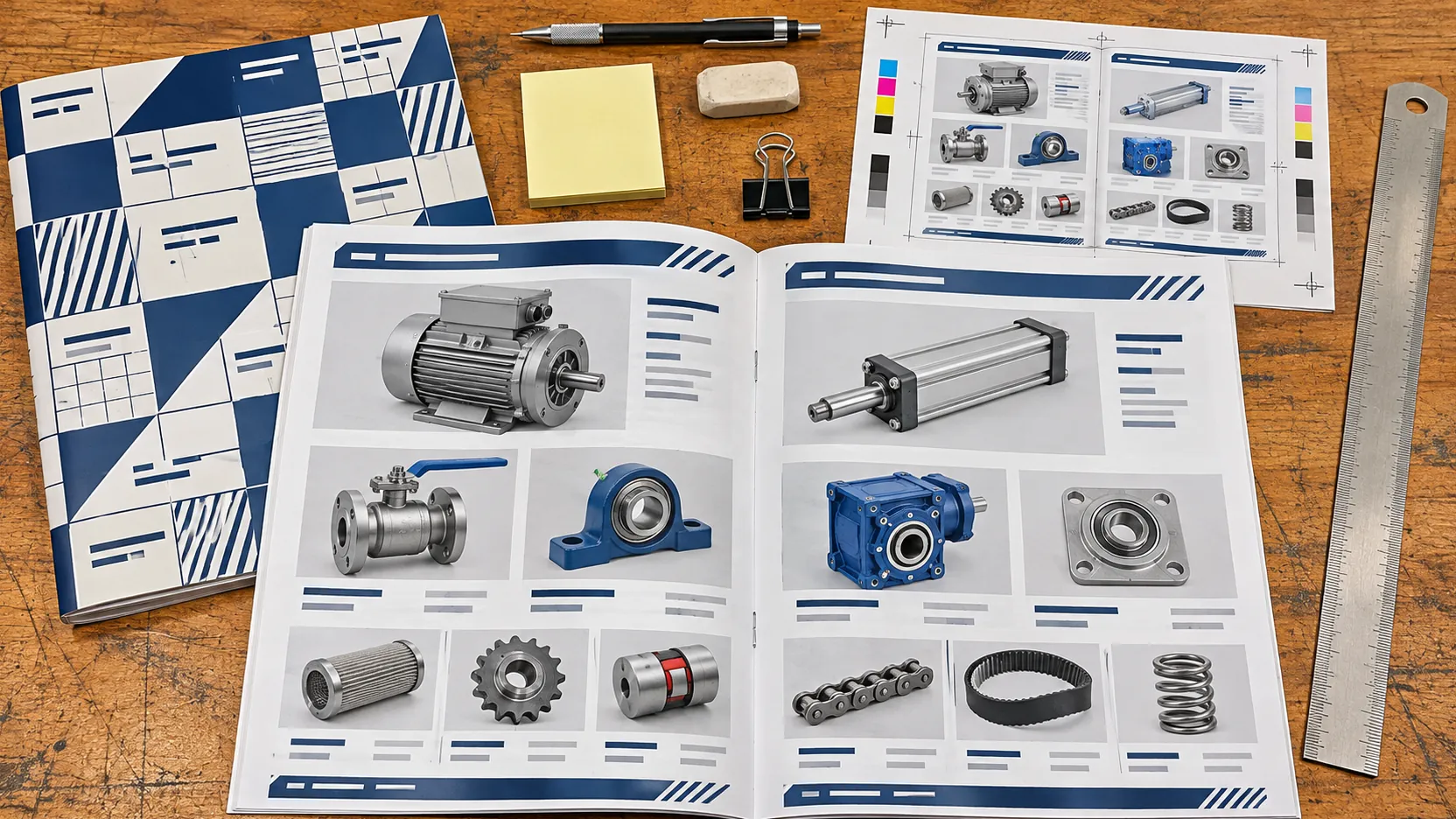
Five variables move a catalog quote — page count, quantity, paper, binding, and trim size — and page count and quantity have the biggest impact.
That ranking comes from printers’ own pricing pages, so treat it as the shape of every quote you collect rather than a formula for your exact spec.
Your own mix can shift it: a 12-page line sheet on heavy cover can price like a booklet, so let same-spec quotes, not intuition, make the final call.
Page count works in steps, not in single pages, and that is where most first-time budget surprises live.
Offset prints in signatures — folded sheets of 4, 8, or 16 pages — so a 30-page catalog wastes paper while 32 pages uses the sheet fully.
This bites hardest just past a fold boundary: page 33 forces one more folded sheet than page 32.
Digital short runs do not follow signature steps, which is one more reason tiny quantities price on different logic than offset runs.
Moving interior stock from 100 lb gloss down to 70 lb gloss can trim catalog cost by 10 to 30 percent.
That range comes from 2026 market benchmarks, and it only holds where your product photos still read well on the lighter sheet.
If images carry the sale, test the lighter stock in a proof before committing the run — a freight saving never rescues a catalog buyers stop opening.
Binding moves whole rows rather than pennies: saddle stitch is the affordable default for shorter line sheets, while perfect bound prints a spine and holds a year of dealer use.The page-count fork between the two is its own decision—the perfect bound vs saddle stitch comparison covers it once page count and update cycle are settled.
The table below puts the five variables on one page, with the lever each one pulls and the size of the swing you should expect when you move it.
| Variable | How it moves the quote | Size of the swing |
|---|---|---|
| Page count | Jumps in signature steps of 4, 8, or 16 pages | A 33rd page adds a whole folded sheet |
| Quantity | Fixed setup spreads across more copies | Steepest savings before 1,000; flattens after |
| Paper | Weight and coating change stock cost per sheet | 10–30% between 100 lb and 70 lb gloss |
| Binding | Saddle stitch vs perfect bound vs spiral | Moves the row: roughly 10% up from saddle to PUR at equal pages |
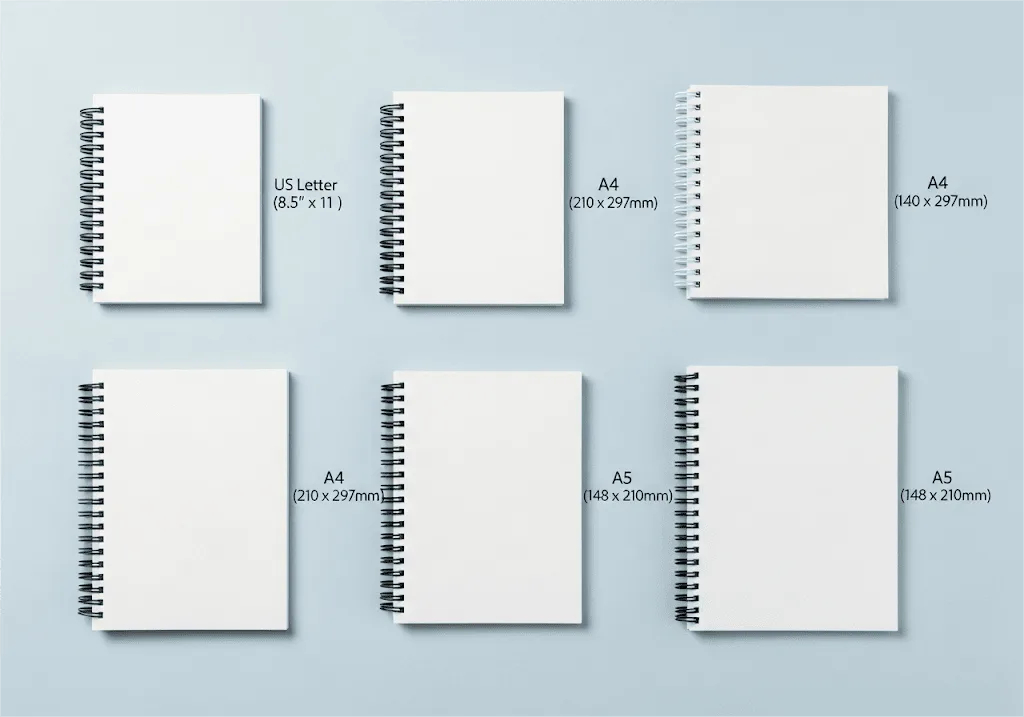
| Trim size | Standard sizes fit the press sheet; odd sizes waste it | Custom sizes can leave half a sheet as waste |
Read the table as a checklist for your RFQ: fix all five before you ask for prices, because a quote that moves two variables at once tells you nothing.
MOQ and the Digital-to-Offset Crossover
MOQs differ because they encode process economics: one domestic digital printer takes a single copy, one published price table starts at 250, one China factory lists 100, and Mainland’s offset sweet spot opens around 500.
Each number is that vendor’s own minimum for its process mix — digital, offset, or both under one roof.
Ask for quotes at two or three quantities on identical specs before assuming either the lowest minimum or the biggest run is right for you.
The minimum is not a hurdle the printer invented to annoy you—it is the point below which their fixed setup chain stops making sense, which is why a vendor running both digital and offset can quote 100 copies and 3,000 copies from the same email thread.
Between roughly 300 and 500 copies sits the crossover, where offset plates start spreading their cost faster than digital’s higher per-sheet price accumulates.
Below that band, do not force offset—a test run of 100 or 200 catalogs is a digital job, and printing it offset to “get ahead” on unit price usually means paying for plates you did not need yet.
How to Plan 500, 1,000, and 3,000 Copies
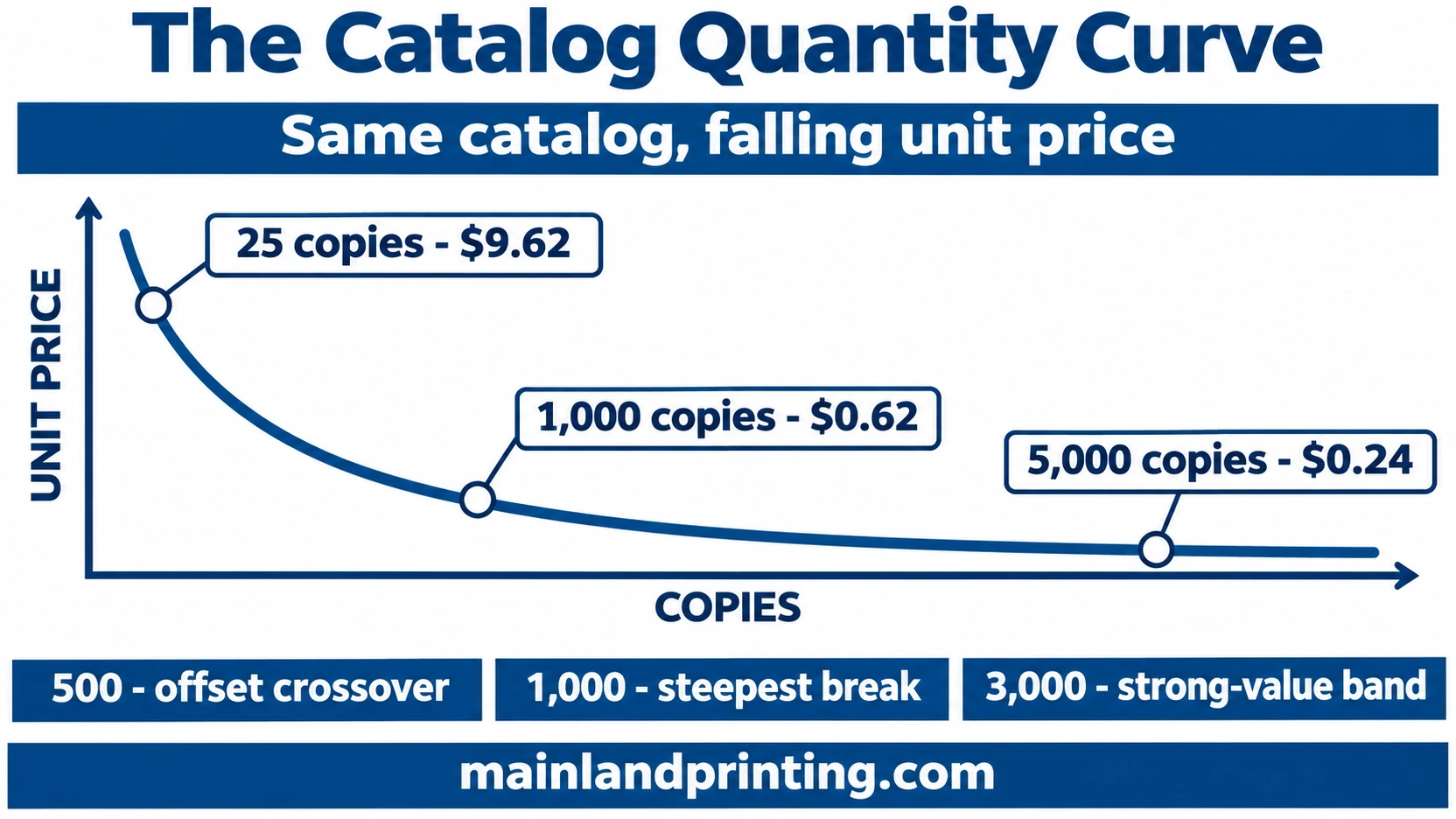
On one published wholesale curve, the same catalog falls from about $9.62 per copy at 25 copies to about $0.62 at 1,000 and about $0.24 at 5,000.
That curve is a light-spec wholesale line published in August 2026, and the absolute dollars move with every spec choice you make.
What transfers across specs is the shape — steep early savings that flatten as the run grows — not the prices themselves.
A 32-page 8.5×11 saddle-stitch catalog on 70 lb gloss drops from $3.25 per copy at 500 copies to $1.85 at 1,000 on a published November 2026 price table.
Those two numbers are production-only, because that table excludes shipping, sales tax, and duties — it compares quantities, not delivered costs.
Perfect-bound and 64-page versions push the whole row up, but the 500-to-1,000 drop repeats on every row of that table.
Both anchors come from public pricing pages—4over4’s wholesale catalog guide and PrintNinja’s catalog price table—so use them to sanity-check the shape of your quotes, not as substitutes for them.
Our own quantity guidance puts the offset sweet spot at 500–1,000 copies, strong per-unit value at 2,000–5,000, and the lowest per-copy cost at 10,000+ for national distribution.
That guidance assumes offset production on our own press lines with the DDP landed cost quoted into the price.
Below about 300 copies, digital usually wins on total cost — test runs and small launches belong in a digital quote, not a forced offset one.
Count active accounts, prospects, one box per rep, and show traffic — then round up one price break, not more, because unsold copies become waste when the line changes.
That counting method is how one US printer’s wholesale-catalog guidance frames the decision, and it matches what real catalog inquiries do when they ask for two or three quantities at once.
Catalogs date faster than evergreen titles, so the inventory buffer that feels safe for a book can strand a catalog — plan the next edition before the buffer, not after it.
The table turns the three tiers into the actual decision each one asks you to make.
| Tier | What the tier buys | Decide it with |
|---|---|---|
| 500 copies | First real offset break; unit price starts beating digital | A counted distribution list that genuinely reaches ~500 hands |
| 1,000 copies | The steepest part of the curve—biggest per-copy drop per dollar added | Reprint timeline and storage, not unit price: this is the reprint-cost tier |
| 3,000 copies | Inside the 2,000–5,000 strong-value band for seasonal or regional pushes | Multi-destination split plan and an edition date, before the run is booked |
If the counted list lands between tiers, take the higher one only when the extra copies map to a named use—new accounts, a second warehouse, next season’s shows—and never more than one break above the count.
Edition Updates, Reprints, and Split Delivery
Re-running plates on a small top-up costs nearly the same as the first run, so batch reprints when you can.
That fixed plate cost is exactly why a “just 200 more” reorder often prices like a brand-new job.
If prices or SKUs will change within months, keep them off the bound pages and run prices on a separate dated sheet — one flyer reprint is cheaper than a full catalog rerun.
The reprint math is what makes edition strategy a cost decision, not just a design preference.
Real catalog RFQs already behave this way—one buyer quoted 5,000 copies in 1,000-copy increments to keep each tranche matchable to the season, and another asked for both 500 and 1,000 in the same email to see where the break landed.
| Your line changes… | Edition structure | Delivery structure |
|---|---|---|
| Every season | Saddle-stitch base catalog + dated price sheet | One run per season, batched with the flyer reprint |
| Prices only, products stable | Bound catalog without prices + separate price sheet | Big base run, small dated reprints |
| Year-round reference | Perfect-bound annual edition | One annual run; air-split only for the launch date |
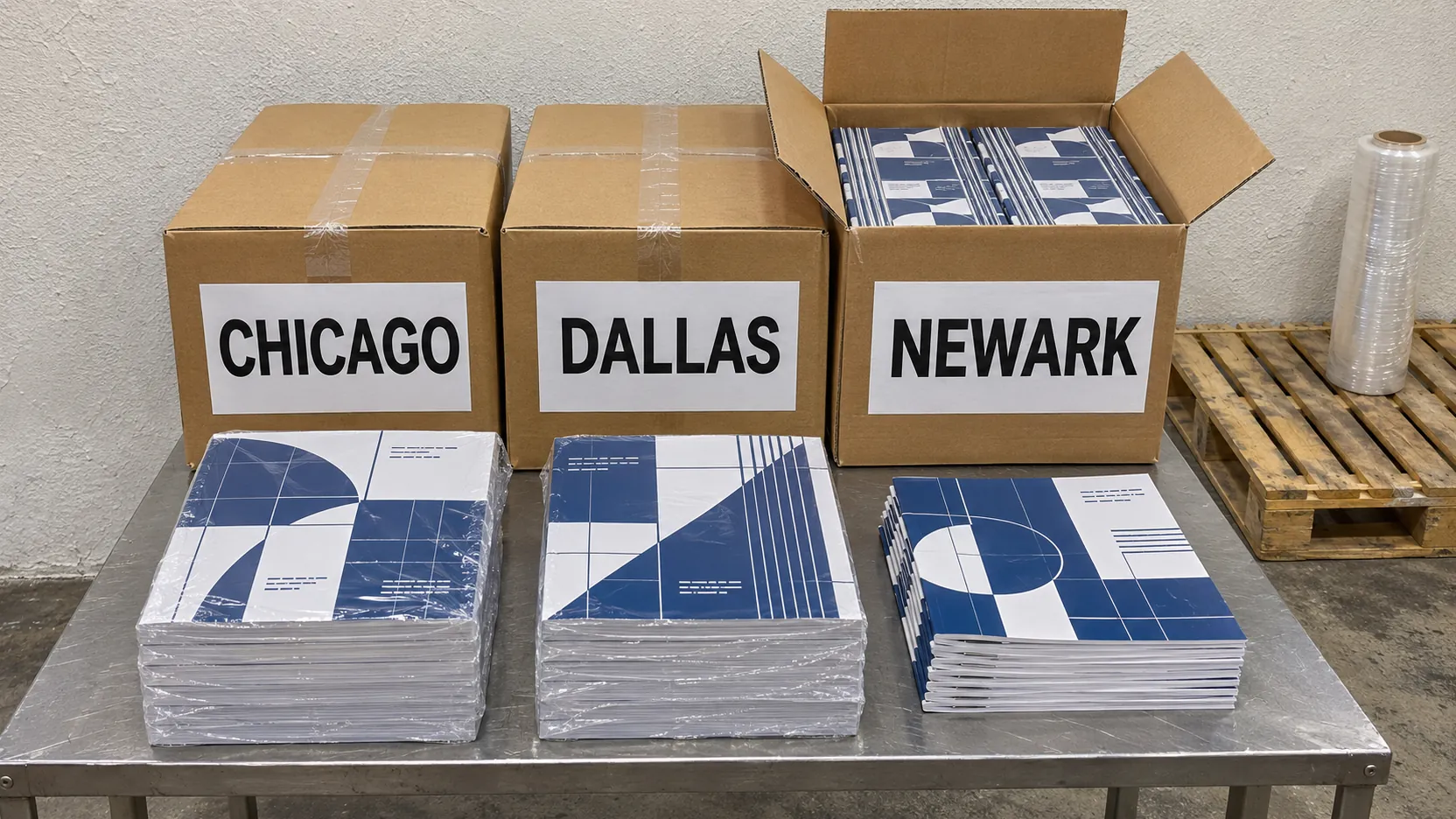
When the launch date is tighter than one ocean shipment allows, split the delivery—air the day-one batch for the show or the sales kickoff, and let the bulk sail; label cartons per destination so each arrival is receivable without repacking.
Ready to price your run?
Send page count, quantity tier, spec, and destination—Mainland replies with a binding recommendation, the exact quantity break, and a DDP timeline within 12 hours.
China Catalog Printing — What You Save and What You Pay
Printed catalogs entering the U.S. from China generally carry a 7.5% Section 301 tariff — the same rate as bound books — while China offset quotes typically run 30–40% below comparable U.S. runs in competitors’ published claims.
The saving range is China factories’ own marketing comparisons on book specs, and the tariff line comes from printer guidance that says to verify your HTS classification, because children’s titles are exempt and tariff lines change.
The honest comparison is a DDP landed price — freight, customs, and duties inside the quote — against a domestic delivered price on the same spec; a bare China unit price wins every spreadsheet and loses every customs invoice.
QinPrinting’s China printing page is the clearest public example of the framing: 30–40% saving claims, a DDP-versus-US table at 500 through 3,000 copies, and the tariff spelled out—their numbers are their own marketing, not ours, but the comparison logic is exactly right.
We quote DDP with freight, customs clearance, and duties included, typically 4–6 weeks door-to-door: proof approval in days 1–3, printing and binding days 4–14, packing and export days 15–17, ocean or air transit days 18–38.
Those timeline bands shift with season, destination, and quantity, so we map them backward from your target date instead of forward from today.
A hard launch date can split the order — air the day-one copies, sea the bulk — but air freight is a premium you pay for a date, not a per-copy saving.
For the term-by-term mechanics—what DDP covers, who is importer of record, when FOB makes more sense—see Mainland’s DDP shipping from China to the US guide; this page keeps only the cost comparison.
What a DDP quote must show inside its single number:
- Freight — ocean or air, to the named ZIP, not “to port”
- Customs clearance — the broker fee and the paperwork on the seller’s side
- Duties — the 7.5% tariff line on printed catalogs, paid before delivery
If any of the three sits outside the quote, add it back before comparing against a domestic delivered price.
The Spec Sheet That Gets Comparable Quotes
Setup, proofing, and expedited fees add 10 to 30 percent to headline estimates, and shipping adds another 5 to 25 percent on small and medium orders.
Those percentages are 2026 market benchmarks, not one vendor’s price list, and an offset plate or make-ready fee alone runs $50 to $300.
A low unit price with a high setup fee can push your break-even quantity far above your real demand, so divide setup fees by your planned quantity before judging any quote.
Send every vendor the same scenario — say, 1,000 copies of a 32-page 8.5×11 saddle-stitch catalog on gloss text, delivered to one ZIP — and ask for the all-in number.
That scenario-quote method is standard 2026 benchmark guidance, because setup, proofing, freight, and duties are exactly where quotes stop being comparable.
Any quote that cannot show unit price, setup and plate fees, proof costs, freight, and duties as separate lines is not yet a comparable quote.
Published 2026 price benchmarks walk the same method with ranges by product category, so you know what a normal number looks like before the sheet leaves your desk.
Your spec sheet needs exactly these lines:
- Quantity — two or three tiers, so the break lands where your count says it should
- Page count — a multiple of 4, with the cover counted separately
- Trim size — a standard sheet fit like 8.5×11 unless the line demands otherwise
- Paper — interior weight and finish, plus cover stock
- Binding — saddle stitch, perfect bound, or spiral, with the page-count reason
- Delivery term — DDP to a named ZIP, or the term you want priced
- Timeline — the date copies must be in hands, so freight mode is a decision, not a surprise
Paste that block into every inquiry—domestic and China—and the replies come back as columns on one spreadsheet instead of three different conversations.
Send One Spec Sheet, Not Three Guesses
You now hold the pieces this page promised: a five-variable framework, a 500/1,000/3,000 tier decision tied to your distribution count, an edition rule that keeps reprints cheap, and a spec sheet that makes quotes comparable across any vendor or border.
What ships with the RFQ is short: the spec sheet, the counted quantity, the destination list, and the date the copies must land.
Take that brief to Mainland’s catalog printing team and the reply comes back as a spec-based DDP quote with the quantity break and the timeline mapped to your date—no per-copy guesswork, no surprise invoices at the border.