When a full-color ages 4+ picture book is ready for offset but the interior stock is still open, picking paper by habit or by the thickest gsm rarely settles the run. You can still lock coated finish, weight, and cover laminate as separate decisions, then confirm them on a physical sample before the quote hardens.
Pick the best paper for children’s book printing by finish and sample, not GSM alone. Match matte, silk, or gloss to illustration style and reading light, then set a gsm band for opacity. Keep cover laminate as a separate choice from interior stock.
You will leave able to judge a paper sample under the same light your readers use—and keep that finish-and-gsm lock steady through the next reprint without reopening matte-versus-gloss in every email.
Scope Ages 4+ Coated Paper for Picture Books
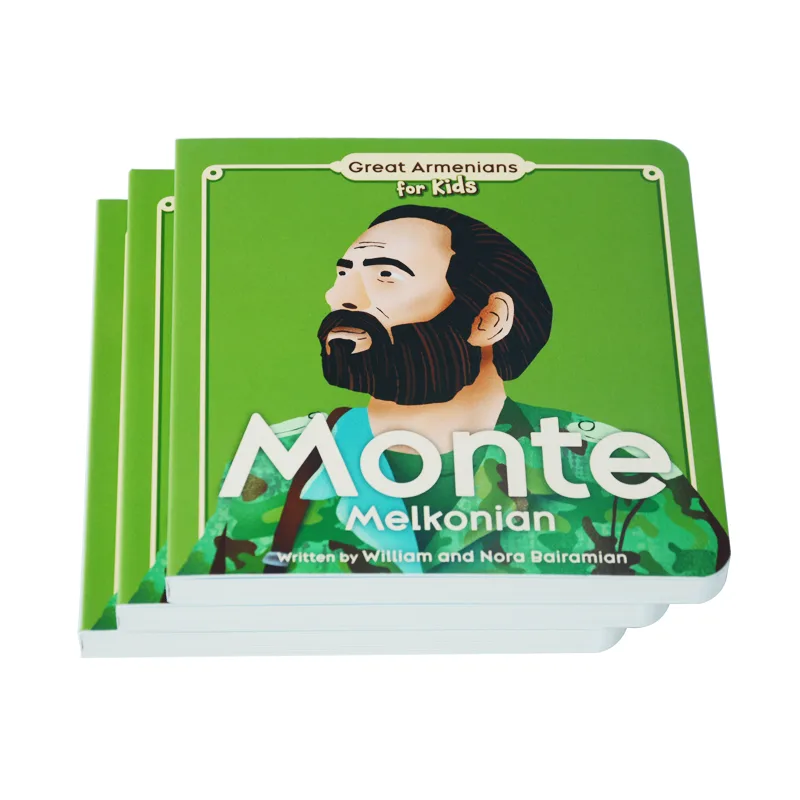
Use this guide when the reader can handle paper pages and the project is a full-color picture book—not a chew-and-tear toddler title. Ages 4+ interiors usually run on coated art paper; board books use mounted paperboard and need a separate product brief.
When you are ready to name interior coated options on a children’s book RFQ, keep toddler board construction off this sheet.
You can plan picture-book interiors on coated art paper in gloss or matte across common 128–200 gsm bands, request a paper-stock sample kit, and keep toddler board books on a separate paperboard path.
This does not promise silk as a named stock SKU, screen-to-print color match, or GSM as the only quality score.
Format lock for Hardcover vs Softcover continues on hardcover vs softcover. Commercial planning after paper is locked returns to Kinderbuchdruck.
| Project signal | Next step |
|---|---|
| Ages 4+ paper-page picture book, full color | Stay here: lock interior finish, gsm, then cover laminate |
| Ages ~0–3, thick mounted pages, rounded corners | Leave this guide; open a board-book paperboard brief instead |
| Need G7 / ICC / proof ΔE depth | Handoff color science after stock is named—do not deepen it here |
A typical offset planning band for first prints is about 300 copies; if quantity is still TBD, Hold the gsm lock until the ladder is real. Inspect board diversion early so toddler titles do not burn a 7–14 day sample cycle on the wrong path.
Match Matte Silk or Gloss to Illustration Style
Lock interior coated finish before you argue about “premium paper.” Soft watercolor and text-heavy spreads usually hate hard glare; bold saturated art often wants more pop; silk sits between them when low glare matters but full matte looks too dull.
When the manuscript is illustration-ready enough to quote and finish is still open, write the finish name on the RFQ—do not hide it inside a vague “high quality coated” line.
Write interior finish and GSM as separate RFQ fields—buyers already quote matte, silk low-glare, or gloss coated stock in distinct bands before they lock the run.
Does not invent win rates; does not claim every RFQ lists all three finishes.
Choose silk when glare hurts under a desk lamp but matte makes the art look dull.
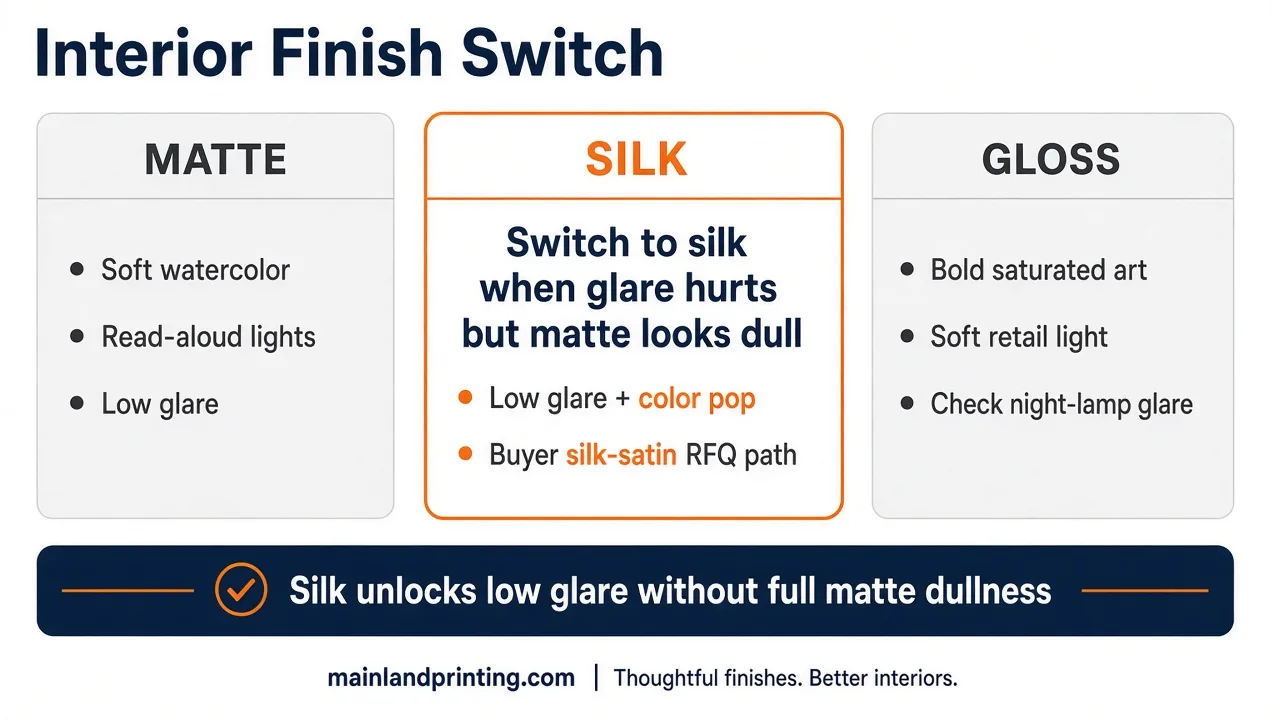
| Illustration / light signal | Choose interior finish |
|---|---|
| Soft watercolor, minimalist art, classroom read-aloud lights | Matte coated — lower glare on faces and large soft washes |
| Need color pop without hotspot glare (buyer “silk / satin, not glossy”) | Silk / satin coated — low-glare middle path; specify on RFQ |
| Bold saturated art, gift display under soft retail light | Gloss coated — sharper pop; check glare on night-story lamps |
| Still mixing cover film language into interior finish | Hold finish lock; split cover laminate on the next section first |
Silk is a buyer-specified low-glare finish path on many RFQs; it is not a substitute for naming gsm, and it is not the same line as cover soft-touch film. Verify the finish under the same lamp your readers will use—not only under a bright monitor.
Red flag: Approving gloss interiors because the cover mockup looked shiny on screen.
Choose Picture Book GSM Without Overweighting Thickness
After finish is named, set a gsm band for opacity and page feel—not as a vanity thickness score. Common picture-book coated bands cluster around 128, 157, and 200 gsm; many RFQs also land in 135–170 or 150–170 for matte interiors.
With finish and gsm named, lock square, landscape, or portrait trim next—use children picture book size guide before the unit price hardens.
When you are tempted to rank paper only by a higher gsm number, pause and check show-through on a printed spread instead.
Use GSM to set opacity and page feel, then confirm finish on a printed sample—higher gsm alone does not prove better picture-book quality.
This does not publish a universal show-through failure rate; lb↔gsm converter depth stays on the dedicated converter URL.
Measure opacity on a dark spread before you pay for the next 50 gsm jump.
| GSM band (coated interiors) | Use it when |
|---|---|
| ~128 gsm | Shorter picture books where freight weight matters; verify opacity on dark spreads |
| ~157 gsm (often 150–170 matte / silk RFQs) | Default planning band for many 32-page full-color titles |
| ~200 gsm (often 170–200 silk/satin asks) | Heavier page feel or high ink coverage; watch spine bulk and shipping weight |
Opacity, finish, and sample feel still decide whether illustrations hold. A dull 200 gsm sheet can lose to a well-chosen 157 gsm matte under classroom lights.Keep quantity, page count, and destination on the same quote ladder so thicker stock does not surprise landed cost—see the children’s book cost guide for budget structure, not for a fixed paper price. Genre-wide paper taxonomy stays on book paper types.
Separate Cover Laminate from Interior Paper Stock
Cover laminate protects and scuffs differently from interior coated stock. Gloss film on the case or softcover wrap does not force gloss pages inside.
When the RFQ still says only “glossy book,” rewrite it before you compare quotes.
Name cover laminate and interior coated stock as two lines on the RFQ—glossy cover film does not automatically mean glossy interior pages.
If your cover needs gloss film for scuff resistance while interiors stay matte for reading comfort, write both finishes on the same RFQ instead of one vague “glossy book” line.
Does not claim every RFQ splits the two; does not invent a universal laminate durability percent.
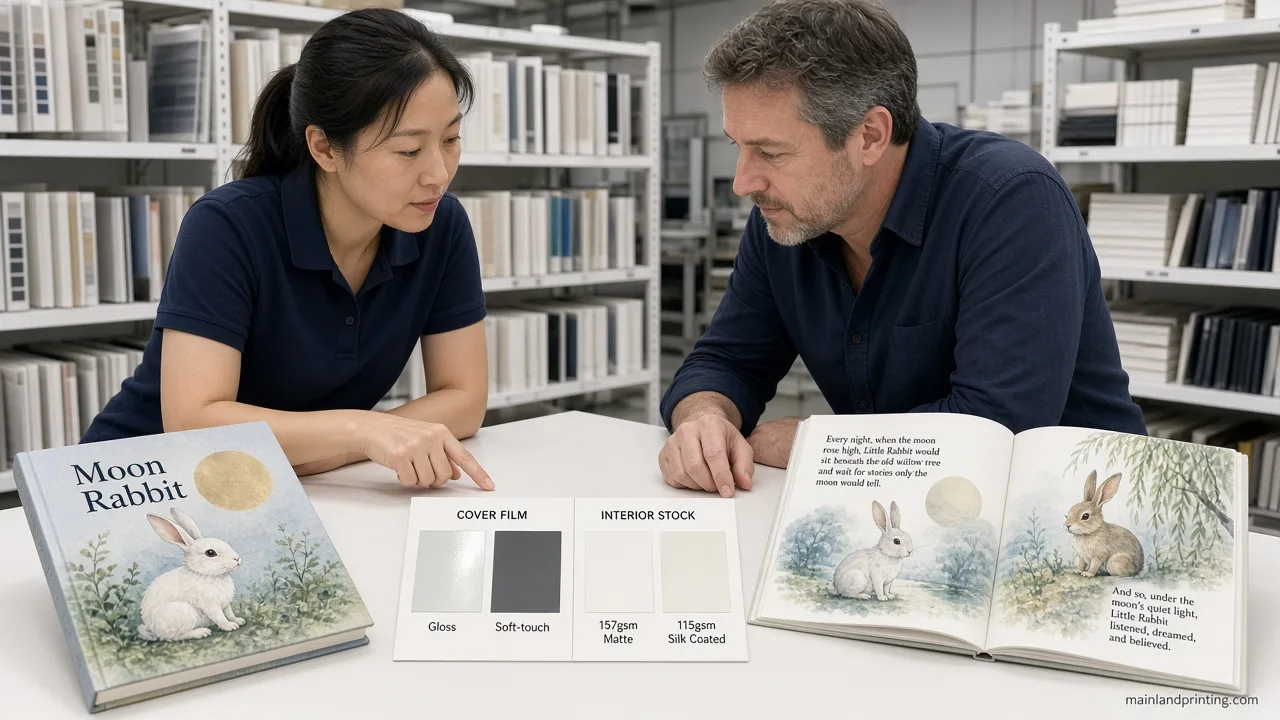
| Oberfläche | Write this on the RFQ |
|---|---|
| Interior pages | Coated finish (matte / silk / gloss) + gsm band |
| Cover wrap / jacket | Lamination: gloss, matte, or soft-touch — separate from interior finish |
| Legal combo example | Matte interiors + gloss cover film for tote scuff resistance |
Achtung: Soft-touch cover film is a cover decision. Do not assume it changes interior glare under a reading lamp.
Trade buyers often treat cover finish as a channel signal—see how the Book Industry Study Group frames professional publishing standards when you write RFQ notes for retail or library lists.
Approve Paper Samples Before You Lock the RFQ
Treat paper finish and a physical sample checkpoint as decision points—not as afterthoughts after the unit price is locked.
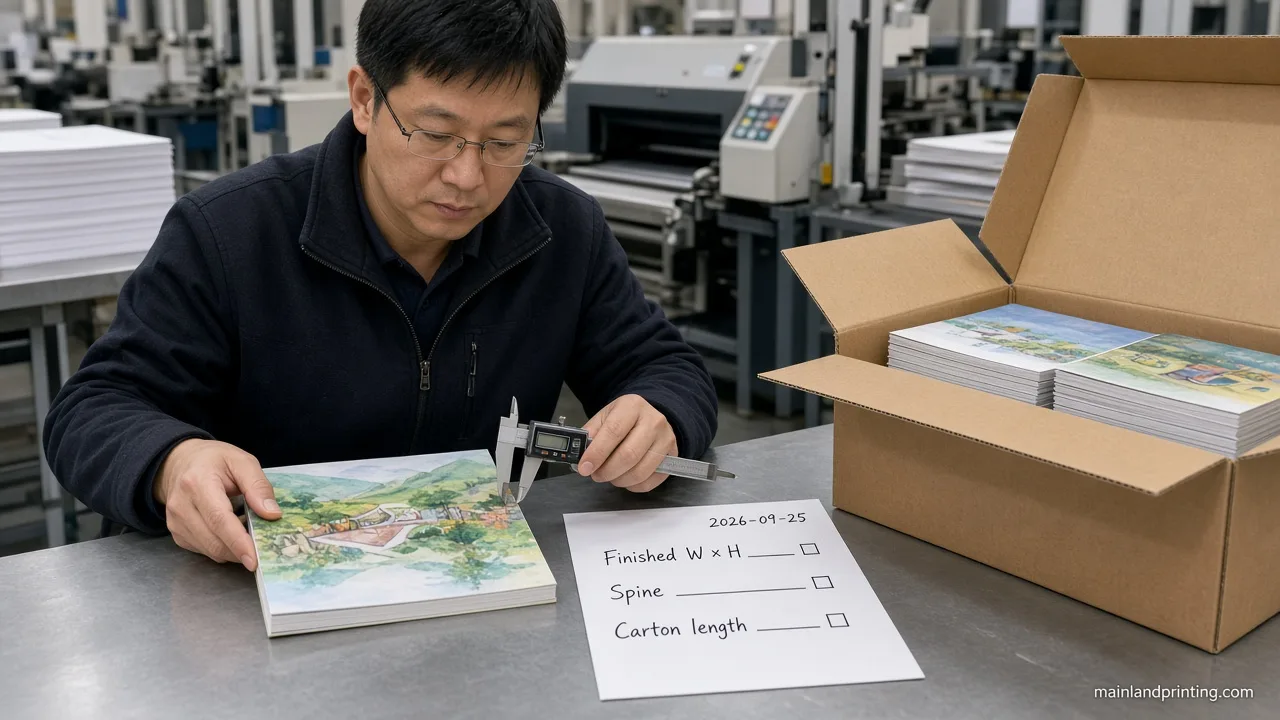
When the buyer still needs to feel coated stock and cover laminate before approving production, request a printed or stock sample on the same finish and gsm you intend to order.
Does not claim a measured approval pass rate.
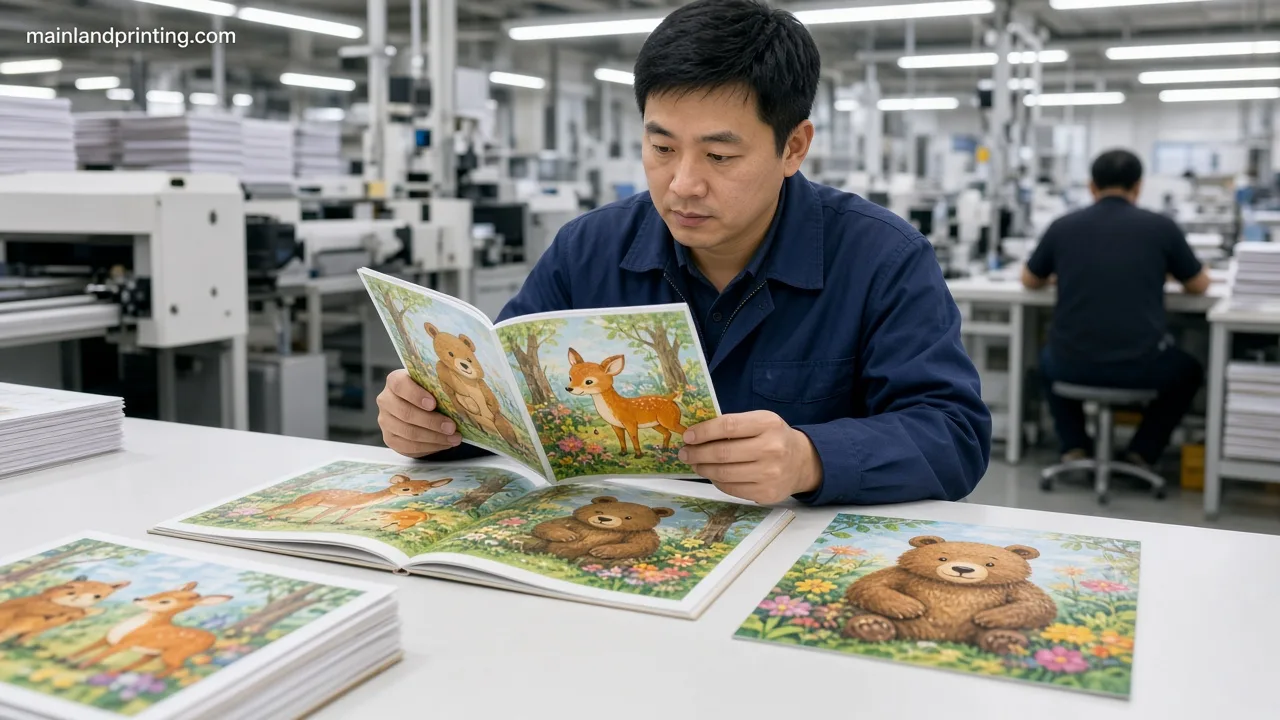
| Sample checkpoint | Pass when |
|---|---|
| Glare under desk / classroom lamp | Faces and text stay readable; no hard hotspot on skin tones |
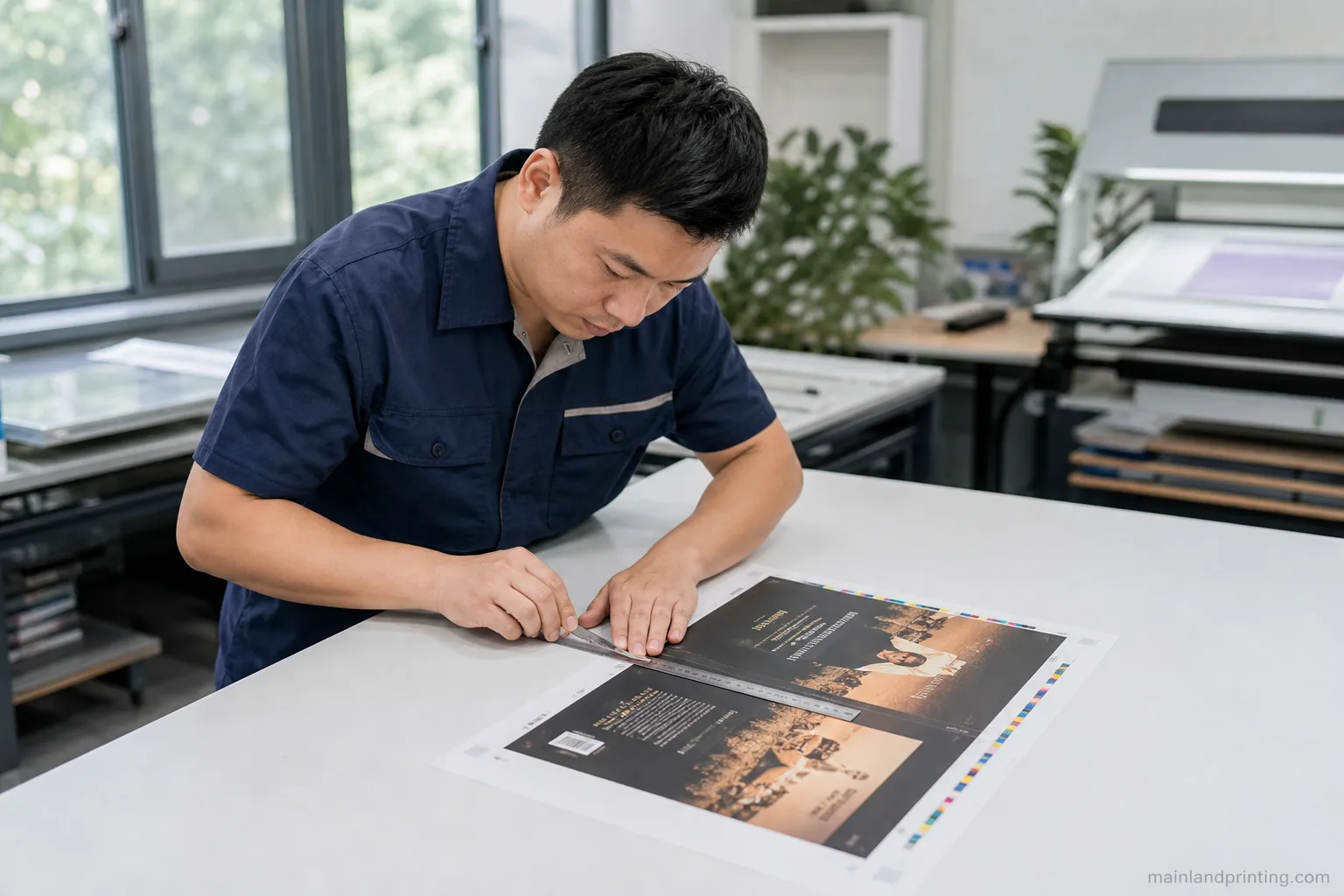
| Show-through on dark spreads | Opposite-page art does not ghost through at intended gsm |
| Cover film vs interior feel | Both match the two RFQ lines you wrote—not one vague finish |
| File readiness | Bleed, trim, and spreads match the file specs checklist |
Red flag: Approving a blank swatch only, then changing gsm or finish without a new printed page. Test glare and inspect show-through before you scale; a missed check here often costs another 7–14 days for a replacement sample.
For fiber sourcing claims on FSC options, keep the certificate path aligned with FSC standards overview—do not invent a certification on the RFQ.
Plan a Picture Book Paper and Sample Review
Share trim, page count, interior finish, gsm band, cover laminate, quantity ladder, and sample need. Mainland Printing can align coated options before you approve the run.
Lock Your Picture Book Paper Spec for Print
A defensible paper lock names interior finish, gsm band, and cover laminate as three fields, then keeps the approved sample with the production brief. That is what “best paper” means for ages 4+ picture books—not a thicker sheet by default, and not a screen that looks perfect on a laptop.
Once those fields clear glare, opacity, and handling checks, you can scale the print run without reopening matte-versus-gloss in every email. Return to the children’s book planner with a sample-backed sheet so quoting compares the same physical product.
If board thickness or toddler safety is still the real question, divert now. If color science is the blocker, hand off to the color paper guide after stock is named. Paper choice is finished when the sample—not the spreadsheet—says the story holds in the hand.
Picture Book Paper FAQ Before You Quote
What is the best paper for children’s book printing?
For ages 4+ full-color picture books, start with coated art paper, lock matte, silk, or gloss to illustration and reading light, then set a gsm band for opacity and confirm both on a sample—not by gsm number alone.
Should picture book interiors be matte or gloss?
Choose matte when soft art and read-aloud lights need low glare; choose gloss when bold color pop matters and glare is acceptable; choose silk when you need a low-glare middle path. Cover laminate stays a separate line.
Is higher GSM always better for children’s books?
No. Higher gsm can improve opacity and page feel, but finish, show-through on dark spreads, spine bulk, and freight still decide. Confirm on a printed sample.
Do I laminate the cover the same way as interior pages?
No. Interior coated stock and cover laminate are two RFQ fields. Matte pages with gloss cover film is a common, intentional combination.