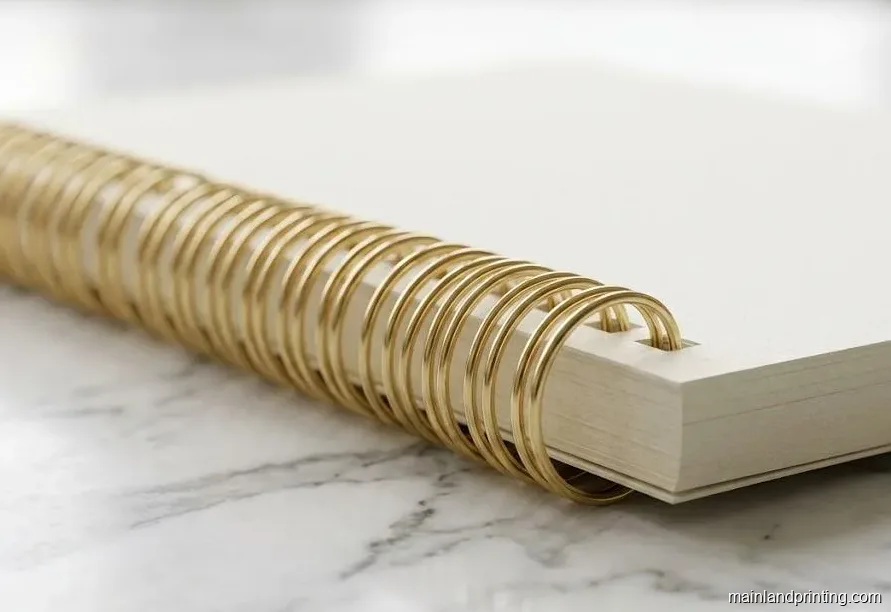
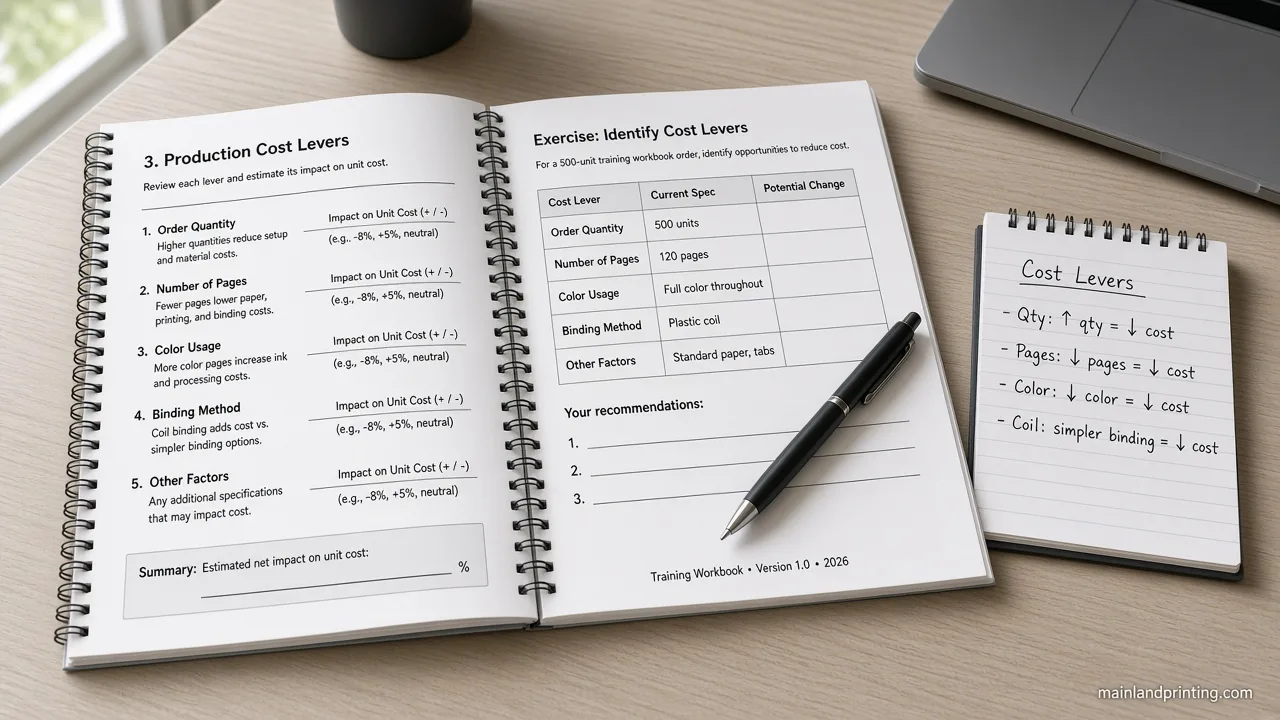
When a spiral workbook or planner PDF still uses perfect-bound margins, facing pages, or an unnamed punch edge, the irreversible risk is already in the file—long before anyone argues about coil color or unit price.
Spiral bound book printing file checklist work starts with binding margin, punch clear zone, turn direction, cover/text/divider ownership, and proof roles—so the pack is submit-ready before Mainland punches metal or plastic.
This guide helps you run that pre-press pass once, keep buyer/design/prepress ownership clear, and send one structure to the spiral line without locking fictional hole templates.
Know When the Spiral File Pack Is Ready to Submit
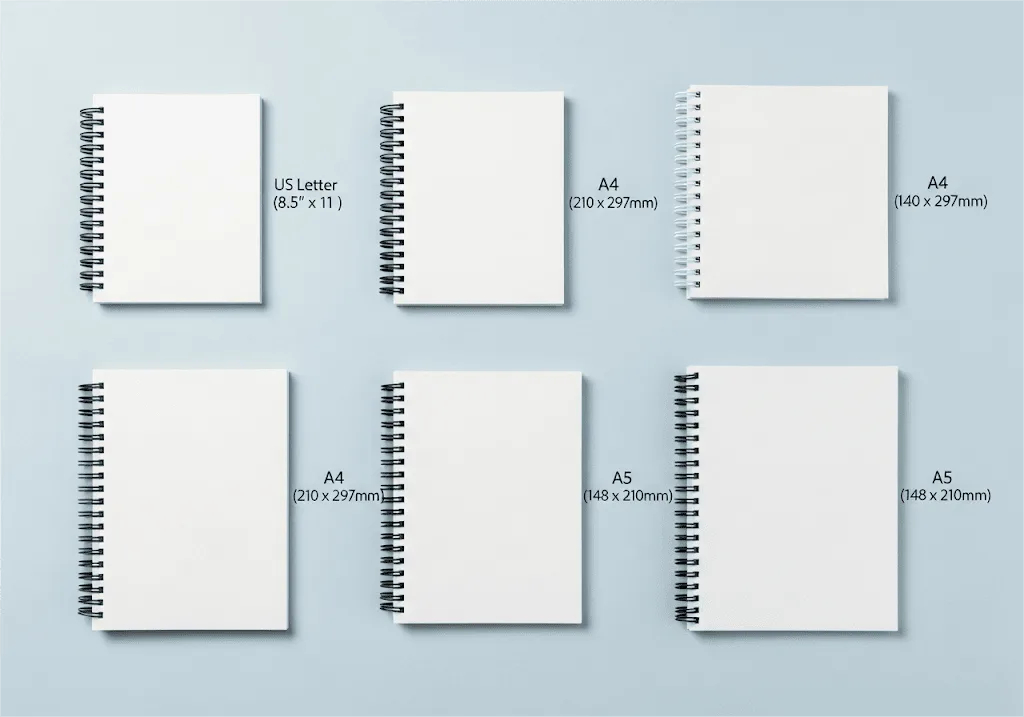
Treat the pack as ready only after five fields are named on the same brief: trim and orientation, binding margin / punch clear zone, turn direction or bound edge, cover vs text vs divider file list, and whether you still need a digital PDF proof, a hard proof, or both.
Wire-bound student workbooks and spiral planners fail the same way when those fields stay “TBD” while printers invent three versions of the punch edge.
The table below is a first lean for spiral and Wire-O file packs. It is not a softcover spine checklist and not a shop-agnostic hole-center template.
| Must be named | Submit when |
|---|---|
| Trim + orientation | Final trim size locked; portrait / landscape / top-flip written in words |
| Binding margin | Clear zone marked on the punch edge; no critical type in that band |
| Page build | Single pages in reader order; facing-pages spreads not used as the print master |
| Dividers / tabs | Count, labels, and odd right-hand insert pages listed—or marked none |
| Beweispfad | Digital, hard proof, or both named before production |
If any row is still blank, hold the “final” upload and verify the five fields before Mainland prices or punches the run.
Keep Text Clear of the Binding Margin and Punch Zone
Leave at least 12 mm to 15 mm (about 0.5″) of inner margin on the bound edge so spiral punch holes do not cut into text or graphics.
That clearance sits on Mainland’s spiral FAQ, and the same team runs a gutter allowance audit before printing.
Trade printers describe a similar planning floor—about half an inch on the binding side, with holes landing near the outer edge of that band—so treat 0.5″ as a shared planning language, not a die map you invent in Illustrator.
Do not publish or lock fixed hole-center coordinates or pitch counts as a universal template before trim size and binding system are confirmed on the live quote.
Keep page numbers off the punch edge—alternate left/right or center them—then check odd and even pages stay readable after the coil is in.
Name Turn Direction and Page Order Before Files Freeze

Name the bound edge on every landscape or flip job—portrait side-bind, landscape short-edge, and top spiral are different punch lines even when the PDF looks the same.
Mainland can bind portrait on the long edge or landscape on the short edge; calendar-style top flips need that edge called out before prepress.
Build the master as single pages in reader order with facing-pages off for the print file—cover and interiors as separate pages with bleed—then measure the punch-edge clear zone so it matches how the book will turn.
Orientation wording does not lock metal Wire-O versus plastic coil; that material fork lives on Mainland’s Wire-O vs plastic coil binding guide after the file geometry is stable.
Split Cover, Text, and Divider Files by Owner
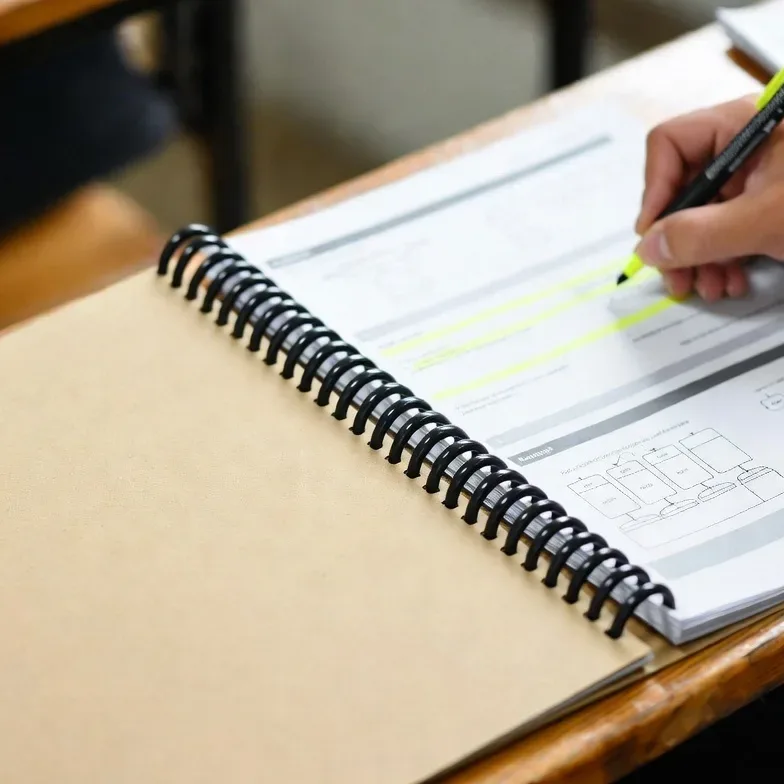
When a 200-page client workbook needs clear divider tabs, buyers already ask for labels on the same spiral RFQ as paper—so the missing fields are which PDF owns the cover, which owns the text, and which pages carry tab hardware.
Keep cover, interior text, and tab/divider art as separate jobs with named owners: buyer confirms labels and count; design places dividers on odd right-hand pages; Mainland confirms insert positions on proof.
OEM shops often bank tabs in groups of three to five and expect each divider on a right-hand page; use that as file-planning language, then confirm Mainland’s bank size and proof method before you lock pagination.
See 48 Hour Books on spiral book tabs for bank and odd-page vocabulary only—their per-tab price table is not Mainland’s list.Tear-out sheets and specialty tab hardware stay project-confirmed—do not treat them as default on every spiral run.
Ready for a spiral pre-press review?
Send trim, bound edge, margin clear zone, cover/text/divider file list, and tab labels—Mainland will audit the pack before punching.
Read Digital Proof and Hard Proof for Different Risks
A digital PDF proof is the place to catch page order, facing-pages mistakes, wrong punch-edge naming, and tab pages that landed on even spreads.
A physical hard proof is where coil fit, paper feel, and whether the punch clear zone still holds on real stock show up—things a screen cannot settle.
Mainland’s pre-press path pairs file audit (bleed, resolution, gutter) with optional physical mockups so materials, coil fit, and layout are inspected in hand before the bulk run.
Approve the geometry on the proof type that matches the risk you still care about; do not treat a screen flip-through as a substitute for coil fit when thickness or cover build is new.
Send One Pre-Press Pack With the Quote
You now have a submit-ready gate, a margin and punch clear rule, named turn direction, split file ownership, and proof roles that match the risk. Approve that pack first; then send quantity ladders or the material fork without reopening the geometry argument.
A clean RFQ pack for this spoke is short: trim and orientation, page count, binding margin note, bound edge in plain words, cover/text/divider file names, tab count and labels or “none,” plastic coil or Wire-O named once, and whether you want digital proof, hard proof, or both.
Share that pack with Mainland’s spiral bound book printing team so the recommendation and the punch refer to the same files.If the job is a training or client workbook whose page structure is still open, lock modules on the training workbook page specs spoke first—then return here for the file checklist.