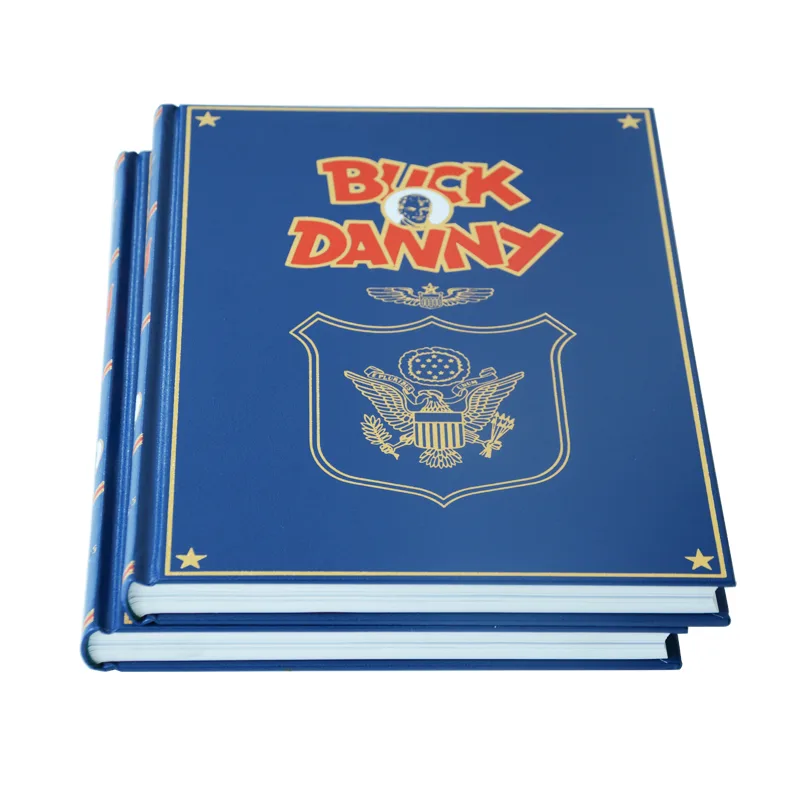
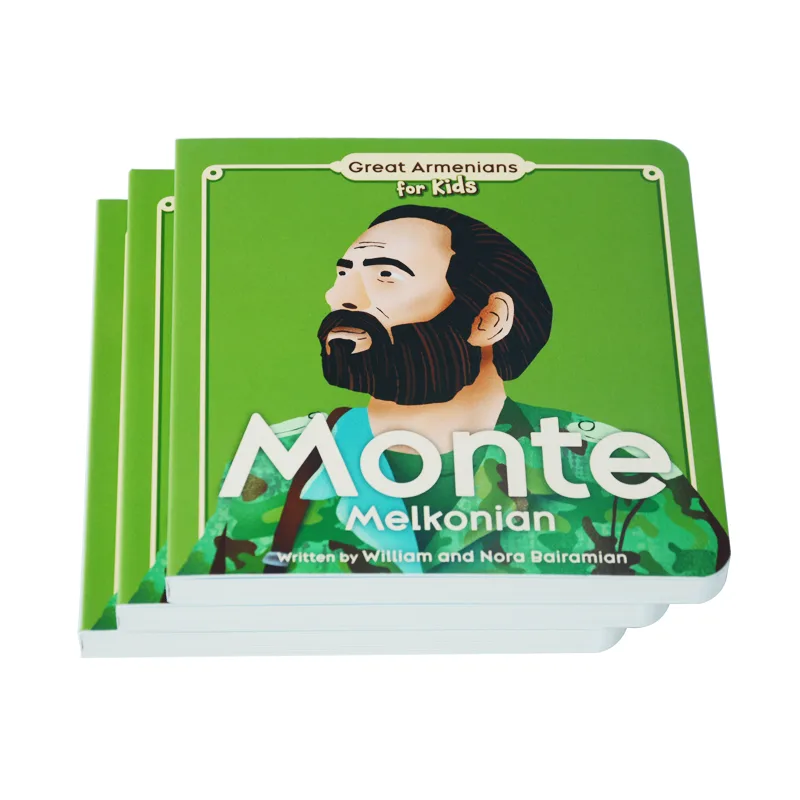
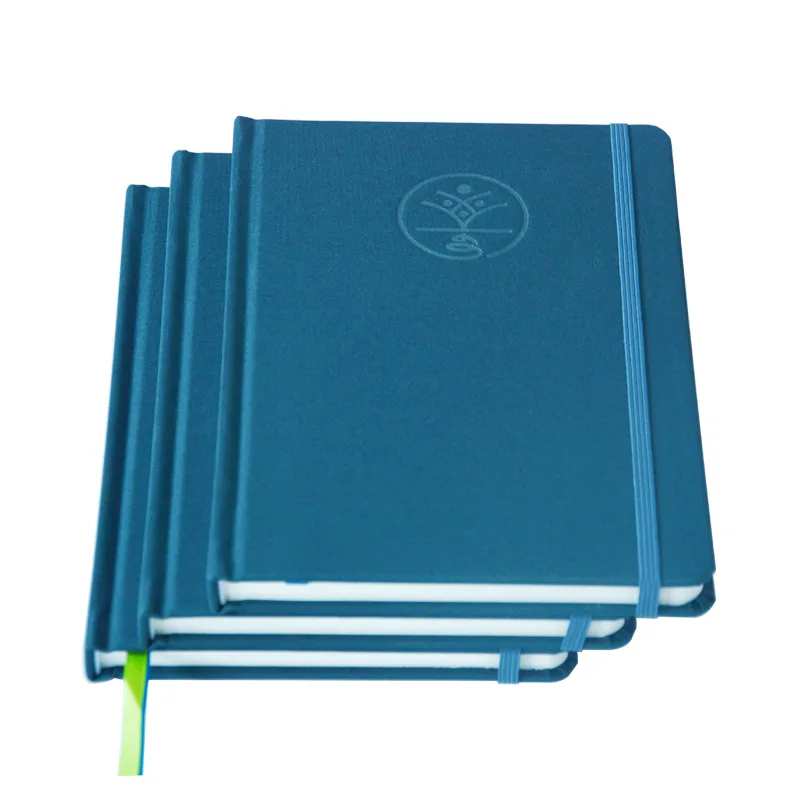
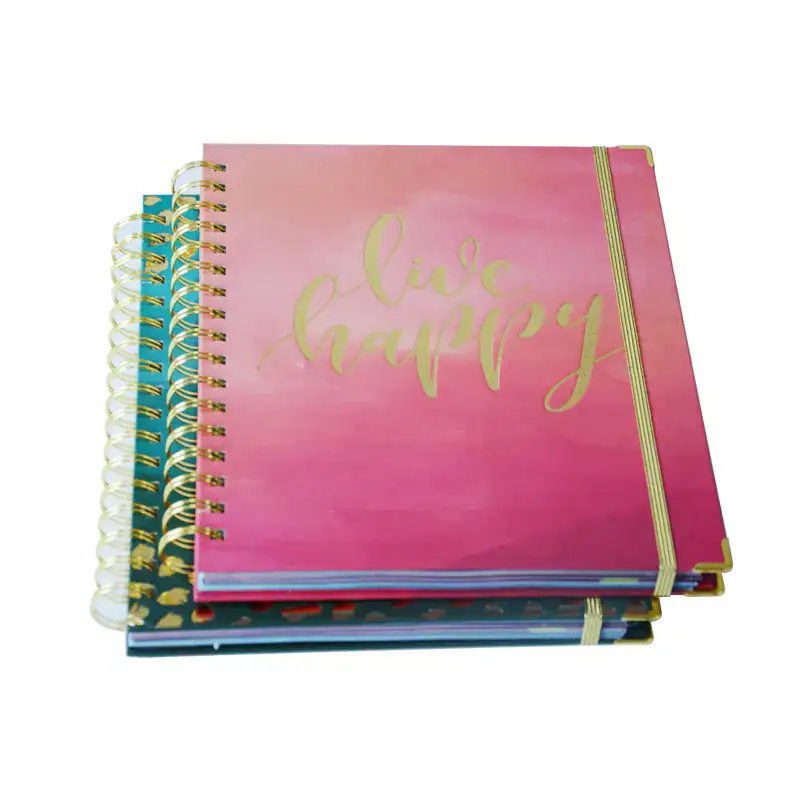
Your client forms a judgment about your company in 0.3 seconds — before they read your headline, your case studies, or your pricing. That judgment is triggered entirely by the physical object in their hands. Most B2B teams treat binding as a line item. It’s actually a brand signal, and it fires before your content does.
Spiral signals “temporary document.” Wire-O signals “technical precision” — but blends into every competitor’s proposal. Hidden Wire-O (hard cover) signals “meticulous, considered, made for you.” For high-stakes client-facing materials in law, consulting, finance, or real estate, Hidden Wire-O is the only format that builds brand before a word is read.
In the next 2,000 words, you’ll get the exact one-question decision filter that maps your brand positioning to the right binding format, a tier-by-tier breakdown of why Hidden Wire-O quotes can vary 30–50% for “identical” specs, and six procurement risks that won’t surface until three months after delivery — when your booklet is sitting in a client’s follow-up meeting falling apart at the spine.
The Question Most Buyers Get Wrong
The default framing: Which binding has the best features for my use case? That’s the right question for selecting office furniture. It’s the wrong question for selecting how your company presents itself in a high-stakes commercial relationship.
Marty Neumeier put it directly in The Brand Gap: “Every physical object that carries your name is either building your brand or eroding it.” A bound proposal is one of the most tangible brand touchpoints a company can produce — and most organizations treat the binding decision as a line item, not a strategy.
The right question: When your reader picks up this booklet, what do you want the first sentence in their head to be about your company?
The Brand Signal Each Binding Sends
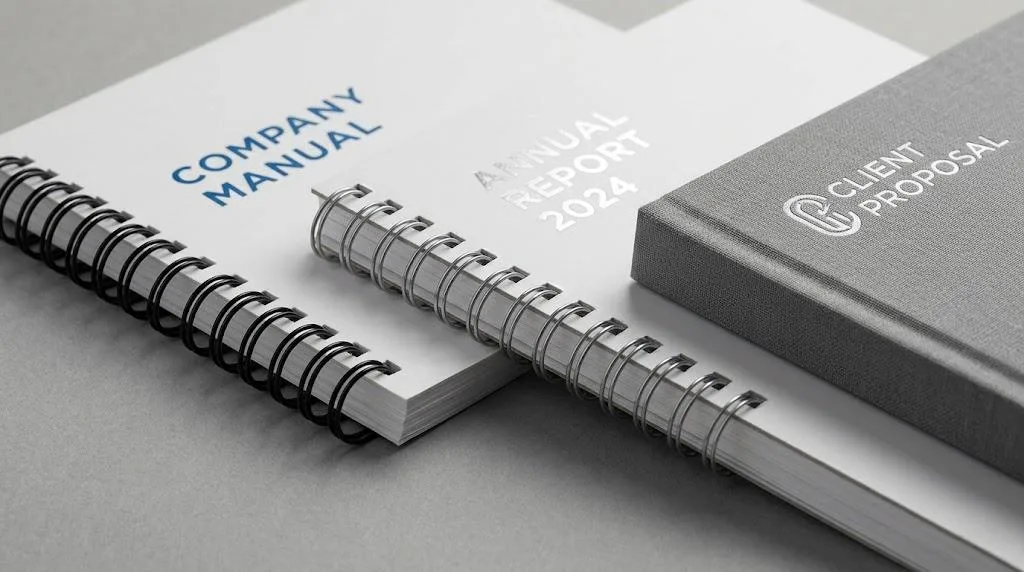
Spiral: The Working Document Signal
Spiral binding has two unavoidable visual characteristics: open, uncapped ends and a continuous arc of exposed plastic or metal. In Gestalt psychology terms, these open-ended forms trigger an “incompleteness” association — the brain registers an unfinished boundary and categorizes the document accordingly.
In practice, this produces a “temporary document” signal. For workshop materials or creative drafts, that’s appropriate. For a law firm proposal, a private equity pitch, or a consulting firm’s capability statement — industries where permanence and certainty are core product attributes — Spiral quietly undermines the authority of everything inside it.
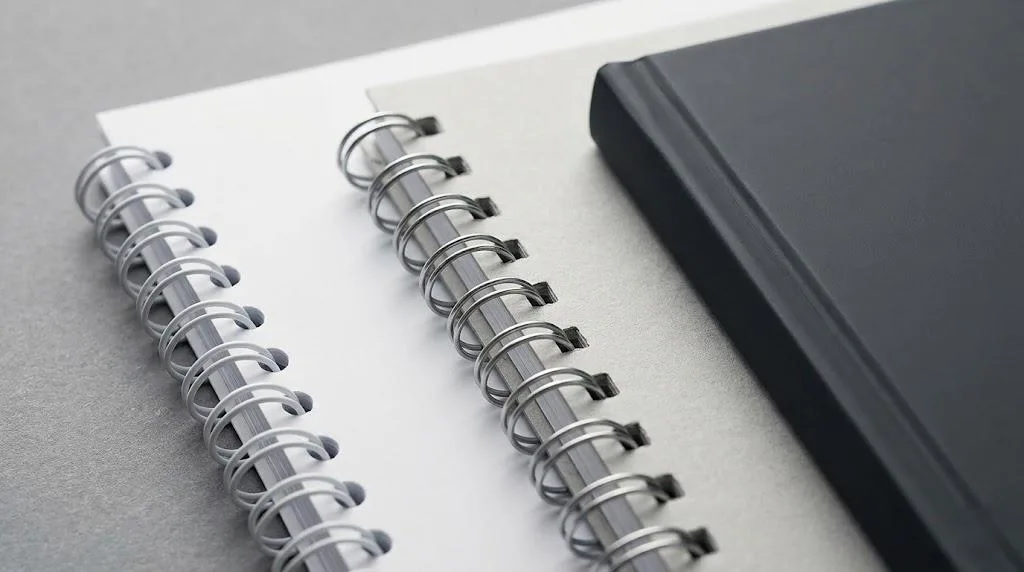
Wire-O: The Precision Tool Signal
Wire-O’s double-loop metal rings communicate something genuinely positive: system, structure, technical precision. In engineering firms and data-heavy reporting environments, that signal aligns well with the brand.
The problem emerges in two scenarios:
- In industries where authority rather than precision is the desired signal — law, finance, luxury services — exposed metal hardware reads as “instrument” rather than “institution.”
- Wire-O has become the default professional binding across most B2B sectors. When every competitor is using silver Wire-O on a dark matte cover, yours doesn’t signal professionalism — it signals membership in a crowd.
Hidden Wire-O: The “Made for You” Signal
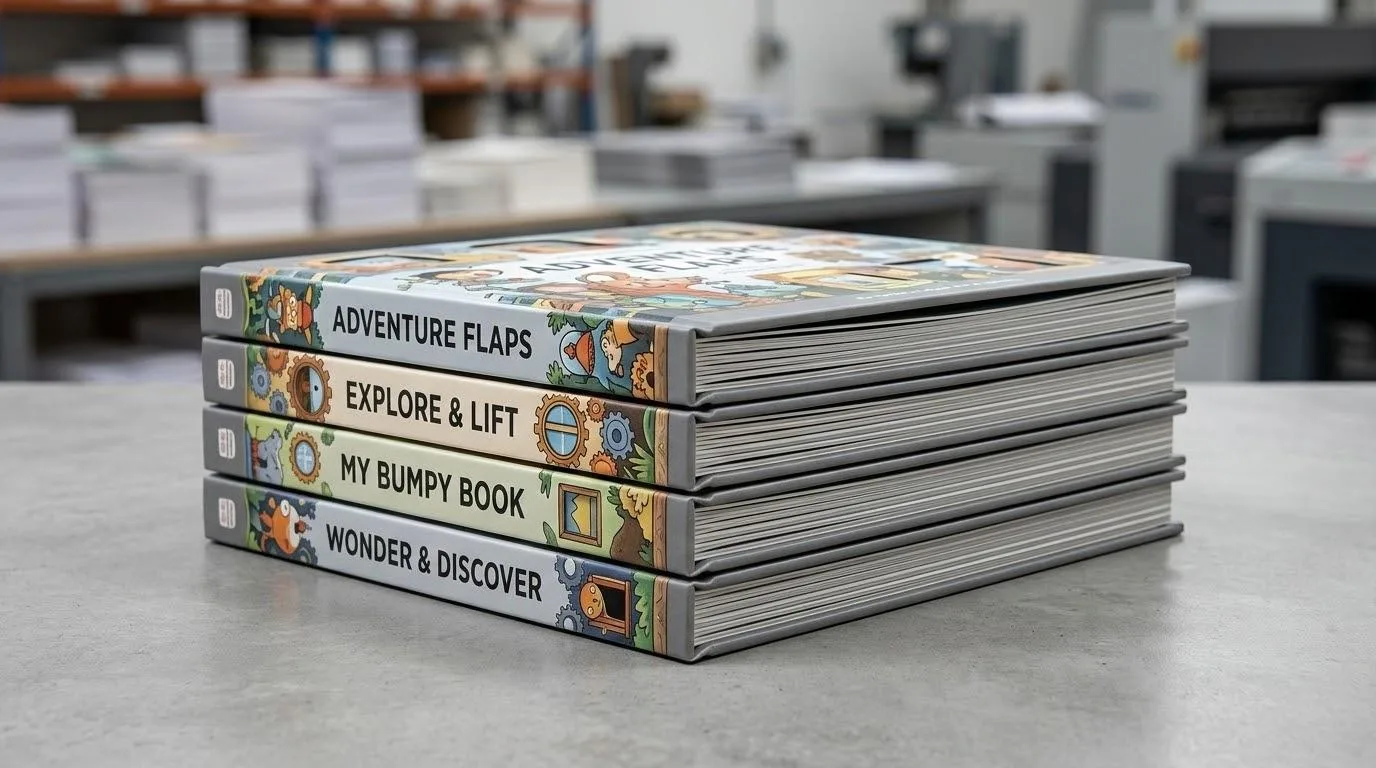
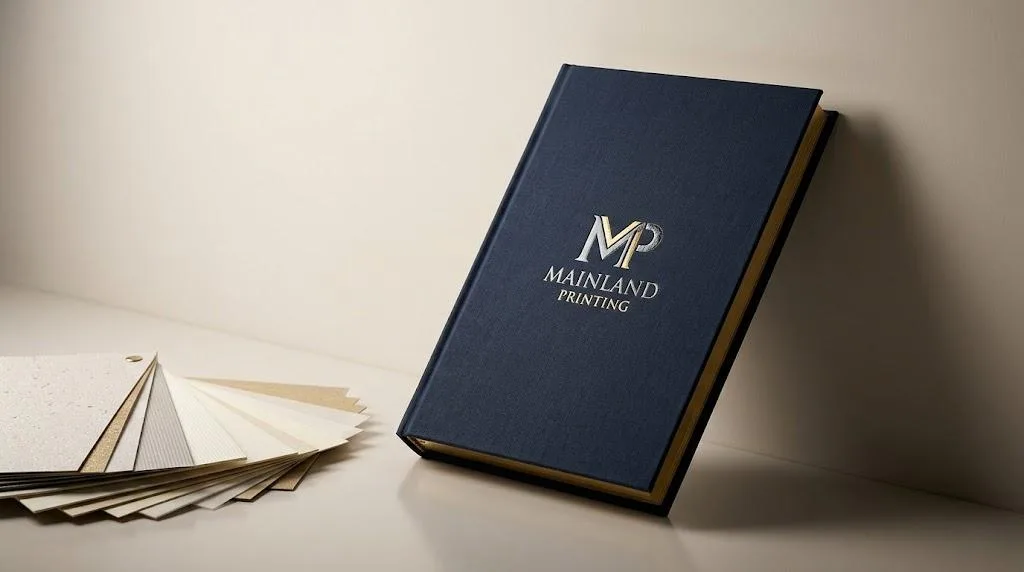
Hidden Wire-O conceals the binding hardware beneath an extended cover, presenting a visually complete, uninterrupted surface. This produces two psychological responses neither Spiral nor Wire-O can generate.
- Completeness perception: when no detail looks unfinished, the brain generalizes that quality standard to the organization behind it. The implicit message: “this company thinks about every detail.”
- Gift perception: the more enclosed and considered the wrapping, the more valued the recipient feels. In high-value commercial relationships, that feeling of being valued is itself a strategic asset.
The Printing Industries of America classifies concealed spine formats as the standard for “high-end corporate presentations, annual reports, and client-facing documents where spine appearance directly impacts first impressions.” This reflects documented buyer behavior, not aesthetic preference.
The One-Question Decision Filter
Before specifying any binding, ask: What do I want the first sentence in my reader’s head to be?
- “This company is meticulous and considered” → Hidden Wire-O (required)
- “This company is systematic and technical” → Wire-O (engineering/technology) or Hidden Wire-O
- “This company is direct and practical” → Spiral (very specific functional scenarios only)
- No clear answer → Your brand positioning needs to be resolved before the binding decision can be made correctly
| Format | Brand Signal | Best Industries | Avoid When | Durability |
|---|---|---|---|---|
| Spiral | Temporary | Training, Internal | High-stakes Proposals | Low–Medium |
| Wire-O | Technical | Engineering, Tech | Authority-driven sectors | Medium |
| Hidden (Soft) | Professional | One-use decks | Multi-meeting cycles | Medium |
| Hidden (Hard) | Premium | Legal, Finance | Page counts >150 | High |
| Hidden (Case) | Flagship | Investment Banking | Budget-sensitive | Very High |
What “More Expensive” Actually Means
When you receive three Hidden Wire-O quotes with a 30–50% price spread and identical specifications on paper, you are almost certainly comparing three different manufacturing processes. Hidden Wire-O describes an outcome, not a standardized method.
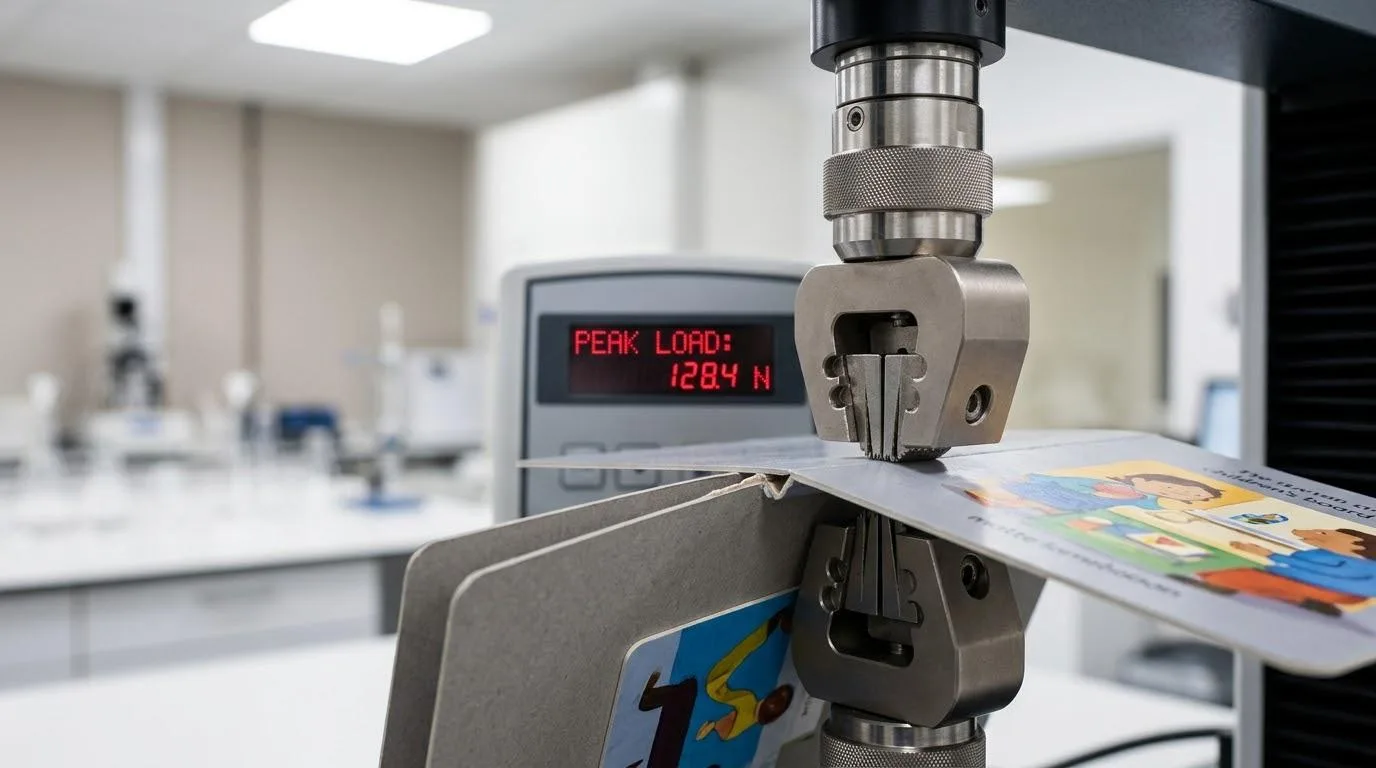
- Soft Wrap (Fold-over Cover): Cover stock is scored and folded inward to conceal the wire. Lowest cost. After 30–50 openings, the score line begins to crack — particularly under gloss or UV lamination. For a proposal used across eight client meetings over four months, this is a structural failure waiting for a timeline.
- Punched Hard Cover: A rigid board substrate is laminated with cover material and punched to accept the wire rings. Standard for legitimate “professional grade” Hidden Wire-O. Holds well up to approximately 150 pages — confirm explicitly when page counts approach that threshold.
- Laminated Case Binding Hybrid: A fully independent casing structure with flexible spine reinforcement. Wire hardware sits entirely enclosed within the case. Durability approaches hardcover book standards. Cost runs 60–80% above standard Wire-O. For flagship client materials that will sit on a managing director’s shelf for two years, this is the correct specification.、
Not Sure Which Binding Matches Your Brand Strategy?
Selecting the wrong format can quietly undermine your professional authority. Get a specialized recommendation based on your industry, page count, and usage cycle.
PRO TIP: Cover construction grade accounts for roughly 55–65% of the total cost differential between Wire-O and Hidden Wire-O. Surface treatment — soft-touch lamination, spot UV, foil — accounts for another 20–30%. The wire itself is a secondary cost factor. If you select Hidden Wire-O with a minimal cover treatment, the per-unit cost difference versus standard Wire-O can compress to 18–25%。
Four Questions to Ask Any Supplier
Before approving a Hidden Wire-O proposal, put these to your supplier and evaluate the quality of the answers:
- Is the cover wrap method a soft score-and-fold, or a rigid board construction?
- How is the hard cover connected to the text block — punched installation or endpaper binding?
- After 100 openings, what happens at the spine junction of this construction?
- If the cover shows adhesion failure during use, what is your reprint policy?
A supplier who answers all four with specificity understands what they’re producing. Vague responses indicate limited technical knowledge — or limited interest in your knowing the difference.
| Industry | Use Case | Recommended | Avoid |
|---|---|---|---|
| Finance/Law | Proposals | Hidden (Hard) | Spiral |
| Technology | Capability Decks | Wire-O | Spiral |
| Real Estate | Sales Booklets | Hidden (Case) | Spiral |
| Engineering | Specs | Spiral/Wire-O | Hidden |
Six Procurement Risks That Surface Three Months Later

More than 70% of Hidden Wire-O complaints don’t appear at delivery. They emerge during use — precisely when you need the material to perform.
- Page count at the threshold. Wire specifications map directly to page count ranges. A booklet near the upper limit of a wire gauge’s capacity will produce heavy page-turn resistance and elevated spine tension. Confirm your page count against your supplier’s wire gauge table before content is finalized.
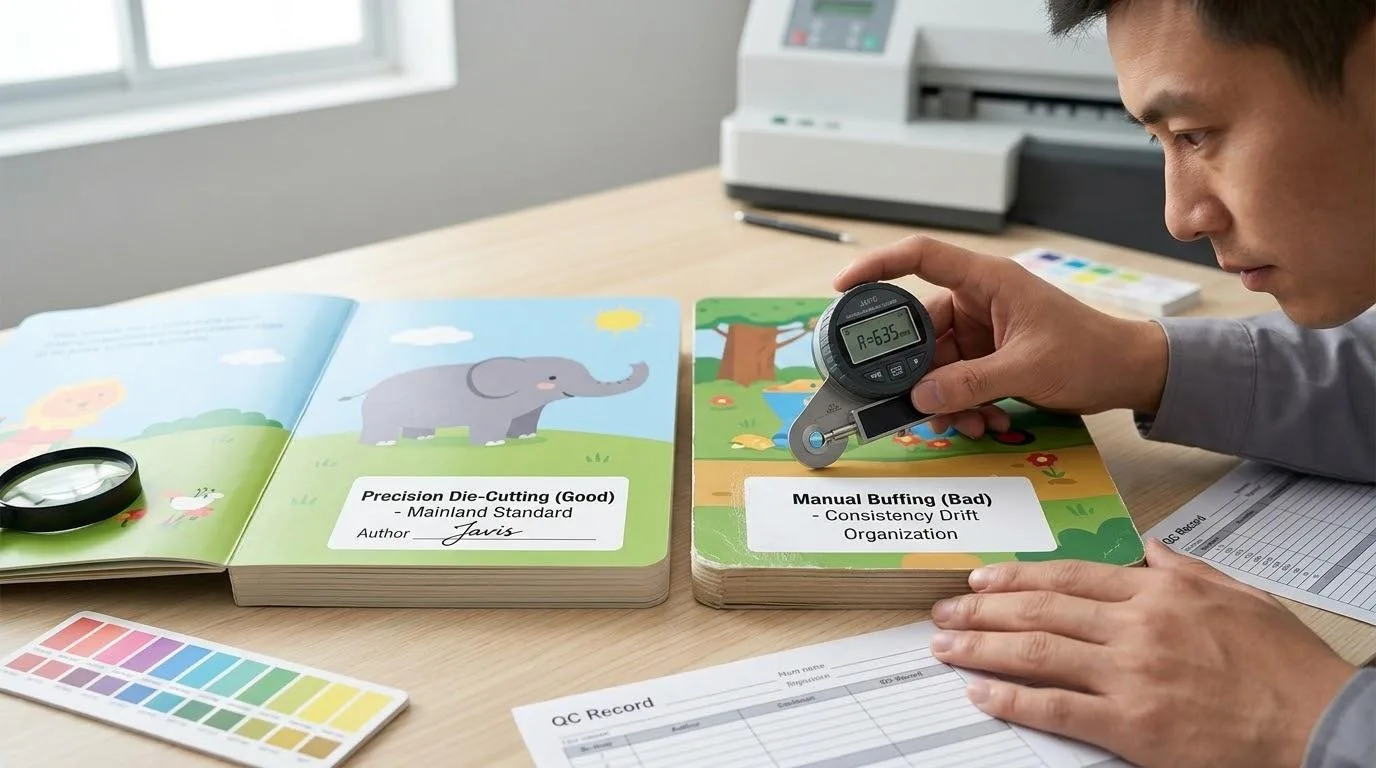
- The sample-to-production gap. Approval samples are produced by skilled operators under close supervision. Production runs involve line workers working to time targets. At delivery, pull books from the first, middle, and last cartons — not only the top of the first box — and check spine integrity, cover flatness, and color against your approved sample.
- Reprint incompatibility. Hidden Wire-O is structurally a one-time binding. If your content includes pricing or personnel listings that will update within 12 months, consider a hybrid approach: a permanent Hidden Wire-O main book for stable brand content, paired with separately printed insert sheets for dynamic information.
- Cross-batch color inconsistency. Retain a sealed color reference sample from your first run. Include a color consistency clause — ΔE ≤ 3 is a reasonable contractual standard — in any reprint agreement.
- Wire corrosion in humid environments. Standard galvanized wire can show surface rust within six to eight months in high-humidity conditions. The upgrade from galvanized to stainless steel wire typically adds 15–25% to wire material cost — a fraction of the total order — and protects your brand across an 18-month sales cycle. This is the highest-ROI single specification upgrade available.
- Compliance exposure in regulated industries. Photography licenses, financial promotion requirements (FCA, SFC, MAS, ASIC), and brand partner logo authorizations all have print-run-specific dimensions. Build a pre-production compliance checklist into your approval process — timed before the print file is released, not after.
Two Scenarios Where the Right Choice Wasn’t Obvious
A management consulting firm needed 200 Hidden Wire-O proposal booklets for board-level presentations. Their initial specification was standard Wire-O to manage cost. The critical factor they hadn’t considered: each booklet would be used across eight to twelve client meetings over four to six months.
That usage pattern required Punched Hard Cover construction — Soft Wrap would have failed structurally within the first month. The upgrade added approximately 22% to production cost. The alternative was a booklet visibly deteriorating during the exact meetings where it was meant to build trust.
An industrial technology company specified silver Wire-O for 300 trade show booklets. The binding was appropriate; the execution created an unintended problem. At the exhibition, three competitors had used identical silver Wire-O on dark matte covers — all four companies’ materials were visually indistinguishable from across the booth.
Evaluate your binding choice against the competitive environment it will inhabit, not in isolation. A switch to matte black wire, combined with a spot UV treatment on the cover logo, would have placed the booklet in an entirely different visual register at negligible additional cost.
Before You Order
The decision between Spiral, Wire-O, and Hidden Wire-O is not primarily a budget decision or a functionality decision. It’s a brand signal decision, and it operates before your content does.
A booklet placed on a client’s desk, picked up in a follow-up meeting, and handed to a colleague for review is a brand touchpoint with a multi-month lifespan. The binding you choose determines what signal it sends every time it’s handled.
Tell us your industry, use case, approximate quantity, and timeline. We’ll provide a specific binding recommendation — including construction tier, wire specification, and a reference cost range — within 24 hours. Not a quote. A recommendation you can make a confident decision from.