Print on demand made launching a book almost risk-free: platforms print one copy when a reader clicks buy, and you never warehouse a box.The trade-off is a per-copy price that never improves, no matter how many copies a title sells. At some point, every publisher with a steadily selling book runs into that ceiling and starts wondering what a factory print run would actually change.
Print on demand vs bulk printing is a volume, cash, and logistics decision: POD wins while copies are few and unpredictable, bulk offset wins once steady sales can absorb a run, and a China factory stretches that advantage with lower unit costs and DDP delivery.
The sections below show you how to find the crossover point for your own title, audit four signals against your sales data, and weigh what a China run adds before any cash leaves your account.
Why POD Costs Stay Flat While Bulk Costs Fall
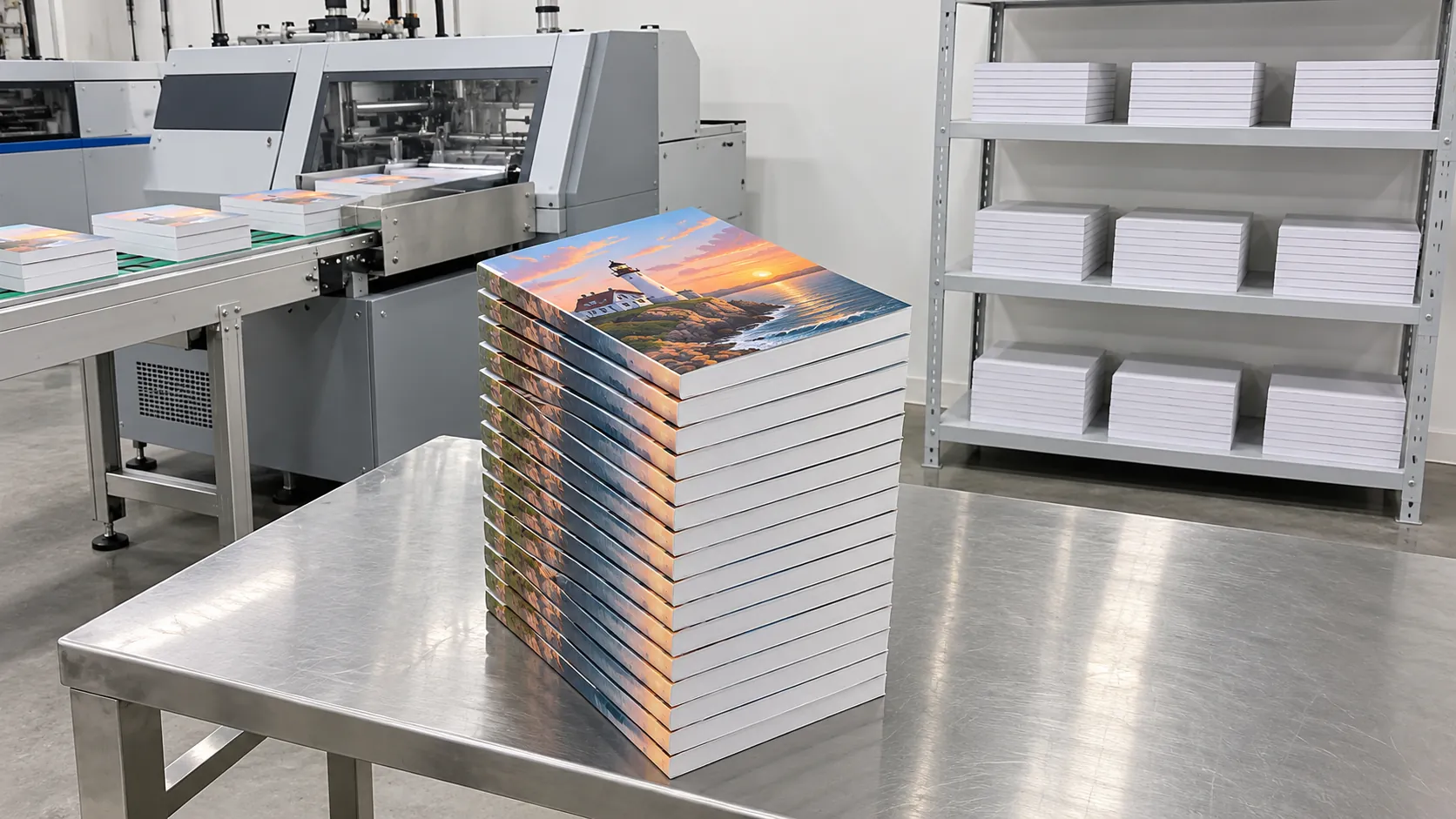
POD pricing feels simple because it never changes. That simplicity is also the ceiling: the platform’s per-copy price carries its own handling and margin on every single unit, at every volume, forever.
A factory run prices differently. Offset presses charge real money to get a job on the press — and then almost nothing for each additional copy.
POD charges a roughly fixed per-copy price no matter how many copies you print, while a bulk offset run spreads one-time setup across every copy in the run, so the per-copy price falls as the quantity rises.
Setup covers plates and press preparation, and the per-copy drop curves differ by page count, color, and binding. A 488-page full-color art book pays for far more press attention than a 120-page black-and-white novel, so its curve starts higher and falls harder.
This is the structural comparison between two production models, so individual quotes still vary and no specific per-copy price is promised here.
You can watch the curve bend in a print broker’s cost comparison of digital versus offset: plate-making and press wash-ups that wreck a 500-copy quote become pennies per copy when the same job runs 40,000.
Where the Crossover Sits for a Typical Book Run
Publishing-industry guides commonly place the offset-versus-POD crossover in the 500-to-1,000-copy zone, with offset clearly cheaper per copy somewhere around 1,000 to 1,500 copies and up.
Treat those zones as planning bands from US-market guides; the exact point depends on your book’s specs and, for an import run, on freight added per copy. Page count, ink coverage, binding, and the shipping line can each move the crossing by hundreds of copies in either direction.
The zones come from published industry guides rather than a live quote, and books outside typical specs can cross earlier or later.
One publisher-services break-even analysis of POD versus offset draws the same bands and adds a useful marker: past 1,500 copies, manufacturing savings usually outweigh warehousing and fulfillment put together.
To see the shape, run an assumed example with your own two quotes swapped in. If a 300-page paperback costs you about $4–5 a copy on POD, a 1,000-copy factory run often lands near half that per copy once printing, freight, and duties are divided across the pallet — which is why the crossing for a China run tends to sit at or below the domestic band.The arithmetic is illustrative, not a quote; your spec and lane set the real numbers, so verify both quotes on the identical spec before you trust the crossing.
If you want the supplier-side view of this decision — quantity tiers, shipping modes, and spec options — Mainland’s print-on-demand books from China page covers the product inputs this guide treats as numbers.
The Four Signals That Say a Title Is Ready
Crossover math tells you where the two cost lines meet. Your sales data tells you whether your book is actually standing there. Four signals, checked one title at a time, separate the books ready for a run from the ones still earning their keep on POD.
The switch makes sense when four things line up: POD unit cost is compressing your margin at current volume, sales are steady across normal periods, the content is stable with few revisions ahead, and cash flow can carry inventory plus storage without starving marketing.
Pull each signal from data you already have, in about ten minutes:
| Signal | What to pull from your numbers |
|---|---|
| Unit-cost squeeze | Your POD per-copy cost and margin over the last 90 days of real volume |
| Steady velocity | Monthly sales across two or three normal periods, with launch spikes and promos excluded |
| Content stability | Revision log since launch, plus any errata or new-edition plans already queued |
| Cash headroom | Months of operating cash left after the run, storage, and marketing are all paid |
Two green signals means wait; three with steady velocity is worth a quote; all four means the title is ready for a factory conversation. Re-check the numbers the week you commit, not the week you get excited.
Audit the signals per title rather than per catalog, and treat a seasonal spike or one promotion as noise rather than steady velocity.
The framework is decision support, not a guarantee of profit — a quote still has to confirm the arithmetic before you commit. For the production-mode comparison behind these signals, the guide on wann man vom POD zum Offsetdruck wechselt covers the generic version of this decision.
What a China Factory Run Adds to the Math
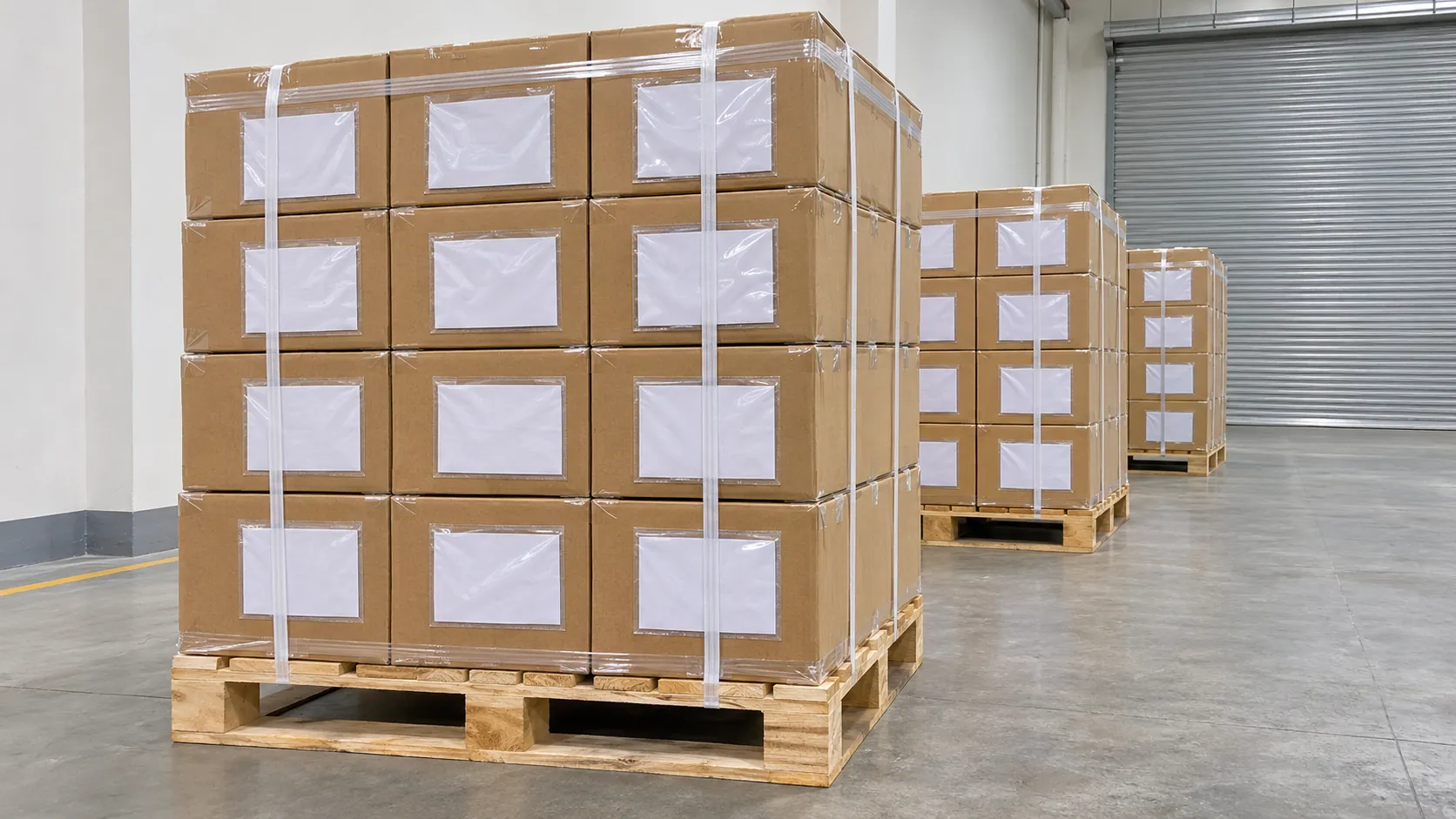
A domestic short-run quote and a China factory quote answer different questions. The domestic quote prices printing. The factory quote prices printing plus a small supply chain.
A China factory run adds four cost and planning items a domestic POD subscription never charges: freight per copy, weeks of transit inventory before books are sellable, customs handling unless the shipment moves DDP, and a longer reorder cycle you must plan against your sales pace.
Sea freight from China typically runs four to six weeks and air freight a matter of days, so a reorder cycle means production time plus ocean time. A title that sells through its stock in a month needs the next run ordered before the current one lands.Decide where the pallets wait, too — your own space, a 3PL, or a small air-freight first wave ahead of the sea shipment — because storage rent and picking cost belong in the same comparison as freight.
Actual freight and timing vary by lane, season, and spec, so treat them as per-quote numbers rather than fixed figures.
The four add-ons, in the order they hit your ledger:
| China-run add-on | How it hits the math |
|---|---|
| Freight per copy | Quoted on top of printing; check that both quotes assume the same delivery basis before you compare |
| Transit inventory | Stock sits in a container for weeks and sells nothing until it clears the port |
| Customs handling | Broker fees and duties — removed when the shipment moves DDP |
| Reorder cycle | Production plus ocean time, measured against your monthly sell-through |
A cheaper print price can hide a fatter freight or brokerage line, so inspect each quote line by line against this table.
Mainland’s offset runs start at 100 copies, and bulk orders ship DDP (Delivered Duty Paid), so customs is handled before the books reach you.
The offer applies to book projects quoted on the China POD page, and pricing still comes from a quote for your specific spec.
It states what the company offers rather than a promise that every project qualifies, since spec, quantity, and destination still drive the final quote.
Inspect a physical sample before any run locks, and ask each factory to state its MOQ basis — per title, per spec, per finish. For the full import picture — quality gates, delivery routes, and market-specific detail — the book printing in China guide for US publishers walks the end-to-end route.
The unit-cost win has to survive the freight bill, the weeks of transit, and the reorder clock — not just beat the per-copy price.
Compare POD vs China Bulk Printing for Your Book
Send your spec and sales pace, and get a DDP-included offset quote to hold against your POD royalty math.
Keep POD Where Flexibility Pays, Bulk Where Volume Wins
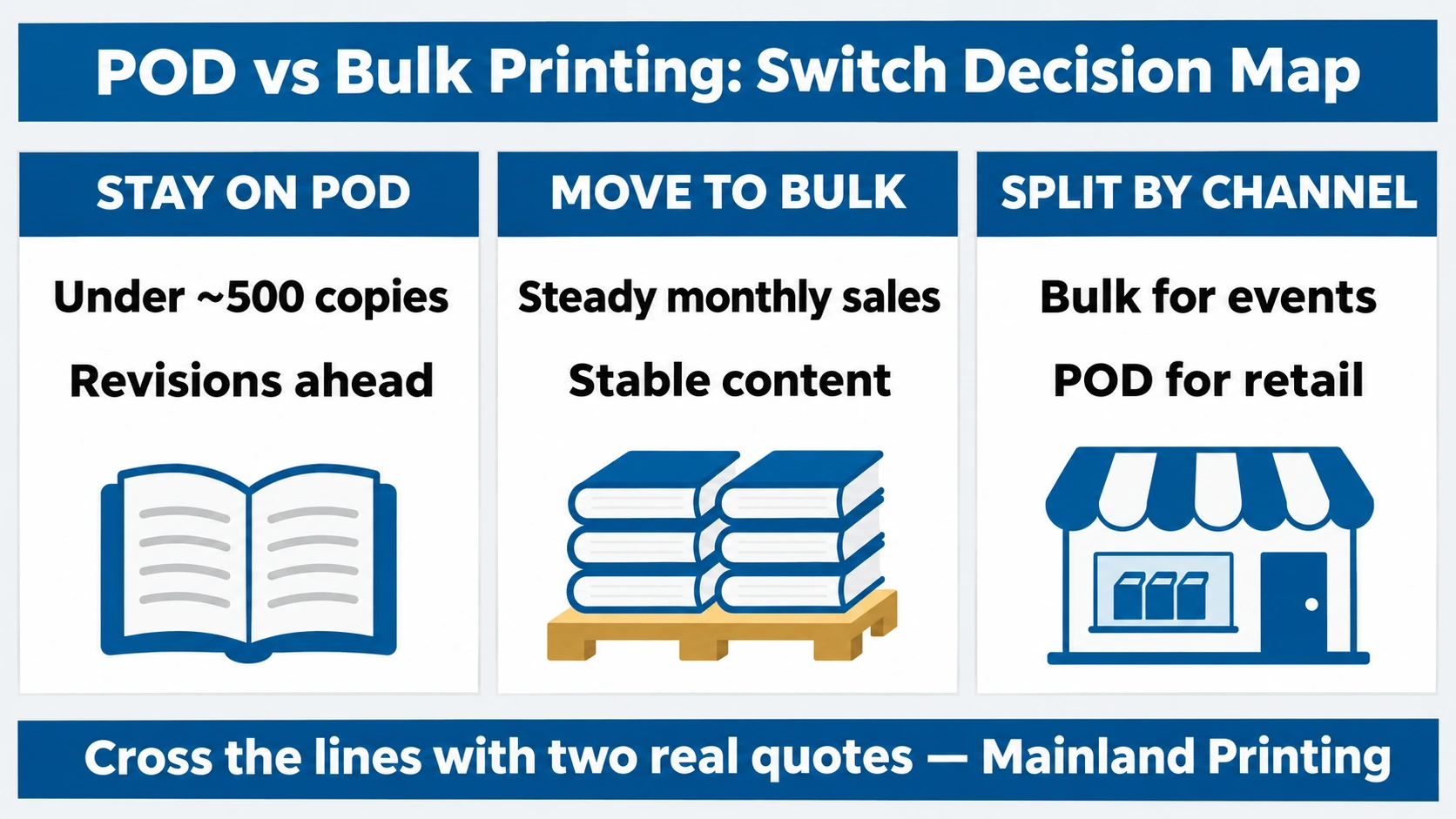
The publishers who do this well rarely flip a switch. They split the catalog: each title, and sometimes each channel, lands on the model its sales pattern can fund.
Publishers commonly run both models at once: bulk for proven steady sellers, event and wholesale stock, and premium editions, while POD keeps covering the retail long tail, untested titles, and books that still get revised.
Split decisions are per title and per channel, and keeping POD on retail platforms preserves never-out-of-stock availability.
This is a market-practice observation rather than a rule, and a catalog with a single title may have no split to make.
- Stay on POD: titles under roughly 500 lifetime copies, seasonal experiments, and any book with a revision still in progress.
- Move to bulk: steady sellers with predictable monthly velocity, and backlist staples that have sold every month for a year or more.
- Split by channel: bulk stock for events, wholesale, and your own store; POD for Amazon and Ingram availability.
Order the smallest run that meets a year of demand, then let the first reorder prove the cycle before you scale the next batch. To pressure-test the per-copy numbers on your own spec, the book printing cost breakdown shows how page count, color, and binding move unit price.
Lock In Your Crossover Numbers With Two Real Quotes
POD earns its keep while a title is young: no inventory, no clock, and revisions that go live in minutes. A China factory run earns its keep once the math holds — steady velocity, stable content, and cash that can wait out a freight cycle in exchange for a per-copy price POD will never quote you.
Both numbers come from the same exercise. Pull your real per-copy POD cost from the last quarter, request a bulk quote on the identical spec with the identical delivery basis, DDP included, and let the two figures name the crossover for that title.When you are ready to price the bulk side, Mainland’s China book team quotes offset runs from 100 copies against your spec.
Whichever side the numbers land on, you will be choosing with your own sales data instead of a platform’s default — and that decision, made once per title, is what compounds across a catalog.