Your quote already says hardcover, yet the factory still asks whether the book block should be Smyth-sewn or PUR-glued. You are not stuck on the cover—you are stuck on the book block that sits inside the case.
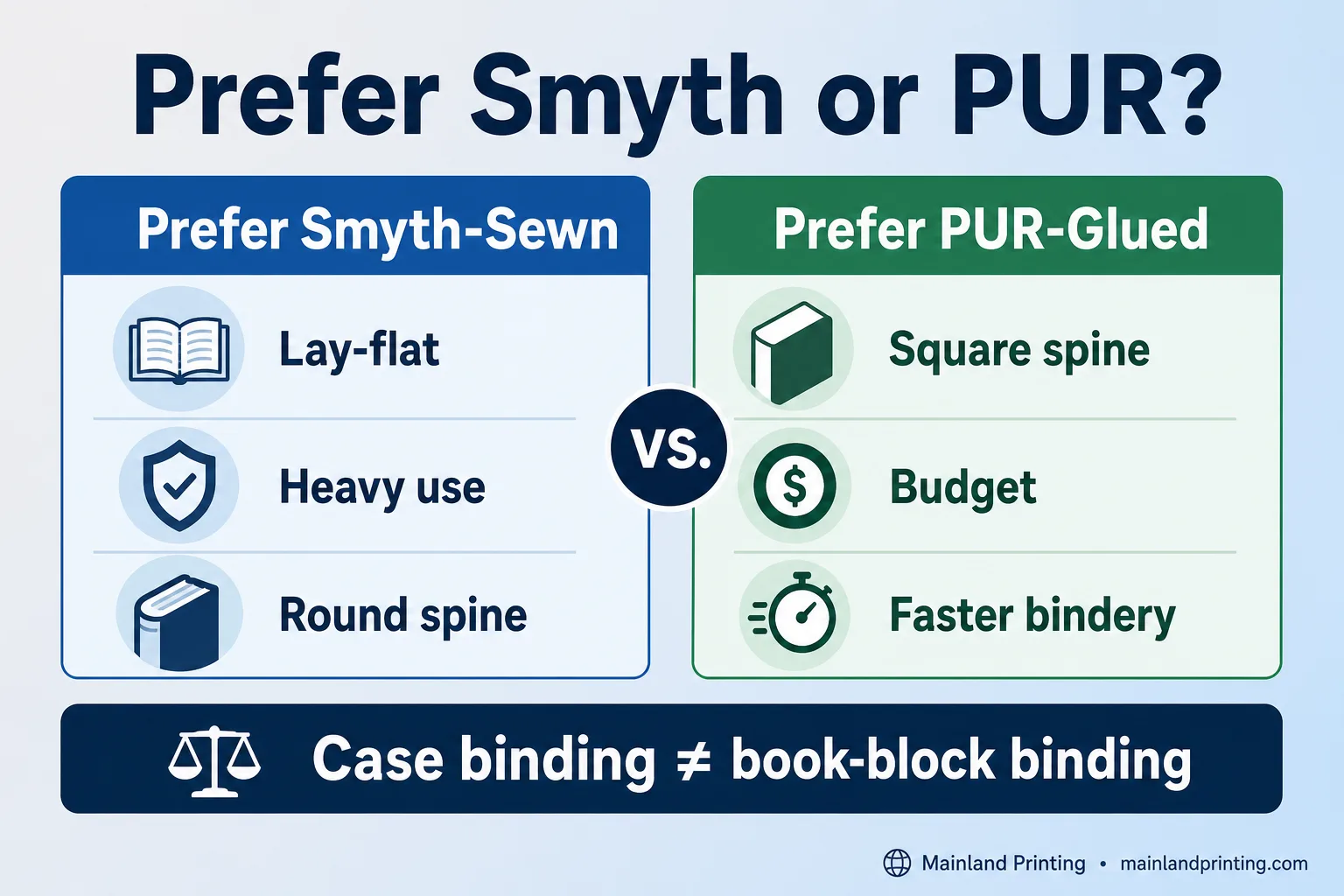
Treat case binding and book-block binding as two decisions: Prefer Smyth-sewn when you need lay-flat, heavy use, or a round spine; Prefer PUR-glued when budget and square-spine speed matter—then Ready/Hold sampling only after those choices are locked.
What this means: use the two-layer table, the Prefer matrix, and the sampling Ready/Hold gate below so you stop approving “hardcover” as if it already answered the sew-or-glue question.
Case Binding and Book-Block Binding Are Different Decisions
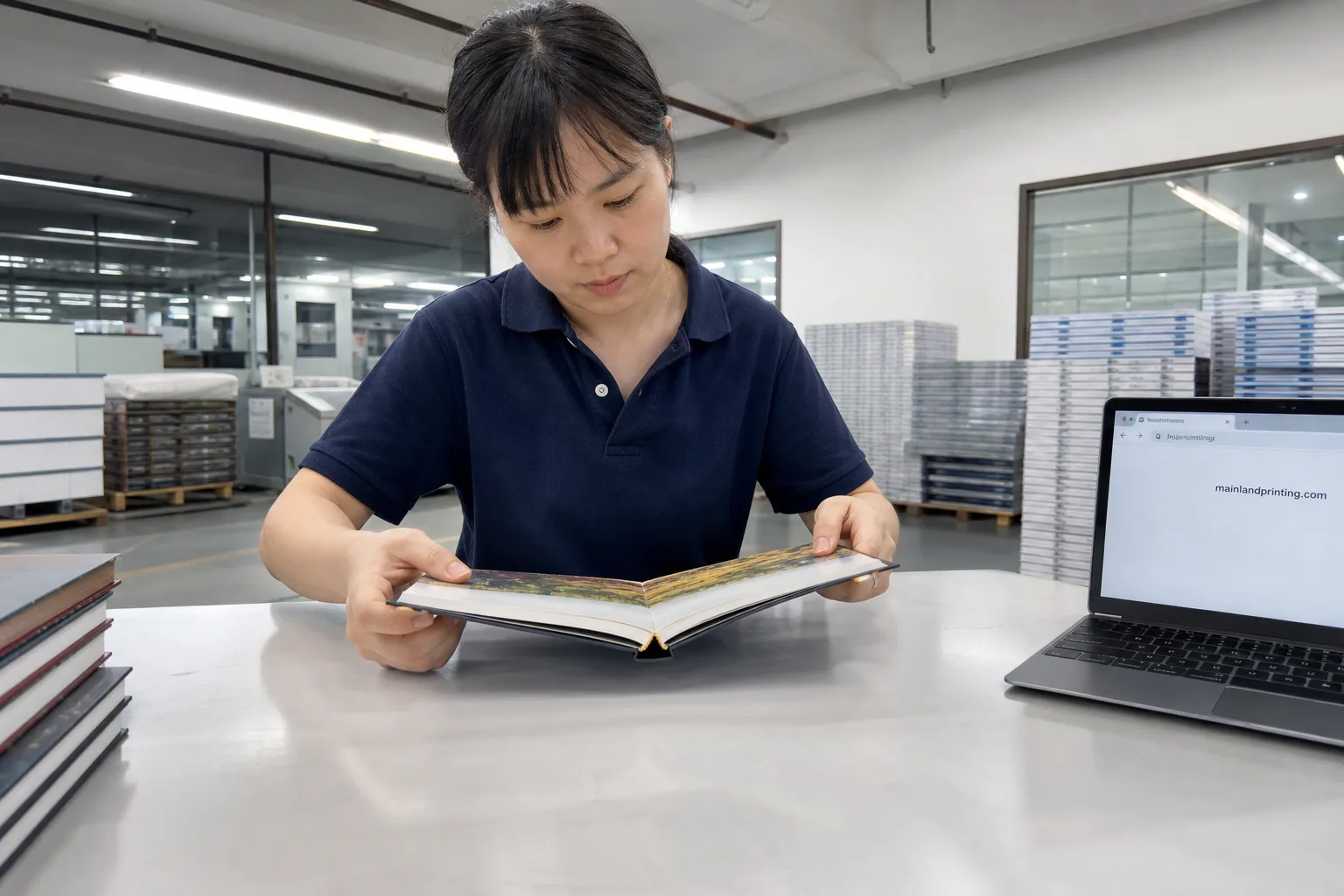
When you say “case-bound,” you only describe the hard case wrapping the text. You still have to choose how the pages become a book block before that case goes on.
If marketing already sold “library-quality hardcover,” ask which book-block method backs that promise. Case boards alone do not create sewn durability.
| Decision layer | What you are choosing | Watch-out |
|---|---|---|
| Case binding | Boards, covering material, casing-in the block | Saying “hardcover” does not pick sew vs glue |
| Book-block binding | Smyth-sewn signatures or PUR-glued spine | Do not treat perfect binding, PUR, and Smyth as synonyms |
If your RFQ only lists “hardcover,” your vendor may assume a default book block you never meant. Write both layers on the same quote line.
- Case: board thickness + covering finish.
- Block: Smyth-sewn or PUR-glued (name one).
- Spine shape: round or square—confirm it matches the block method.
When you once approved a hardcover sample without naming the block, you discovered lay-flat and spine shape only after freight. Lock the book-block method before you fall in love with the case cloth.
Copy this sentence into your RFQ remarks: “Hardcover case + [Smyth-sewn / PUR-glued] book block + [round / square] spine.” If any bracket stays blank, Hold the sample order.
How Smyth-Sewn Book Blocks Perform
When you need pages that survive heavy opening and still open wide, Smyth sewing builds the block with thread through signatures first—glue then supports, it does not replace the mechanical link.
- Lay-flat feel: signatures can open farther with less spine crack risk.
- Heavy-use strength: textbooks, manuals, and keepsakes tolerate repeated flex better.
- Round-spine path: round backs usually need a sewn block; do not assume PUR can round the same way.
- Trade-off: more bindery time—often +3–5 days versus PUR on the same plant—and usually a higher unit cost.
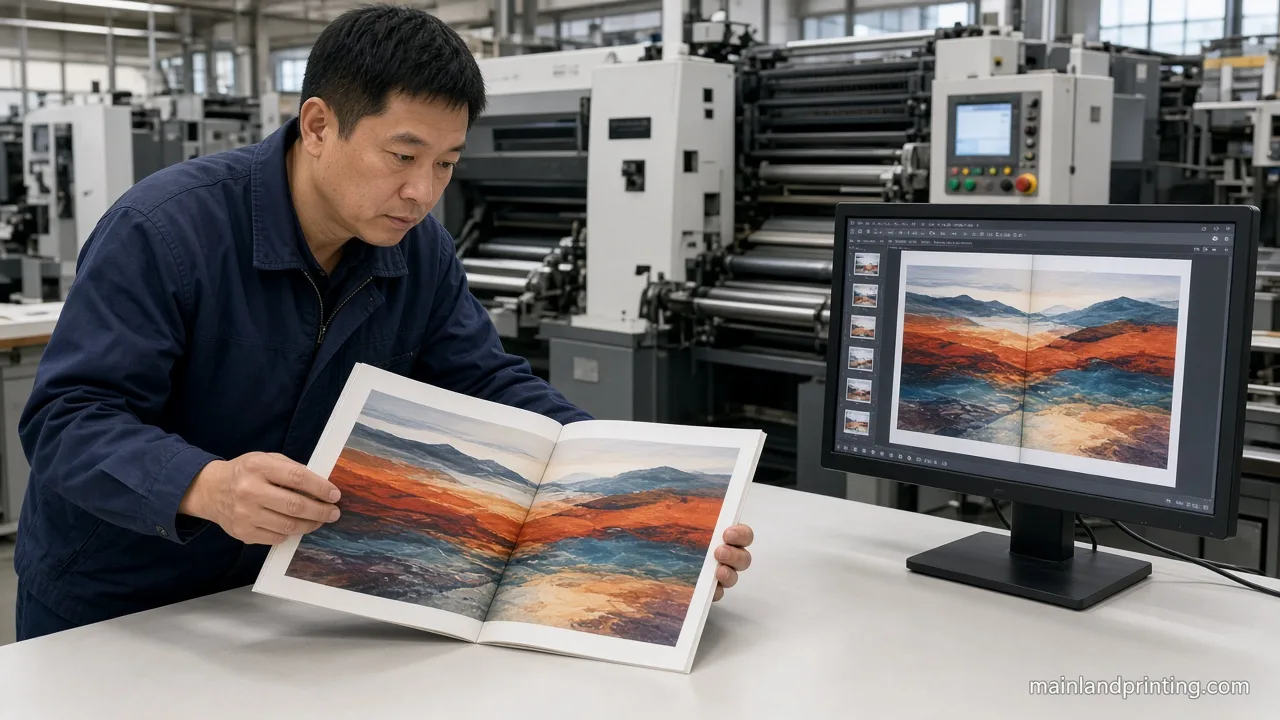
If your art book needs cross-spread images to read across the gutter, Prefer sewing before you negotiate board upgrades. A prettier case will not fix a glued gutter that refuses to open.
- Ask for a sewn sample signature you can flex on camera.
- Photograph the gutter at 180° intent—not a gentle 90° pose.
- Confirm thread + mull reinforcement is in the quote, not “sewn look”—ask for signature size (often 16s/32s) in writing.
For background on the sewing tradition itself, skim Smyth sewing basics—then bring the Prefer matrix back to your page count and use case.
When your schedule is tight, still ask how many sew days the plant needs. Sewing is slower than PUR on many lines; surprise lead time is a planning failure, not a surprise “quality upgrade.”
How PUR-Glued Book Blocks Perform
When budget and square-spine speed matter more than heirloom flex, PUR (polyurethane reactive) adhesive can hold a milled hardcover block with stronger, more flexible bonds than old EVA hot-melt stories imply.
- Cost / speed: usually faster and cheaper than sewing—often 15–30% lower bindery cost on mid runs when spine stays square.
- Square spines: fits many trade hardcovers that stay square.
- Watch-out: still adhesive-led—extreme force-open habits can stress the spine.
- Round spine: treat as Hold unless your factory confirms a sewn path instead.
If you need a round spine for shelf presence, do not “upgrade the case” while keeping a PUR block. Confirm spine shape with the round vs square spine before you freeze PUR.
- State square spine explicitly when you choose PUR.
- Ask whether the quote uses PUR—not generic “perfect bind glue.”
- Test open angle on the sample the way your reader will, not gently for photos—inspect the first 10mm of the gutter for crack whitening.
When you previously picked PUR only because the unit price looked lower, then forced the sample open like a sewn art book, the spine complaint was a use mismatch—not a random glue failure. Match use first.
If your title is a lightly handled gift hardcover that stays square, Prefer PUR and spend the saved bindery money on board, foil, or packaging instead of sewing you will never stress.
Match Binding to Page Count, Use, and Budget
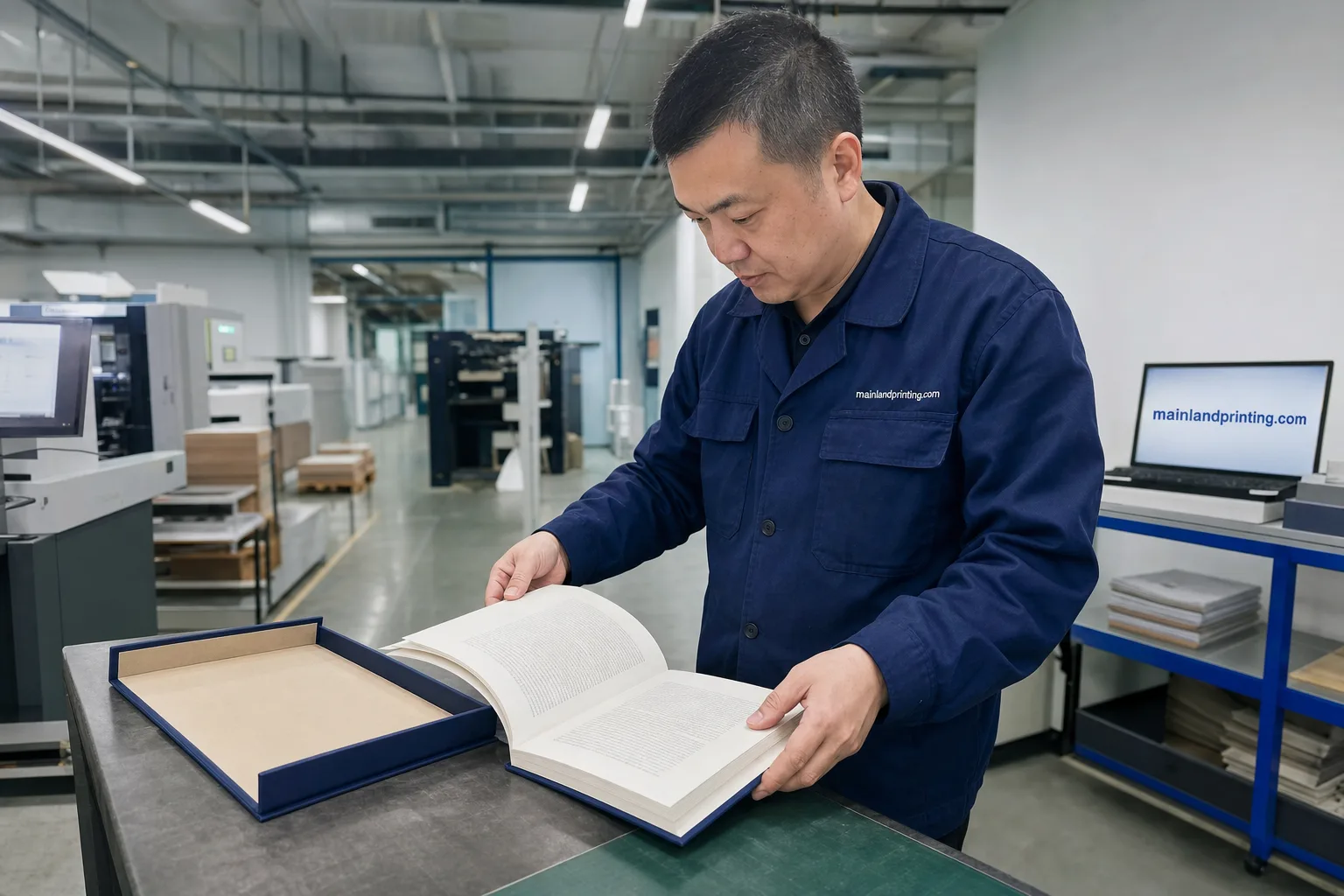
Before you Prefer one method for the whole list, map each title’s job. Sewing is not automatically “more professional,” and PUR is not automatically “cheap and weak.”
Score each title on three axes—open stress, spine shape, and budget ceiling—then pick the Prefer row. You will finish the quote review faster than arguing adjectives.
| Your project signal | Prefer | Avoid / switch |
|---|---|---|
| Cookbook, music, art spreads, daily reference | Smyth-sewn | PUR if you need true hands-free lay-flat |
| Round spine hardcover | Smyth-sewn | PUR as a round-spine shortcut |
| Square trade hardcover, moderate use, tight budget | PUR-glued | Paying for sew when use never stresses the block |
| Very thick / heavy text block (about 40mm+ spine feel) | Smyth-sewn (discuss) | Assuming any glue grade equals thread |
| Short deadline + square spine OK | PUR-glued | Adding sew late after files already imposed for glue |
When two titles share a case style but different use, Split the book-block choice—do not force one Prefer row onto the whole program to “keep the PO simple.”
- Write use + page count on the RFQ before price shopping.
- Circle Prefer Smyth or Prefer PUR on the matrix row that matches.
- Only then compare unit cost—see the hardcover printing cost guide for run-size context, not as a binding substitute.
If your planner still defaults every hardcover to sew “for quality,” ask whether the reader will ever open it like a reference book. Paying sew premium on a lightly handled gift title is a budget leak wearing a craft costume.
- Prefer sew checklist: lay-flat intent, round spine, heavy daily open, thick block.
- Prefer PUR checklist: square spine, moderate open, schedule pressure, cost ceiling.
Put both checklists on one slide for your next vendor call. You will stop arguing abstract “quality” and start naming Prefer rows.
Need a book-block recommendation on your hardcover quote?
Send page count, use case, and spine shape—we will map Smyth vs PUR before you pay for the wrong sample path.
Questions to Settle Before Sampling
Before you Ready a hardcover sample, freeze the book-block method in writing. Sampling the case while the block is still “TBD” wastes a round.
Bring the Prefer matrix to the sample meeting. If nobody can point to a row, you are not Ready—you are guessing with freight.
| Check | Ready if… | Hold if… |
|---|---|---|
| Book-block method named | Smyth-sewn or PUR written on the PO | Only “hardcover” / “case bound” |
| Spine shape vs method | Round → sewn confirmed; square → method matches | Round spine + PUR assumed |
| Use case stated | Lay-flat / heavy use / gift / trade noted | No use note, price-only decision |
| Page count / signatures | Count fits factory signature plan | Odd count with no blank-page plan |
Hold is cheaper than a second sample freight when the first block was the wrong Prefer row.
- Will readers force the book open on a table?
- Do you need a round spine for brand look?
- Is this a library/classroom life or a light gift open?
- Can your timeline absorb sew days, or must PUR win on schedule?
- Red flags: “hardcover only,” round+PUR, or sew default with no use case.
When you walk the full print path later, keep this binding gate beside the steps in the how to print hardcover overview—binding choice belongs early, not after cover files are already locked.
- Sample request must name block method in the email subject.
- Inbound check: measure open angle on camera and verify spine shape vs what you ordered.
- Reject “we will confirm binding after printing” language.
Paper permanence standards such as ISO paper permanence speak to substrate life; your sew-vs-PUR call still owns how the block survives opening stress.
If the plant cannot show you a comparable sewn or PUR hardcover sample in your page-count band, Hold commercial quantity until they can. You should not learn the open feel on 1,000 copies.
Lock the Book Block Before You Fall for the Case
You can love the cloth and foil and still fail the reader if the book block fights every open. Separate case from block, Prefer from the matrix, then Ready samples only with the method named.
Send your next hardcover RFQ with use, page count, spine shape, and Smyth or PUR already circled. You will sample the book you meant—not a default hiding behind the word hardcover.
If you only change one habit this week, stop approving quotes that say hardcover without a book-block line. That single field prevents most sew-vs-PUR regrets before they leave the plant.
When your next sample arrives, open it the way a real reader will—then decide Ready or Hold against the Prefer row you wrote, not against a pretty cover photo. Aim for one clear open-angle photo at your intended use (for example, flat on a table for cookbooks) before you release the bulk PO.