Le choix du style de couverture d'un livre cartonné ne relève pas uniquement d'une préférence esthétique. Ce choix a une incidence sur l'usure de la première et de la dernière page, sur la façon dont le dos s'ouvre, sur la façon dont les cartons se déplient, ainsi que sur la manière dont votre échantillon doit être validé avant la production en série.
Les livres cartonnés à couverture souple conviennent généralement aux lancements où le budget est limité, aux titres courts destinés aux tout-petits et aux programmes de vente au détail simples, tandis que les livres cartonnés à couverture rigide sont adaptés aux éditions cadeaux haut de gamme, aux ouvrages de collection de type bibliothèque et aux projets pour lesquels la rigidité de la couverture, la présence en rayon et la durabilité justifient les coûts supplémentaires liés à la mise en place.
Ce guide compare les deux formats en termes de spécifications de production, et pas seulement de styles visuels, afin que vous puissiez définir les dimensions, l'épaisseur du carton, les vérifications d'épreuves, l'emballage en carton et les postes du devis avant d'opter pour la solution la plus sûre.
Que signifient les termes “ auto-reliure ” et “ reliure rigide ” dans la fabrication des livres cartonnés ?
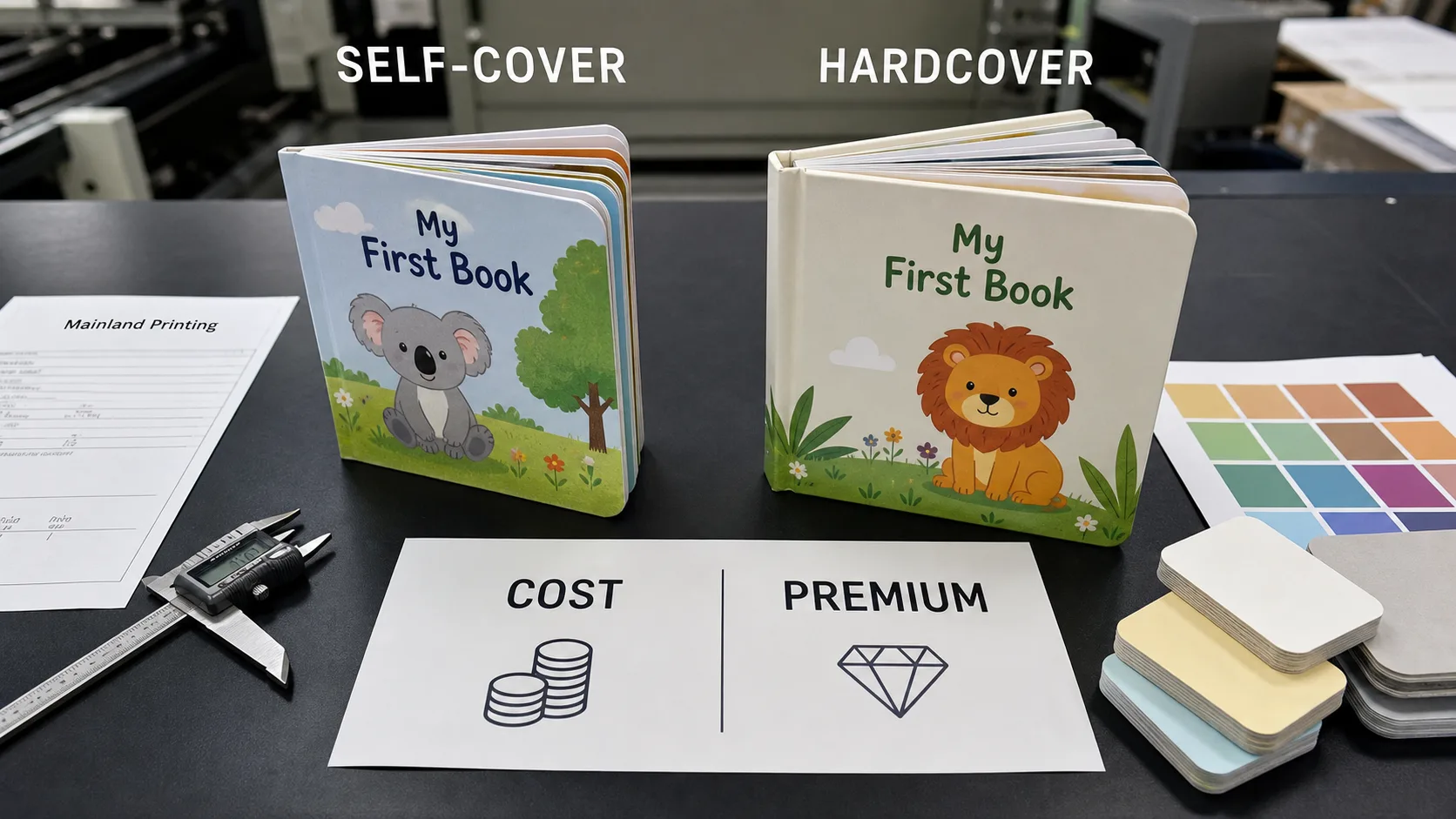
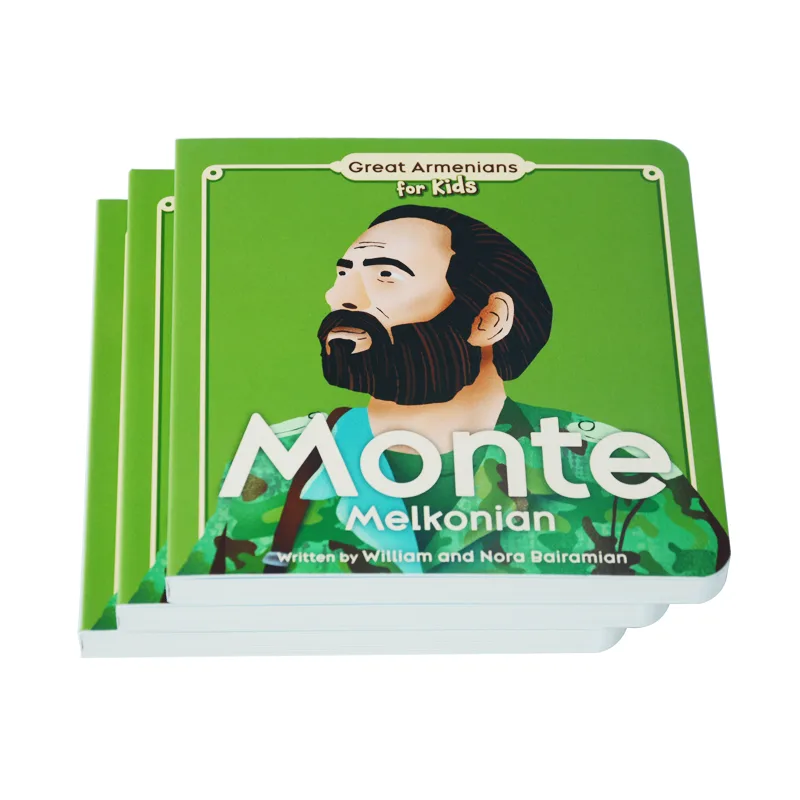
Un livre cartonné à couverture intégrée utilise le même carton pour la couverture et les pages intérieures. La couverture faisant partie intégrante de la séquence de pages en carton laminé, le livre donne une impression de compacité, de simplicité et d'efficacité.Un livre cartonné à couverture rigide est doté d'une couverture séparée, de type « étui », ou d'une structure de couverture plus épaisse autour du bloc du livre, ce qui confère une plus grande solidité à la couverture et au dos.
Cette différence peut sembler minime, jusqu’à ce que vous demandiez un devis. Si votre demande de devis mentionne simplement “ livre cartonné ”, l’usine risque de vous proposer le prix correspondant à la structure la plus simple, et votre échantillon pourrait vous parvenir avec une texture de couverture différente de celle à laquelle vous vous attendiez.Lorsqu'on compare impression de livres cartonnés options, déterminez la structure de la couverture avant d'aborder la question des finitions ou du prix unitaire.
| Format | Comment est-il construit ? | Le plus adapté | Formulation à utiliser pour l'appel d'offres |
|---|---|---|---|
| Livre cartonné à couverture détachable | Les pages de couverture sont réalisées selon la même technique de fabrication que les pages intérieures. | Des titres simples destinés aux tout-petits, des tests de marché précoces, des objectifs de vente très serrés. | “ Livre cartonné à couverture intégrée, le même carton pour la couverture et les pages intérieures. ” |
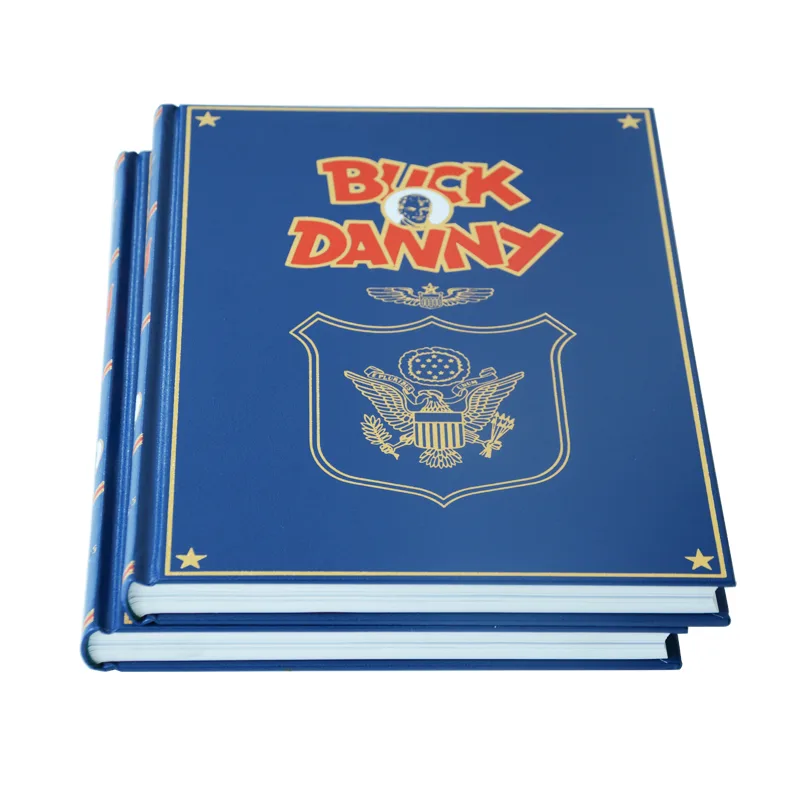
| Livre cartonné à couverture rigide | Livre cartonné doté d'une couverture plus épaisse ou de type « case ». | Éditions cadeaux, produits haut de gamme, ouvrages à conserver, valeur perçue plus élevée. | “ Livre cartonné à couverture rigide avec une structure de couverture distincte ; veuillez valider les échantillons du carton, de la couverture et du dos. ” |
| Livre illustré à couverture rigide au format standard | Bloc de texte en papier à l'intérieur d'une reliure rigide. | Des lecteurs plus âgés, des livres plus volumineux, un feuilletage plus aisé. | “ Un livre illustré à couverture rigide, et non un livre cartonné. ” |
Points à retenir pour l'acheteur
Ne validez pas un devis pour un livre cartonné tant que la structure de la couverture n'a pas été précisée par écrit. Une même illustration peut donner lieu à deux échantillons présentant des différences en termes de résistance à l'ouverture, de volume du carton, d'usure des bords de la couverture et de toucher en magasin.
Quel format convient à chaque cas de figure en matière de publication ?
Commençons par le contexte commercial. Un format à couverture simple est généralement le choix le plus pratique lorsque vous avez besoin d’un livre solide pour les tout-petits, que vous souhaitez un processus de fabrication simple et que vous vous attendez à ce que les parents jugent la valeur du produit en fonction de sa sécurité, de ses couleurs et de son prix plutôt qu’en fonction du toucher d’une couverture de luxe.Cela facilite également la comparaison du projet entre les différents fournisseurs, car le devis peut contenir moins de variables spécifiques à la couverture.
Un livre cartonné à couverture rigide est plus résistant lorsque le produit doit donner l'impression d'être un objet-cadeau. Les coffrets, les éditions spéciales pour les fêtes, les titres haut de gamme vendus dans les boutiques de musées et les récompenses Kickstarter à prix élevé nécessitent souvent cette touche supplémentaire apportée par la couverture.Avant d'accepter cette option, comparez-la à la quantité prévue de votre commande et à votre plan d'emballage ; une option qui augmente la taille des cartons peut avoir un impact aussi important sur le calcul des frais de transport que sur le coût des matériaux.
| Objectif de publication | Un premier choix plus sûr | Pourquoi |
|---|---|---|
| Premier tirage à des fins de validation du marché | Couverture autonome | Une complexité structurelle moindre et une validation des échantillons plus aisée. |
| Édition cadeau haut de gamme | Livre cartonné à couverture rigide | La rigidité de la couverture et le toucher du livre justifient un prix de vente plus élevé. |
| Chaîne préscolaire à forte audience | Couverture de base, sauf si l'acheteur précise qu'il souhaite une couverture premium | La durabilité, les contrôles de sécurité et l'efficacité de l'emballage comptent généralement plus que le design haut de gamme. |
Si le titre se situe à mi-chemin entre un produit destiné aux tout-petits et une édition de collection, consultez l'ancienne comparaison des formats dans livre cartonné à couverture rigide planification, puis revenez à cet article pour aborder plus en détail le choix de la structure de la couverture des livres cartonnés.
Vous souhaitez obtenir un devis pour un livre cartonné sans avoir à faire d'estimations approximatives ?
Indiquez le format de coupe, le nombre de pages, la quantité souhaitée, le type de couverture souhaité et le marché de destination. Mainland Printing peut vous aider à comparer les différentes options de livres cartonnés à couverture souple et à couverture rigide avant que vous ne commandiez un échantillon.
Les éditeurs devraient facturer séparément les coûts, les quantités minimales de commande et les frais d'emballage
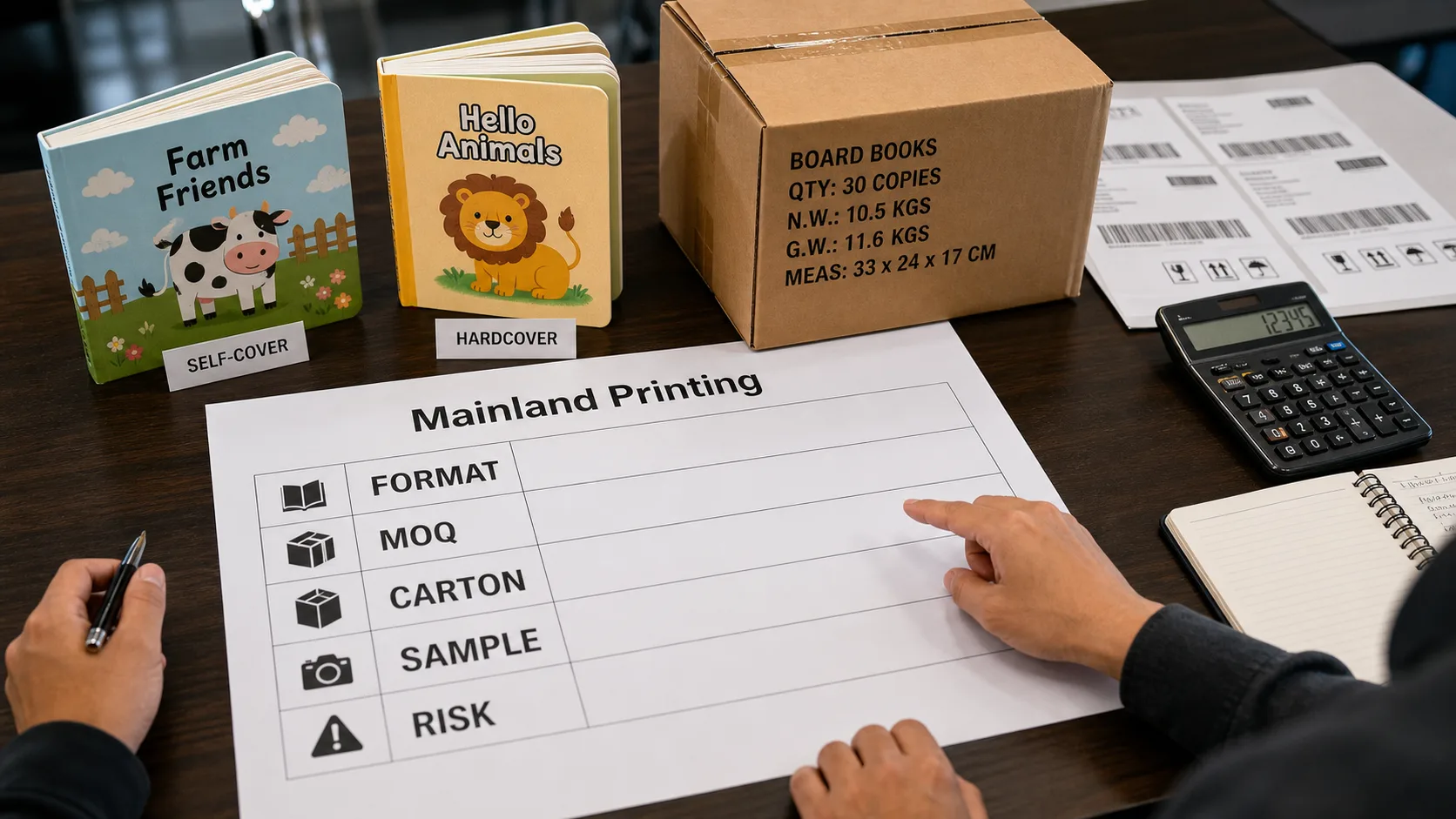
Une couverture souple ne signifie pas forcément que le livre est bon marché, et une couverture rigide ne signifie pas forcément qu'il est cher.Le devis dépend de la taille, de l'épaisseur du carton, du nombre de pages, du pelliculage, des coins arrondis, du travail manuel, des étapes de validation et de l'emballage en carton. Toutefois, les livres cartonnés à couverture rigide entraînent généralement un surcoût, car la structure de la couverture nécessite une manipulation supplémentaire du matériel et implique davantage d'étapes de validation.
Lorsque vous comparez des devis, demandez à chaque fournisseur de vous proposer les mêmes éléments.Si l'un des devis inclut un échantillon physique, les frais de livraison en carton et la vérification de la résistance au frottement du pelliculage, tandis qu'un autre n'indique qu'un prix unitaire, le devis le moins cher n'est pas vraiment comparable. Le même principe s'applique lorsqu'on examine un devis pour l'impression de livres pour tout projet de livre sur mesure.
Veuillez également confirmer les quantités minimales de commande (MOQ) et les tranches de quantité — notre Guide sur la quantité minimale de commande (QMC) de 500 exemplaires explique comment évaluer la pertinence d'une formulation peu contraignante en termes de quantité minimale de commande (MOQ) avant de comparer les formats.
| Facteur de coût | Impact de l'autocouverture | Impact des livres cartonnés à couverture rigide | Question à poser |
|---|---|---|---|
| Matériau et assemblage du couvercle | C'est généralement plus simple, car les pages de garde suivent le même ordre que les planches. | Il se peut qu'il faille prévoir une planche de recouvrement supplémentaire, du film d'emballage, de la colle ou une finition manuelle. | Le prix de la housse est-il facturé séparément ? |
| Validation d'échantillon | Prêtez attention à la couleur, au pelliculage, au rayon des coins et à l'ouverture des pages. | Vérifiez également la prise en main du boîtier, la charnière du couvercle et la transition au niveau du dos. | Combien de cycles de correction sont inclus ? |
| Volume du carton | Plus compact dans de nombreuses tailles. | Permet d'augmenter l'épaisseur et le volume du carton. | Pouvez-vous m'indiquer les dimensions des cartons avant le versement de l'acompte ? |
Pour les tirages où le coût est un facteur déterminant, comparez le coût total du projet plutôt que le seul prix unitaire.La formule pratique est la suivante : coût des échantillons et des épreuves + coût unitaire de production + frais de mise en place spécifiques à la couverture + emballage + contrôle qualité + frais de transport + droits de douane/taxes + risque de retouches. Si votre ouvrage est expédié aux États-Unis, le volume du carton et les conditions de livraison peuvent avoir autant d'importance que le matériau de la couverture.
lorsque les formats se comportent différemment
Ces deux formats peuvent être résistants s'ils sont bien conçus. La question est de savoir où se concentrent les contraintes. Dans un livre cartonné à couverture intégrée, ce sont les pages extérieures qui subissent directement les frottements, les morsures, les frottements contre les rayons et les ouvertures répétées.Dans un livre cartonné à couverture rigide, la couverture plus épaisse permet de protéger la première impression, mais il faut vérifier soigneusement la charnière et la jonction des bords afin que le livre ne soit pas trop rigide et que le dos ne cède pas.
Ne vous fiez pas uniquement à l'épaisseur de la couverture pour évaluer la résistance du livre. Vérifiez l'adhérence du pelliculage, la finesse des coins arrondis, la résistance à l'ouverture des pages, et si le bord de la couverture s'accroche lorsque l'enfant fait glisser le livre sur une table.Pour avoir une vision plus globale des produits destinés aux enfants, comparez la planification de la sécurité avec celle de Mainland Printing. sécurité des livres cartonnés guide à consulter avant de valider les documents.
Pour la manipulation et le stockage à long terme, il convient d'utiliser des moyens de conservation officiels tels que Guide sur la conservation des collections des bibliothèques et Recommandations de la NARA en matière de stockage sont des rappels utiles qui montrent que la lumière, l'humidité, l'abrasion et les conditions d'emballage ont une incidence sur les objets imprimés après leur fabrication.
Points à vérifier avant de choisir le format
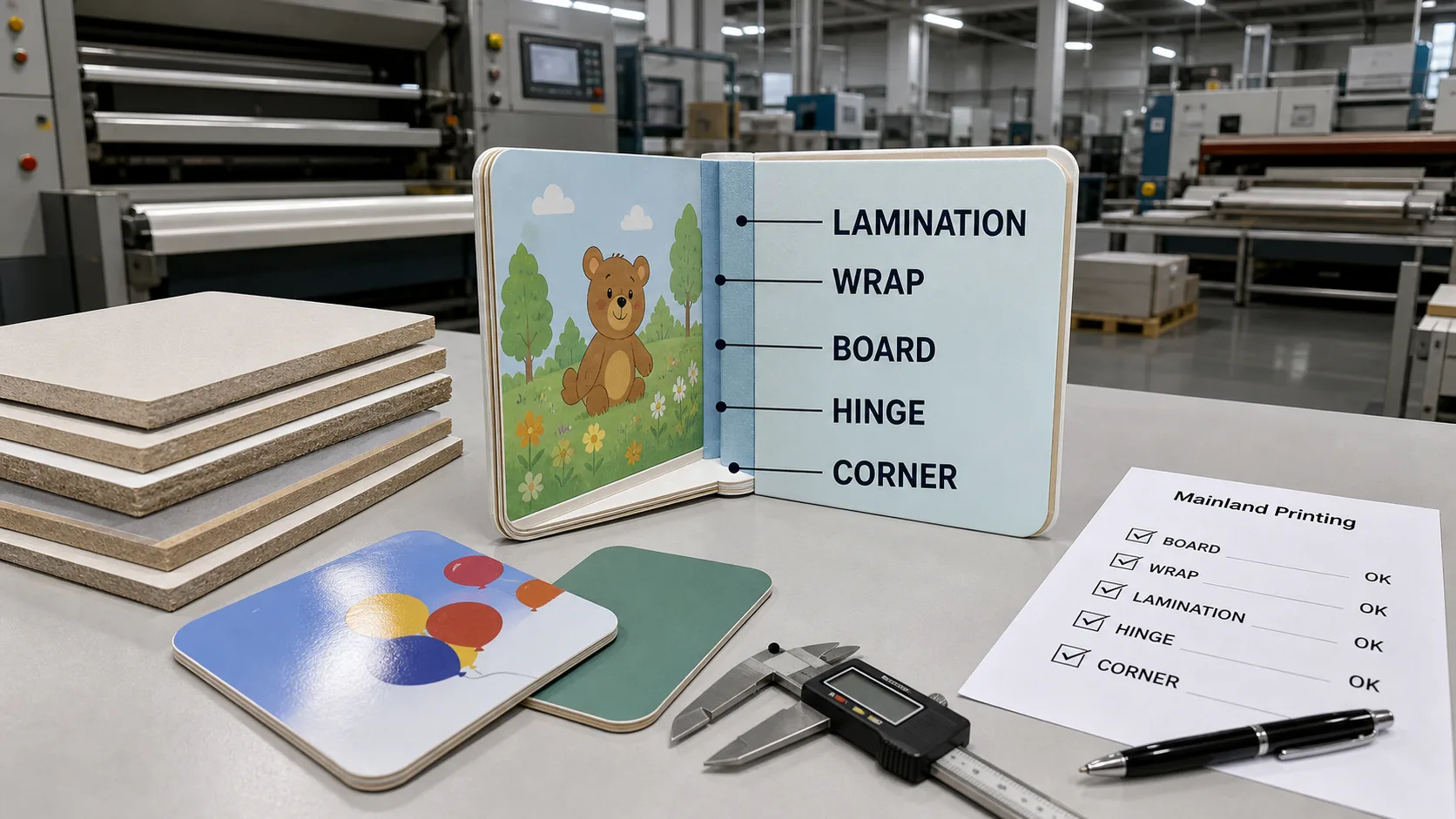
Un échantillon ne doit pas se limiter à répondre à la question “ Le livre a-t-il l'air bien ? ”. Il doit vous permettre de déterminer si le format choisi résistera aux conditions d'utilisation, d'emballage et de vente du produit. Pour les livres cartonnés, ne validez les couleurs et les illustrations qu'après avoir vérifié le comportement physique de l'échantillon.
Considérez l'échantillon comme un contrôle « conforme/non conforme » et non comme une épreuve esthétique. Demandez au fournisseur de consigner par écrit des exemples de valeurs cibles, telles qu'un rayon d'arrondi de 2 mm ou 3 mm, une épaisseur de 1,5 mm si c'est celle que vous visez, une quantité minimale de commande (MOQ) de 500 pièces pour la phase d'essai, ainsi qu'un délai estimé en jours pour la livraison de l'échantillon.Parmi les signes d'alerte, on peut citer un échantillon qui s'ouvre correctement une première fois, mais qui commence à blanchir au niveau de la charnière après des vérifications répétées.
| Point de contrôle | Passer | Signal d'échec |
|---|---|---|
| Impression générale | Les pages s'ouvrent sans qu'il soit nécessaire d'exercer une force excessive et se referment sans à-coups. | La couverture ou la double page intérieure frotte contre la charnière, surtout vers l'avant. |
| Finition des angles et des bords | Les coins arrondis sont agréables au toucher, sans stratifié décollé ni panneau rugueux. | Le moindre bord tranchant, surélevé ou irrégulier apparaît dès un léger frottement. |
| Frotement de la couverture | Le pelliculage protège les zones très colorées et les arrière-plans sombres. | L'encre s'efface rapidement sur la couverture, le dos ou les coins arrondis. |
| Compression du carton | Les livres emballés sont posés à plat, sans que la couverture ne soit courbée ni que les bords ne soient abîmés. | La couverture, plus épaisse, risque d'abîmer les livres voisins ou nécessite un emballage supplémentaire. |
Comment limiter l'altération des couleurs, du pelliculage et l'usure des bords
Les livres cartonnés se caractérisent souvent par des illustrations aux couleurs vives, de grandes surfaces de couleur unie et des textures agréables au toucher.Le choix du format peut mettre en évidence différents points faibles : les livres à couverture intégrée exposent directement la surface imprimée de la couverture à l'usure quotidienne, tandis que les livres cartonnés à couverture rigide présentent des bords et des plis supplémentaires qui nécessitent une finition soignée. Quel que soit le format, vérifiez le laminage final et pas seulement la feuille imprimée.
Si vos illustrations comportent des arrière-plans sombres ou une forte densité d'encre, demandez une épreuve physique avec le pelliculage et le traitement des coins arrondis que vous avez choisis.Un fichier PDF numérique ne permet pas de déterminer si les reflets sur une couverture brillante sont acceptables, si le pelliculage mat laisse trop facilement des traces de doigts ou si une couverture sombre s'abîme au niveau des arrondis. Pour les ouvrages pour enfants aux couleurs vives, il convient également de prendre cette décision en fonction de livre pour enfants à colorier La planification est telle que le papier, le revêtement et les illustrations ne sont pas validés séparément.
Formulation de l'appel d'offres permettant d'éviter tout échantillon non conforme
Le moyen le plus simple d'éviter de recevoir un échantillon non conforme est d'indiquer clairement les critères de sélection dans l'appel d'offres, plutôt que d'en discuter après la remise des prix. Joignez des photos de référence si vous en disposez, mais ne vous fiez pas uniquement à celles-ci. Un fournisseur a besoin de descriptions, de mesures et de critères d'acceptation.
- Format : livre cartonné à couverture détachable ou livre cartonné à couverture rigide.
Lorsque ces éléments comprennent des rabats, des curseurs ou des écrans tactiles, ajoutez notre Caractéristiques techniques du livre cartonné interactif avant de valider l'outillage.
- Taille de coupe : la largeur, la hauteur et si les coins sont arrondis.
- Nombre de pages : Les feuilles de la planche de comptage sont bien visibles, et pas seulement les faces imprimées.
- Couverture et dos : épaisseur du panneau, structure du revêtement, enrobage, stratification et finition.
Pour les formulations concernant les demandes de devis « 40 pt » vs « 60 pt » et « C1S » sur cette ligne de carte, utilisez notre Guide sur l'épaisseur des livres cartonnés avant de valider le devis.
- Exigences en matière de preuve : épreuve numérique, maquette physique, épreuve humide ou échantillon définitif.
- Tranches de quantité : la commande cible, plus un niveau inférieur et un niveau supérieur.
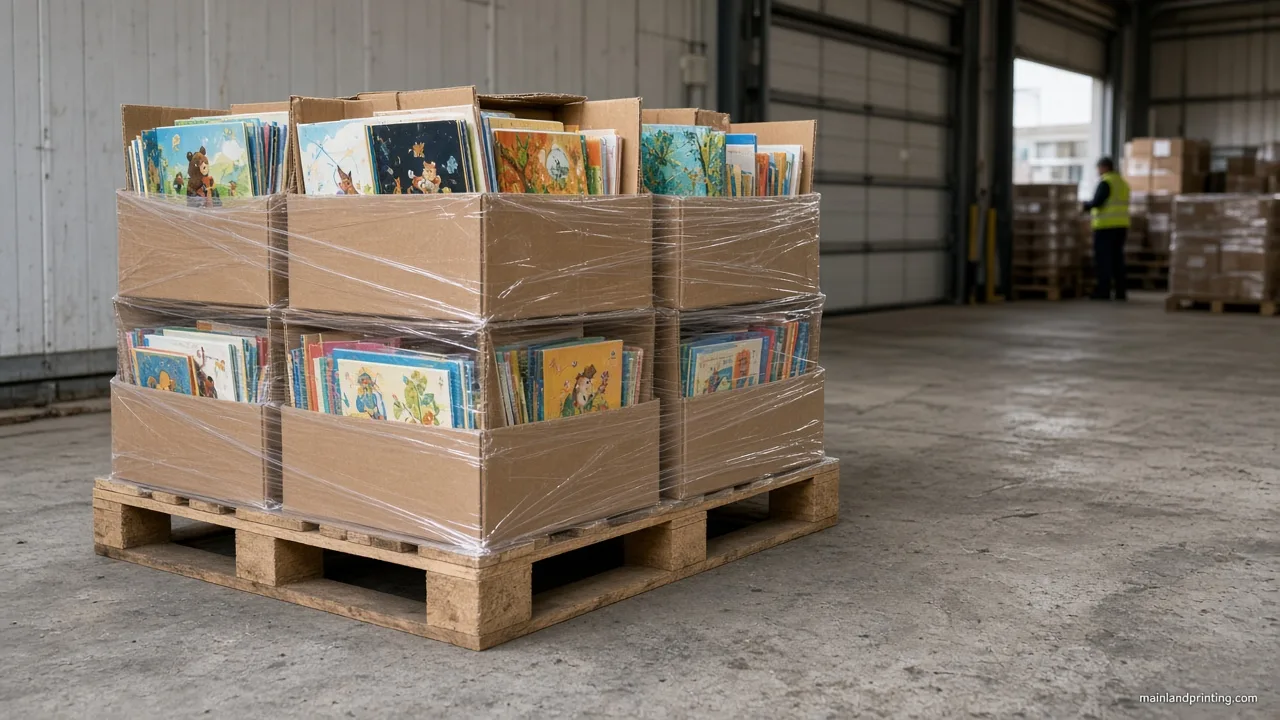
- Emballage : quantité par carton, dimensions du carton, film rétractable et marché de livraison.
Si vous êtes encore en train d'établir le budget global, associez cet appel d'offres à un prix d'un livre cartonné examiner minutieusement les échantillons, l'emballage et les conditions de transport, afin qu'ils ne soient pas considérés comme des éléments secondaires.
Pour permettre une comparaison claire, indiquez votre tolérance acceptable en mm, le délai de validation des épreuves en heures, le mois de livraison souhaité et le nombre d’unités par carton principal. Ces précisions facilitent la vérification du devis par rapport à un message succinct se limitant à “ Veuillez établir un devis pour un livre cartonné à couverture rigide ”.”
Matrice de choix finale
Optez pour une couverture à rabat lorsque vous recherchez un livre cartonné pratique destiné aux jeunes lecteurs, facile à manipuler et offrant un coût de production plus maîtrisé. Privilégiez la structure de livre cartonné à couverture rigide lorsque la couverture elle-même doit véhiculer un message de valeur : positionnement en tant que cadeau haut de gamme, impact visuel en rayon, aspect « objet de collection » ou demande d'un détaillant souhaitant un produit plus solide.
| Optez pour cet itinéraire si… | Livre cartonné à couverture détachable | Livre cartonné à couverture rigide |
|---|---|---|
| Il vous faut la procédure d'approbation la plus simple possible | Passer | À utiliser uniquement si une couverture haut de gamme est requise. |
| Il s'agit d'une édition-cadeau, d'une édition de musée ou d'une édition souvenir. | C'est possible, mais cela risque de paraître un peu basique. | Passer |
| Le volume de fret constitue un facteur de coût majeur | Généralement plus faciles à maîtriser. | Veuillez indiquer les dimensions des cartons avant validation. |
| Le prix de vente au détail dépend de la qualité de la première impression | Risque de sous-positionnement. | Accepter, si l'examen de l'échantillon confirme la finition de la charnière et des bords. |
Avant de valider l'une ou l'autre de ces options, demandez un échantillon qui reflète la structure réelle de la couverture, le laminage réel, le rayon réel des coins et l'emballage en carton probable. Il est plus économique de prendre la bonne décision concernant la structure avant la fabrication d'échantillons que de se rendre compte, une fois la production lancée, que le livre a beau avoir l'air correct, il n'est pas pratique à manipuler.
Foire aux questions sur le format des couvertures des livres cartonnés
Un livre cartonné à couverture rigide est-il moins résistant ?
Pas forcément. Un livre cartonné à couverture intégrée bien plastifié peut résister à une utilisation normale par un enfant en bas âge, surtout si l'on vérifie sur l'échantillon physique que les coins arrondis, la charnière et la résistance de la couverture sont satisfaisants. Le point faible réside dans un cahier des charges imprécis, et non dans le concept même de la couverture intégrée.
Il convient de fixer le prix lorsque la couverture doit offrir une forte valeur d'appel en rayon, un positionnement « cadeau » ou donner l'impression d'un objet de collection destiné à être conservé longtemps. Demandez les dimensions du carton et Validation d'un échantillon de livre cartonné avant de prendre une décision, car la prime d'assurance peut également avoir une incidence sur les frais d'emballage et de transport.
Puis-je changer de formule après avoir consulté le premier devis ?
Vous pouvez modifier la commande, mais considérez cela comme un nouveau devis. La conception de l'emballage peut avoir une incidence sur la manutention des matériaux, les exigences en matière d'épreuves, le volume des cartons et le calendrier des échantillons ; le fournisseur doit donc mettre à jour les postes de la commande plutôt que de se contenter d'ajuster le prix unitaire.