When a publisher or distributor DC will only accept a commercial appointment, children’s book printing shipping to USA starts with receiving rules—ASN fields, PO lines, and lead time—not with a vague “ship when ready” note on the quote.
Plan children’s book printing shipping to USA from ASN, PO, and appointment lead time first; size a multi-SKU first tranche if needed, then reverse-schedule proof, press, and freight from the receiving window.
You will leave able to assemble a dock-ready receiving pack, decide when a multi-SKU first tranche earns its keep, and reverse-schedule proof and press from warehouse acceptance—so the next launch does not restart from a refused appointment.
Build the Commercial Receiving Pack
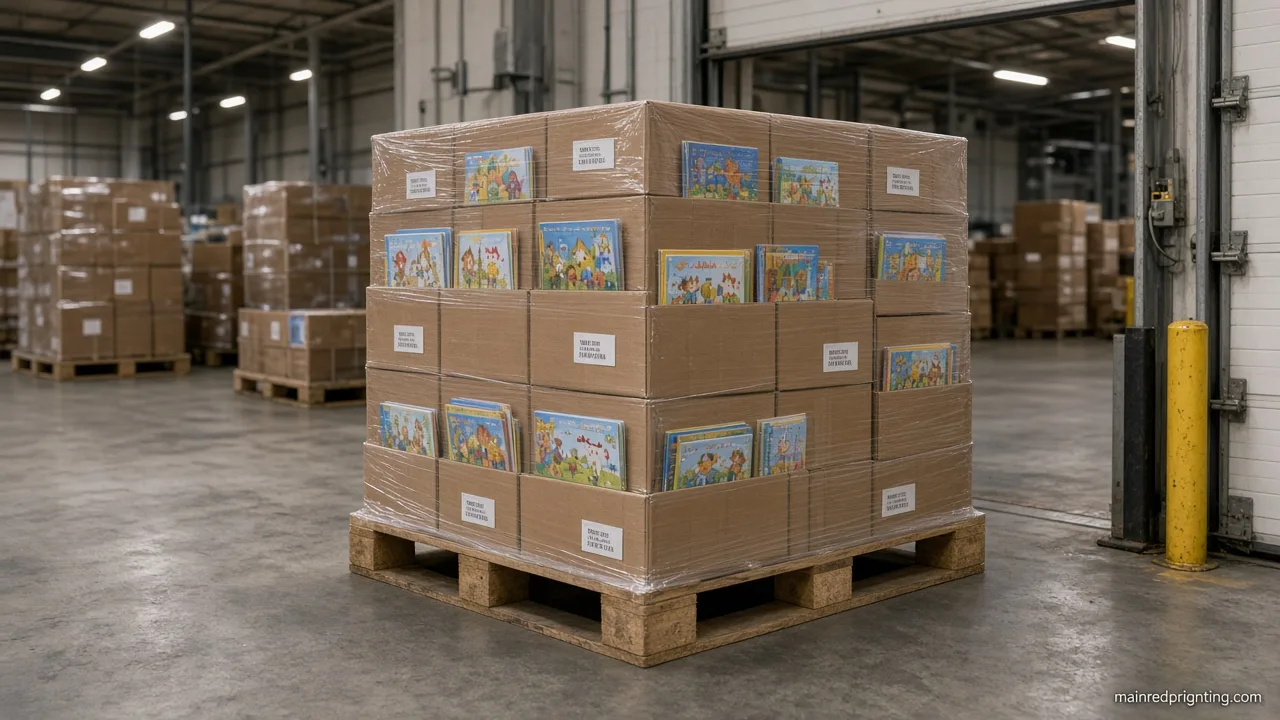
Build children’s book printing shipping to USA around a commercial receiving pack first—PO line, ASN fields, appointment lead time, and a commercial dock address—before you freeze ocean or air.Use this when a publisher or distributor warehouse will refuse a residential-style drop or incomplete ASN. Appointment lead times and ASN formats differ by DC; treat each warehouse sheet as destination-specific, not a universal DDP promise.
| Receiving field | Write this before freight books |
|---|---|
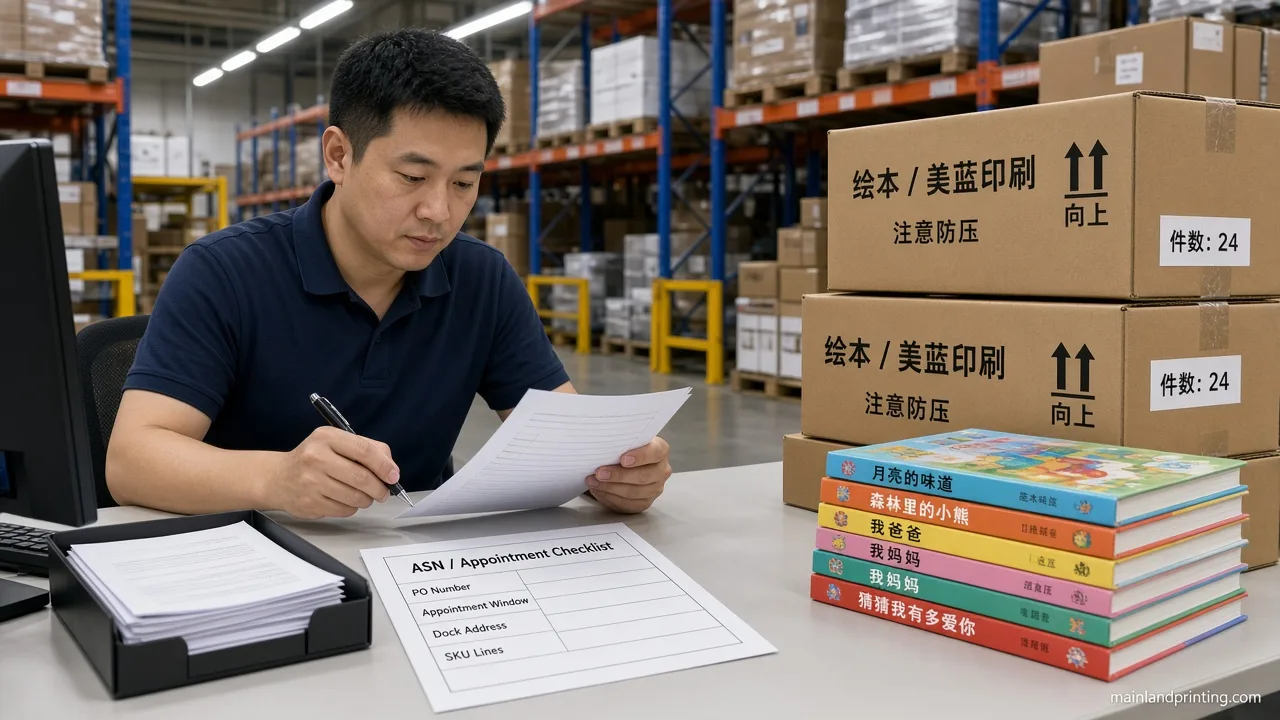
| PO / ASN | PO number, ASN ID or carton-level lines, SKU × qty per line |
| Appointment lead time | Days the DC needs before the truck can book a slot |
| Type d'adresse | Commercial dock hours; dock vs driveway; liftgate if required |
| Mode | Pallet vs carton; label format the warehouse email confirms |
Industry freight notes still stress that ocean arrivals move with weather and customs, so keep transit as a planning range while the ASN pack stays fixed. If you still need a landed-cost view while receiving fields lock, use picture book print cost as the money math sibling; this page stays on warehouse receiving.
Write the commercial receiving pack into the RFQ as one shared sheet the printer, forwarder, and warehouse coordinator can all read. Include the legal receiving name, street address without suite ambiguity, dock contact phone, preferred appointment portal or email, and the lead-time days the DC states in writing.If a distributor node and a publisher warehouse both appear on the same launch, keep two sheets—not one blended address—because appointment portals rarely accept a mixed commercial identity.
For Florida-style landed runs, Texas education drops, or platform warehouse trials, treat each destination as its own acceptance ruleset.A TikTok-style or 3PL commercial address can still reject an incomplete ASN even when duties are prepaid. Children’s book printing shipping to USA fails when the quote assumes one DDP phrase covers every dock’s PO syntax.
Pass / Fail cue: if the street date is named but PO/ASN lines, appointment lead time, and commercial address type are still “TBD,” the receiving pack fails—pause children’s book printing shipping to USA freight booking until those fields have owners.
Size a Multi-SKU First Tranche
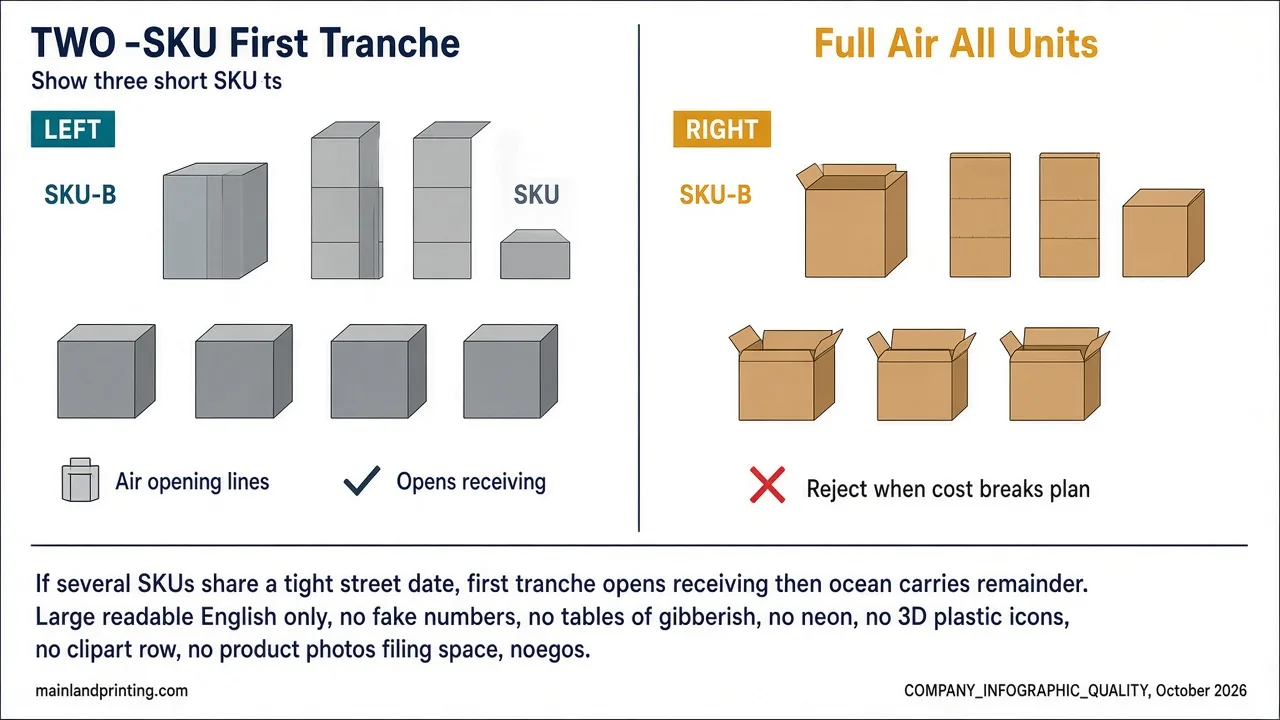
When multiple SKUs share one launch window, size a multi-SKU first tranche that opens receiving—then ocean the remainder by title—rather than airlifting every unit.Apply this when street-date risk is high but full-air cost would break the landed plan. A mixed first carton still needs per-SKU counts on the ASN; missing lines trigger dock hold even if books print correctly.
| Situation | Choisir |
|---|---|
| One title; ocean buffer covers appointment | Keep a single ocean lot; protect carton quality |
| Several SKUs; street date tighter than ocean range | Air a multi-SKU first tranche sized for receiving + QC |
| DC needs every title on the ASN before marketing drop | Put each SKU line on the first tranche; ocean the bulk per title |
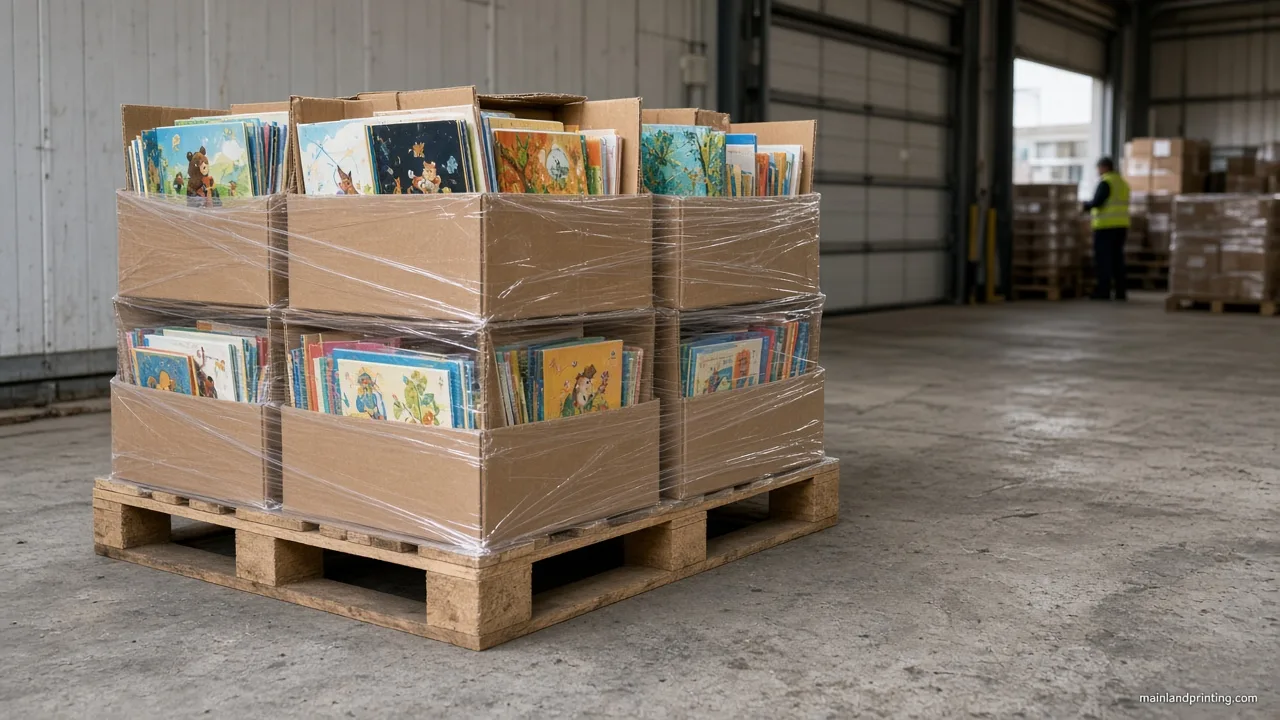
Write per-SKU carton counts on the ASN before the first tranche leaves—mixed pallets without line counts are a common dock hold. DDP can cover duties and delivery terms but does not invent a universal appointment style for every DC.
Paper weight and cover stock change how first-tranche cartons stack and crush—settle picture book paper choices before you freeze pack specs for the air share. Children’s book printing shipping to USA stays cheaper when ocean carries the remainder after the dock has accepted the opening lines.
Size the air share for receiving and QC only—often a minority of total units across titles—then ocean the remainder by SKU once the dock has accepted the opening lines.When titles share a street date but differ in page count or cover board, pack first-tranche cartons so the lightest crush risk sits on top and each ASN line still matches the outer label. Measure carton weight early; a carton quoted light but weighing heavy will not keep the same air rate.
Practical China→US book freight ranges (packaging × speed, split lots, appointment clarity) align with guides such as expédition de livres depuis la Chine. Use those ranges as planning inputs; verify current sailing and air cutoffs with your forwarder for each PO.
Reverse-Schedule from Warehouse Acceptance
Reverse-schedule children’s book printing shipping to USA from warehouse acceptance backward: appointment lead time → freight range → press/pack → proof gate → artwork lock.Use this when the street or in-store date is firm and receiving hours are known. Ocean calendars stay weather- and customs-dependent; keep ranges as buffers, not guaranteed arrival days, and do not copy board-book HTS language into the carton note.
| Planning gate | Lock this first |
|---|---|
| Warehouse acceptance | Appointment date plus lead-time buffer the DC requires |
| Freight window | Ocean ~4–6 weeks or air ~1 week as planning ranges |
| Press + carton | Print finish plus packing days before handoff |
| Proof gate | Bound sample approval before bulk children’s book printing shipping to USA |
Measure the buffer in days: street date minus appointment lead time minus freight range minus press/pack days; if the remainder is under 7 days, inspect the plan before you approve bulk.
Keep owners on each gate: who releases proof, who confirms press finish, who books the appointment, and who verifies ASN lines against pallet labels.If proof slips more than three days, recompute the buffer before you enlarge the first tranche. Ordinary picture-book corner and cover checks still matter on the ocean remainder—protect softcover stacks so the first accepted ASN is not undone by crushed remainder cartons—but do not paste board-book HTS claims into the carton note.
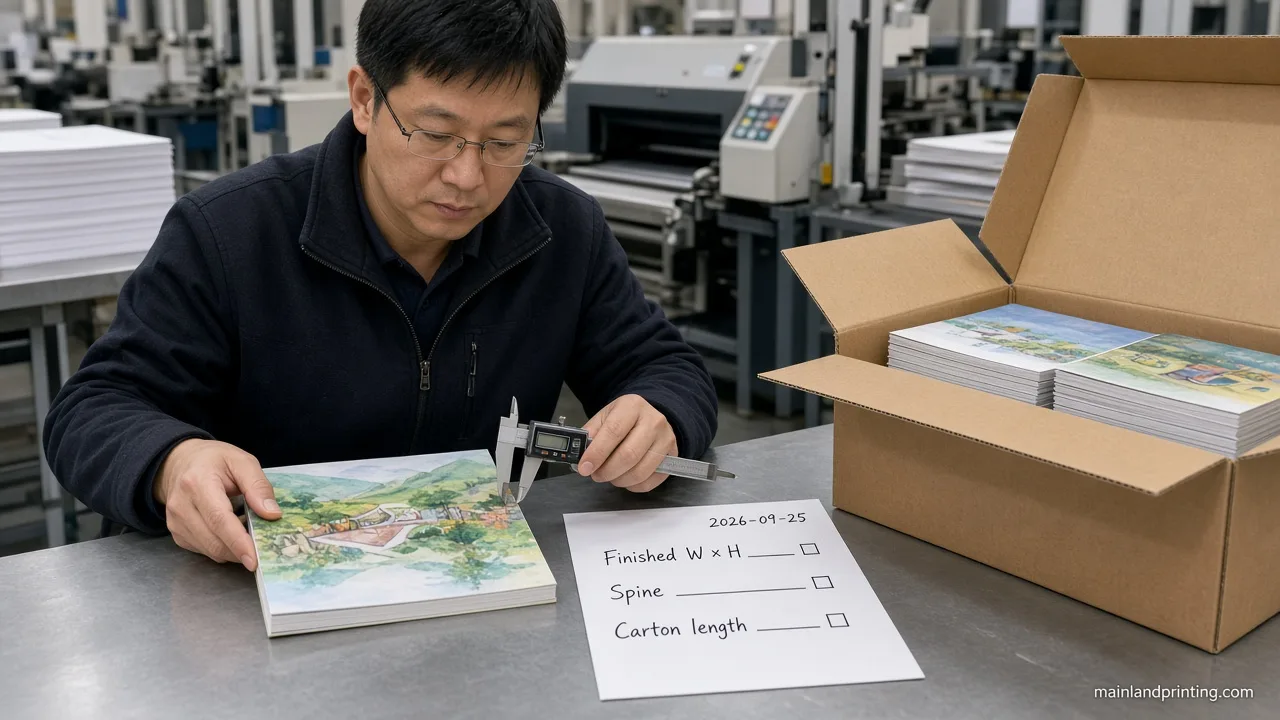
Trim size drives carton dims and air rate—confirm the picture book size guide before the forwarder books service levels.
Red flags before freight leaves:
- Street date locked, ASN/PO lines still blank
- Residential driveway assumed for a publisher dock appointment
- Multi-SKU launch with one unlabeled mixed carton and no line counts
- One ocean lot planned with zero buffer against a hard in-store date
- Duty or DDP language copied from a board-book article without forwarder confirmation
Test the receiving pack once: print the ASN or carton list, verify SKU counts match pallet labels, and check that appointment lead time on the sheet matches the warehouse email. Children’s book printing shipping to USA is ready only when that pack and the freight mode tell the same story.
Ready to plan print and delivery?
Send your launch date, warehouse ASN/PO fields, appointment lead time, multi-SKU split, and carton or pallet mode for a children’s picture book print and delivery schedule.
Lock Your Publisher Receiving Schedule
Children’s book printing shipping to USA becomes releasable when the ASN/PO pack, appointment lead time, first-tranche plan (if any), and reverse schedule all point at the same warehouse acceptance—and when duty language stays with the forwarder, not a copied HTS line.That gate turns a launch promise into a receiving schedule a publisher DC can accept.
Keep one page in the RFQ folder: appointment date, lead-time days, ocean or air cut-off, proof approval, press finish, and carton pack date.When any date slips by more than 3 days, re-check the buffer and decide whether the first tranche must grow or the street date must move. For production and schedule review on children’s picture books, send the receiving pack above to Mainland Printing.