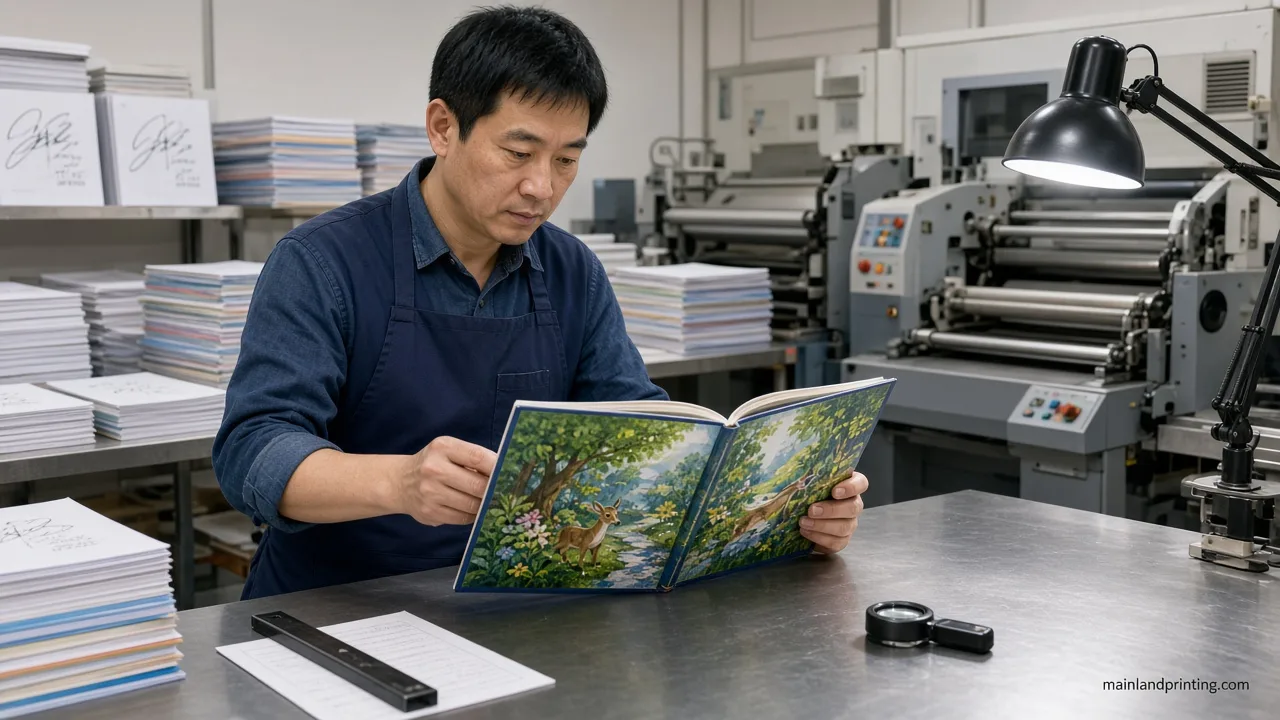
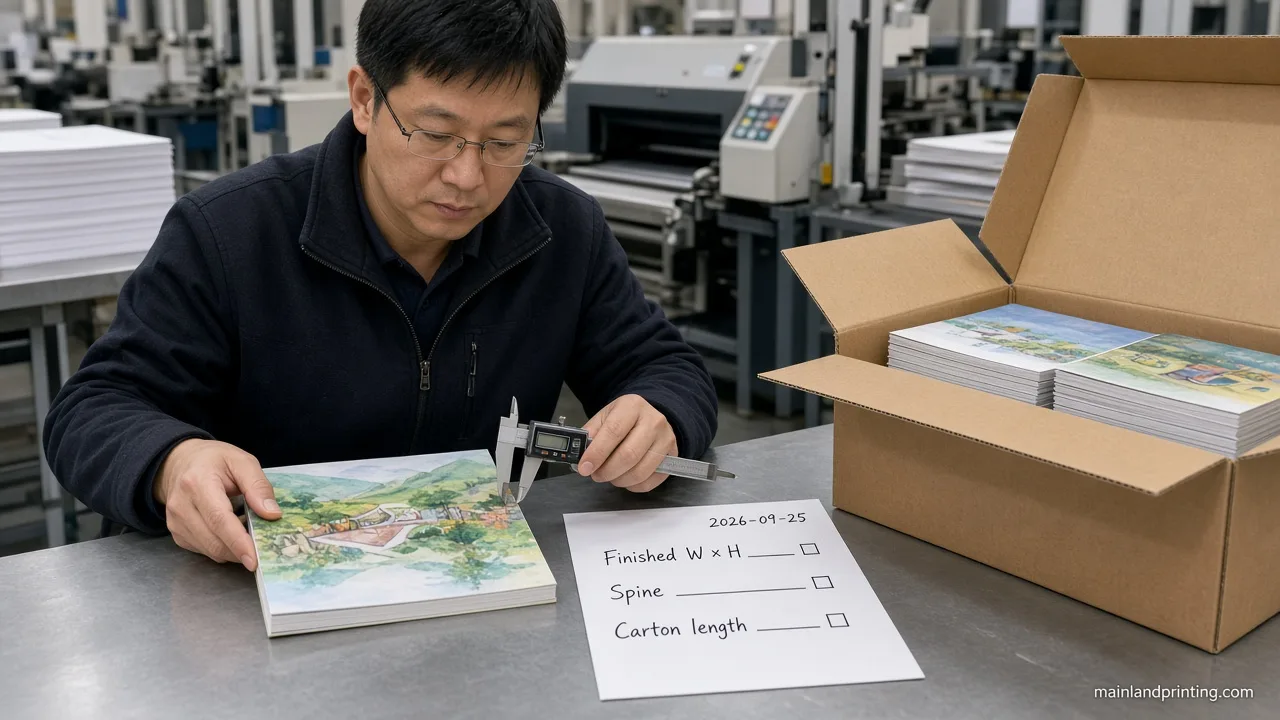
When a gallery catalog, artist monograph, or custom coffee table book must clear a real budget gate, art book printing cost is decided by how setup, proofs, unit print, and freight share the total—not by a single sticker unit rate pulled from someone else’s chart.
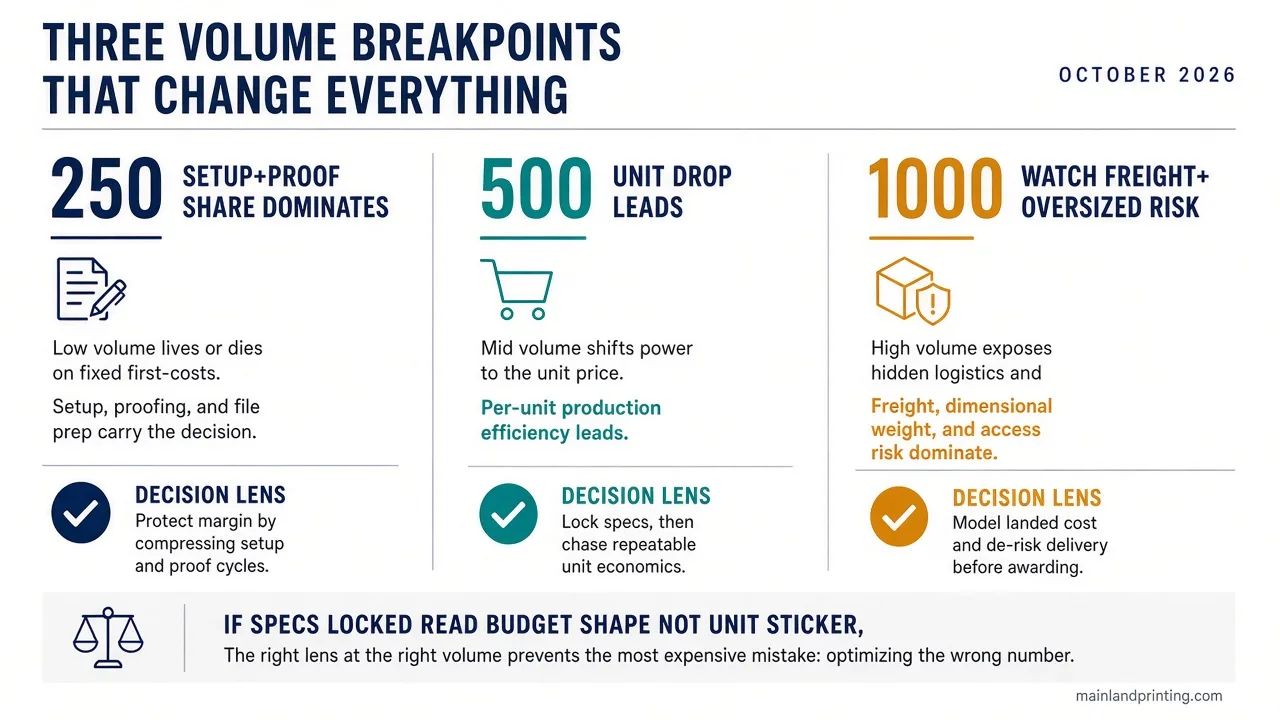
Treat art book printing cost as a budget shape: at 250 setup and proofs dominate; at 500 the unit drop usually leads; at 1,000 freight and oversized risk can erase savings. Lock one spec, then compare 250/500/1,000 on a single RFQ pack.
You will leave able to map the cost variables that swing totals, compare 250 vs 500 vs 1,000 as budget shapes, and send one RFQ pack so the next art-book quote round stays comparable without republishing fixed dollar tables.
Map Cost Variables Before You Quote
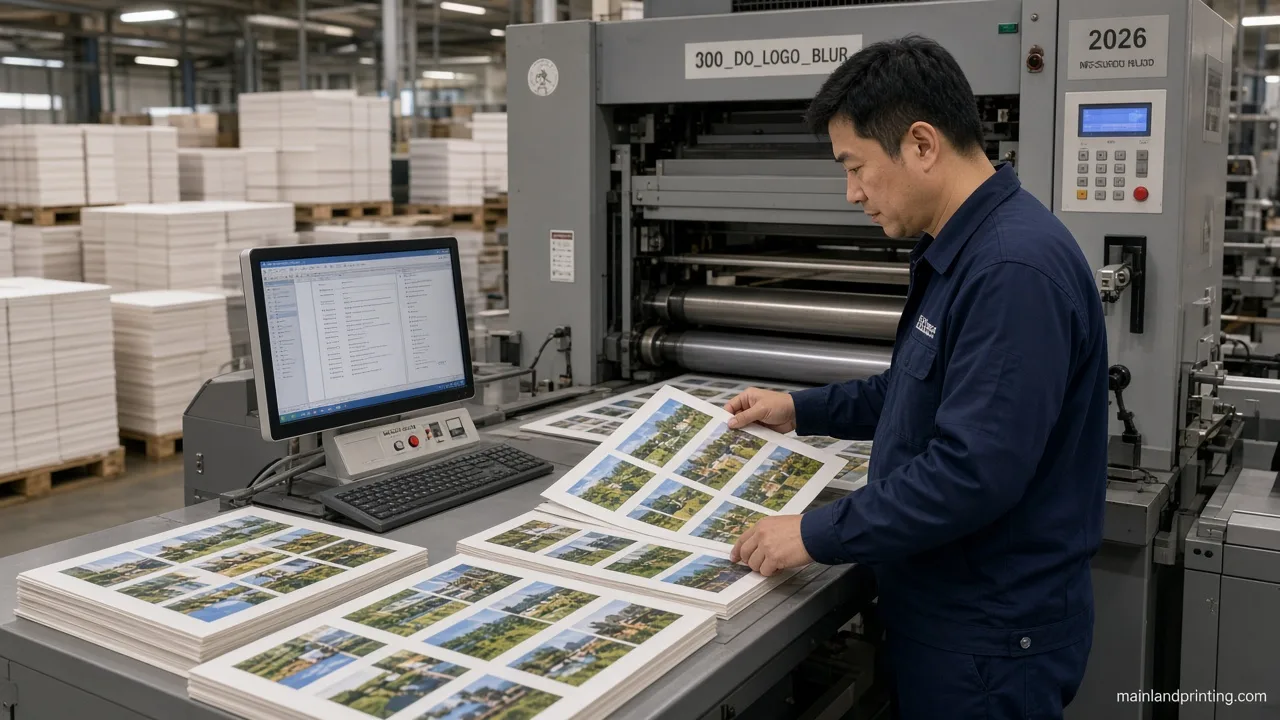
Map art book printing cost variables—trim size, page count, paper gsm, binding, cover, proof type, and destination—before you compare any vendor total.Use this when quotes arrive with different paper or binding assumptions. Competitor fixed per-unit charts are planning noise, not your quote; confirm EXW versus landed terms separately.
| Coste variable | How it moves the budget |
|---|---|
| Trim size + page count | Sets sheet layout, plate/setup share, and carton cube |
| Paper gsm + coating | 157 vs 200 gsm and matte vs gloss change sheet cost and feel |
| Binding + cover finish | Casewrap, dust jacket, cloth, foil, or spot UV add fixed and unit work |
| Proof type | Bound hardcopy proof protects color; it also sits in the shared setup bucket |
| Quantity tier | 250 / 500 / 1,000 change which bucket dominates the total |
| Ship-to + format risk | Destination and oversized coffee-table formats swing freight share |
Industry offset notes still treat heavy coated stocks (about 157–200 gsm) and a physical proof as the safe path for gallery-quality color—use that as process guidance, not as a copied price cell.
Write the variable map into one sheet before any plant opens a calculator. If slipcase or tray geometry is already on the table, park the DFM math on slipcase budget checks so this page stays on cost shape, not structure engineering.
Measure page count in the same way on every bid—include or exclude endsheets in writing—so a 96-page quote is not compared to a 104-page lookalike. If foil, cloth, or spot UV is optional, mark it optional on every tier; a “maybe foil” line is how setup share sneaks back into a 500-copy unit story.
Pass / Fail cue: if two quotes disagree on paper gsm, binding, or proof type, the comparison fails—freeze the variable map before you chase a lower unit number.
Compare 250 vs 500 vs 1,000 Runs
At 250 copies, setup and proof share usually dominate art book printing cost; at 500 the unit drop typically leads; at 1,000 watch freight and oversized risk erase the unit savings.Apply this when you are choosing among 250, 500, and 1,000 with the same locked specification. Do not treat competitor rough guides as Mainland Printing prices; each SKU needs its own RFQ.
| Tamaño de la tirada | Budget shape to expect |
|---|---|
| 250 copies | Setup, plates, and proof share usually dominate the total |
| 500 ejemplares | Unit print drop typically leads if specs stay locked |
| 1.000 ejemplares | Unit keeps falling—watch freight and oversized carton risk erase the gain |
Ask for 250, 500, and 1,000 on the same locked sheet—changing paper mid-compare invents a fake savings line. Competitor rough guides (for example a published ~$5–8/unit@500 for one SKU) stay external planning noise, not your Mainland Printing quote.
Keep hardcover case economics in their own lane when the cover board is the main swing—use hardcover cost drivers for that sibling decision; this page owns art-book run-size shape across the three tiers.
When inventory risk is high, a smaller first press with a planned reprint can beat a 1,000-lot that sits in cartons—but only after you price the second setup honestly. Art book printing cost at 1,000 is not automatically “cheaper” if freight, wraps, or oversized coffee-table formats inflate the landed share.
Run a simple share check on each tier: estimate setup+proof dollars as a percent of total, then unit print, then freight.If setup still exceeds about one-third of the 500-copy total, you are still living in a 250-shaped budget even though the PO says 500. If freight exceeds the unit savings from 500 to 1,000, stop praising the unit drop and resize the carton plan.
Spec a Custom Coffee Table Book Budget
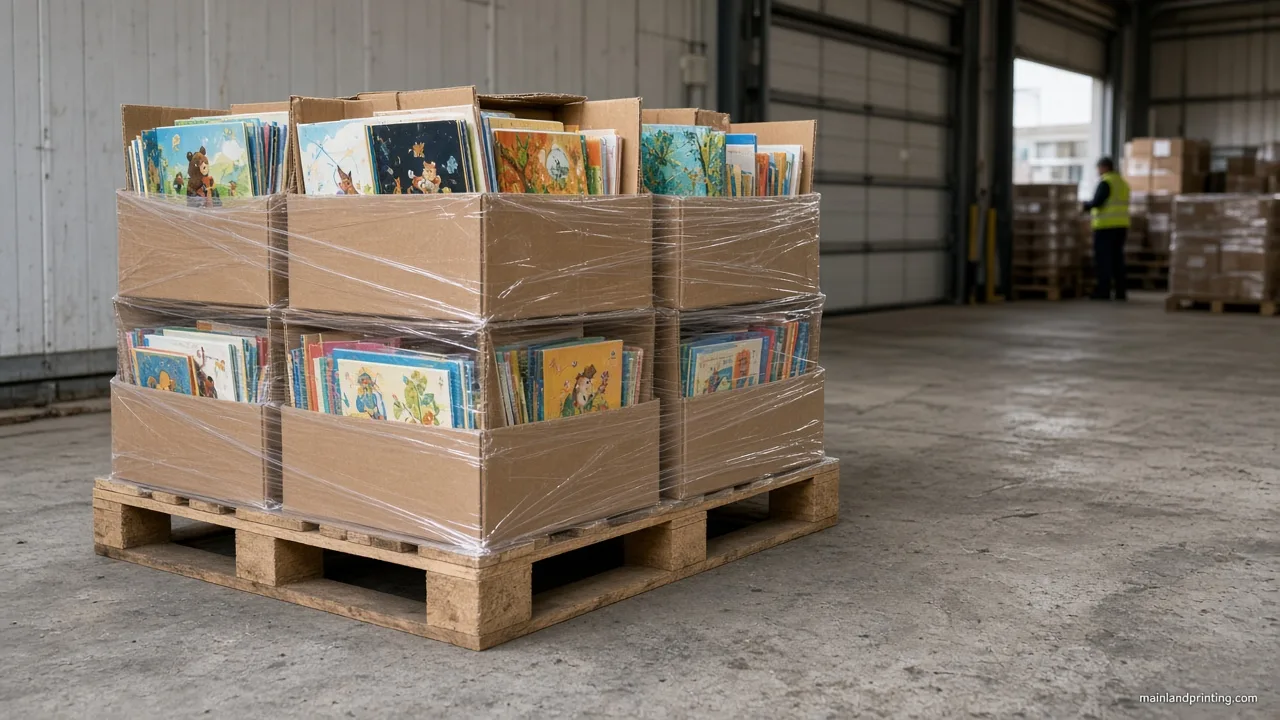
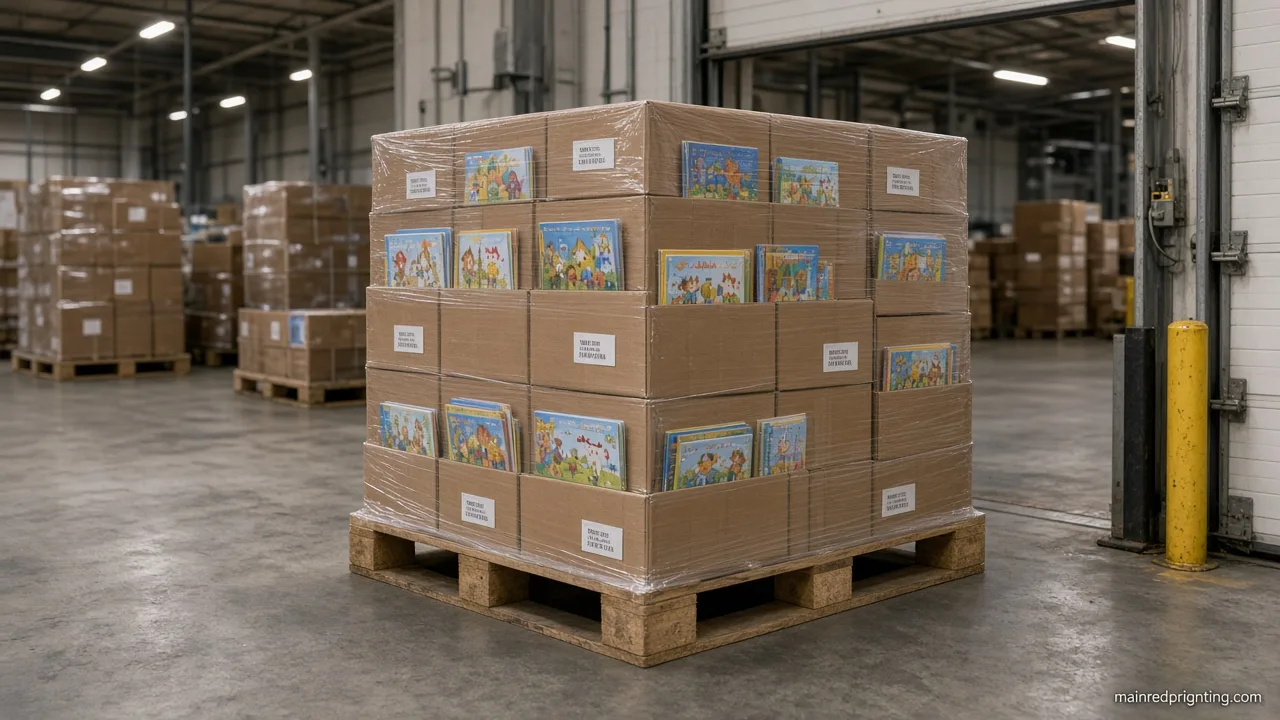
A custom coffee table book inherits the same variable map, then adds oversized trim, heavier boards, and carton cube that can flip the 1,000-copy story from unit win to freight risk.Use this when the brief is a large-format visual book—not a standard novel trim—and you still need art book printing cost comparable across plants.
| CTB signal | Budget move |
|---|---|
| 12×12″ or larger trim | Sheet waste and carton cube rise; re-check 1,000 freight share |
| 200 gsm interiors + thick boards | Unit and weight climb; proof the paper feel before bulk |
| Lay-flat / sewn + specialty cover | Fixed finishing work grows; keep it identical on every tier quote |
POD photobook calculators answer a different job than offset gallery runs—do not mix their unit stickers into an offset RFQ. For industry process-control language you can cite without copying a printer’s price grid, see trade resources such as PRINTING United Alliance.
Weigh a sample carton early: a 12×12″ book that looked light on the quote sheet can push dimensional weight on air or courier legs.If the launch needs 1,000 copies but only 200 fit the first event, price the 200 as a receiving tranche and keep the remainder on ocean math—same locked paper, not a second SKU invented mid-quote.
Build the Art Book RFQ Pack
Build one art book RFQ pack—trim, pages, paper, binding, cover finish, proof type, quantity tiers, and ship-to—before you ask printers to bid.Use this checklist before you send art book printing cost requests to more than one plant. Anonymous sample specs still need sales confirmation; this pack standardizes inputs, not final unit prices.
| Campo «Solicitud de presupuesto» | Escribe esto |
|---|---|
| Trim + page count | Exact mm/in and total pages (or spreads) |
| Paper + coating | Interior gsm + matte/gloss; endsheet if any |
| Binding + cover | Hardcover/softcover; casewrap, jacket, cloth, foil/spot UV |
| Prueba | Digital only vs bound hardcopy on production stock |
| Quantity tiers | 250 / 500 / 1,000 on the same locked sheet |
| Ship-to + Incoterm | City/country, EXW vs DDP intent, carton or pallet preference |
Red flags before you trust a low unit number:
- Quotes compared across different paper gsm or binding
- No proof line on a full-color art book
- Only one quantity quoted when you still need 250 vs 500 vs 1,000
- Oversized coffee-table trim with freight marked “TBD”
- Fixed dollar tables copied from a competitor blog into your board deck
Buyer RFQs for art books repeatedly surface pricing, quantity, material, dimensions, and sample gates—treat those as the minimum pack, then add destination so landed share cannot hide inside a fake EXW win.
Name an owner for each field: who freezes trim, who signs the proof, who confirms ship-to. If any owner is blank, pause the bid round. A complete RFQ pack is boring on purpose—that boredom is what makes art book printing cost comparable.
Ready to compare art book print runs?
Send trim, pages, paper, binding, proof type, 250/500/1,000 quantities, and ship-to for an art book printing quote built on one locked specification sheet.
Lock Specs Before You Compare Quotes
Art book printing cost only becomes comparable when every plant bids the same trim, paper, binding, proof, and destination—and when 250, 500, and 1,000 sit on one sheet so you can see which tier is setup-heavy, unit-led, or freight-risk. That discipline turns scavenged price charts into a decision you can approve.
Freeze the RFQ pack, reject mid-compare spec drift, and keep generic all-book cost pages out of this lane. When the sheet is stable, send it for an art-book production quote and read the three tiers as budget shapes—not as borrowed unit stickers.
If page count changes by more than eight pages, or board/cover finish changes after the first bid, restart the three-tier request. A 3% page creep can erase a “500 wins” conclusion without anyone noticing until cartons arrive heavy.
Lock Your Art Book Budget Before RFQ
Lock the art book budget when the variable map, the 250/500/1,000 shape read, and the RFQ pack all point at the same specification—and when oversized coffee-table freight risk is named, not hoped away. That gate is what lets you fund the project without mistaking a competitor’s chart for your quote.
Keep the approved sheet beside proof sign-off. If trim, board, or destination changes after approval, re-run the three tiers before you enlarge the PO. For production-ready art book printing on that locked pack, send the RFQ above to Mainland Printing.