Worried about your next production run failing safety inspections? I’ve spent many years in the trenches helping brands master CPSIA & EN-71 testing for board book printing, and today, I’m revealing the exact blueprint to ensure your books are 100% bite-proof and toddler-safe.
CPSIA & EN-71 testing for board book printing evaluates the chemical and physical safety of children’s books. These standards mandate strict limits on lead and phthalates while requiring mechanical tests for tension and small parts to ensure products are safe for the 0-3 age group.
Want to see the specific factory-level SOPs that guarantee a pass? Stick around, because I’m about to show you the ‘compatibility trap’ that most printers miss.
1. The Decision Matrix: Lab Standards vs. Factory Excellence

When you are evaluating a new printing partner, it is easy to get lost in a sea of “Yes, we can do it” promises. However, the difference between a generic printer and a children’s book specialist lies in their “Safety Buffer.”
Before you sign your next contract, evaluate this comparison table. It highlights the fundamental differences between meeting the legal minimum and achieving true manufacturing excellence.
| Key Performance Indicator | Legal Industry Floor | Our Factory Standard (Ceiling) | Why This Matters for Your Brand |
|---|---|---|---|
| Physical Tension (Pull Test) | 90 Newtons | 120+ Newtons | Anything below 90N risks page detachment, creating a lethal choking hazard. |
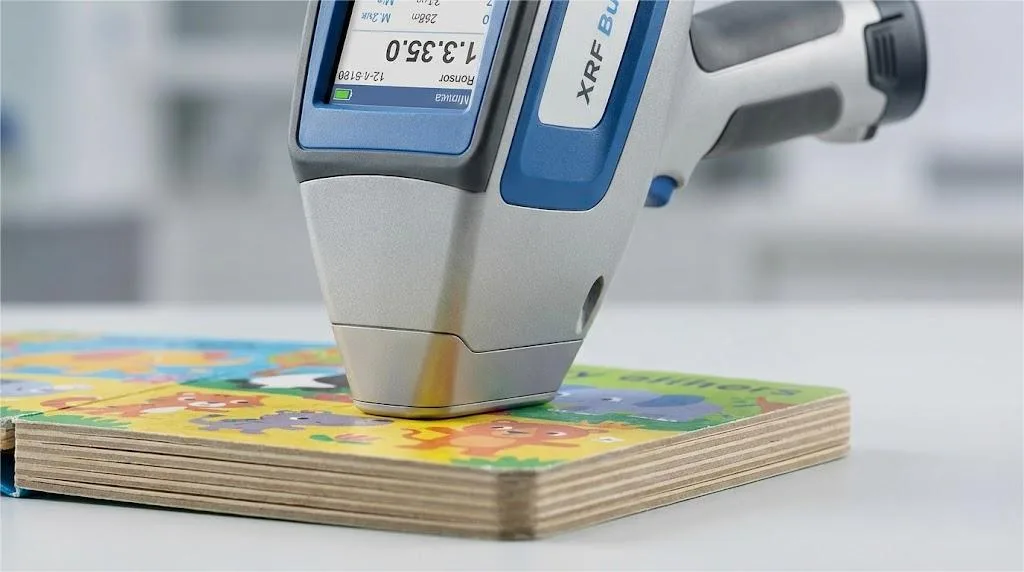
| Total Lead Content | < 100 ppm | < 20 ppm (Near ND) | 100ppm is the legal limit, but cumulative ink layers can cause unexpected spikes during final testing. |
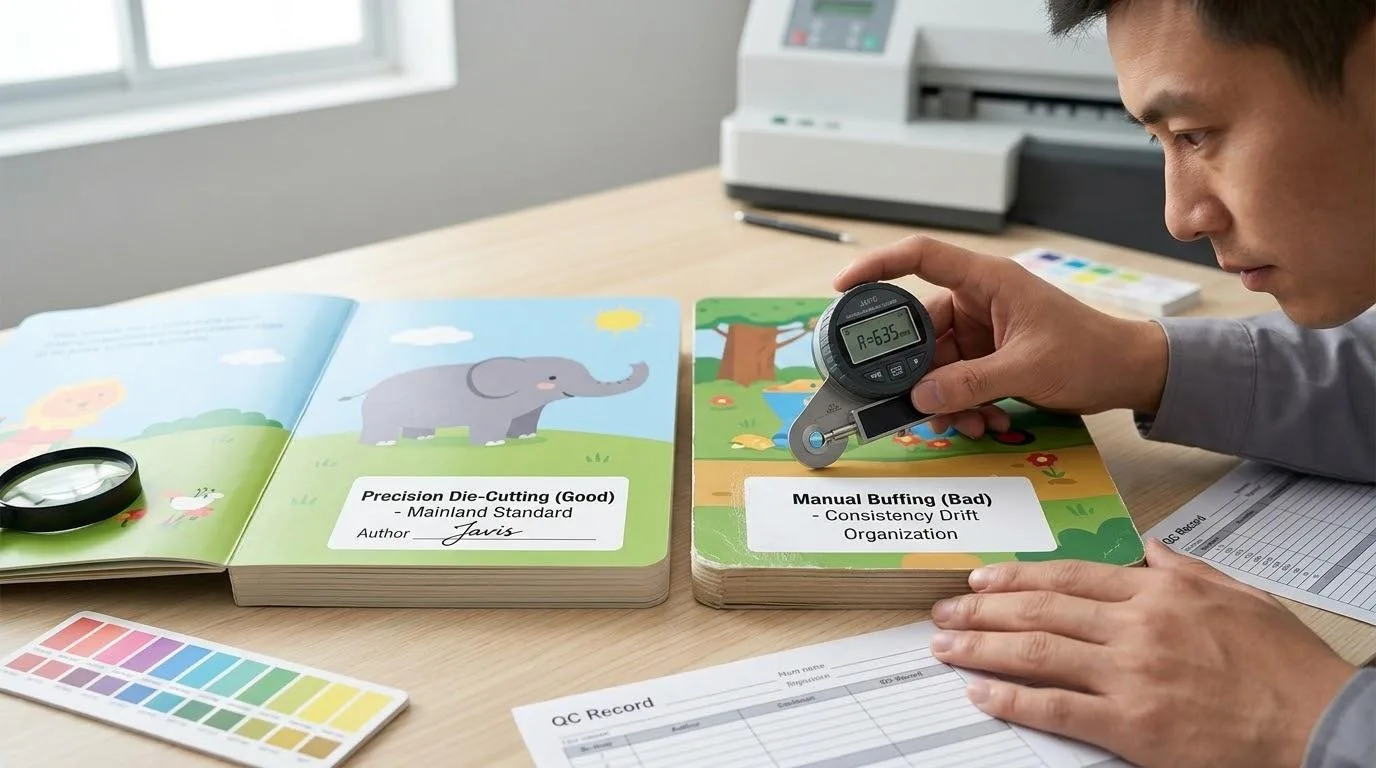
| Scuff Resistance (Rub Test) | No Mandatory Requirement | 200+ Cycles (Sutherland) | Low-quality coatings peel under saliva, leading to direct ink and chemical ingestion by the toddler. |
| Edge Safety & Radius | No sharp edges | 10mm-15mm Rounded Radius | Blunts physical impact and improves impact safety by 85% compared to standard square corners. |
| Compliance Strategy | Re-testing at $1,000+ | Internal Pre-Check SOP | A single recall typically costs a brand upwards of $100,000 in fines and logistics. |
2. The 1:10:100 Rule: The Real Economics of Safety
In B2B sourcing, the price per unit is often the focus, but the “True Cost” is determined by risk management. We follow the 1:10:100 Rule of Quality Costs, which dictates your profit margins more than your initial quote ever will:
- $1 (The Prevention Stage): This is the cost of catching a compliance error during pre-production—for example, swapping a non-compliant adhesive for a medical-grade one before the presses run.
- $10 (The Detection Stage): This is the cost of a failed test at a third-party lab like SGS or Intertek. While the test itself costs around $1,000, the “per unit” cost of shipping delays and administrative headaches adds up quickly.
- $100 (The Failure Stage): This represents the catastrophic cost of a market-side recall. When a product reaches the customer and is found to have “Small Parts” (detached pages) or lead-contaminated ink, the brand loses its reputation, faces massive lawsuits, and incurs disposal fees that can exceed $100,000.
By investing in a specialized Board Book Printing partner who understands these stakes, you aren’t just buying paper and ink; you are buying insurance for your career and your brand’s future.
Eliminate Compliance Risks Before Production Starts
Safety isn’t just about a certificate; it’s about engineering a book that survives real-world use. Explore our specialized production capabilities designed specifically for the 0-3 age group.
3. Deep Dive into Chemical Compliance: The “Compatibility Trap”
A common misconception among sourcing managers is that purchasing “soy-based ink” and “FSC-certified paper” guarantees a pass. Unfortunately, this is exactly where 90% of testing failures occur.
Why Do “Safe” Materials Fail the Finished Test?
I once encountered a textbook case with a U.S.-based boutique brand. They had spent months sourcing FSC-certified paper and a world-renowned ink brand to ensure total safety.
Yet, the finished book failed the EN 71-3 Heavy Metal Migration test for Barium. The client was baffled—how could “clean” materials result in a “toxic” product?
- The Hidden Trap: The problem wasn’t the paper or the ink individually. It was the Lamination Adhesive. Low-end, oil-based glues can act as a “chemical catalyst” during the heat-binding process. These glues “activate” stable heavy metal molecules in the ink, allowing them to migrate through the lamination and onto the surface where a child can lick them.
- The Expert Solution: We solved this by switching to High-Solid Water-Based Adhesives and maintaining a Dyne Level of 42+ on the film. This creates both a physical and chemical seal that blocks migration.
- The Sourcing Lesson: Do not just look at individual Material Safety Data Sheets (MSDS). Ask your printer: “Have you performed compatibility testing specifically for this ink-glue-film combination?”
4. Physical Durability:
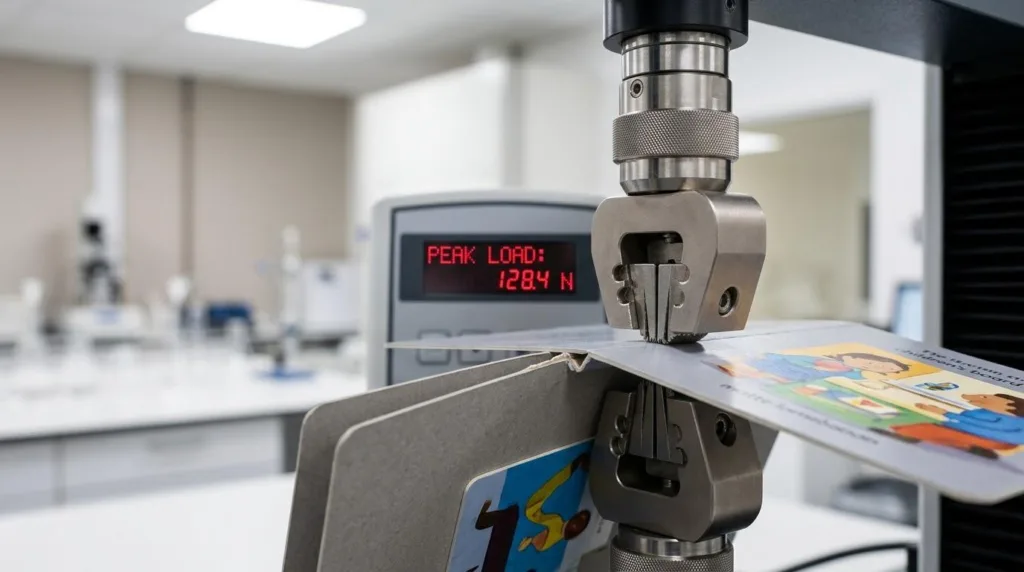
For board books designed for toddlers, the Tension Test is the “life or death” metric. If a “flap” or a page can be torn off, it instantly becomes a Small Part—a major choking hazard that triggers immediate CPSC intervention.
“Mechanical and physical properties testing must simulate ‘worst-case’ scenarios—including bite simulations and extreme tension—to ensure that no small parts are liberated during foreseeable abuse by a toddler.”
— Soline de Villard, Global Product Manager for Toys & Juvenile Products at SGS
3 Technical Keys to “Tear-Proof” Quality
1. Grain Direction Strategy:
Paper is a fibrous material. Like wood, it has a grain. When die-cutting books with interactive “flaps,” we insist on a cut direction perpendicular to the paper fiber.
This simple structural adjustment increases tear resistance by 30% without adding a single cent to the material cost. A general printer will often ignore this to save on paper wastage, but that small “saving” creates a massive safety risk.
2. The 120% Tension Buffer:
Sea freight is brutal. Humidity fluctuations in a shipping container weaken paper fibers over a 30-day voyage. If a factory produces exactly to the 90N line, the book may arrive at the warehouse at 85N.
We implement a 120N internal standard to account for this environmental “fatigue.”
3. Saliva-Immersion Simulation:
We don’t just test dry friction. Our SOP includes a rub test after immersing the sample in a pH 6.8 simulated saliva solution for two hours.
This ensures the Lamination strength won’t fail and the coating won’t peel or flake when a child gnaws on the book edges for hours on end.
5. Future Trends: The 2026 PFAS Ban & “Plastic-Free” Evolution
States like California and New York are tightening restrictions on PFAS (Forever Chemicals) in children’s products. This is the next major hurdle for Custom Book Printing.
- The Trap: Traditional “anti-scratch” films often contain fluorine-based compounds to achieve their durability. While they pass current tests, they will likely fail 2026 standards.
- The Strategy: We recommend that high-end brands transition to High-Solid Aqueous Coating. By layering multiple water-based coatings instead of using a plastic film, you eliminate the PFAS risk and the physical hazard of “plastic film ingestion” entirely. This transition doesn’t just keep you compliant; it gives your marketing team a powerful “Plastic-Free” story to tell eco-conscious parents.
Amy Baez, a Pediatric Occupational Therapist and founder of Play-a-Round Therapy, highlights the importance of this:
“Mouthing is a vital sensory milestone. Since we cannot stop 0-3 year-olds from exploring books with their mouths, the industry’s responsibility is to provide ‘indestructible’ materials that withstand saliva and bite pressure.”
6. The “30-Second Audit” for Sourcing Managers
When evaluating a new supplier, don’t listen to their promises—look for their evidence. A specialized factory should be able to provide these five proof points within 24 hours:
- On-Site Tension Gauge: Confirm they have a calibrated pull-tester in their QC lab, not just a certificate from a year ago.
- Dyne Pen Test Video: Check the surface tension of their lamination. If it’s below 38 Dyne/cm, the film will eventually bubble or peel (delaminate).
- Full-Link MSDS Archives: They should have safety data for every component: the grayboard, the ink, the glue, and the film.
- Humidity-Controlled Production: Ask about their workshop environment. If the humidity isn’t controlled, your board books will warp or “bow” before they even reach the shipping container.
- 0-3 Specialist Portfolio: Ask for examples where they solved a “Mechanical Property” failure. A general printer won’t understand the nuances of fiber grain or saliva solubility.
Conclusion: Transforming Compliance into Brand Equity
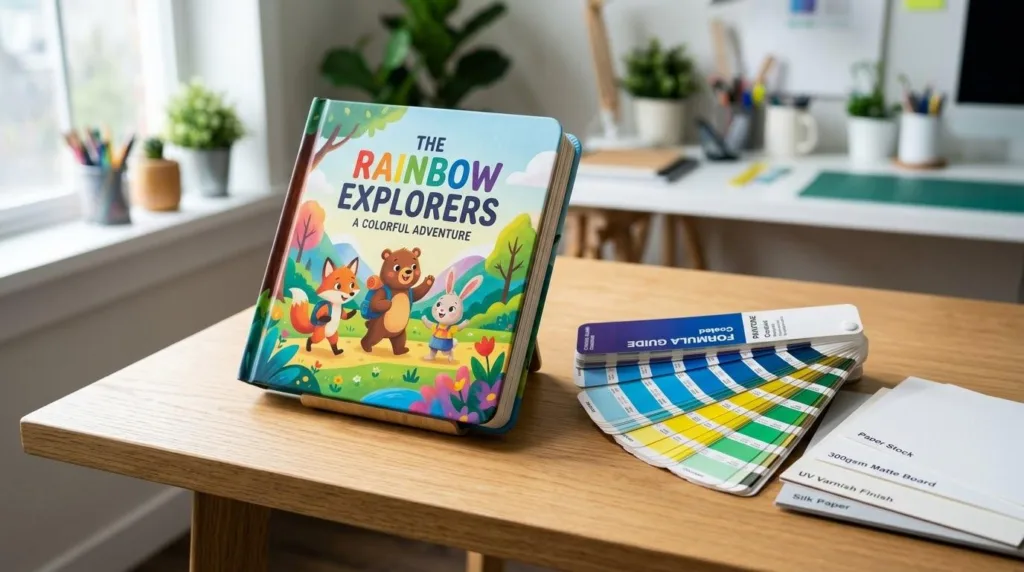
In a market flooded with low-cost options, the brands that thrive are those that prioritize the safety of their smallest users.
Navigating the complexities of CPSIA & EN-71 Testing for Board Book Printing can be a daunting task, but it is also an opportunity. By moving from a “check-the-box” mentality to a “Risk Control” partnership, you eliminate the hidden costs of heavy metal migration, page detachment, and the nightmare of a product recall.
Remember, your brand’s reputation is built on the trust of parents who put your books into the hands (and mouths) of their children. Don’t leave that trust to chance.
Whether you are specifying Bite-proof coatings or selecting the perfect 400gsm grayboard, make sure your decisions are backed by the rigorous mechanical and chemical standards we’ve discussed today.