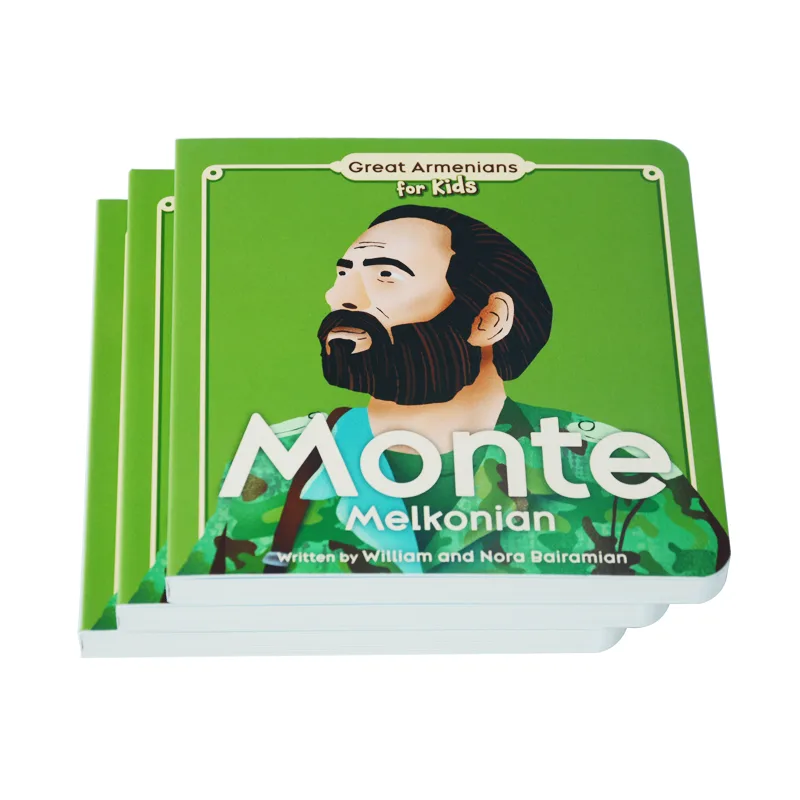
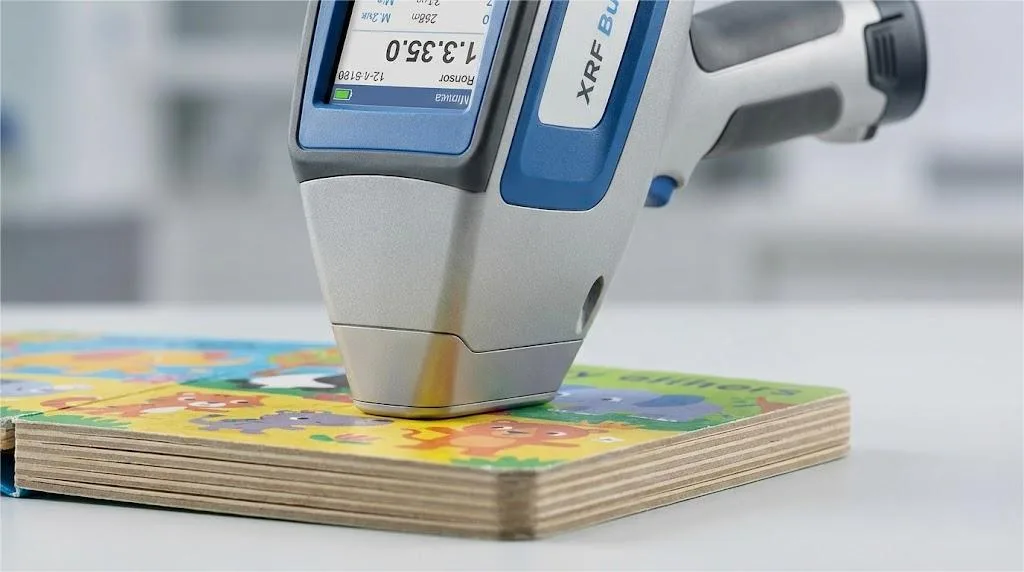
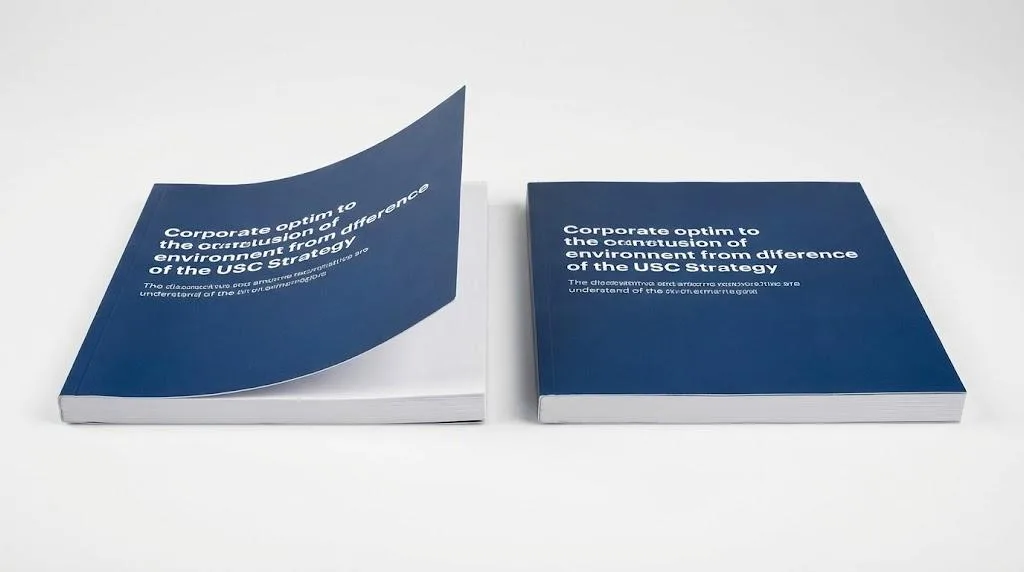
Navigating international safety compliance for children’s publishing can feel like a high-stakes minefield. This guide breaks down exactly why your choice between die-cut and manually buffed round corners determines your brand’s regulatory success and long-term durability.
Board book printing safety standards require smooth, non-delaminating edges to prevent choking hazards. Die-cut round corners provide superior safety by using high-pressure mechanical force to seal paper fibers. In contrast, manual buffing utilizes abrasion that can leave micro-burrs and inconsistent radii.
But there is a catch: most factories won’t tell you about the “Consistency Drift” that ruins bulk shipments. Read on to discover the 5-step audit that protects your brand from a total product recall.
Why “Mechanical Certainty” Outperforms “Human Touch”

To help you make the most informed procurement decision, we have distilled the complex physical parameters into the table below. This is not just a comparison of processes; it is a comparison of risk management strategies.
| Evaluation Dimension | Industrial Auto Die-Cutting | Manual/Semi-Auto Buffing | Decision Impact |
|---|---|---|---|
| Physical Principle | Vertical “Cold Forging” | Rotary Abrasion “Subtraction” | Affects fiber structure |
| Instant Pressure | 15 – 20 Tons | Minimal to None | Determines edge density |
| Processing Tolerance | ± 0.05 mm | ± 0.3 mm ~ 0.8 mm | Affects compliance consistency |
| Edge Finish | Compressed & Sealed Fibers | Torn Fibers & Micro-burrs | Determines durability & safety |
| Bulk Consistency | 100% Constant | Drifts with worker fatigue | Key to audit pass rates |
| Unit Cost Logic | One-time Tooling Fee (~$350) | Included in base processing | Long-term Asset vs. Short-term Saving |
1. The “Fiber Sealing” Effect: The Physics of Hidden Safety
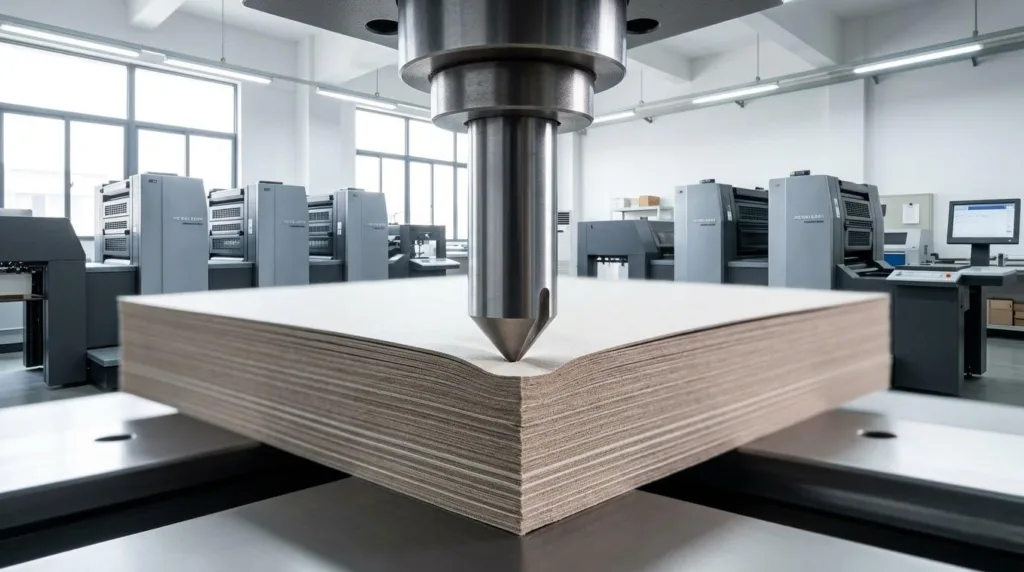
Why do some board books delaminate after a toddler chews on them while others remain intact? It is rarely a paper quality issue; it is almost always a manufacturing process issue.
“In board book production, the physical form is as much a part of the narrative as the illustrations. A precision-engineered round corner is not merely a safety requirement; it is a tactile bridge. When a manufacturer utilizes high-pressure die-cutting over manual abrasion, they are essentially sealing the creative intent within a safe, durable vessel.”
The Physics of “Cold Forging”
When our industrial-grade die-cutting machines strike the paperboard with 15 to 20 tons of vertical pressure, the process is closer to “cold forging” than simple cutting. It doesn’t just sever the greyboard; it instantaneously compresses the pores within the fiber structure.
- Saliva Resistance: This “Edge Compression Layer” creates a natural physical barrier. Our lab tests show that high-pressure sealed edges have a fiber density 25% higher than the original board, slowing saliva penetration by over 40%.
- Preventing Ingestion: By locking the 5-7 layers of paperboard together at the molecular level, this process eliminates the chance of edge delamination, preventing toddlers from peeling off and swallowing cardboard fragments—a major choking hazard.
2. “Consistency Drift”: The Silent Killer in Bulk Production
As a factory owner with many years of experience, I have seen the most painful lessons occur in the gap between the “Golden Sample” and the Bulk Shipment.
Case Study: The $350 Saving that Cost $15,000
We once worked with a Kickstarter creator who, to save a $350 custom tooling fee, followed a competitor’s advice that “manual buffing achieves the same result for small batches.”
- The Trap: The samples provided were handcrafted by a master craftsman and were, quite frankly, perfect.
- The Reality: During the production of 3,000 units, the workers inevitably suffered from fatigue, leading to “Accuracy Drift.” Under 50x magnification, the corners showed a “step effect” where the manual sanding hadn’t been perfectly perpendicular.
- The Consequence: A third-party inspector in a Los Angeles warehouse flagged the shipment. Because the edges didn’t meet the ASTM F963 Sharp Edge Test standards, the books were barred from major retail channels. The creator faced a total loss of over $15,000.
The Lesson: True safety should never depend on a worker’s mood; it should be locked into the die’s dimensions.
Buffing is “subtraction.” Because sanding belts wear down and human hands fluctuate, the 1st book and the 5,000th book will inherently differ. Die-cutting is “locking.” As long as the steel die remains, every single unit is locked into a 0.05mm tolerance.
Ready to Engineer Your Next Board Book?
Don’t leave child safety to chance. Let us help you apply professional die-cutting standards to your project for 100% bulk consistency and peace of mind.
3. The Production Manager’s Financial Model: The ROI of Tooling
Professional procurement is not about finding the lowest price; it is about buying the highest level of certainty. When manufacturing for children, adhering to CPSIA regulations is the baseline for your business survival.
Risk vs. Cost Quantization Table
| Order Volume | Tooling Investment | Potential Recall Risk | Recommended Decision |
|---|---|---|---|
| Under 1,000 units | $350 | Low (Full manual QC possible) | Manual Buffing (with strict QC) |
| 2,000 – 5,000 units | $350 | High (Sampling risk) | Mandatory Custom Die-Cutting |
| 10,000+ units | Amortized to $0.035/unit | Extreme (Brand-ending) | Fully Automated Line Die-Cutting |
4. The “30-Second Tactile Audit”: A Professional SOP

To ensure every book meets compliance standards such as EN-71 Part 1, we recommend that you—or your QC agent—execute this “Fingertip Audit” upon receiving production samples. Understanding mechanical and physical properties of toys is essential for anyone in the children’s book printing space.
“The most frequent failure in children’s product safety audits isn’t always chemical; it’s physical. We often see ‘Consistency Drift’ in manually finished products. While a sample may pass, the 5,000th unit in a bulk shipment often fails the Sharp Edge Test due to micro-burrs left by worn buffing belts.”
Practical Inspection Checklist:
- The Smoothness Swipe: Firmly run your index finger along the curved edge. A high-pressure die-cut edge feels like a single solid piece of polished wood. A buffed edge will often have a “layered” feel or slight fuzziness.
- The “Pinch and Peel” Test: Attempt to catch the edge of a single page with your fingernail at the corner. If the fiber isn’t compressed (as in buffing), you will be able to catch a “lip.” If it is die-cut, the layers are virtually fused.
- Light Shadow Consistency: Stack five books and observe the shadow of the corners under a single light source. The silhouette of die-cut corners will be perfectly identical; buffing will result in a “jagged” shadow where each R-angle varies slightly.
Conclusion: Building a Brand on Mechanical Certainty
In the hyper-competitive B2B publishing market, your brand reputation is built on the things parents “don’t have to worry about.”
When selecting a partner for Board Book Printing, stop asking “How experienced are your workers?” and start asking “Are your corners produced via vertical die-pressing or rotary buffing?” This question alone will signal to the factory that they are dealing with a professional who understands the engineering of safety.
Are you ready to upgrade your books to engineering-grade safety standards?
If you have technical questions regarding complex R-angles or high-page-count board books, we provide deep-dive consultations based on many years of factory-floor experience. Ensuring every project undergoes rigorous quality control in book printing is our promise to you.