Every catalog order meeting ends up in the same four paper decisions — interior stock, surface finish, cover weight, and lamination — and vendor pages answer them with vocabulary: gloss art, matte art, satin, C1S, soft-touch, 250 gsm. The words arrive without a way to choose between them, and the proof that comes back rarely looks like the screen.
Catalog paper printing works best as a use-first decision: gloss art paper suits photo-led pages, matte keeps text-heavy catalogs readable, cover weight follows the sales route, and lamination protects the journey. GSM measures thickness, not quality — the final call belongs on a printed sample.
By the end you can name an interior stock and finish from your own page mix, put a cover weight behind your sales route, and run a five-point sample check that catches what a PDF hides.
Start From How the Catalog Gets Read
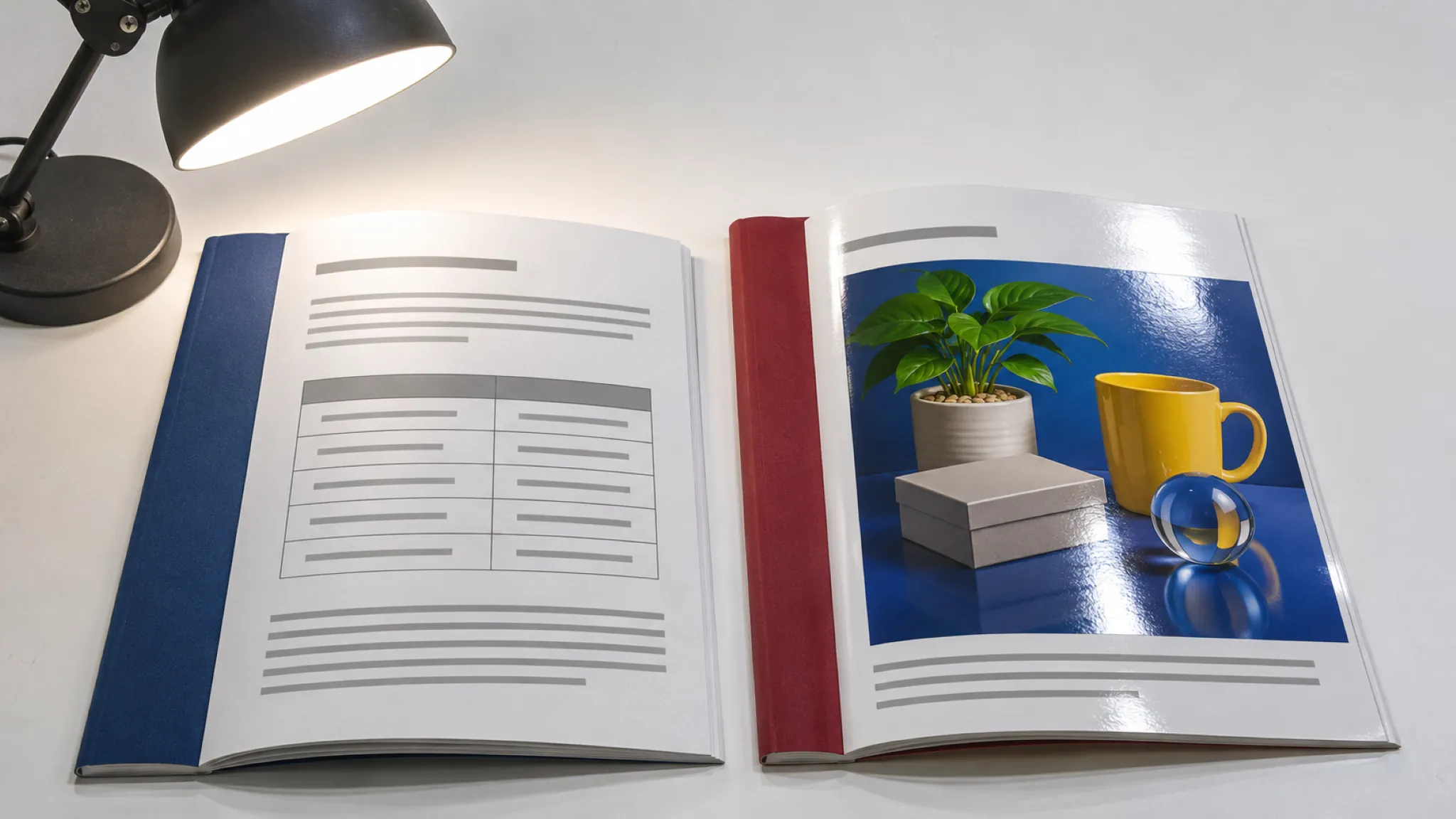
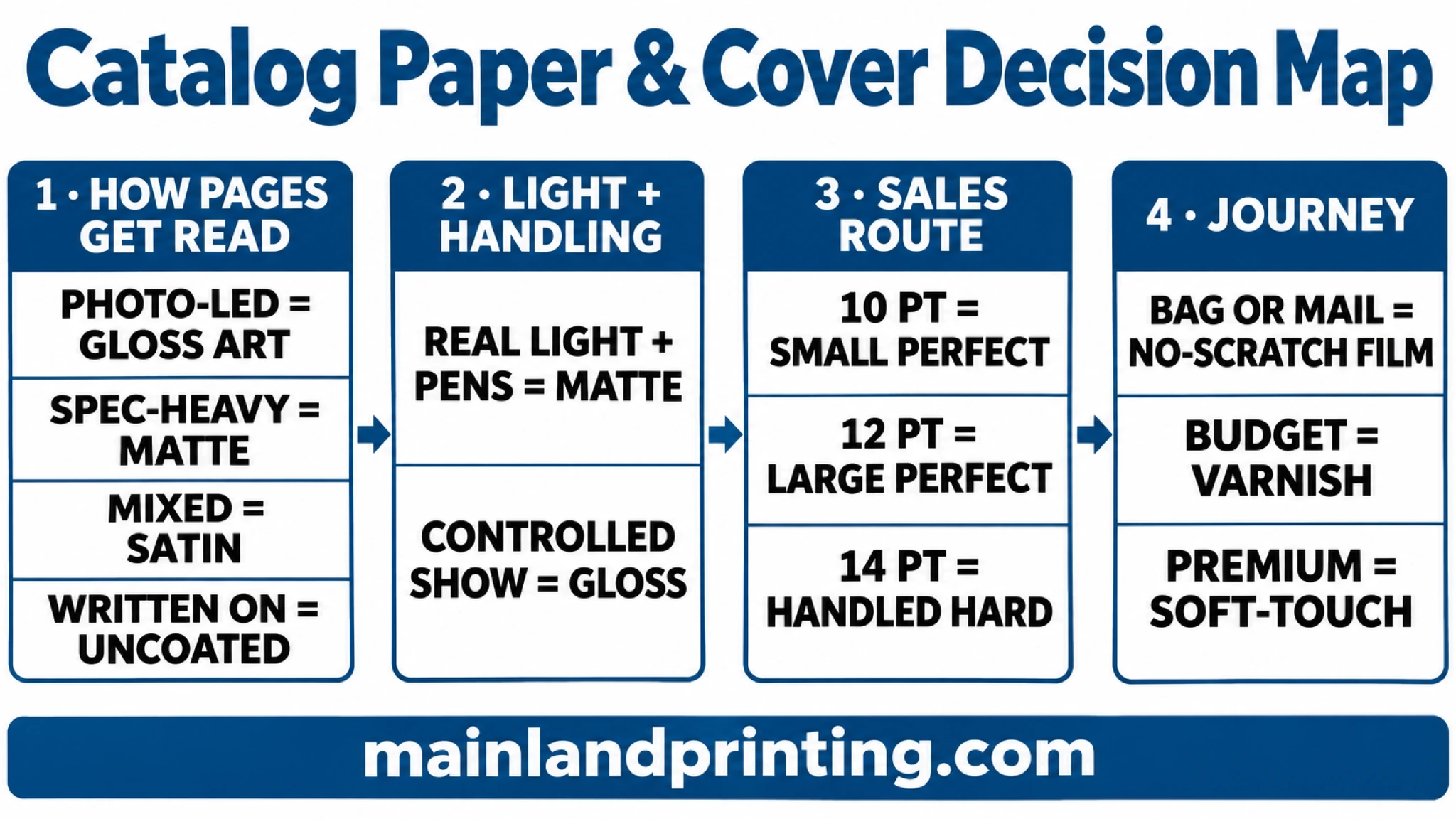
Interior stock follows how the catalog gets read: gloss art paper makes product photos pop, matte keeps text-heavy pages crisp, satin or silk splits the difference, and uncoated takes pen notes.
Gloss art paper runs roughly 128 to 157 gsm for catalogs, and one print guide calls it the most popular choice for product catalogs because it makes colors and photos pop. If your pages exist to show the product, this is the default to brief.
Matte is the reading surface. Body copy, spec tables, and bullet lists stay crisp without glare, which is why text-heavy and spec-heavy catalogs lean matte — the reader’s eye, not the product shot, is doing the work on those pages.
Satin — sometimes called silk — is the honest middle path for mixed catalogs: a moderate sheen that balances vibrancy with readability, and it is specifically recommended for pieces that mix images and text, like catalogs or covers.
Uncoated stock earns its place when people write on the piece — reps taking names, buyers marking quantities. It takes pen ink cleanly and reads understated; workbook and spec-sheet RFQs ask for it by weight, usually 100 to 120 gsm.
| How the catalog gets read | Interior stock to ask for |
|---|---|
| Photo-led hero catalog | Gloss art, 128–157 gsm |
| Spec-heavy reference | Matte art, 105–128 gsm |
| Mixed hero spreads + spec pages | Satin / silk, 115–157 gsm |
| Pages people write on | Uncoated, 100–120 gsm |
Most catalog pages live in the 60–120 gsm band; 157 gsm reads as a coffee-table interior and shows up on image-led RFQs. Stock names are paper grades, not factory inventory — availability shifts by region and mill, so treat the table as a direction to brief, not a part number.
Matte or Gloss: Decide by Light, Handling, and Markups
Choose matte or gloss by three conditions — reading light, handling, and whether people write on the piece — not by taste.
Three checks decide it:
- Light — gloss glares under downlights, show floors, and warehouse benches; matte stays readable.
- Handling — gloss collects fingerprints at every hand-off; matte shrugs them off but scuffs bare.
- Markup — gloss fights the pen; matte and uncoated take ink cleanly.
Each condition has a documented mechanism behind it, and the catalog route decides which one leads.
Under direct light a glossy surface can wash out the pages you paid to print: glare is the documented tradeoff, while matte kills glare and reads clean for text. Show floors, counters under downlights, and warehouse benches all favor matte.
Handling splits the same way. Fingerprints show on gloss at every touch, so a catalog passed hand to hand at a meeting wears faster than matte would; matte shrugs off smudges, though bare matte scuffs more when loose in a bag — a problem lamination solves in the next section.
Markup is the quiet decider. When reps circle SKUs and buyers take notes, gloss fights the pen: ink smears or refuses to stick, while matte takes ink cleanly and uncoated is easiest of all.
Gloss earns its keep on imagery. The reflective coating deepens every shade, so photo-led hero pieces still justify it — under controlled lighting — and one hybrid pattern covers both needs: spot UV lays gloss only over the cover image while the pages stay matte.
There is one documented protection edge to note: glossy coatings hold up slightly better against moisture and fading, a real factor for catalogs that live in mailrooms or on open shelves.
Matte for catalogs read under real light, passed hand to hand, or written on; gloss for hero pieces shown under controlled conditions — that is the whole decision. Dealer-shelf references, counter spec books, and mailed catalogs almost always land on the matte side; single-touch showpieces can carry gloss.
Cover Weight That Survives the Sales Route
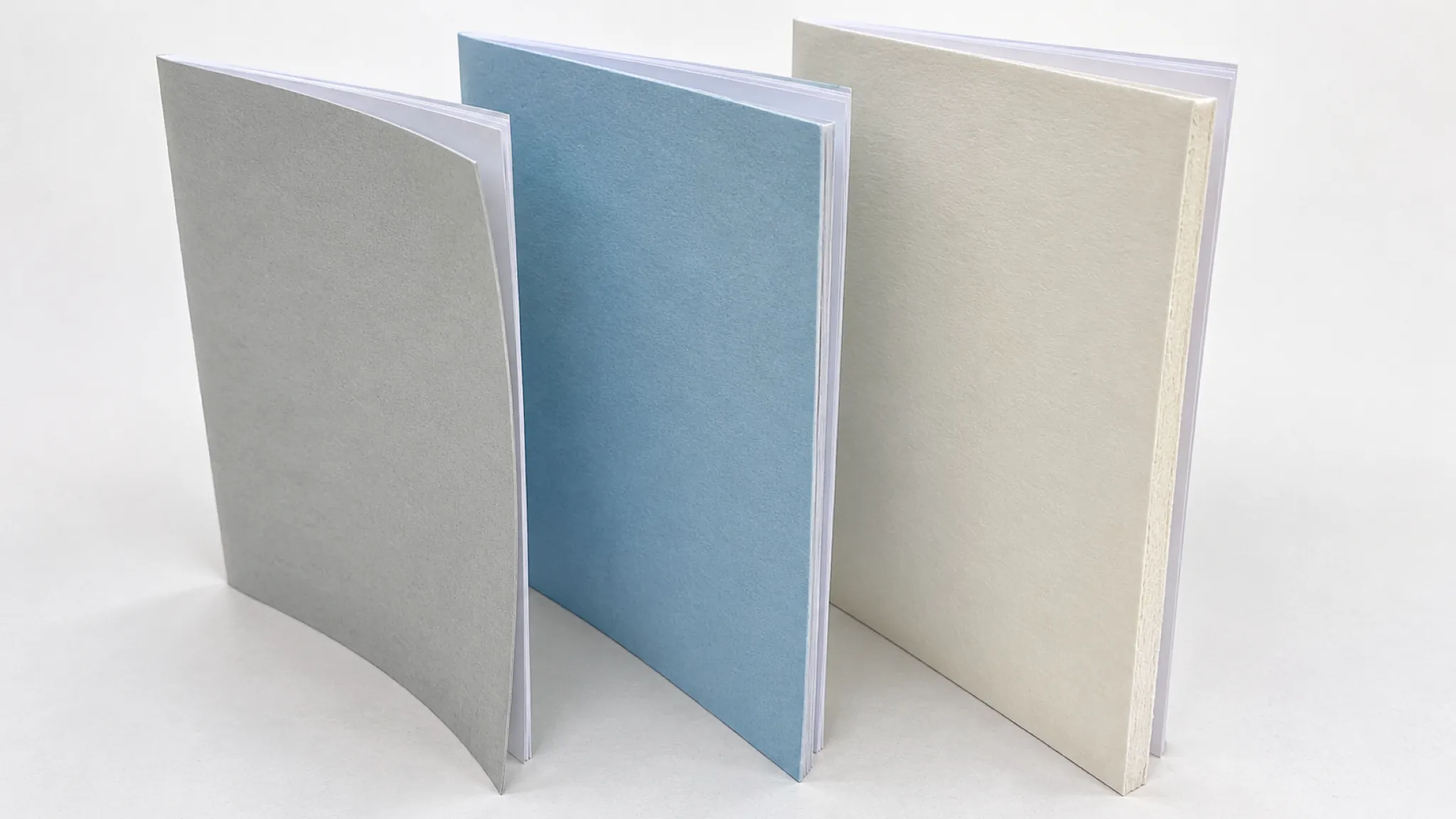
Cover stock is specified separately from text stock: the common cover band runs 135 to 300 gsm, and the choice maps to how hard the catalog gets handled. Three points cover most catalog work — 10 pt (250 gsm), 12 pt (300 gsm), and 14 pt (350 gsm).
A print guide pegs 10 pt as a great fit for catalog covers and the default for perfect-bound projects up to 6×9, 12 pt for larger perfect-bound work, and 14 pt for anything that gets handled a lot — trade-show tables and dealer counters.
For the arithmetic behind those numbers, the Guía de conversión de gramajes de papel translates gsm, pounds, and points side by side.
Pair cover weight with the binding decision.
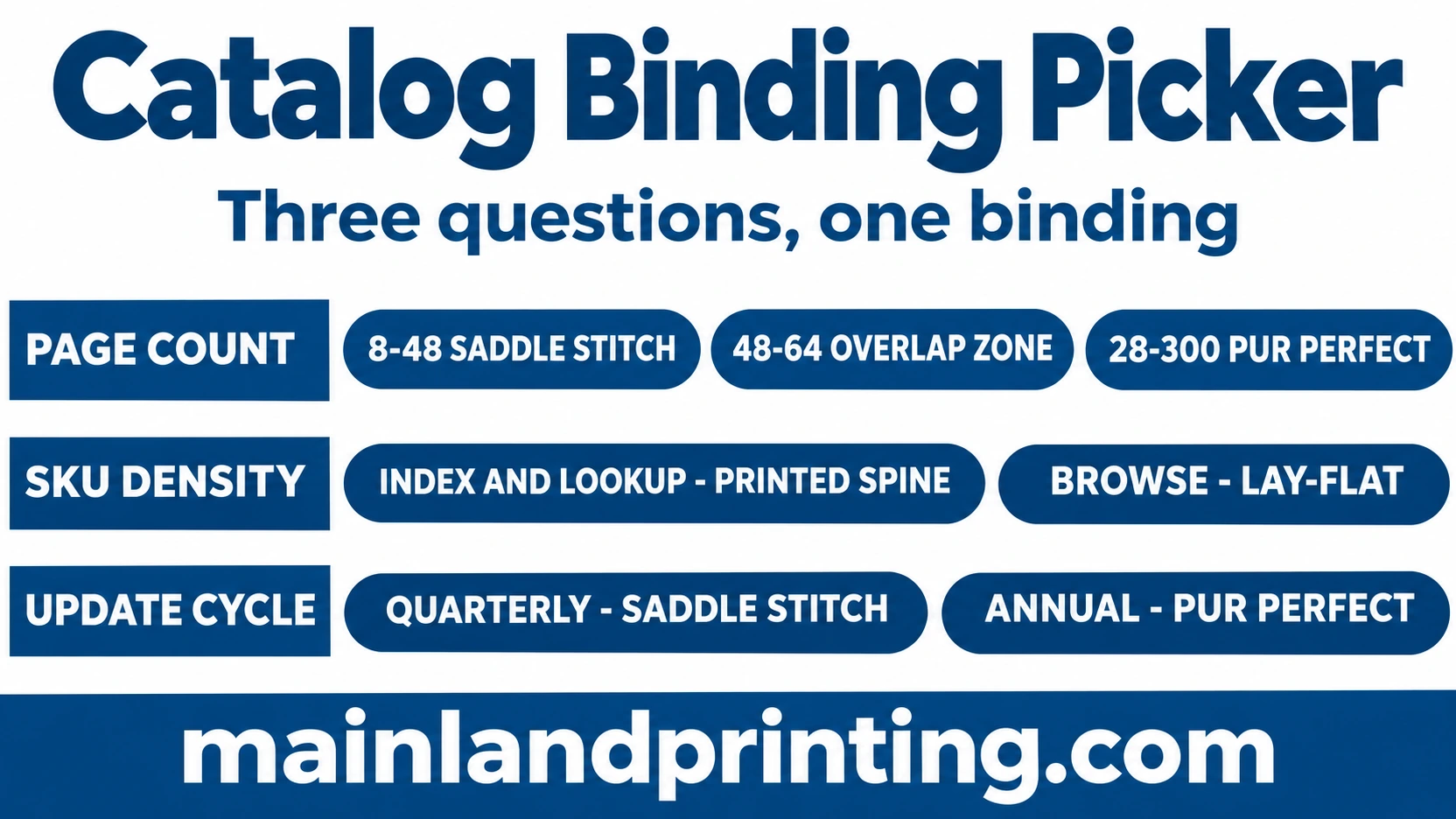
Saddle-stitched covers stay lighter because the cover is just another sheet in the nest, while perfect-bound covers need 10 pt or heavier to give the spine rigidity; if the binding itself is still open, the catalog binding options guide handles page count, density, and update cycle in full.
Real RFQs land exactly on this band: a 3,000-copy catalog quoted on 110 lb card with a soft-matte finish, a 1,000-unit booklet on 120 gsm art gloss, and children’s titles on 250–300 gsm card. Buyers arrive knowing the grade they want — the open question is which point fits the route.
Every extra point ships on every copy. Heavier covers raise postage on mailed catalogs and nudge per-unit cost, so cover weight is a budget variable too; the catalog printing costs guide puts numbers around quantity and edition choices.
The heaviest stocks bring their own failure mode: heavy ink coverage is more prone to cracking at folds on 135 lb-class stock, and heavy matte interiors can show shiny scuff areas that a varnish fixes at a price. Flag any design with ink crossing the fold before the run.
GSM measures thickness, not quality — a higher number is a stiffer, heavier, pricier catalog, not a better one.
| Cover point | Where it earns its keep |
|---|---|
| 10 pt / 250 gsm | Smaller perfect-bound catalogs; the spine-rigidity starting point |
| 12 pt / 300 gsm | Larger perfect-bound and sewn references |
| 14 pt / 350 gsm | Trade-show and dealer tables — pieces handled hard |
Saddle-stitch covers sit below the band on lighter jobs, where the cover matches the interior stock family instead of acting as a board.
Lamination: Match the Film to the Route
Lamination is a thin protective film bonded over the cover — a transparent coating that adds protection and durability on top of whatever stock you chose. The film choice is a route decision, not a decoration decision.
Gloss film brightens colors, which is why print guides call it suitable for catalogues and brochures — it pairs with photo-led retail and show pieces the same way gloss paper does.
Matte film kills glare and matches a matte interior page-for-page; it is the calm default for dealer shelves and counter catalogs.
Soft-touch is a velvety matte film with a suede feel. It costs more, so it belongs on premium brand books where the feel earns the spend.
No-scratch film targets the bag-and-mailer route: it protects against the scratches, stains, and scuffs a cover picks up in transit, and it layers well over matte laminate.
When budget rules, varnish is the documented economical alternative, and UV varnish approaches film lamination on gloss and durability. Outside-only lamination is the common cost trim — cover exterior filmed, inside faces plain.
| Film or finish | Where it earns its keep |
|---|---|
| Gloss film | Photo-led retail and show pieces |
| Matte film | Dealer shelves and counter use; matches matte interiors |
| Soft-touch | Premium brand books and flagship pieces |
| No-scratch | Mailed and bagged catalogs |
| Varnish / UV varnish | Budget runs needing light protection |
Film improves scuff resistance; it does not guarantee a lifespan. Route, moisture, and handling still decide how a cover ages.
Five Sample Checkpoints on the Physical Proof
Approve paper and cover on a physical sample, not a PDF, because every finish decision is physical. Screens hide glare, fingerprints, and pen smear — and they render color differently than any press sheet, so color gets approved on the printed sample itself.
Five checks cover the failure modes:
- Light test — read a body page and a photo page under the lighting where the catalog actually lives, and check glare on both finishes.
- Handling test — thumb the cover and a photo page a few times, then look for fingerprints on gloss and scuff on bare matte.
- Pen test — write a margin note on a spec page and see whether ink sits or smears.
- Rub test — drag a thumbnail across the laminated cover, or slide it into a tote, to preview the mail and bag route.
- Screen check — expect the sample to differ from your monitor, and treat the sample as the color standard.
Each checkpoint maps to one failure you cannot see in a file, which is why paper and cover surprises surface at delivery instead of at approval.
The order of decisions shows up in real specs too: an engineering catalog quoted at 124 pages A4 with a 250 gsm matte-laminated cover over a 128 gsm matte art interior — a matte system chosen for readability with the cover protected for the route. You do not need that exact spec, only the same sequence.
Sample approval is a normal step, not an indulgence — RFQs regularly ask for a sample first, specifically to see how the cover finish looks and feels before the run.
Ready to turn a spec into a sample?
Send page count, quantity, how the catalog gets used, your interior direction, and any cover weight or finish preference — Mainland replies with a paper and cover recommendation on your actual spec, and “recommend for me” is a valid answer on the quote form.
The Papers and Covers We Run
Mainland runs glossy coated, matte coated, uncoated, and FSC-certified or recycled stocks, and the catalog quote form takes cover finish as a standard field alongside page count, quantity, and use.
Offset pricing makes sense from around 500 copies, digital covers short runs, and layouts built in 4-page multiples keep signatures efficient — three constraints your designer wants early, not at proof stage.
Paper and finish change how color reads on the sheet, so printed samples are the approval surface; nobody honest promises an exact screen match, and quotes stay spec-based rather than per-copy.
Lock Your Paper and Cover on a Sample, Not a Screen
Run the decisions in order and the catalog nearly specifies itself: the way pages get read names the interior stock, the light and the handling name the finish, the sales route sets the cover point, and the route decides the film.
Each choice narrows the next, which is why a one-line use statement gets better paper quotes than a stock code guessed from a chart.
That sequence is also what makes an RFQ defensible internally — every line on the quote traces back to a condition you can show, and the sample review catches what neither a PDF nor a vocabulary list can.
The paper review costs one email; a reprint costs a pallet.