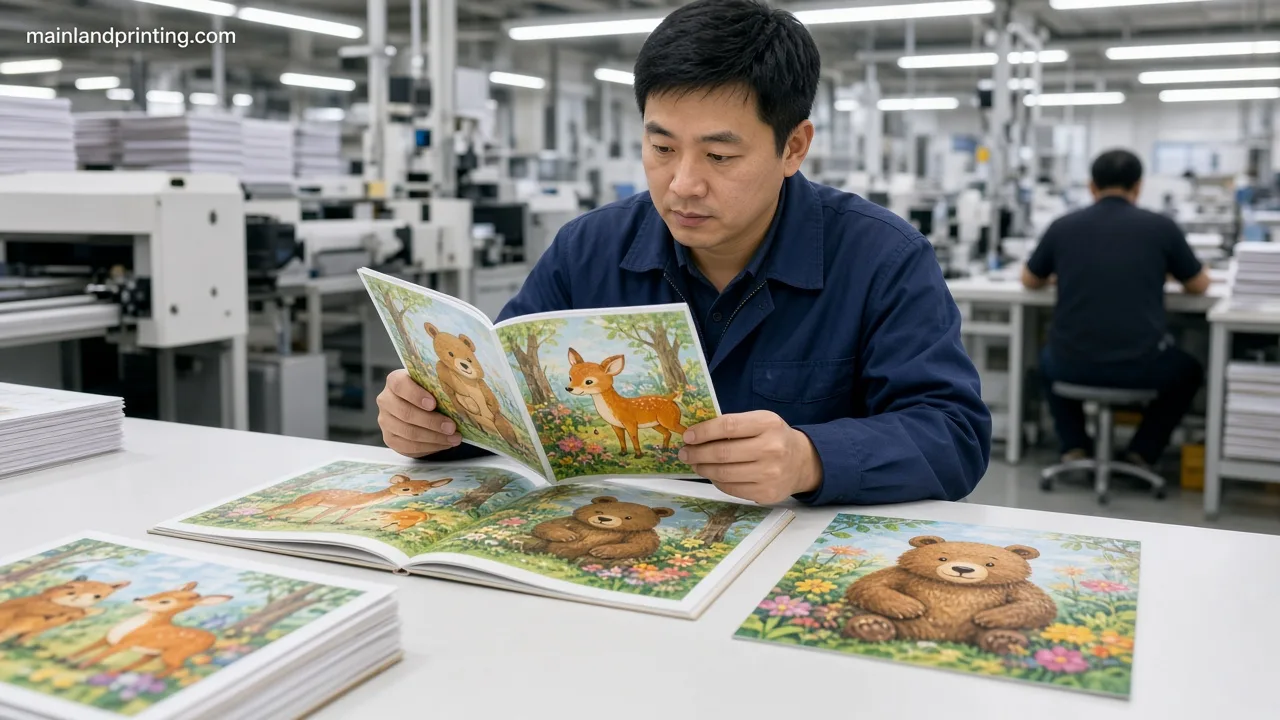
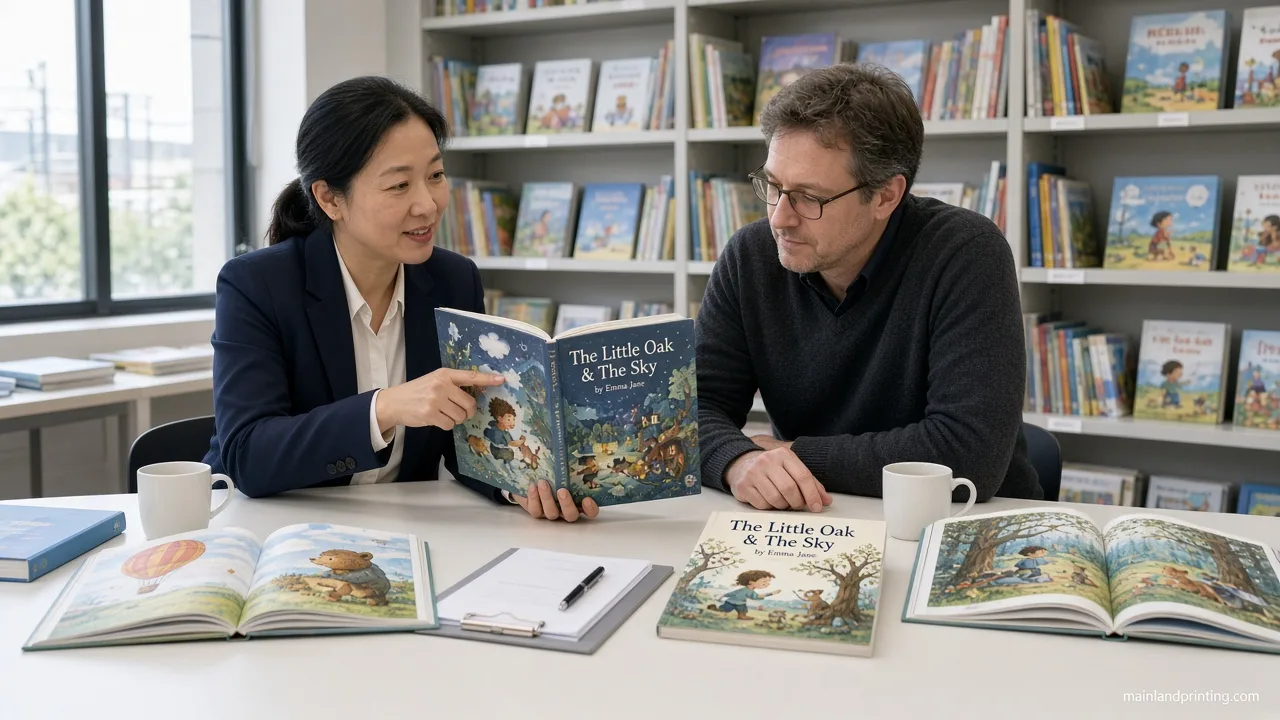
Estás comparando tela, buckram, cuero sintético (PU) y cartón forrado con papel para una tirada de libros de tapa dura, pero los presupuestos de los proveedores rara vez explican cómo la rigidez del cartón, el adhesivo y la tensión de la envoltura funcionan como un sistema integrado.
Respuesta rápida: Elige el tipo de cubierta en función de la tirada y el acabado: «paper-over-board» para ilustraciones a todo color en tiradas inferiores a 1.000 unidades; tela de buckram o lino para una durabilidad de calidad bibliotecaria con estampado en caliente; y cuero sintético de poliuretano (PU) para cubiertas con un tacto de alta calidad cuando la profundidad del grabado en relieve es reducida.
En los apartados siguientes encontrarás una comparación lado a lado, una tabla de «aprobado/rechazado» para la pila de cubiertas, una matriz de compatibilidad de acabados y el proceso de tirada, para que puedas aprobar las especificaciones antes de que comience la preimpresión.
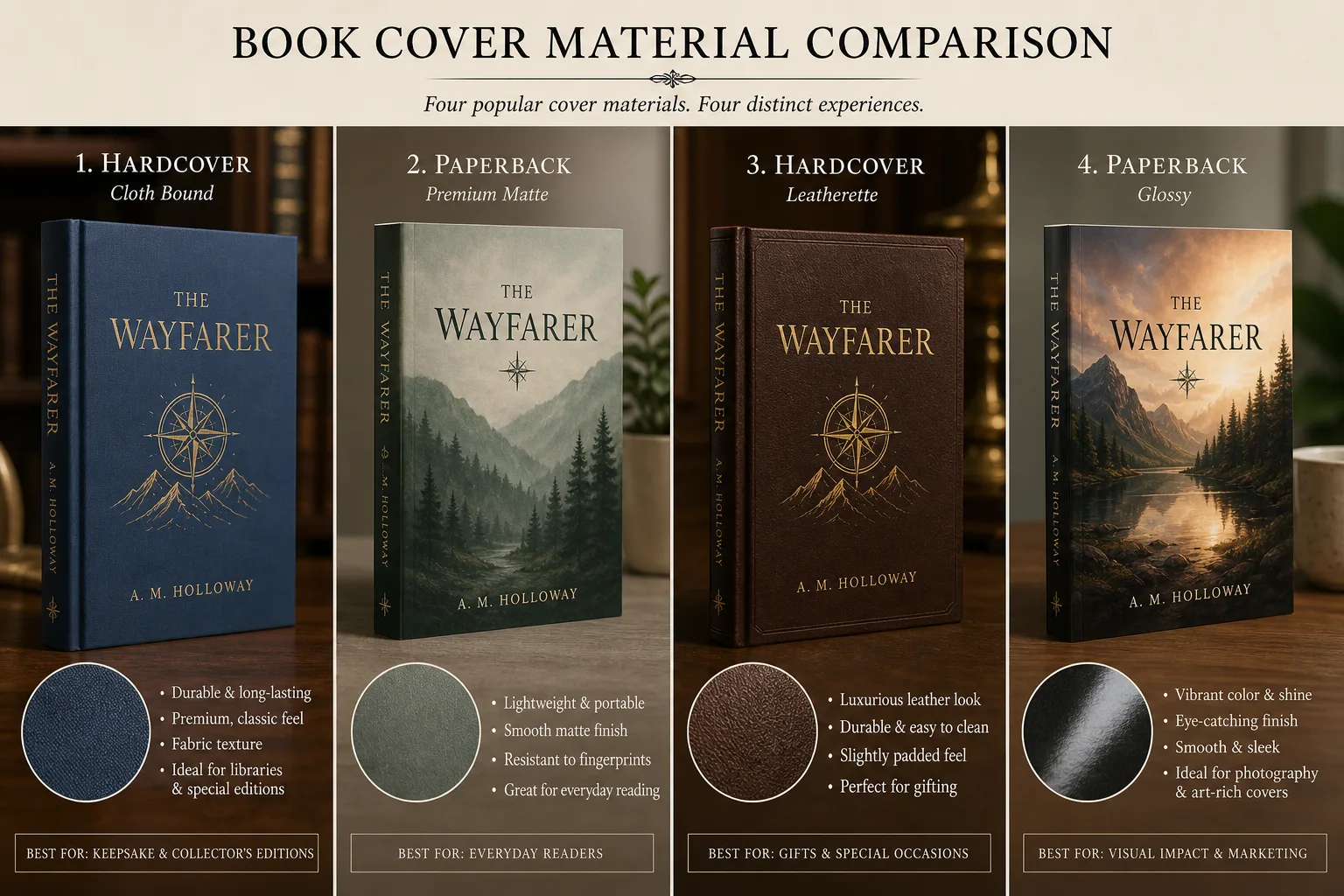
Comparativa de materiales de cubierta de un vistazo
El material de la cubierta dura no es una mera cuestión estética. Determina cómo el cartón gris absorbe el adhesivo, cómo resisten las esquinas el transporte y qué elementos decorativos conservan su nitidez tras la encuadernación.
Utiliza esta instantánea antes de cerrar las negociaciones con tu imprenta.
| Material de envoltura | Lo mejor para | El punto óptimo típico para el pedido mínimo (MOQ) | Notas finales |
|---|---|---|---|
| Buckram (tela almidonada) | Ediciones de biblioteca, libros de texto, títulos muy solicitados | Entre 500 y más de 2.000 unidades | Excelente laminado; el grabado en relieve requiere una profundidad controlada |
| Tela de lino y algodón | Libros de tapa dura de alta calidad, ediciones de regalo | 300–1 000 unidades | Lámina brillante; se nota el tejido en las tablas oscuras |
| Cuero sintético / cuero artificial | Cuadernos, libros de negocios de alta gama, branding táctil | 500–1 500 unidades | Grabado ciego ≤0,6 mm; el grabado profundo puede provocar grietas |
| Tapa de cartón forrada con papel (cubierta impresa) | Portadas a todo color, álbumes de fotos, títulos ilustrados | 300–1 000 unidades | Laminado mate/brillante + barniz UV selectivo; lámina solo sobre el laminado |
Si tu proyecto ya incluye estampado en caliente o grabado en relieve, lee cómo hacerlo buckram frente a tela de PU comprueba cómo se comporta con el calor antes de fijar las especificaciones del envoltorio.
Cómo se apilan realmente los materiales de las cubiertas de los libros de tapa dura
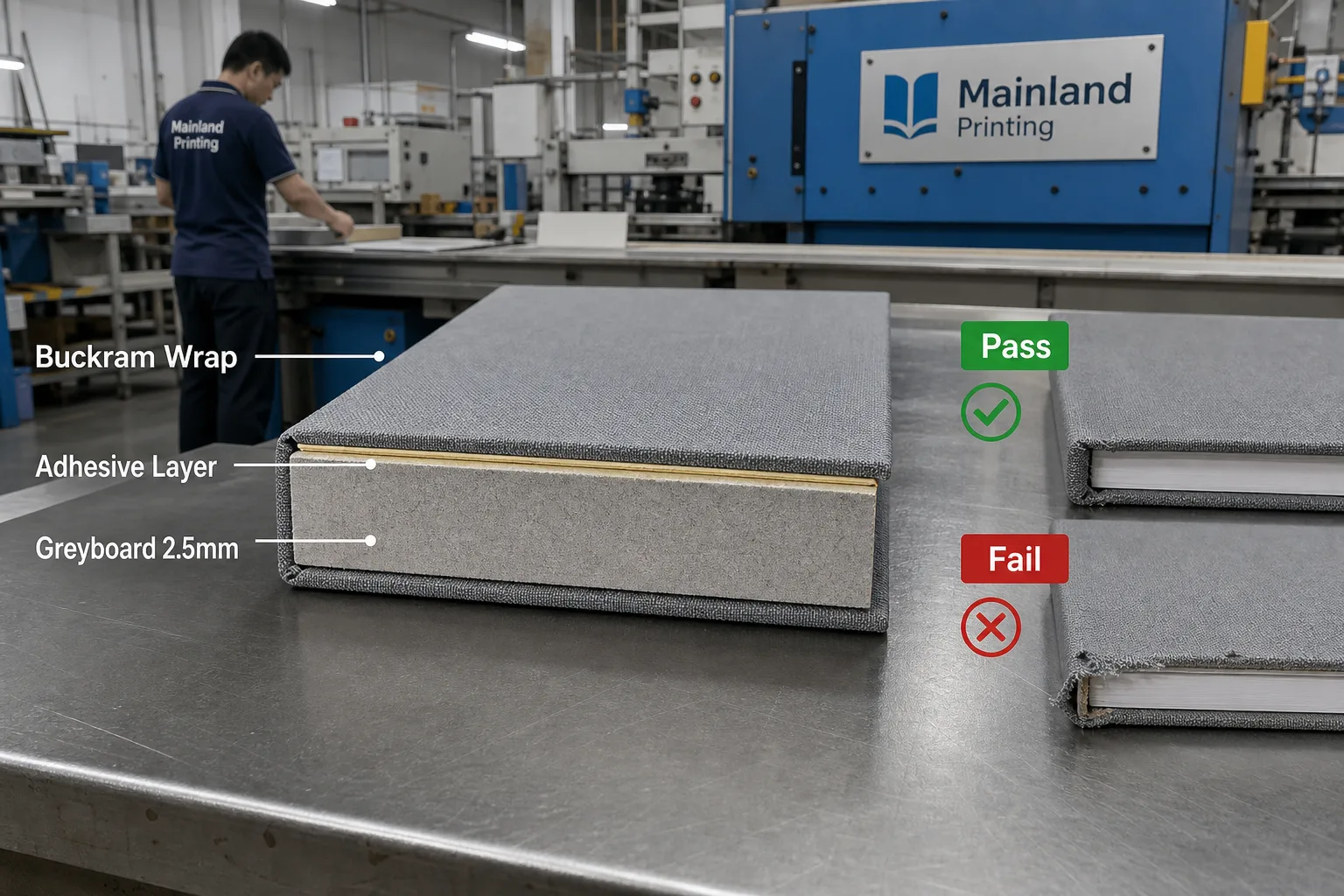
Una cubierta de tapa dura es un laminado: cartón gris + adhesivo + envoltura + laminado opcional o forro de tela. Cualquier punto débil en cualquiera de las capas se manifiesta en forma de levantamiento de las esquinas, deformación del lomo o deterioro del acabado.
La mayoría de las guías describen los materiales de forma aislada. En la planta de producción, el grosor del cartón y la tolerancia a la elasticidad del envoltorio determinan si la cubierta supera la primera prueba de caída de la caja.
| Comprobación de la pila | Especificaciones por confirmar | Pasar | Fallo |
|---|---|---|---|
| Calibre de cartón gris | 2,0–2,5 mm estándar; 2,75–3,0 mm para uso intensivo | La tabla se mantiene plana 24 horas después de envolverla, sin que se curven las esquinas | Deformación >1 mm en la carcasa de 6×9 tras la prueba climática |
| Tiempo de apertura del adhesivo | PVA para papel; cola compatible con el almidón para tela | No se han detectado burbujas bajo el envoltorio en las últimas 48 horas | Amolladura visible en el lomo o en el borde delantero |
| Tensión del envoltorio en las esquinas | Plegado en inglete de tela/buckram; termofijado con PU si es necesario | Radio de las esquinas uniforme, sin que se vea la pizarra blanca | PU agrietado o tela deshilachada en las puntas |
| Unión de la tabla espinal | Espalda hueca o ajustada según las especificaciones de fijación | Se abre completamente hasta 150° sin que se rompa el lomo | Separación de la placa tras 50 ciclos de apertura y cierre |
Para obtener una visión general completa de la construcción, consulta ¿Qué caracteriza a un libro de tapa dura? antes de decidir el peso del revestimiento y la calidad del tablero.
Buckram, tela de lino y fundas de calidad bibliotecaria
El buckram es un tejido de base de algodón o lino impregnado con almidón, lo que le confiere un tacto firme y una superficie fácil de limpiar con un paño. El buckram estándar para bibliotecas tiene un gramaje de entre 120 y 135 g/m² antes del forrado.
La tela de lino o algodón lisa para encuadernación ofrece más textura y profundidad de color, pero necesita un refuerzo de papel o película para estabilizar el tejido durante la confección de la cubierta.
Ambos admiten bien la lámina de estampado en caliente cuando la tela está forrada y el cartón está seco; el contenido de humedad debe ser inferior a 8% antes del envoltorio.
Las cubiertas de tela suponen un coste de producción inicial mayor que las de cartón forrado con papel, ya que los fabricantes de tapas acaban a mano las esquinas y las uniones del lomo. Hay que prever entre 2 y 4 días adicionales de producción para tiradas de menos de 500 unidades con cubierta de tela.
Fundas de cuero sintético y piel sintética
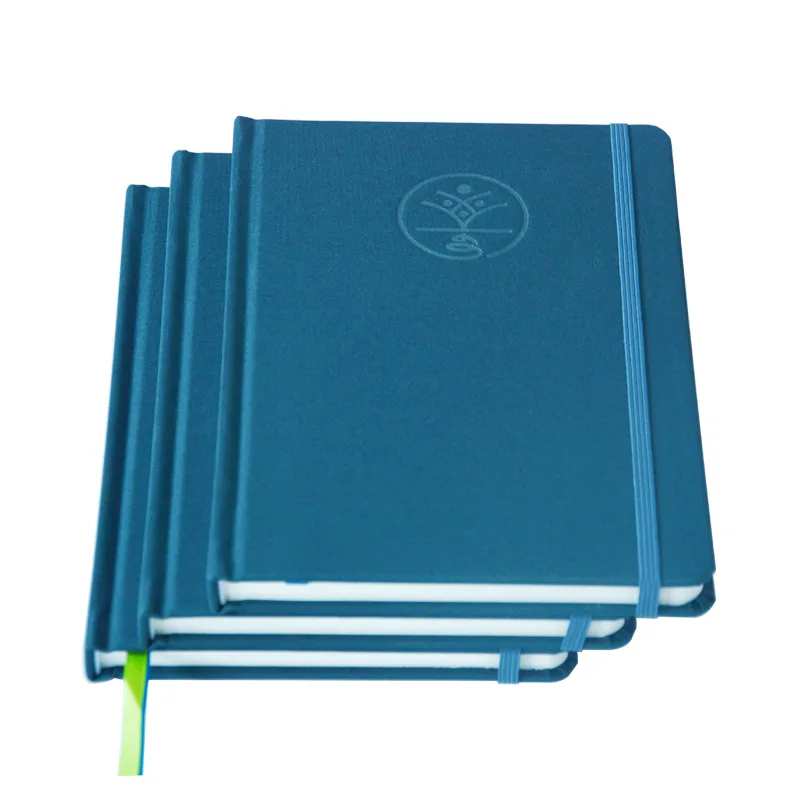
El cuero sintético de poliuretano es una película de poliuretano sobre un sustrato de tejido o papel. Ofrece un color uniforme, resistencia a las rozaduras y un tacto similar al del cuero, sin las variaciones propias de la piel natural.
Funciona bien para logotipos en relieve y estampados en seco cuando la profundidad de la impresión es reducida, normalmente entre 0,4 y 0,6 mm. El relieve más profundo en PU fino puede presentar microfisuras en los 30 días siguientes a la encuadernación.
Los tipos de PU sensibles al calor pueden dejar marcas bajo los troqueles de lámina a temperaturas superiores a 120 °C. Si tus especificaciones incluyen tanto lámina como PU, solicita una muestra de prueba de quemado del mismo lote de sustrato.
Para comprobar que los colores de la cubierta y las páginas interiores coincidan, consulta el Guía de colores de las fundas de cuero antes de que se apruebe la impresión en masa.
Opciones de tapa dura con cubierta de papel y sobrecubierta impresa
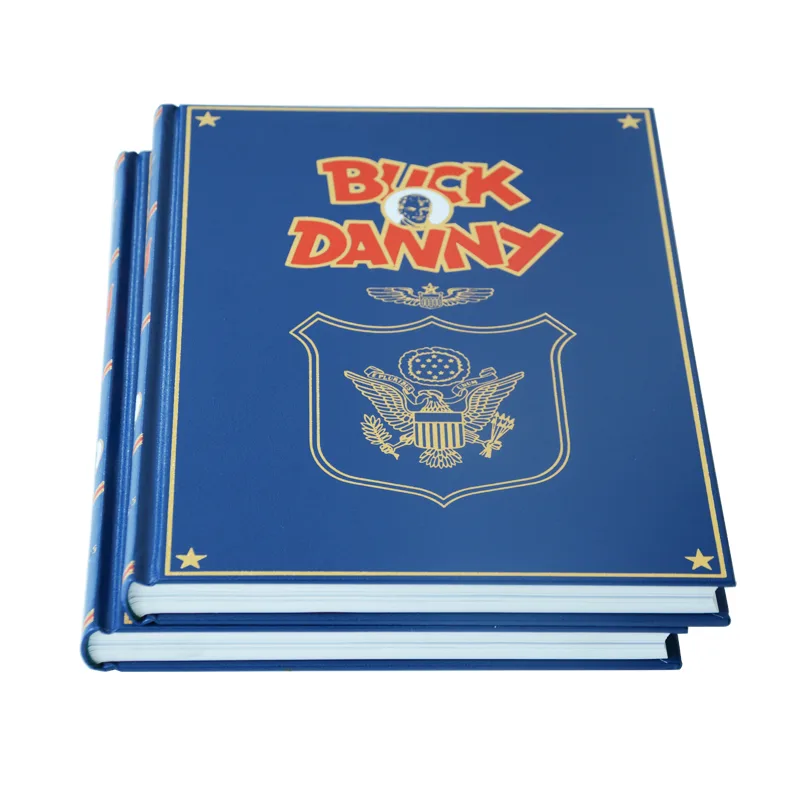
La encuadernación «paper-over-board» consiste en una lámina impresa en offset o digitalmente que se pega sobre cartón gris, a menudo con un laminado mate o brillante. Es la opción predeterminada cuando la ilustración de la portada es fotográfica o a sangre.
Elige papel artístico de 157–200 g/m² para la envoltura; un gramaje inferior hace que se note la textura del cartón. El laminado añade entre 12 y 18 micras; comprueba la variación de color (Delta-E) en las pruebas de aprobación.
El barniz UV selectivo, el relieve y el estampado en papel laminado requieren pasadas independientes. Cada pasada añade una tolerancia de registro de ±0,3 mm; comprueba la imposición antes de aprobar la línea de troquelado.
Nota de la planta de producción: Cuando un comprador cambia de tapa de cartón recubierta de papel a tapa de tela a mitad del proyecto, el grosor del cartón suele mantenerse igual, pero el adhesivo y la geometría de los pliegues de las esquinas cambian. Vuelve a presupuestar tanto el material como la configuración; no des por sentado que se trata de un simple cambio de precio unitario.
Whichever cover material wins the comparison, our scalable book printing services keep the cover stack consistent from sample run to full order.
¿Estás listo para comparar las características de la cobertura de tu póliza?
Matriz de compatibilidad de acabados
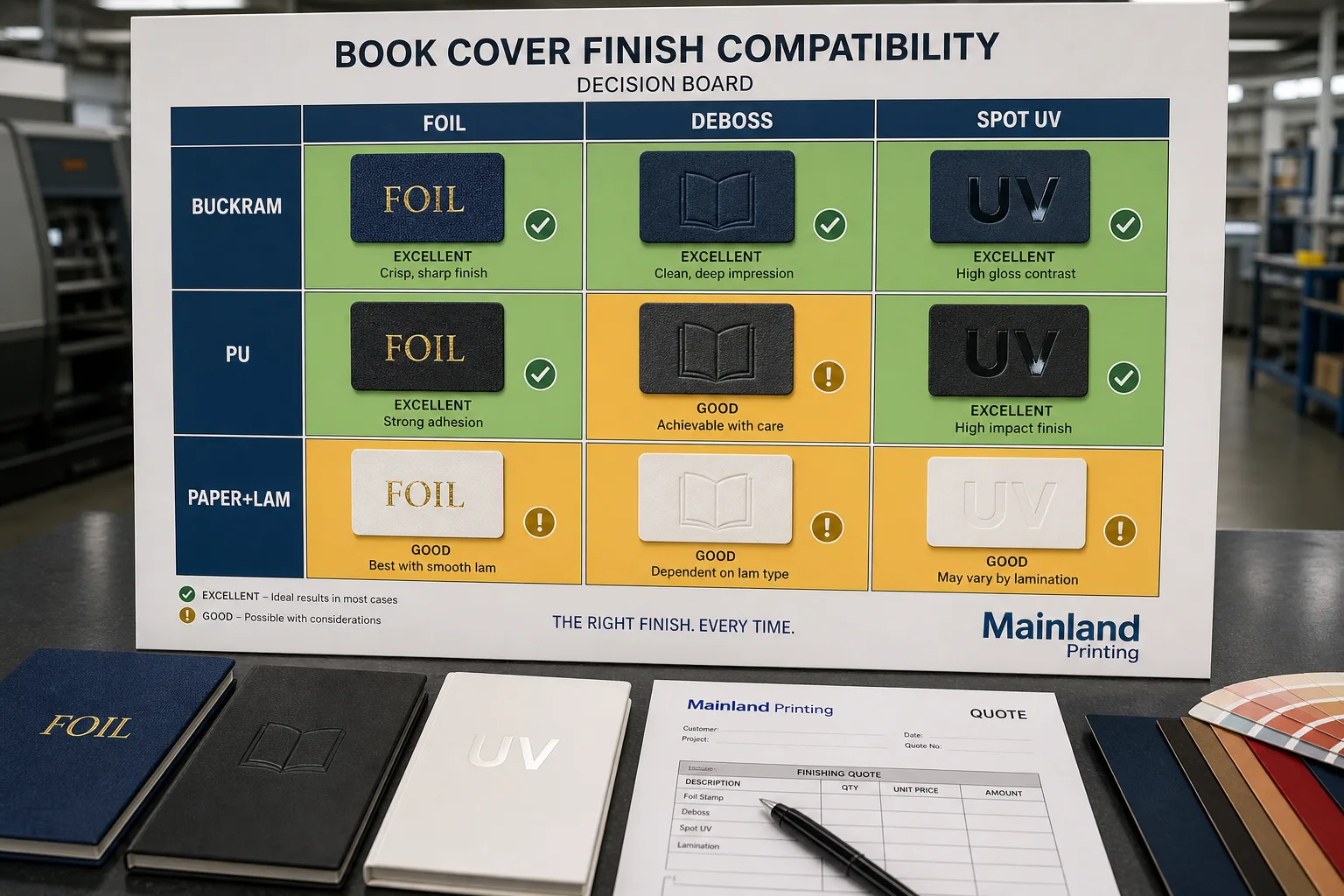
Elige los adornos antes de fijar el material de envoltura. El laminado, el grabado en relieve y el barniz UV selectivo afectan de forma diferente a la capa superficial.
| Acabado | Buckram / tela | Cuero sintético PU | Papel + laminado |
|---|---|---|---|
| Estampado en caliente | Excelente; utiliza un paño con forro | Funciona bien con una temperatura del troquel inferior a 120 °C | Lámina solo sobre laminado; comprobar la adherencia |
| Grabado en relieve ciego | Bien; profundidad: 0,8–1,2 mm | Solo superficial; ≤0,6 mm | Estampado en relieve sobre cartón mediante envoltura |
| UV directo | No es habitual en la ropa | Limitado; comprueba la adherencia de la tinta | De serie en laminado mate |
| Sobrecubierta | Habitual en las ediciones en tela | Opcional; a juego con el color del lomo | A menudo se omite cuando la envoltura es de diseño completo |
Si la profundidad del grabado no es negociable, lee el Estudio de caso sobre el grabado en relieve de materiales antes de optar por el PU en lugar de la tela.
Las limitaciones de las guías sobre materiales de recubrimiento
Idea clave n.º 1: La calidad de la tabla marca el límite máximo, no el nombre de la marca
La mayoría de las guías de adquisición comparan la tela y el papel como si fueran cubiertas intercambiables. En la encuadernación de tapa dura, un cartón de 2,0 mm con lomo compacto se comporta de forma diferente a uno de 2,75 mm con lomo hueco, incluso si se utiliza la misma tela de encuadernación.
Cuando especifiques el envoltorio, indica también el grosor del cartón gris, el tipo de adhesivo y si el lomo es hueco o compacto. Una tela de alta calidad sobre un cartón de calidad inferior seguirá teniendo problemas en las esquinas durante el transporte.
Antes de dar el visto bueno, comprueba la tabla de «aprobado/suspendido» de la pila de cubiertas que aparece más arriba con tu muestra física, no solo con la muestra de la cubierta.
Idea n.º 2: Los troqueles de acabado determinan el tipo de envoltura, no al revés
Las empresas suelen elegir telas de lino por una cuestión de prestigio y, a continuación, solicitan un grabado en relieve profundo con lámina metálica en una sola pasada. El buckram y las telas reforzadas admiten una mayor presión de troquelado; el PU y los laminados finos requieren pasos separados a temperaturas más bajas.
Antes de solicitar un presupuesto, comprueba que todos los adornos figuren en la matriz de compatibilidad de acabados. Las imprentas calculan el coste de las herramientas por pasada; combinar acabados incompatibles en una misma trayectoria del material da lugar a nuevos presupuestos y a retrasos de entre 5 y 7 días.
Solicita una única prueba consolidada de preimpresión en la que se muestren el estampado en caliente, el grabado en relieve y la envoltura del lomo en una maqueta.
Idea clave n.º 3: El volumen de la tirada determina la opción de material más económica
A partir de 300 unidades, la tapa de cartón forrada con papel, con cubierta digital o offset de tirada corta, suele resultar más rentable en términos de coste total. A partir de 1.000 unidades, las tiradas con tapa de buckram amortizan los costes de manipulación de la tela y de configuración del laminado al repartirse entre un mayor número de ejemplares.
El cuero sintético PU ocupa un término medio: resulta atractivo para líneas premium de 500 unidades, pero es sensible al desperdicio de piel en cortes de tamaños irregulares. Compara siempre los presupuestos en función de tu nivel de cantidad real, no del pedido mínimo (MOQ) del catálogo del proveedor.
Ajustar las hipótesis presupuestarias a las coste de impresión en tapa dura Analízalo bien antes de decidirte por el paño en lugar del papel.
Planificación de materiales por tirada de impresión
Utiliza este proceso de selección cuando tengas una cantidad fija y necesites una lista reducida bien fundamentada para la solicitud de presupuesto.
| Tirada | Trayectoria de envoltura principal | Cuándo actualizar |
|---|---|---|
| 200-400 unidades | Carta sobre cartón + laminado mate | En tapa dura si se trata de un libro de regalo o literario y el presupuesto lo permite: +15–25% |
| 500-800 unidades | Buckram o lino reforzado + lámina metálica | ¿Es la marca «táctil» un elemento fundamental para el posicionamiento? |
| Más de 1.000 unidades | Buckram o cartón forrado con papel a escala | Acabado mixto: tapa dura de tela + sobrecubierta impresa |
Señales de alerta antes de dar el visto bueno a la producción en serie:
- Las ofertas de los proveedores solo incluyen el embalaje; en la partida no se especifican ni el grosor del cartón gris ni las características del adhesivo.
- La muestra física utiliza un lote de tela distinto al de la orden de producción en serie.
- La prueba de estampado en lámina se ve nítida en la muestra plana, pero se difumina en el lomo de la encuadernación en tapa dura.
- La cubierta de PU presenta microfisuras tras una prueba de humedad relativa 60% de 48 horas.
- El presupuesto se basa en 1.000 unidades, pero tu pedido de Kickstarter es de 350; vuelve a ajustar el nivel de financiación antes de realizar el ingreso.
Las carpetas de biblioteca clasifican la tela rellena de almidón por separado de la tela para encuadernación de tejido liso; véase esto Resumen general sobre el buckram utiliza la terminología propia del ámbito de la conservación cuando especifiques ediciones de larga duración.
Especificar el material de la tapa del cierre antes de solicitar un presupuesto
Envía esta lista junto con tu PDF listo para imprimir y las especificaciones técnicas de la portada. Las especificaciones incompletas son la principal causa de que haya que volver a maquetar la portada.
- Tamaño de corte, número de páginas y tipo de encuadernación (cosida o con tapa adhesiva).
- Cálculo del grosor y la anchura del lomo del cartón gris, incluyendo el margen de volumen.
- Código del material de envoltura: buckram, lino, PU o papel de envoltura (g/m²) + tipo de laminado.
- Acabado del mapa: colores de lámina, profundidad del grabado en relieve, zonas con barniz UV selectivo, con pruebas de aprobación independientes.
- Niveles de cantidad para el presupuesto: 300 / 500 / 1.000 (o sus rangos de suministro reales).
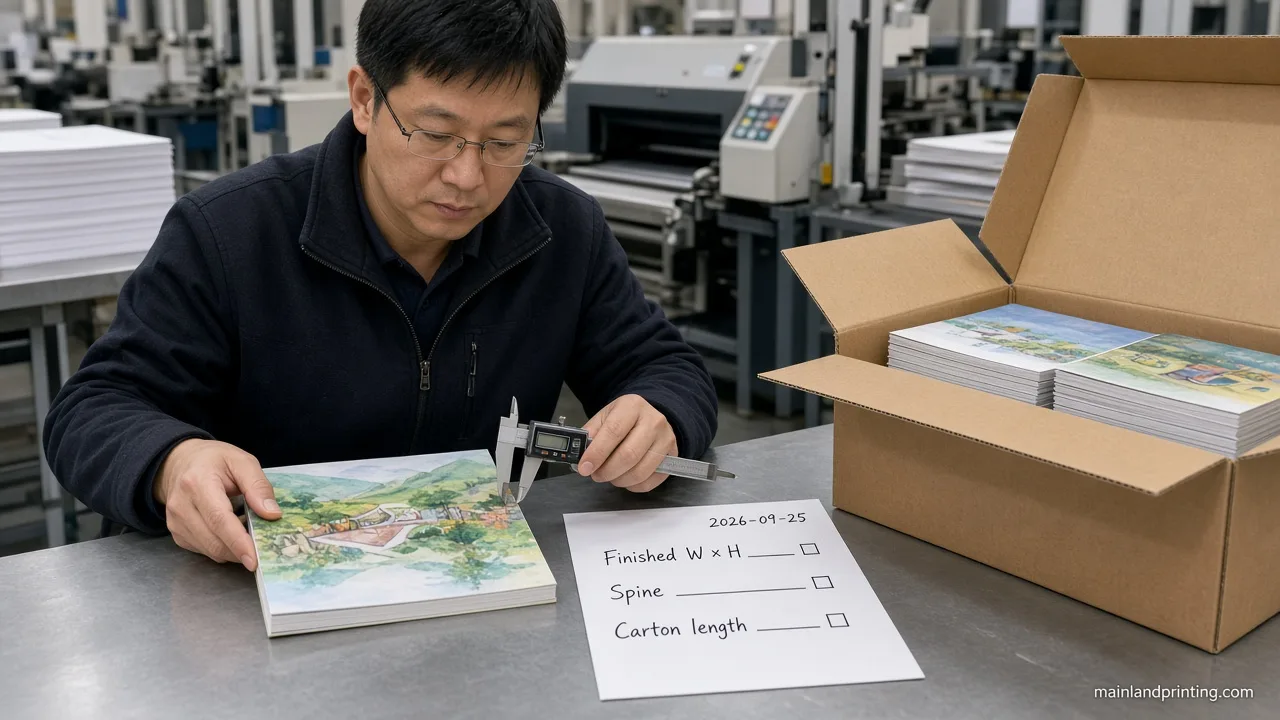
- Requisitos de la muestra: maquetón en estuche con cartón de producción y material de embalaje a granel.
- Clima y ruta marítima: confirmar el embalaje si la humedad relativa en el destino supera el 65%.
Si tu título requiere tanto una cobertura de alta calidad como un coste unitario controlado, ponte en contacto con nosotros a través de nuestro servicios de impresión en tapa dura página con esta lista de comprobación adjunta.